

Kirjahaku
Etsi kirjoja tekijän nimen, kirjan nimen tai ISBN:n perusteella.
1000 tulosta hakusanalla Eric Thomson


Europe has many wonderful old traditions, and one of them is the Christmas market.The December market in Vienna is recorded since 1298, but Innsbruck was actually founded as a market in a field already in 1133 and it could be argued that the December market here would be even older.The wonderful Tyrolian atmosphere makes this a must for anyone enjoying the Christmas markets.
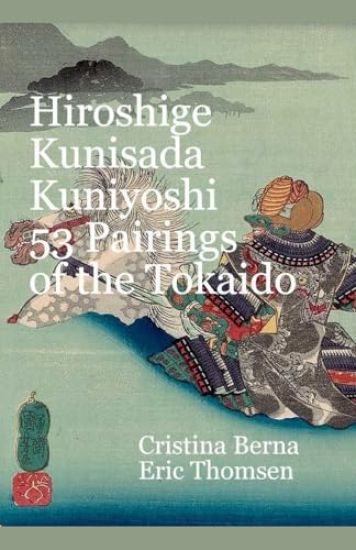
Hiroshige Kunisada Kuniyoshi 53 Pairings of the Tokaido
Cristina Berna; Eric Thomsen
HARPERCOLLINS PUBLISHERS
2023
pokkari
This series, Fifty-three Pairings of the Tokaido Road, Tōkaidō gojūsan tsui, 東海道五十三対, popularly called Pairs Tōkaidō or 53 Parallels for the Tokaido Road, was published in 1845-1846.It is a unique cooperation between three artists: Utagawa Hiroshige, Utagawa Kunisada and Utagawa Kuniyoshi and five publishers: Ibaya Kyūbei, (Ibaya Senzabur (Dansend )) and Kojimaya J bei, Ensh ya Matabei, Ebiya Rinnosuke (Kaijud ) and Iseya Ichibei.The special feature of this "Pairs Tōkaidō" is the pairing of a print for each station with a legend, a wonderful, dramatic, historic or supranatural story. These stories are told partly by the print theme, partly by accompanying text in a cartouche. Sometimes there is a poem. It is a very enjoyable tour

No, it is not a spelling error. It is not "Dear" friends but "Deer" friends...as in Roe deer - Buck, Roe and Fawn.Actually, they were not "dear" at all the first time When Anjuli and Lille-Tiger saw two deer the first time, their eyes widened, hair stuck out, tails all bottle cleaner brush like. The deer jumped them and galloped down the bridge and disappeared into the Orchard, down a steep slope to the left and the end of the bridge. Shed No 1 to the left, which Anjuli loved.

Tomikichiro Tokuriki 徳力富吉郎, was born on March 22, 1902 and died in 1999 in Kyoto, Japan. Young Tomikichiro's first teacher was his grandfather. He signed himself as Tomiki.Tomikichiro Tokuriki became a modern Japanese woodblock printmaker representing the 12th generation of a Kyoto artisan family designated as the official Kyoto print artists for the famous Honganji Temple. with a two-year preparatory class and four years of regular training. During his college years, the young artist uncovered his fervor for sosaku hanga prints, a movement and later a three year training at the Kyoto College of Art, graduating from Kyoto Art College in 1923. He graduated from Kyoto City School of Fine Arts and Kyoto City Specialist School of Painting in 1924. He was celebrated his hometown, by making woodblock prints of the cityWith the assistance of an old carver and an Ukiyo-e printer, Tomikichiro Tokuriki learned everything to master the complete process of design, carving and printing himself.After World War II, he established the Matsukyu Publishing Company to produce and distribute his own prints and other Shin Hanga and Sosaku Hanga pieces sosaku hanga prints - a movement that had spread from Tokyo to Kyoto. He also began to teach block-carving to artisans and artists, in later years many of them foreigners. In 1948 he also set up a sub-company called Koryokusha consisting of artists who would produce their prints under the financial umbrella of Matsukyu.Tomokichiro Tokuriki is described as a charming man. He was an influential figure in Japan's contemporary print movement. He was the official artist of the Honganji Temple, and his work has been commissioned for various temples throughout Japan, including the famous shrines at Ise. His prints are in the permanent collections of the Museum Fine Arts Boston and the Museum of Modern Art New York.

If you like animals and want to give your child the experience of meeting animals you should consider having outpets.Birds of Play will show you some places in Copenhagen, the capital of Denmark, where you and your family can enjoy meeting birds as outpets.Activities like feeding ducks creates an important bond between a child and the natural world and it stays with them long after the activity is over. If done the right way, it won't impact heavily on our native fauna.

Innsbruck was established as a market place in 1133 when the Counts of Andechs bought a field on the left bank of the Inn, today called St. Nikolaus.One of the wonderful traditions of Christmas is the Nativity. But you don't have to be Christian or a regular church-goer to love these wonderful displays. The creativity and artistry speak to all children and to the child in us all.
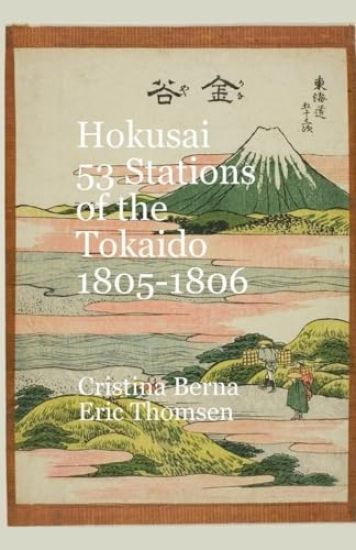
Hokusai's 53 Stations of the Tōkaidō 1805-1806 is something completely different It is different from his famous 36 Views of Mt Fuji, which are sublime artistic expressions distilling a long life's work.It is different from much of Hokusai's other well known work, like his 100 Views of Mt Fuji. But in that series Hokusai still retained a lot of the humor and the caricature found here.It is different from the many other well known 53 Stations of the Tōkaidō in that Hokusai does not focus on the landscape and the markers that Hiroshige and others showed.Instead Hokusai focus on the events, the interactions between the travellers, the tales that you will share with your friends when you get back home.


Mexico Before Cortez - An Account Of The Daily Life, Religion And Ritual Of The Aztecs And Kindred Peoples
J. Eric Thompson
Read Books
2007
pokkari

Mexico Before Cortez - An Account Of The Daily Life, Religion And Ritual Of The Aztecs And Kindred Peoples
J. Eric Thompson
READ BOOKS
2008
sidottu
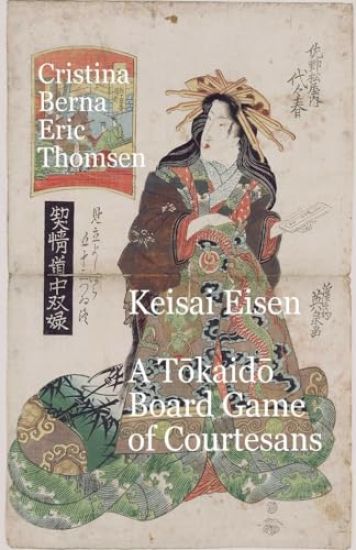
Keisai Eisen A Tokaido Board Game of Courtesans
Cristina Berna; Eric Thomsen
Missys Clan
2022
pokkari
What did prostitutes look like in Edo Japan?Keisai Eisen (1790 -1848) is especially known for his bijin-ga, pretty women, and landscapes. He is known for his participation in the series 69 stations of the Nakasendō together with Hiroshige.The series A Tōkaidō Board Game of Courtesans, Fifty-three Pairings in the Yoshiwara used the Tōkaidō with landscape inserts as an excuse to show courtesans and geisha, bijin-ga, to skirt the censorship. They were published 1821-1823. His bijin-ga are considered to be masterpieces of the "decadent" Bunsei Era (1818-1830).Most of them have impressive hairdo with many ornamental hairpins and combs. Their dress is extravagant with beautiful patterns and sublime embroideries. Their faces are elongated squares with long noses and small pouted painted mouths.Courtesans were desirable for their rich and splendid attire, not so much for their beauty and their names were actually like trademarks for a series of girls performing the role with the brothel in question.

El Departamento de Bomberos de Los ngeles, ltimamente, se ha enfrentado a desaf os tremendos por eso despierta inter s en su equipo y sus heroicos bomberos. Los camiones de bomberos son unos de los veh culos m s interesantes que existen Est n bellamente pintados de un color vistoso y poseen equipamiento de protecci n y todo tipo de accesorios.Los camiones de bomberos tienen luces muy llamativas, bocinas y sirenas potentes y variadas y algunos de ellos incluso llevan campanas Los bomberos est n al servicio del p blico: acuden para extinguir incendios, cuando ha ocurrido un accidente o cualquier otro siniestro de emergencia.Honramos a todos los bomberos y socorristas en este 4 de julio de 2025 y esperamos que disfrute de nuestra selecci n de fotograf as.

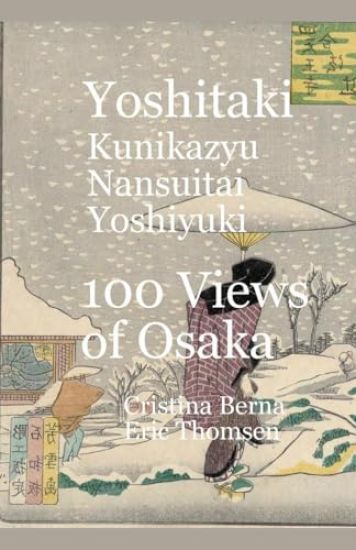
Yoshitaki Kunikazu Nansuitei Yoshiyuki 100 Views of Osaka
Cristina Berna; Eric Thomsen
Missys Clan
2024
pokkari
Viewing Osaka through the series 100 Views of Naniwa (Osaka) is an amazing experience. It is a well executed repetition over a format by Hiroshige. Some add a "Famous" to the title.This series is by three artists, Utagawa Yoshitaki, Utagawa Kunikazu and Nansuitei Yoshiyuki.Hiroshige I created his revolutionary series 100 Famous Views of Edo over three years, 1856-1859.This led to the publishing of copy series 100 Views of Naniwa (Osaka) by other artists. The book here is based mainly on prints in the Museum of Fine Arts in Boston and Osaka Municipal Museum collections.Hiroshige I had done his own series Famous Views of Naniwa (Osaka), 10 prints, as early as 1834, but it was his 100 Famous Views of Edo that caused the significant copy production.Copying ideas and prints was quite normal in the Edo Period Japan print business.

Hiroshige Famous Views of the Sixty-Odd Provinces
Cristina Berna; Eric Thomsen
Missys Clan
2022
pokkari
What was Japan like in 1853, when this portrait was started by Utagawa Hiroshige with one print from each of the 69 provinces. It is an outstanding picture book from just before photography.Hiroshige travelled the Tōkaidō road to participate in an important procession in Kyoto in 1832 and published his 53 Stations of the Tōkaidō which was the most popular print series ever made in Japan, see the author's ISBN 9781956215090.It was even more popular than Hokusai's series Thirty-six Views of Mount Fuji, which had been recently published and which had influenced Hiroshige tremendously ISBN 9781956215243.The Famous Views from the Sixty-Odd Provinces contains some of Hiroshige's most beloved prints and he again uses the horizontal format he pioneered for landscape prints.

Hiroshi Yoshida was born 19 September, 1876 in Kurume, Fukuoka. He died 5 April, 1950 (aged 73) in his home in Tokyo.Hiroshi Yoshida was born Hiroshi Ueda. At the age of 15, he was adopted by the Yoshida family after his talent for painting was discovered by Kasaburo Yoshida, a junior high school art teacher.In 1920, at the age of 44, Yoshida presented his first woodcut at the Watanabe Print Workshop, organized by Shōzaburō Watanabe (1885-1962), publisher and advocate of the shin-hanga movement.Yoshida believed that the painter should have supreme authority and assume the role of director, not the publishing house. Yoshida was known to be meticulous about the process and quality of his finished prints. He did not give his prints the "seal of approval" or the stamp of his name, "jizuri" (self-print), unless he was extremely satisfied with the end result.At the age of 73, Yoshida took his last sketching trip to Izu and Nagaoka and painted his last works The Sea of Western Izu and The Mountains of Izu. He became sick on the trip and returned to Tokyo where he died on 5 April, 1950, at his home.
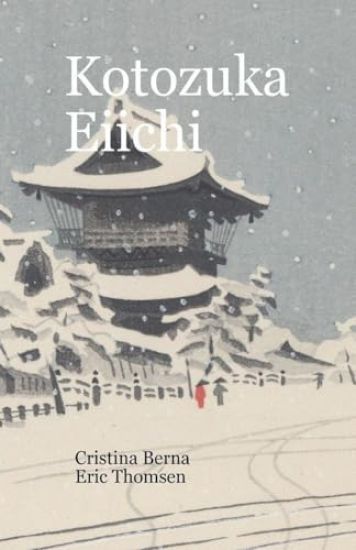
Kotozuka Eiichi 琴塚 英一 (1906-1979), born in Osaka, graduated from the Kyoto Kaiga Semmon Gakko (Technical School of Painting) in 1930. From 1932, he exhibited prints with Shun'yokai (Spring Principle Association), an artist's organization that exhibited Western-style art. He also exhibited with the government sponsored Teiten. He was a member of Nihon Hanga Kyokai (Japan Print Association) from 1938. In addition to print making, Kotozuka exhibited Japanese-style paintings with the artists' organization Seiryusha, which he helped found in 1929. He was also a co-founder of Koryokusha in 1948 with fellow artists Tokuriki Tomikichirō (1902-2000), Kamei Tōbei (1901-1977) and Takahashi Tasaburō (1904-1977) which they set up to publish their creative prints (sosaku hanga). After WWII he created a number of designs for the publisher Uchida Publishing, including his most famous series Eight Snow Scenes of Kyoto.Other series created by the artist include Scenes from Four Historical Cities; Scenes from Shiga, Nara and Kyoto; and Four Scenes from Kyoto. He also participated in the design of the series Fifty Kinds of Flowers (Hana gojū dai no uchi) with Kamei Tōbei and Tokuriki Tomikichirō and Twenty-Four Views In and Out of Kyoto with Kamei Tōbei