Kirjojen hintavertailu. Mukana 12 083 983 kirjaa ja 12 kauppaa.

Kirjahaku

Etsi kirjoja tekijän nimen, kirjan nimen tai ISBN:n perusteella.

1000 tulosta hakusanalla Ernst-Wilhelm Handler

Rechtliche Aspekte im Building Information Modeling (BIM)

Rechtliche Aspekte im Building Information Modeling (BIM)

Florian Schrammel; Ernst Wilhelm

Springer Vieweg
2016
nidottu
Dieses essential gibt eine praxisorientierte Übersicht über Aufgaben und Haftung des BIM-Managers in Abhängigkeit zu den übrigen Baubeteiligten hinsichtlich der HOAI, der VOB/B, der RBBau und weiterer gesetzlicher Regelwerke. Die Autoren befassen sich mit der rechtlichen Einordnung des in Deutschland noch am Anfang stehenden „Building Information Modeling (BIM)“. Sie erläutern vor allem Auswirkungen von BIM in vergütungs- und haftungsrechtlicher Hinsicht. Darüber hinaus erfolgt eine Betrachtung von Schnittstellen der Leistungspflichten der jeweiligen Projektbeteiligten unter Berücksichtigung des BIM-Managers, von versicherungsrechtlichen Fragen und von vergaberechtlichen Aspekten im Zusammenhang mit BIM.
MRI Atlas of MS Lesions

MRI Atlas of MS Lesions

M.A. Sahraian; Ernst-Wilhelm Radü

Springer-Verlag Berlin and Heidelberg GmbH Co. K
2007
muu
MRI has become the main paraclinical test in the diagnosis and management of multiple sclerosis. We have demonstrated more than 400 pictures of different typical and atypical MS lesions in this atlas. Each image has a teaching point. New diagnostic criteria and differential diagnosis have been discussed.
MRI Atlas of MS Lesions

MRI Atlas of MS Lesions

M.A. Sahraian; Ernst-Wilhelm Radü

Springer-Verlag Berlin and Heidelberg GmbH Co. K
2014
nidottu
MRI has become the main paraclinical test in the diagnosis and management of multiple sclerosis. We have demonstrated more than 400 pictures of different typical and atypical MS lesions in this atlas. Each image has a teaching point. New diagnostic criteria and differential diagnosis have been discussed.
Anatomie des Frosches

Anatomie des Frosches

Alexander Ecker; Robert Wiedersheim; Ernst Wilhelm Theodor Gaupp

Hansebooks
2016
pokkari
Anatomie des Frosches ist ein unver nderter, hochwertiger Nachdruck der Originalausgabe aus dem Jahr 1896. Hansebooks ist Herausgeber von Literatur zu unterschiedlichen Themengebieten wie Forschung und Wissenschaft, Reisen und Expeditionen, Kochen und Ern hrung, Medizin und weiteren Genres. Der Schwerpunkt des Verlages liegt auf dem Erhalt historischer Literatur. Viele Werke historischer Schriftsteller und Wissenschaftler sind heute nur noch als Antiquit ten erh ltlich. Hansebooks verlegt diese B cher neu und tr gt damit zum Erhalt selten gewordener Literatur und historischem Wissen auch f r die Zukunft bei.
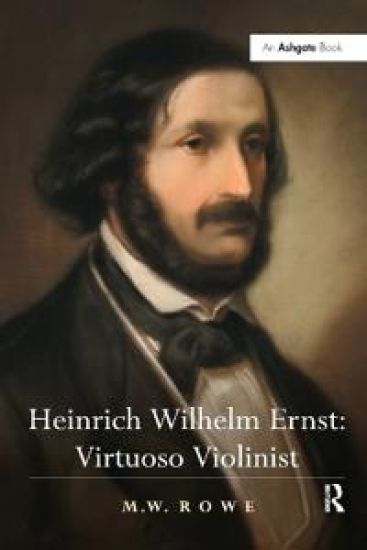
Heinrich Wilhelm Ernst: Virtuoso Violinist

Heinrich Wilhelm Ernst: Virtuoso Violinist

Mark Rowe

Ashgate Publishing Limited
2008
sidottu
From 1840-57, Heinrich Ernst was one of the most famous and significant European musicians, and performed on stage, often many times, with Berlioz, Mendelssohn, Chopin, Liszt, Wagner, Alkan, Clara Schumann, and Joachim. It is a sign of his importance that, in 1863, Brahms gave two public performances in Vienna of his own and Ernst's music to raise money for the now mortally ill violinist. Berlioz described Ernst as 'one of the artists whom I love the most, and with whose talent I am most sympathetique', while Joachim was in no doubt that Ernst was 'the greatest violinist I ever heard; he towered above the others'. Many felt that he surpassed the expressive and technical achievements of Paganini, but Ernst, unlike his great predecessor, was also a tireless champion of public chamber music, and did more than any other early nineteenth-century violinist to make Beethoven's late quartets widely known and appreciated. Ernst was not only a great virtuoso but also an accomplished composer. He wrote two of the most popular pieces of the nineteenth century - the Elegy and the Carnival of Venice - and he is best known today for two solo pieces which represent the ne plus ultra of technical difficulty: the transcription of Schubert's Erlking, and the sixth of his Polyphonic Studies, the variations on The Last Rose of Summer. Perhaps he made his greatest contribution to music through his influence on Liszt's outstanding masterpiece, the B minor piano sonata. In 1849, Liszt conducted Ernst playing his own Concerto Pathétique, a substantial single-movement work, in altered sonata form, using thematic transformation. Soon after this performance, Liszt wrote his Grosses Konzertsolo (1849-50), his first extended single-movement work, using altered sonata form, and thematic transformation. This is now universally acknowledged to be the immediate forerunner of the sonata, which refines and develops all these techniques. Liszt made his debt clear when, three years after completi
Heinrich Wilhelm Ernst: Virtuoso Violinist
From 1840-57, Heinrich Ernst was one of the most famous and significant European musicians, and performed on stage, often many times, with Berlioz, Mendelssohn, Chopin, Liszt, Wagner, Alkan, Clara Schumann, and Joachim. It is a sign of his importance that, in 1863, Brahms gave two public performances in Vienna of his own and Ernst's music to raise money for the now mortally ill violinist. Berlioz described Ernst as 'one of the artists whom I love the most, and with whose talent I am most sympathetique', while Joachim was in no doubt that Ernst was 'the greatest violinist I ever heard; he towered above the others'. Many felt that he surpassed the expressive and technical achievements of Paganini, but Ernst, unlike his great predecessor, was also a tireless champion of public chamber music, and did more than any other early nineteenth-century violinist to make Beethoven's late quartets widely known and appreciated. Ernst was not only a great virtuoso but also an accomplished composer. He wrote two of the most popular pieces of the nineteenth century - the Elegy and the Carnival of Venice - and he is best known today for two solo pieces which represent the ne plus ultra of technical difficulty: the transcription of Schubert's Erlking, and the sixth of his Polyphonic Studies, the variations on The Last Rose of Summer. Perhaps he made his greatest contribution to music through his influence on Liszt's outstanding masterpiece, the B minor piano sonata. In 1849, Liszt conducted Ernst playing his own Concerto Pathétique, a substantial single-movement work, in altered sonata form, using thematic transformation. Soon after this performance, Liszt wrote his Grosses Konzertsolo (1849-50), his first extended single-movement work, using altered sonata form, and thematic transformation. This is now universally acknowledged to be the immediate forerunner of the sonata, which refines and develops all these techniques. Liszt made his debt clear when, three years after completi