The North American Sylva; Or, A Description Of The Forest Trees Of The United States, Canada And Nova Scotia. Considered Particularly With Respect To Their Use In The Arts And Their Introduction Into Commerce. To Which Is Added A Description Of The Most Useful Of The European Forest Trees (Volume I) has been considered by academicians and scholars of great significance and value to literature. This forms a part of the knowledge base for future generations. So that the book is never forgotten we have represented this book in a print format as the same form as it was originally first published. Hence any marks or annotations seen are left intentionally to preserve its true nature.
The North American Sylva; Or, A Description Of The Forest Trees Of The United States, Canada, And Nova Scotia (Volume Ii) has been considered by academicians and scholars of great significance and value to literature. This forms a part of the knowledge base for future generations. So that the book is never forgotten we have represented this book in a print format as the same form as it was originally first published. Hence any marks or annotations seen are left intentionally to preserve its true nature.
Tree sitters. Logger protests. Dying timber towns. An iconic species on the brink. The Timber Wars consumed the Pacific Northwest in the late 1980s and early1990s and led political leaders to ask scientists for a solution. The Northwest Forest Plan was the result. For most of the twentieth century, the central theme of federal forest management in the Pacific Northwest had been logging old-growth forests to provide a sustained yield of timber. During the 1970s and 1980s, however, a series of studies by young scientists highlighted the destructive impact of that logging on northern spotted owls, salmon, and the old-growth ecosystem itself. Combining this new science with newly minted environmental laws like the Endangered Species Act, environmental activists obtained court injunctions to stop old-growth logging on federal land, setting off a titanic struggle in the Pacific Northwest to find a way to accommodate conservation imperatives as well as the logging that provided employment for tens of thousands of people. That effort involved years of controversy and debate, federal courts, five science assessments, Congress, and eventually the president of the United States. It led to creation of the Northwest Forest Plan, which sharply and abruptly shifted the primary goal of federal forestry toward conserving the species and ecosystems of old-growth forests. Scientists went from spectators to planners and guides, employing their latest scientific findings and expertise to create a forest plan for 20 million acres that would satisfy the courts. The largest upheaval in federal forest management in history had occurred, along with a precipitous decline in timber harvest, and there was no going back. In this book, three of the scientists who helped craft that change tell the story as they know it: the causes, development, adoption, and implementation of the Northwest Forest Plan. The book also incorporates personal reflections from the authors, short commentaries and histories from key figures— including spotted owl expert Eric Forsman—and experiences from managers who implemented the Plan as best they could. Legal expert Susan Jane M. Brown helped interpret court cases and Debora Johnson turned spatial data into maps. The final chapters cover the Plan’s ongoing significance and recommendations for conserving forest and aquatic ecosystems in an era of megafires and climate change.
This work has been selected by scholars as being culturally important and is part of the knowledge base of civilization as we know it.This work is in the public domain in the United States of America, and possibly other nations. Within the United States, you may freely copy and distribute this work, as no entity (individual or corporate) has a copyright on the body of the work.Scholars believe, and we concur, that this work is important enough to be preserved, reproduced, and made generally available to the public. To ensure a quality reading experience, this work has been proofread and republished using a format that seamlessly blends the original graphical elements with text in an easy-to-read typeface.We appreciate your support of the preservation process, and thank you for being an important part of keeping this knowledge alive and relevant.
This book draws on the perspectives of nearly 20 000 faculties from around the world to determine significant trends in how professors view teaching and research.
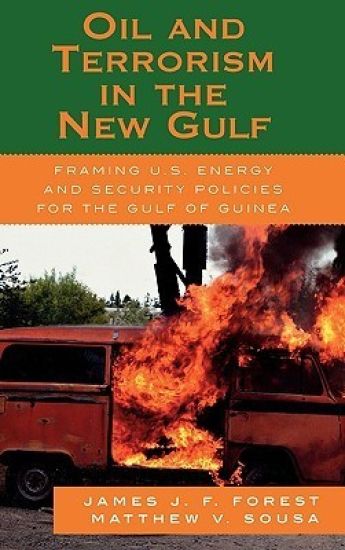
Oil and Terrorism in the New Gulf examines the national security implications of U.S. energy security policies in the Middle East, and the emerging U.S. involvement in oil exploration and extraction in West Africa. Similar political, social, and economic challenges_poverty, corruption, lack of infrastructure, and weak governments_are seen in the oil-producing states of both the Middle East and Africa. Drawing comparisons between these two regions allows Forest and Sousa to formulate policy recommendations for how to handle foreign policy toward Africa in the future based on lessons learned from past interaction with the Middle East. Oil and Terrorism in the New Gulf promises to inform a lively debate over the future of U.S. foreign policies toward Africa and is a valuable resource for policymakers and the academic community that should be approached in a coherent, integrated fashion to ensure the success of the United State's energy and national security agendas.
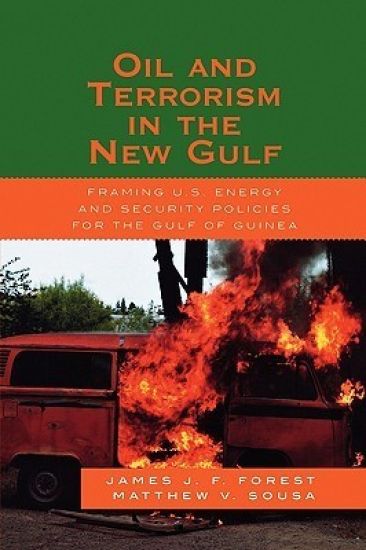
Oil and Terrorism in the New Gulf examines the national security implications of U.S. energy security policies in the Middle East, and the emerging U.S. involvement in oil exploration and extraction in West Africa. Similar political, social, and economic challenges—poverty, corruption, lack of infrastructure, and weak governments—are seen in the oil-producing states of both the Middle East and Africa. Drawing comparisons between these two regions allows Forest and Sousa to formulate policy recommendations for how to handle foreign policy toward Africa in the future based on lessons learned from past interaction with the Middle East. Oil and Terrorism in the New Gulf promises to inform a lively debate over the future of U.S. foreign policies toward Africa and is a valuable resource for policymakers and the academic community that should be approached in a coherent, integrated fashion to ensure the success of the United State's energy and national security agendas.
This book draws on the perspectives of nearly 20 000 faculties from around the world to determine significant trends in how professors view teaching and research.
This work has been selected by scholars as being culturally important and is part of the knowledge base of civilization as we know it.This work is in the public domain in the United States of America, and possibly other nations. Within the United States, you may freely copy and distribute this work, as no entity (individual or corporate) has a copyright on the body of the work.Scholars believe, and we concur, that this work is important enough to be preserved, reproduced, and made generally available to the public. To ensure a quality reading experience, this work has been proofread and republished using a format that seamlessly blends the original graphical elements with text in an easy-to-read typeface.We appreciate your support of the preservation process, and thank you for being an important part of keeping this knowledge alive and relevant.