Kirjojen hintavertailu. Mukana 12 083 983 kirjaa ja 12 kauppaa.

Kirjahaku

Etsi kirjoja tekijän nimen, kirjan nimen tai ISBN:n perusteella.

1000 tulosta hakusanalla Francois Benoit Hoffmann

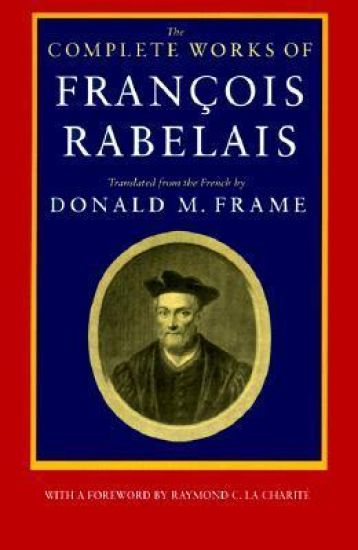
The Complete Works of Francois Rabelais

The Complete Works of Francois Rabelais

François Rabelais; Raymond C. La Charité

University of California Press
1999
pokkari
Rip-roaring and rib-tickling, Francois Rabelais' irreverent story of the giant Gargantua, his giant son Pantagruel, and their companion Panurge is a classic of the written word. This complete translation by Donald Frame, helpfully annotated for the nonspecialist, is a masterpiece in its own right, bringing to twentieth-century English all the exuberance and invention of the original sixteenth-century French. A final part containing all the rest of Rabelais' known writings, including his letters, supplements the five books traditionally known as Gargantua and Pantagruel. This great comic narrative, written in hugely popular installments over more than two decades, was unsparingly satirical of scholarly pomposity and the many abuses of religious, legal, and political power. The books were condemned at various times by the Sorbonne and narrowly escaped being banned. Behind Rabelais' obvious pleasure in lampooning effete erudition and the excesses of society is the humanist's genuine love of knowledge and belief in the basic goodness of human nature. The bawdy wit and uninhibited zest for life that characterize his unlikely trio of travelers have delighted readers and inspired other writers ever since the exploits of Gargantua and Pantagruel first appeared.

François Poulain de la Barre and the Invention of Modern Equality
In a tour de force of intellectual history, Siep Stuurman rediscovers the remarkable early Enlightenment figure François Poulain de la Barre. A dropout from theology studies at the Sorbonne, Poulain embraced the philosophy of Descartes, became convinced of the injustice and absurdity of the subjection of women, and assembled an entirely original social philosophy. His writings challenging male supremacy and advocating gender and racial equality are the most radically egalitarian texts to appear in Europe before the French Revolution.In exploring Poulain's breakthrough, Stuurman sheds new light on the origins of the Enlightenment, the history of feminism, the emergence of rational Christianity, and the social and political implications of Descartes's philosophy. This groundbreaking work, the first comprehensive study of Poulain, brings to life the men and women of the Radical Enlightenment, who pioneered ideas about equality that would shape humankind to this day. Impeccably researched, cogently argued, and lucidly written, this is truly a masterpiece of scholarship.
Francois Hotman

Francois Hotman

Donald R. Kelley

Princeton University Press
2015
pokkari
The lifetime of Francois Hotman (1524-1590) was one of the most tumultuous periods in European history. Donald R. Kelley shows how this protege of Calvin and agent of many of the great Protestant princes became involved in ecclesiastical politics, Huguenot diplomacy, and conspiracy. One of the first modern revolutionaries, Hotman rebelled not only against his family and its faith, but against the laws and eventually the government of his country. As an embittered exile lie produced a voluminous body of propaganda aimed at recovering a lost political and religious innocence on which to found a new community. At the same time he was one of the greatest and most versatile scholars of his age, achieving distinction as a jurist, teacher, classical scholar, dialectician, theologian, and historian. His Franco-Giallia and Anti-Tribonian have fascinated generations of political theorists, and his letters, reports, and anonymous works are of inestimable value to historians. Originally published in 1973. The Princeton Legacy Library uses the latest print-on-demand technology to again make available previously out-of-print books from the distinguished backlist of Princeton University Press. These editions preserve the original texts of these important books while presenting them in durable paperback and hardcover editions. The goal of the Princeton Legacy Library is to vastly increase access to the rich scholarly heritage found in the thousands of books published by Princeton University Press since its founding in 1905.
Francois Hotman

Francois Hotman

Donald R. Kelley

PRINCETON UNIVERSITY PRESS
2016
sidottu
The lifetime of Francois Hotman (1524-1590) was one of the most tumultuous periods in European history. Donald R. Kelley shows how this protege of Calvin and agent of many of the great Protestant princes became involved in ecclesiastical politics, Huguenot diplomacy, and conspiracy. One of the first modern revolutionaries, Hotman rebelled not only against his family and its faith, but against the laws and eventually the government of his country. As an embittered exile lie produced a voluminous body of propaganda aimed at recovering a lost political and religious innocence on which to found a new community. At the same time he was one of the greatest and most versatile scholars of his age, achieving distinction as a jurist, teacher, classical scholar, dialectician, theologian, and historian. His Franco-Giallia and Anti-Tribonian have fascinated generations of political theorists, and his letters, reports, and anonymous works are of inestimable value to historians. Originally published in 1973. The Princeton Legacy Library uses the latest print-on-demand technology to again make available previously out-of-print books from the distinguished backlist of Princeton University Press. These editions preserve the original texts of these important books while presenting them in durable paperback and hardcover editions. The goal of the Princeton Legacy Library is to vastly increase access to the rich scholarly heritage found in the thousands of books published by Princeton University Press since its founding in 1905.
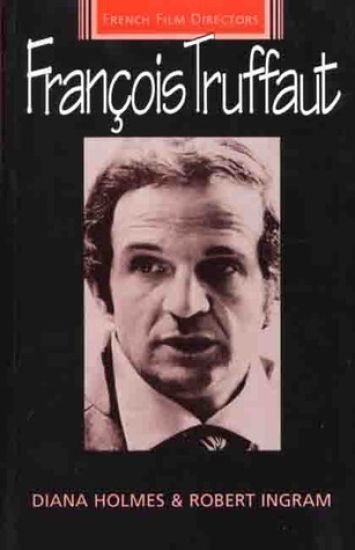
Francois Truffaut

Francois Truffaut

Diana Holmes; Robert Ingram

Manchester University Press
1998
nidottu
First in a series designed to situate and explain the films of French directors. A concise, accessible and original reading of Truffaut's films. A timely evaluation of the films of a popular director whose work features on most A-level French syllabuses and on the majority of University French Studies programmes both in the UK and the USA .
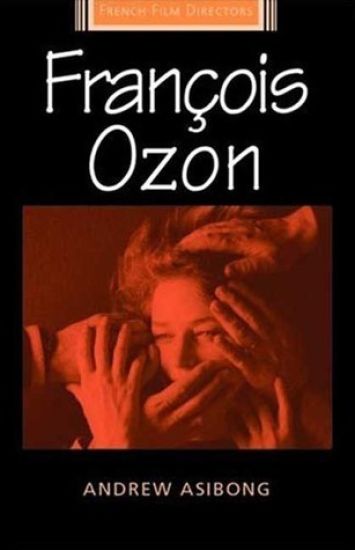
FrançOis Ozon

FrançOis Ozon

Andrew Asibong

Manchester University Press
2008
sidottu
This is the first full-length study of the films of François Ozon, director of such diverse films as 8 femmes, Swimming Pool, 5x2 and Les amants criminels. Andrew Asibong’s passionate and critical analysis focuses on the extent to which Ozon’s seemingly light touch never ceases to engage with the fundamentally weighty issue of existential transformation, a transformation that affects both his protagonists and his audiences.A central question emerges: what is at stake, cinematically, ethically and politically, in Ozon’s alternatively utopian and cynical flirtation with the construction and deconstruction of contemporary social relations.Revealing Ozon as a highly adept ‘fan’ of a whole range of thought, literature and cinema, Asibong places the precocious French auteur in an intellectual yet highly accessible critical framework, allowing Ozon’s importance for a thoroughly postmodern filmgoing generation to be given the attention it deserves.
Francois Mitterrand

Francois Mitterrand

David S. Bell

Polity Press
2005
sidottu
François Mitterrand was one of the giants of post-war French politics - a master tactician whose political career spanned more than four decades from wartime occupation to decolonization, the Cold War to European integration. As President, elected twice, he enjoyed an unprecedented fourteen years in office, bringing the left to power and demonstrating that it was a credible governing coalition over some ten years. When he died in 1998, Mitterrand left an enduring political legacy not only on the French domestic scene, but also in European and foreign affairs. In this pre-eminently accessible political biography, David Bell, offers a fascinating ‘behind-the-scenes’ analysis of the politics of François Mitterrand. Bringing together a wealth of material, Bell explores Mitterrand’s political leadership and the techniques he used in attaining and wielding political power. Mitterrand’s unusual journey from right to left, from the Third to the Fifth Republic is a story of ambition, manipulation and ideological fluidity, which provides a lens through which the entire political history of post-war France may be viewed. This engaging assessment of one man’s contribution to an era of French and European politics will appeal to anyone interested in contemporary political leadership, French politics, history and European affairs.
Francois Mitterrand

Francois Mitterrand

David S. Bell

Polity Press
2005
nidottu
François Mitterrand was one of the giants of post-war French politics - a master tactician whose political career spanned more than four decades from wartime occupation to decolonization, the Cold War to European integration. As President, elected twice, he enjoyed an unprecedented fourteen years in office, bringing the left to power and demonstrating that it was a credible governing coalition over some ten years. When he died in 1998, Mitterrand left an enduring political legacy not only on the French domestic scene, but also in European and foreign affairs. In this pre-eminently accessible political biography, David Bell, offers a fascinating ‘behind-the-scenes’ analysis of the politics of François Mitterrand. Bringing together a wealth of material, Bell explores Mitterrand’s political leadership and the techniques he used in attaining and wielding political power. Mitterrand’s unusual journey from right to left, from the Third to the Fifth Republic is a story of ambition, manipulation and ideological fluidity, which provides a lens through which the entire political history of post-war France may be viewed. This engaging assessment of one man’s contribution to an era of French and European politics will appeal to anyone interested in contemporary political leadership, French politics, history and European affairs.
Francois Laruelle's Philosophies of Difference

Francois Laruelle's Philosophies of Difference

Rocco Gangle

Edinburgh University Press
2013
sidottu
Everything you need to understand both Laruelle's critique of difference and his project of non-philosophy. Hailed as a key thinker by important philosophers such as Gilles Deleuze and Ray Brassier, the 2010 translation of Philosophies of Difference has made Francois Laruelle's work accessible to the English-speaking world in time to meet a rising tide of interest. This new guide takes students and academics through Philosophies of Difference, following the development of Laruelle's thought, unpicking the difficult structure, discussing the strengths and weaknesses of the text and evaluating the arguments for and against his ideas. Readers will find everything they need to understand both Laruelle's critique of Difference and his project of non-philosophy: one of the most intriguing avenues in contemporary thought. It critiques philosophical Difference as a whole and the 3 specific models treated by Laruelle: Nietzsche-Deleuze, Heidegger and Derrida. It situates Philosophies of Difference within the rest of Laruelle's work and contemporary European thought. It explains the key shift from philosophy to non-philosophy which makes Laruelle so intriguing to philosophers today. It shows how Laruelle impacted on the work of Deleuze, Badiou and the Speculative Realism movement.
Francois Laruelle's Philosophies of Difference

Francois Laruelle's Philosophies of Difference

Rocco Gangle

Edinburgh University Press
2013
nidottu
Everything you need to understand both Laruelle's critique of difference and his project of non-philosophy. Hailed as a key thinker by important philosophers such as Gilles Deleuze and Ray Brassier, the 2010 translation of Philosophies of Difference has made Francois Laruelle's work accessible to the English-speaking world in time to meet a rising tide of interest. This new guide takes students and academics through Philosophies of Difference, following the development of Laruelle's thought, unpicking the difficult structure, discussing the strengths and weaknesses of the text and evaluating the arguments for and against his ideas. Readers will find everything they need to understand both Laruelle's critique of Difference and his project of non-philosophy: one of the most intriguing avenues in contemporary thought. It critiques philosophical Difference as a whole and the 3 specific models treated by Laruelle: Nietzsche-Deleuze, Heidegger and Derrida. It situates Philosophies of Difference within the rest of Laruelle's work and contemporary European thought. It explains the key shift from philosophy to non-philosophy which makes Laruelle so intriguing to philosophers today. It shows how Laruelle impacted on the work of Deleuze, Badiou and the Speculative Realism movement.
Francois Laruelle's Principles of Non-Philosophy

Francois Laruelle's Principles of Non-Philosophy

Anthony Paul Smith

Edinburgh University Press
2016
sidottu
In Principles of Non-Philosophy, Laruelle develops the concepts and method of a more democratic form of thought where neither science nor philosophy is subjected to one another, but brought together in a more productive theoretical and practical relationship. While the potential importance of this project is clear, Laruelle remains famously difficult. Anthony Paul Smith provides an introduction and guide to the text that situates you amongst the figures and concepts Laruelle engaged with, provides a foothold for your own understanding and, more importantly, potential use of the project of non-philosophy.
Francois Laruelle's Principles of Non-Philosophy

Francois Laruelle's Principles of Non-Philosophy

Anthony Paul Smith

Edinburgh University Press
2016
nidottu
This is the insider's guide through the difficult terrain of Laruelle's most complete development of non philosophy. Francois Laruelle has been engaged in one of the most daring projects in contemporary philosophy, aiming to overturn the standard form of philosophy and renew its practice again. However, he grew dissatisfied with the purely critical form of his work as it seemed to simply subordinate philosophy to science and so simply reversed the old hierarchy. In Principles of Non Philosophy Laruelle develops the concepts and method of a more democratic form of thought where neither science nor philosophy is subjected to one another, but brought together in a more productive theoretical and practical relationship. While the potential importance of this project is clear, Laruelle remains famously difficult. Anthony Paul Smith provides an introduction and guide to the text that situates you amongst the figures and concepts Laruelle engaged with, provides a foothold for your own understanding and, more importantly, potential use of the project of non philosophy. It provides you with the essential the historical background to non philosophy, which Laruelle leaves out of his writing. It explains how non philosophy contributes to contemporary debates in European philosophy, especially in relation to the philosophy of science, theories of the subject and the role of language in philosophy. It shows how non philosophy can be a useful research paradigm for interdisciplinary or transdisciplinary work.
François Couperin and 'The Perfection of Music'

François Couperin and 'The Perfection of Music'

David Tunley

Ashgate Publishing Limited
2004
sidottu
François Couperin's contribution to the literature of baroque keyboard music has long been recognized. François Couperin and 'The Perfection of Music' updates and expands upon David Tunley's valuable 1982 BBC Music Guide to the composer, and examines the whole of Couperin’s output including the organ masses, motets and chamber music, in addition to the well-known works for harpsichord. Taking as its focal point Couperin's concept of the perfection of music through the union of the French and Italian styles, this book takes a more analytical approach to Couperin's work. Early chapters outline the main contrasting features of the two schools in the seventeenth- and early eighteenth-centuries, and it becomes clear that Couperin's expressive power owed much to his fusion of the polarities of the French classical tradition with that of the Italian baroque. The book features a number of appendices, including the prefaces to Couperin's work both in the original French and in English translation, and a glossary of dances of the French baroque.