Kirjojen hintavertailu. Mukana 11 244 527 kirjaa ja 12 kauppaa.

Kirjahaku

Etsi kirjoja tekijän nimen, kirjan nimen tai ISBN:n perusteella.

1000 tulosta hakusanalla French Hacking

French Moves

French Moves

McCarren Felicia

Oxford University Press Inc
2013
nidottu
For more than two decades, le hip hop has shown France's "other" face: danced by minorities associated with immigration and the suburbs, it has channeled rage against racism and unequal opportunity and offered a movement vocabulary for the expression of the multicultural difference that challenges the universalist discourse of the Republic. French hip-hoppers subscribe to black U.S. culture to articulate their own difference but their mouv' developed differently, championed by a Socialist cultural policy as part of the patrimoine culturel, instituted as a pedagogy and supported as an art of the banlieue. In the multicultural mix of "Arabic" North African, African and Asian forms circulating with classical and contemporary dance performance in France, if hip hop is positioned as a civic discourse, and hip hop dancer as legitimate employment, it is because beyond this political recuperation, it is a figural language in which dancers express themselves differently, figure themselves as something or someone else. French hip hop develops into concert dance not through the familiar model of a culture industry, but within a Republic of Culture; it nuances an "Anglo-Saxon" model of identity politics with a "francophone" post-colonial identity poetics and grants its dancers the statut civil of artists, technicians who develop and transmit body-based knowledge. This book— the first in English to introduce readers to the French mouv' —analyzes the choreographic development of hip hop into la danse urbaine, touring on national and international stages, as hip hoppeurs move beyond the banlieue, figuring new forms within the mobility brought by new media and global migration.

French Revolutions

French Revolutions

Tim Moore

Yellow Jersey Press
2012
pokkari
‘Bill Bryson on two wheels’ IndependentSelf-confessed loafer Tim Moore, seduced by the speed and glamour of the biggest annual sporting event in the world, sets out to cycle the Tour de France. All 3,630km of it.A few weeks before the actual Tour de France, British writer Tim Moore sets out to cycle the course and offers a laugh-out-loud funny and highly entertaining account of how the great ride would feel when embarked on by an amateur. Racing old men on butchers' bikes and being chased by cows, Moore soon resorts to standard race tactics - cheating and drugs - in a hilarious and moving tale of true adventure.
French Popular Lithographic Imagery, 1815-70

French Popular Lithographic Imagery, 1815-70

Beatrice Farwell

University of Chicago Press
1998
muu
This final volume of Beatrice Farwell's multivolume text-fiche catalogue discusses how lithography, the revolutionary printing technology of the 19th century, came to be devoted more to commerce than to art. Farwell studies the many commercial applications of the versatile lithographic medium, showing how lithography was transformed from artisanal craft to industrial mass production. In exploring the connection between art and commerce, Farwell seeks to enrich our understanding of the relations between so-called "high" and "low" art in 19th-century France. The fiche accompanying the text features art reproductions, courses of instruction in drawing, examples of different lithographic techniques, and a section on the development of colour lithography.
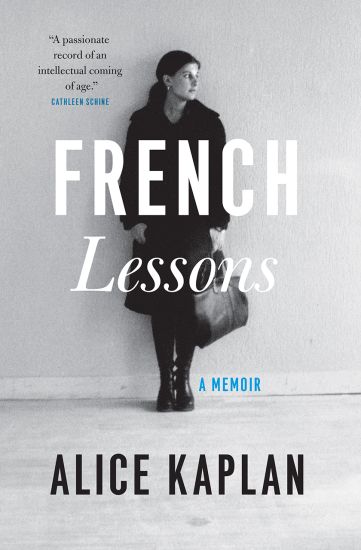
French Lessons

French Lessons

Alice Kaplan

University of Chicago Press
2018
pokkari
Brilliantly uniting the personal and the critical, French Lessons is a powerful autobiographical experiment. It tells the story of an American woman escaping into the French language and of a scholar and teacher coming to grips with her history of learning. Kaplan begins with a distinctly American quest for an imaginary France of the intelligence. But soon her infatuation with all things French comes up against the dark, unimagined recesses of French political and cultural life. The daughter of a Jewish lawyer who prosecuted Nazi war criminals at Nuremburg, Kaplan grew up in the 1960s in the Midwest. After her father's death when she was seven, French became her way of "leaving home" and finding herself in another language and culture. In spare, midwestern prose, by turns intimate and wry, Kaplan describes how, as a student in a Swiss boarding school and later in a junior year abroad in Bordeaux, she passionately sought the French "r," attentively honed her accent, and learned the idioms of her French lover. When, as a graduate student, her passion for French culture turned to the elegance and sophistication of its intellectual life, she found herself drawn to the language and style of the novelist Louis-Ferdinand Celine. At the same time she was repulsed by his anti-Semitism. At Yale in the late 70s, during the heyday of deconstruction she chose to transgress its apolitical purity and work on a subject "that made history impossible to ignore:" French fascist intellectuals. Kaplan's discussion of the "de Man affair"--the discovery that her brilliant and charismatic Yale professor had written compromising articles for the pro-Nazi Belgian press--and her personal account of the paradoxes of deconstruction are among the most compelling available on this subject. French Lessons belongs in the company of Sartre's Words and the memoirs of Nathalie Sarraute, Annie Ernaux, and Eva Hoffman. No book so engrossingly conveys both the excitement of learning and the moral dilemmas of the intellectual life.
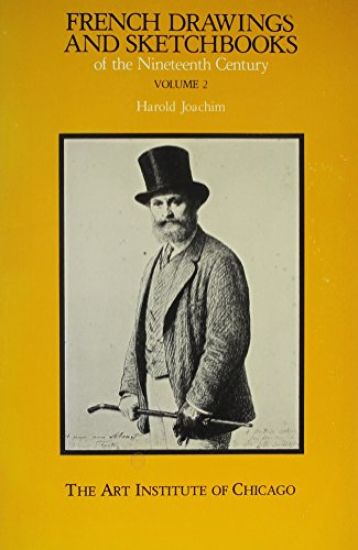
French Drawings and Sketchbooks of the Nineteenth Century

French Drawings and Sketchbooks of the Nineteenth Century

Art Institute of Chicago

University of Chicago Press
1979
muu
The first volume of" French Drawings and Sketchbooks of the Nineteenth Century," the third part in an ongoing series of text-fiche publications presenting the distinguished drawing collection of the Art Institute, contains works by artists born between 1770 and 1830. This period includes Ingres, who is represented by nine drawings, including five exemplary pencil portraits, and Gericault, whose extraordinary album of sixty-four sheets, reproduced here, represents two crucial phases of the artist's career. The text-fiche also contains drawings by Delacroix and Daumier, which range from casual study sheets to complete pictorial compositions, as well as important groups of drawings by Millet and Bresdin, a group of important, but as yet unknown, drawings by the great sculptor Carpeaux, and an impressive sheet by Courbt.
French Drawings and Sketchbooks of the Nineteenth Century

French Drawings and Sketchbooks of the Nineteenth Century

Art Institute of Chicago

University of Chicago Press
1979
muu
The first volume of" French Drawings and Sketchbooks of the Nineteenth Century," the third part in an ongoing series of text-fiche publications presenting the distinguished drawing collection of the Art Institute, contains works by artists born between 1770 and 1830. This period includes Ingres, who is represented by nine drawings, including five exemplary pencil portraits, and Gericault, whose extraordinary album of sixty-four sheets, reproduced here, represents two crucial phases of the artist's career. The text-fiche also contains drawings by Delacroix and Daumier, which range from casual study sheets to complete pictorial compositions, as well as important groups of drawings by Millet and Bresdin, a group of important, but as yet unknown, drawings by the great sculptor Carpeaux, and an impressive sheet by Courbt.
French Popular Lithographic Imagery, 1815-70

French Popular Lithographic Imagery, 1815-70

Beatrice Farwell

University of Chicago Press
1983
muu
The "French Popular Lithographic Imagery, 1815-1870"series reproduces in twelve volumes approximately 5000 nineteenth-century lithographs from the collections of the Bibliotheque nationale.Beatrice Farwell's multivolume text-fiche catalogis an essential resource to art historians and will appeal to all those interested in nineteenth-century France."
French Popular Lithographic Imagery, 1815-70

French Popular Lithographic Imagery, 1815-70

Beatrice Farwell

University of Chicago Press
1986
muu
The "French Popular Lithographic Imagery, 1815-1870"series reproduces in twelve volumes approximately 5000 nineteenth-century lithographs from the collections of the Bibliotheque nationale.Beatrice Farwell's multivolume text-fiche catalogis an essential resource to art historians and will appeal to all those interested in nineteenth-century France."
French Popular Lithographic Imagery, 1815-70

French Popular Lithographic Imagery, 1815-70

Beatrice Farwell

University of Chicago Press
1986
muu
The "French Popular Lithographic Imagery, 1815-1870"series reproduces in twelve volumes approximately 5000 nineteenth-century lithographs from the collections of the Bibliotheque nationale.Beatrice Farwell's multivolume text-fiche catalogis an essential resource to art historians and will appeal to all those interested in nineteenth-century France."
French Popular Lithographic Imagery, 1815-70

French Popular Lithographic Imagery, 1815-70

Beatrice Farwell

University of Chicago Press
1987
sidottu
The "French Popular Lithographic Imagery, 1815-1870"series reproduces in twelve volumes approximately 5000 nineteenth-century lithographs from the collections of the Bibliotheque nationale.Beatrice Farwell's multivolume text-fiche catalogis an essential resource to art historians and will appeal to all those interested in nineteenth-century France."
French Popular Lithographic Imagery, 1815-70

French Popular Lithographic Imagery, 1815-70

Beatrice Farwell

University of Chicago Press
1988
muu
The "French Popular Lithographic Imagery, 1815-1870"series reproduces in twelve volumes approximately 5000 nineteenth-century lithographs from the collections of the Bibliotheque nationale.Beatrice Farwell's multivolume text-fiche catalogis an essential resource to art historians and will appeal to all those interested in nineteenth-century France."
French Popular Lithographic Imagery, 1815-70

French Popular Lithographic Imagery, 1815-70

Beatrice Farwell

University of Chicago Press
1989
muu
The "French Popular Lithographic Imagery, 1815-1870"series reproduces in twelve volumes approximately 5000 nineteenth-century lithographs from the collections of the Bibliotheque nationale.Beatrice Farwell's multivolume text-fiche catalogis an essential resource to art historians and will appeal to all those interested in nineteenth-century France."
French Popular Lithographic Imagery, 1815-70

French Popular Lithographic Imagery, 1815-70

Beatrice Farwell

University of Chicago Press
1990
muu
The "French Popular Lithographic Imagery, 1815-1870"series reproduces in twelve volumes approximately 5000 nineteenth-century lithographs from the collections of the Bibliotheque nationale.Beatrice Farwell's multivolume text-fiche catalogis an essential resource to art historians and will appeal to all those interested in nineteenth-century France."
French Popular Lithographic Imagery, 1815-70

French Popular Lithographic Imagery, 1815-70

Beatrice Farwell

University of Chicago Press
1993
muu
The "French Popular Lithographic Imagery, 1815-1870"series reproduces in twelve volumes approximately 5000 nineteenth-century lithographs from the collections of the Bibliotheque nationale.Beatrice Farwell's multivolume text-fiche catalogis an essential resource to art historians and will appeal to all those interested in nineteenth-century France."
French Popular Lithographic Imagery, 1815-70

French Popular Lithographic Imagery, 1815-70

Beatrice Farwell

University of Chicago Press
1995
muu
This series will reproduce in 12 volumes approximately 5000 19th-century lithographs from the collections of the Bibliotheque Nationale. In this volume, Beatrice Farwell has collected more than 300 lithographs showing women as passive, erotic objects. Inexpensive and ephemeral, these "sujets gracieux" decorated the walls of brothels and were sold to a large bachelor market free from the strictures of family values. While numerous fantasies from this genre have been enshrined in modernist painting, Professor Farwell's effort to catalogue everyday representations demonstrates the large degree to which these powerful images circulated in popular culture.
French DNA

French DNA

Paul Rabinow

University of Chicago Press
1999
sidottu
Is there such a thing as "French DNA"? Can a country be said to have its own genetic material? When that country is France, as Paul Rabinow discovered, the answer to both questions is "yes". In a story that involves nations, commerce, patients and genetics, Rabinow seeks to uncover the tangled relations and conceptions that govern modern medical research. In 1993, an American biotechnology company, Millennium Pharmaceuticals, and France's genetics lab, the Centre d'Etude du Polymorphisme Humaine (CEPH), developed plans for a collaborative effort to discover diabetes genes. The results of this collaboration could have been medically significant and financially lucrative. The two companies had agreed that CEPH would supply Millennium with a store of genetic material collected from a large number of French families, and Millennium would supply funding and expertise in new technologies to accelerate the identification of the genes, terms to which the French government had agreed. But in early 1994, just as the collaboration was to begin, the French government called a halt to the deal. The government explained that the CEPH could not be permitted to give the Americans that most precious of substances - never before named in such a manner - French DNA.
French DNA

French DNA

Paul Rabinow

University of Chicago Press
2002
nidottu
In 1993, an American biotechnology company and a French genetics lab developed a collaborative research plan to search for diabetes genes. But just as the project was to begin, the French government called it to a halt, barring the laboratory from sharing something never previously thought of as a commodity unto itself: French DNA.
French Modern

French Modern

Paul Rabinow

University of Chicago Press
1995
nidottu
In this study of space and power and knowledge in France from the 1830s through the 1930s, Rabinow uses the tools of anthropology, philosophy, and cultural criticism to examine how social environment was perceived and described. Ranging from epidemiology to the layout of colonial cities, he shows how modernity was revealed in urban planning, architecture, health and welfare administration, and social legislation.
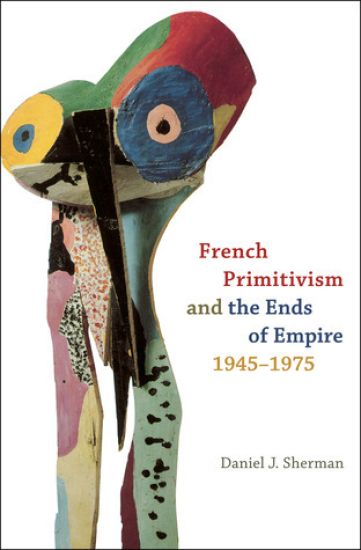
French Primitivism and the Ends of Empire, 1945-1975

French Primitivism and the Ends of Empire, 1945-1975

Daniel J. Sherman

University of Chicago Press
2011
sidottu
For over a century, the idea of primitivism has motivated artistic modernism. Focusing on the three decades after World War II, known in France as "les trentes glorieuses" despite the loss of most of the country's colonial empire, this probing and expansive book argues that primitivism played a key role in a French society marked by both economic growth and political turmoil. In a series of chapters that consider significant aspects of French culture - including the creation of new museums of French folklore and of African and Oceanic arts and the development of tourism against the backdrop of nuclear testing in French Polynesia - Daniel J. Sherman shows how primitivism, a collective fantasy born of the colonial encounter, proved adaptable to a post-colonial, inward-looking age of mass consumption. Following the likes of Claude Levi-Strauss, Andre Putman, and Jean Dubuffet through decorating magazines, museum galleries, and Tahiti's pristine lagoons, this interdisciplinary study provides a new perspective on primitivism as a cultural phenomenon and offers fresh insights into the eccentric edges of contemporary French history.
French Masculinities

French Masculinities

Christopher E. Forth; Bertrand Taithe

Palgrave Macmillan
2007
sidottu
This volumes offers a comprehensive and critical overview of ideas of how virilité has been imagined in France from the Eighteenth century. Incorporating insights of cultural and social historians, this collection approaches masculinities in a complex and interdisciplinary manner that will appeal to a wide range of readers.