

Kirjahaku
Etsi kirjoja tekijän nimen, kirjan nimen tai ISBN:n perusteella.
1000 tulosta hakusanalla Friedman Lester D.
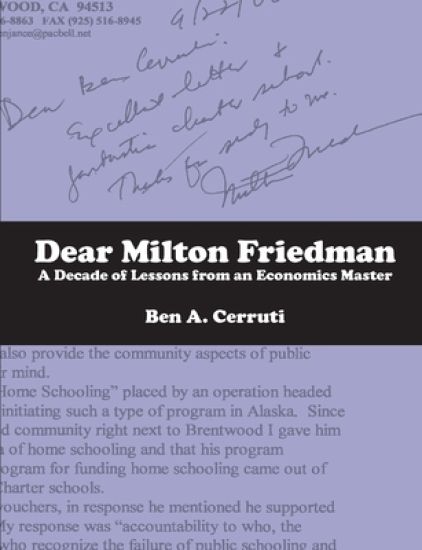
"[Milton Friedman's] relatively simple and rational approach to explaining and demonstrating how to best achieve economic prosperity was by utilizing the natural motivation of a free people functioning in a free market inspired me to learn more about economics...It is my hope that those reading the correspondence that follows will also be able to profit from the knowledge conveyed by this Nobel Laureate who was so deserving of the award." -From the Introduction

Est emocionado con su nueva y reluciente A7R V, pero la cantidad de funciones y opciones que ofrece le resulta abrumadora? No es el nico: gran parte de las funciones m s tiles de la c mara ni siquiera se encuentran en los men s En este libro de... 800 p ginas Gary Friedman explica todas las funciones de la c mara y muestra el mejor modo de usarlas en distintas situaciones. Tambi n aprender * Los ajustes personales que usa Gary con la c mara, y en qu circunstancias los cambia. * M s de 900 consejos y trucos que le ayudar n a sacar el m ximo partido de cada funci n. * Todos los ajustes y funciones de v deo, y las compensaciones entre las distintas curvas gamma * Funciones ocultas que s lo se pueden obtener asign ndolas antes a los botones * Atajos para navegar r pidamente por el nuevo sistema de men s * El poco conocido punto ciego del AF por detecci n de fase y c mo evitarlo * Una gu a completa de adaptadores de terceros para objetivos antiguos * C mo usar la funci n de desplazamiento de p xeles para obtener im genes de 240 MB sin tr pode * Instrucciones paso a paso para cargar im genes y v deos sobre el terreno * Y mucho m s. Gary lleva m s de 15 a os escribiendo los libros m s vendidos sobre c maras Sony... Consiga su ejemplar hoy mismo y saque el m ximo partido a esta incre ble obra de ingenier a.

Las gu as de Gary Friedman gozan de una merecida fama, por ser a la vez exhaustivas y f ciles de comprender. Con esta gu a de 730 p ginas podr desmitificar los men s y utilizar su nueva c mara con mucha m s confianza. Ya tienes la mejor c mara del mundo; consigue el mejor libro del mundo para sacarle el m ximo partido

Reality Ignored: How Milton Friedman and Chicago Economics Undermined American Institutions and Endangered the Global Economy
Kenneth M. Davidson
Createspace Independent Publishing Platform
2011
nidottu
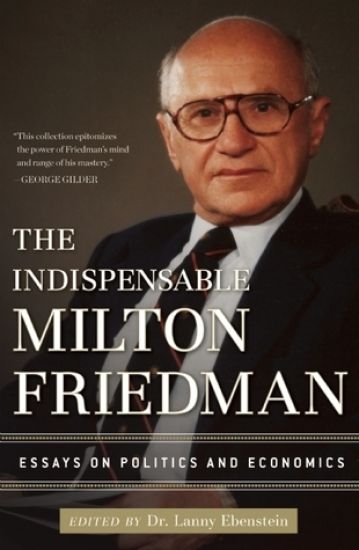
The Indispensable Milton Friedman
Regnery Publishing Inc
2012
sidottu
Milton Friedman is one of the most famous economists in history. His writings and theories on everything from capitalism and freedom to deregulation and welfare have inspired movements, influenced government policies, and changed the course of America's economic history. Now, acclaimed Friedman biographer Dr. Lanny Ebenstein brings together twenty of Friedman's greatest essays in his new book, The Indispensable Milton Friedman: Essays on Politics and Economics. The only collection of Friedman's writings to span his entire career, The Indispensable Milton Friedman: Essays on Politics and Economics features some of Friedman's never-before-republished writings as well as the best and most timeless of his works. These exceptional essays not only illuminate the progression of Friedman's thought, but explain how America might overcome some of its most difficult challenges. Broken into two sections, politics and economics, The Indispensable Milton Friedman shows how we can ultimately turn America around, and is more necessary than ever during this critical election year and time of economic uncertainty.
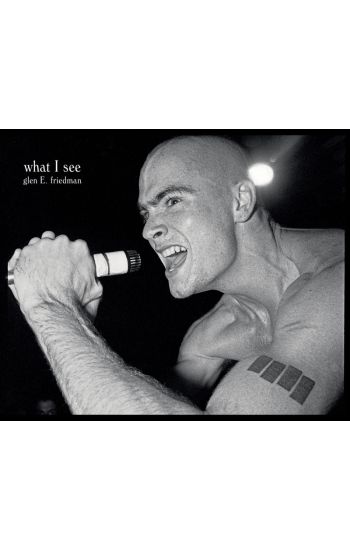
What I See: The Black Flag Photographs Of Glen E. Friedman
Glen E Friedman; Chuck Dukowski
AKASHIC BOOKS,U.S.
2022
sidottu
A stunning collection of the most iconic photographs ever taken of Black Flag, along with never-before-seen shots and a foreword by Chuck Dukowski. 256 jam-packed pages, over 300 photographs, and over 70% of the photos have never been seen.What I See: The Black Flag Photographs of Glen E. Friedman is an incredible compilation of all of Friedman's most iconic and recognizable images (from 1980 to 1983), of this seminal American punk band, as well as over one hundred never-before-seen photos made during those phenomenal peak years in the group's history.The book includes a foreword by Chuck Dukowski, a cofounder and bass player of Black Flag. Friedman's own introduction to the book takes readers through his journey with the group, from the very first time he saw them play, to his perspectives on the music of the era, to the how, why, and what Black Flag were doing at the time. His words provide additional context to the imagery, explaining what drove him to create his art alongside the band.From the streets around Black Flag's single-room home base/office, rehearsing for their first album, handing out flyers, wheat-pasting posters, driving for hours to a show and returning the same night, house parties, clubs, to the big stage and the beach, Glen E. Friedman was there with his heart, soul, and most importantly his camera. In What I See, he shares with us and inspires us with these images that were made over an incredibly volatile three-year time span.
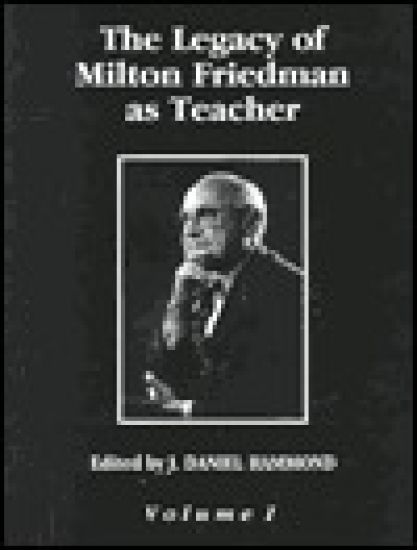
The Legacy of Milton Friedman as Teacher
Edward Elgar Publishing Ltd
1999
sidottu
Milton Friedman is beyond question the most famous living economist of the 20th century. He is closely associated with the doctrine of 'monetarism' which has been adopted by many governments around the world.This important two volume collection presents a major study of Milton Friedman's outstanding contribution to economics as a teacher at the University of Chicago. It shows how Friedman's distinctive ideas about money, markets and economic theory, communicated in the classroom and in thesis committees, influenced an entire generation of economists. It also reveals his influence on graduate-education practices at the University of Chicago and elsewhere.
An Analysis of Milton Friedman's The Role of Monetary Policy
Nick Broten; John Collins
Macat International Limited
2017
nidottu
Milton Friedman was one of the most influential economists of all time – and his ideas had a huge impact on the economic policies of governments across the world. A key theorist of capitalism and its relationship to democratic freedoms, Friedman remains one of the most cited authorities in both academic economics and government economic policy. His work remains striking not just for its brilliant grasp of economic laws and realities, but also for its consistent application of high-level evaluation and reasoning skills to produce arguments that can convince experts and laypeople alike. Friedman’s 1968 essay ‘The Role of Monetary Policy’ is a key example of how Friedman’s critical thinking skills helped to cement his influence and reputation. The paper addressed the question of how a government’s monetary policy affects the economy – from employment levels to inflation and so on. At its heart lies an evaluation and critique of the most widely accepted conception of monetary policy at the time – the ‘Phillips Curve’ – which argued that increased inflation leads naturally to increased employment. Systematically noting the flaws and weaknesses of the Phillips Curve theory, Friedman showed why this is not, in fact, the case. He then drew up a systematic alternative argument for what governmental monetary policy could and should aim to do. Though economists now consider Friedman’s ideas to have considerable limitations, ‘The Role of Monetary Policy’ remains a masterclass in evaluating and countering faulty arguments.
An Analysis of Milton Friedman's Capitalism and Freedom
Sulaiman Hakemy
Macat International Limited
2017
nidottu
Milton Friedman was arguably the single most influential economist of the 20th-century. His influence, particularly on conservative politics in America and Great Britain, substantially helped – as both supporters and critics agree – to shape the global economy as it is today. Capitalism and Freedom (1962) is a passionate but carefully reasoned summary of Friedman’s philosophy of political and economic freedom, and it has become perhaps his most directly influential work. Friedman’s argument focuses on the place of economic liberalism in society: in his view, free markets and personal economic freedom are absolutely necessary for true political freedom to exist.Freedom, for Friedman, is the ultimate good in a society – the marker and aim of true civilisation. And, crucially, he argues, real freedom is rarely aided by government. For Friedman, indeed, “the great advances of civilization, whether in architecture or painting, in science or literature, in industry or agriculture, have never come from centralized government”. Instead, he argues, they have always been produced by “minority views” flourishing in a social climate permitting variety and diversity.” In successive chapters, Friedman develops a well-structured line of reasoning emerging from this stance – leading him to some surprising conclusions that remain persuasive and influential more than 60 years on.
An Analysis of Milton Friedman's The Role of Monetary Policy
Nick Broten; John Collins
Macat International Limited
2017
sidottu
Milton Friedman was one of the most influential economists of all time – and his ideas had a huge impact on the economic policies of governments across the world. A key theorist of capitalism and its relationship to democratic freedoms, Friedman remains one of the most cited authorities in both academic economics and government economic policy. His work remains striking not just for its brilliant grasp of economic laws and realities, but also for its consistent application of high-level evaluation and reasoning skills to produce arguments that can convince experts and laypeople alike. Friedman’s 1968 essay ‘The Role of Monetary Policy’ is a key example of how Friedman’s critical thinking skills helped to cement his influence and reputation. The paper addressed the question of how a government’s monetary policy affects the economy – from employment levels to inflation and so on. At its heart lies an evaluation and critique of the most widely accepted conception of monetary policy at the time – the ‘Phillips Curve’ – which argued that increased inflation leads naturally to increased employment. Systematically noting the flaws and weaknesses of the Phillips Curve theory, Friedman showed why this is not, in fact, the case. He then drew up a systematic alternative argument for what governmental monetary policy could and should aim to do. Though economists now consider Friedman’s ideas to have considerable limitations, ‘The Role of Monetary Policy’ remains a masterclass in evaluating and countering faulty arguments.
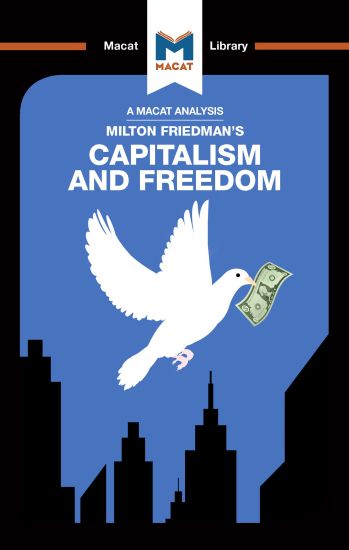
An Analysis of Milton Friedman's Capitalism and Freedom
Sulaiman Hakemy
Macat International Limited
2017
sidottu
Milton Friedman was arguably the single most influential economist of the 20th-century. His influence, particularly on conservative politics in America and Great Britain, substantially helped – as both supporters and critics agree – to shape the global economy as it is today. Capitalism and Freedom (1962) is a passionate but carefully reasoned summary of Friedman’s philosophy of political and economic freedom, and it has become perhaps his most directly influential work. Friedman’s argument focuses on the place of economic liberalism in society: in his view, free markets and personal economic freedom are absolutely necessary for true political freedom to exist.Freedom, for Friedman, is the ultimate good in a society – the marker and aim of true civilisation. And, crucially, he argues, real freedom is rarely aided by government. For Friedman, indeed, “the great advances of civilization, whether in architecture or painting, in science or literature, in industry or agriculture, have never come from centralized government”. Instead, he argues, they have always been produced by “minority views” flourishing in a social climate permitting variety and diversity.” In successive chapters, Friedman develops a well-structured line of reasoning emerging from this stance – leading him to some surprising conclusions that remain persuasive and influential more than 60 years on.

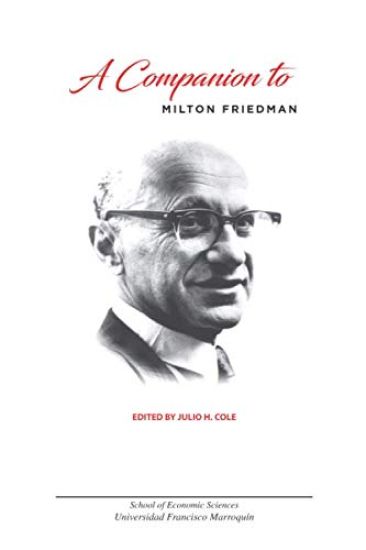
A Companion to Milton Friedman
Peter J. Boettke (Et Al); Cole (Editor and Author of the Introduct
Universidad Francisco Marroquin
2019
nidottu
This is the second volume in the series of "Companions to Economics" that the UFM School of Economics has sponsored and will continue to sponsor over the next few years. Since the first volume in this series was devoted to Adam Smith, it is quite fitting that this second volume should be devoted to Milton Friedman, who was unquestionably Smith's most influential 20th century disciple.Much of his fame and renown derived from his role as a public intellectual, an aspect of his work that was reflected largely in popular books such as Capitalism and Freedom (1962) and the hugely successful Free to Choose (1980), and he was certainly an ardent and effective advocate of the free-market economy. But he was also much more than that. He was a technical economist of the first rank, and he made a great number of important contributions to economic theory, to economic history, and to the analysis of economic policy. This other aspect of his professional career was recognized by the award of the Nobel Memorial Prize in Economic Sciences in 1976.The chapters collected in this Companion reflect the wide range of interests that Milton Friedman was concerned with during his career, and they will not only provide guidance to non-specialist readers coming to Friedman for the first time, but will also interest more advanced scholars as well.- Julio H. Cole, from the Introduction

Bruce Jay Friedman
VDM Publishing House
2010
nidottu
Observera att förlaget som ger ut denna produkt baserar innehållet i sina produkter på fria källor som Wikipedia. Boken är med stor sannolikhet endast ett utdrag ur dessa informationskällor, alltså inte en vanlig bok i den bemärkelsen.

Michael Jan Friedman
OmniScriptum
2026
pokkari
This work deals with the economic systems of the two monetary revolutionaries of this century. They reacted against orthodoxy in different ways, with Friedman redirecting and reinforcing Keynes' major contributions. Friedman used the system of testing one hypothesis against another rather than using a naive model. He provided analytical, political, and ideological positions that yield an all-encompassing analytical system.
A Study Guide for Bruce Jay Friedman's "Brazzaville Teen-ager"
Cengage Learning Gale
Gale, Study Guides
2017
pokkari

A Place to Belong: Debbie Friedman Sings Her Way Home
Deborah Lakritz
Behrman House Inc.,U.S.
2022
sidottu
How Debbie Friedman became one of Judaism’s best-known singer/songwriters.