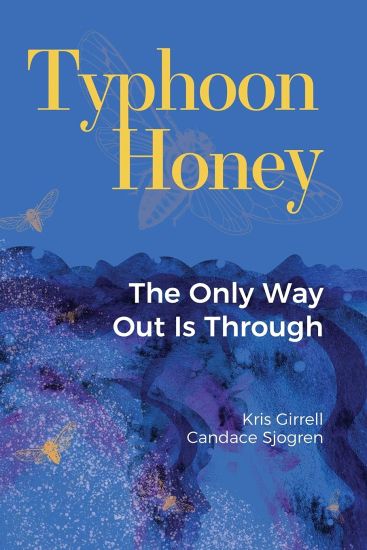
Starting with a foundation of understanding how we, as physical and psychological beings actually function, Typhoon Honey lays out a path toward becoming the sole and undisputed author of one's life - called "being the source." The authors explain, with ample case examples and exercises, how to - release limiting self-concepts;- understand what reality is and isn't; and - become totally and powerfully accountable in determining your future.A tour de force in transformational technologies, pulling back the curtain on how those techniques actually work, Typhoon Honey is a must read for anyone who desires to step up to a new level of life and living.
Learning to Work Cooperatively and Respectfully with Others Democratic life skills are skills that enable all of us—children and adults alike—to be caring, thoughtful members of families, schools, communities, and societies. But these emotional and social skills don’t just happen. Teachers and families support and nudge young children toward them, using guidance techniques that calm and teach. Completely updated and revised, the second edition of this classic resource provides relatable anecdotes and practical strategies for teachers to understand Why building secure relationships with children and families is so important—and eight communication practices to build them How viewing misbehavior as mistaken behavior allows you to focus on helping a child learn better ways to meet their needs When and how to use specific guidance practices to promote children’s healthy personal development and social cooperation How an encouraging learning community helps everyone move toward achieving their potential Whether you’re a veteran teacher or just embarking on your teaching journey, you’ll find what you need in this book to provide young children with a solid foundation for their—and society’s—future.
Learning to Feel, Second Edition, teaches readers how to gain choice and authority over their emotional states. Feelings and emotions are reactions to the deeply held beliefs and experiences of our lives. In order to become fully emotionally intelligent - that is, to be able to know what is yours, what comes from the others, and how best to respond to those others - we must connect first to those core experiences and often re-interpret the meaning they have held for us. Learning to Feel is such a journey, intended to be a set of trail blazes for anyone who wishes to up their game in the realm of emotional intelligence. (Edition 1 was selected for the Independent Press Distinguished Favorite Award and a Literary Titan gold award.)
Living in Fear is a reminder of the threat to democracy posed by the current rise in extreme right-wing politicians and political parties in the Western World. July 22, 2022, the Spanish Parliament approved a new Historic Memory law that, among other measures, declared Franco's government illegal, nullified the rulings of the dictatorship's courts and made the government responsible for recovering the bodies of the hundreds of thousands of people killed during the civil war and the subsequent dictatorship.85 years after Franco's death, it appeared that justice would finally come to all Spaniards, without revenge or reprisals. It might not be so, as the recent July 24 2023 national elections saw an active rise in the number of extreme right-wing members of Parliament. A wave of great unrest and fear is again sweeping the country.Living in Fear, the single volume updated edition of Damnatio Memoriae, is directed at drawing readers' attention to the Francoist genocide of Spain, the pre-WWII human catastrophe that served as a testing ground for Hitler's forthcoming holocaust.
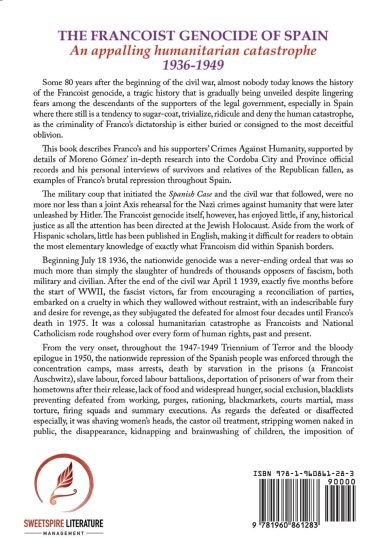
The Spanish Civil War that began 17 July 1936 with Franco's military coup, did not end with the defeat of the supporters of the legal government 1 April 1939. From the moment the first shot was fired, the military insurgents embarked on a wave of massacre, torture and repression against half of the Spanish population that was terrorized, helpless for 40 years, until Franco's death in 1975. Aside from a brief lifting of the forced lid of silence in the 1950s, the rest of the world remains ignorant of the genocide that, closely modelled on Hitler's methods in Nazi Germany, led to the post-war slaughter of tens of thousands by firing squad or extra-legal methods buried, unidentified, by the hundreds in mass graves, many of which are only now being uncovered. Damnatio Memoriae, supported by dozens of eye-witness interviews, addresses this dark period in great detail as it sheds light on the repression that destroyed the lives of hundreds of thousands of dissenting men and women imprisoned for many years in more than 180 concentration camps, countless prisons and slave labour workers battalions where many died from torture, starvation and disease. Today, the surviving relatives of this half of the Spanish population, especially children who were taken from their parents to be re-educated, are attempting to identify the remains of the lost members of their families, give them some dignity in death, and obtain some closure to their pain.
The Spanish Civil War that began July 1936 with Franco's military coup, didnot end with the defeat of the supporters of the legal government April 1939. From the moment the first shot was fired, the military insurgents embarked on awave of massacre, torture and repression against half of the Spanish population, until Franco's death in 1975
The Spanish Civil War that began 17 July 1936 with Franco's military coup, did not end with the defeat of the supporters of the legal government 1 April1939.From the moment the first shot was fired, the military insurgents embarked on a wave of massacre, torture and repression against half of the Spanish population that was terrorized, helpless for 40 years, until Franco's death in 1975. Aside from a brief lifting of the forced lid of silence in the 1950s, the rest of the world remains ignorant of the genocide that, closely modelled on Hitler's methods in Nazi Germany, led to the post-war slaughter of tens of thousands by firing squad or extra-legal methods buried, unidentified, by the hundreds in mass graves, many of which are only now being uncovered.Damnatio Memoriae, supported by dozens of eye-witness interviews, addresses this dark period in great detail as it sheds light on the repression that destroyed the lives of hundreds of thousands of dissenting men and women imprisoned for many years in more than 180 concentration camps, countless prisons and slave labour workers battalions where many died from torture, starvation and disease.Today, the surviving relatives of this half of the Spanish population, especially children who were taken from their parents to be re-educated, are attempting to identify the remains of the lost members of their families, give them some dignity in death, and obtain some closure to their pain.
The Spanish Civil War that began July 1936 with Franco's military coup, did not end with the defeat of the supporters of the legal government April 1939. When the first shot was fired, the military insurgents embarked on a wave of massacre, torture and repression against half of the Spanish population that was terrorized, helpless for 40 yearsThe Spanish Civil War that began 17 July 1936 with Franco's military coup, did not end with the defeat of the supporters of the legal government 1 April 1939. From the moment the first shot was fired, the military insurgents embarked on a wave of massacre, torture and repression against half of the Spanish population that was terrorized, helpless for 40 years, until Franco's death in 1975. Aside from a brief lifting of the forced lid of silence in the 1950s, the rest of the world remains ignorant of the genocide that, closely modelled on Hitler's methods in Nazi Germany, led to the post-war slaughter of tens of thousands by firing squad or extra-legal methods buried, unidentified, by the hundreds in mass graves, many of which are only now being uncovered.Damnatio Memoriae, supported by dozens of eye-witness interviews, addresses this dark period in great detail as it sheds light on the repression that destroyed the lives of hundreds of thousands of dissenting men and women imprisoned for many years in more than 180 concentration camps, countless prisons and slave labour workers battalions where many died from torture, starvation and disease. Today, the surviving relatives of this half of the Spanish population, especially children who were taken from their parents to be re-educated, are attempting to identify the remains of the lost members of their families, give them some dignity in death, and obtain some closure to their pain.
This is a silly story about a pair of doves and the problems that arise while they are building their nest and teaching their little ones how to fly. It includes a bit of fantasy along with real life events that the author observed as they happened right outside her window.
This new study provides fresh readings of Thomas Hardy’s work and illuminates the social and cultural history of dress in the nineteenth century. The book argues that Hardy had a more detailed and acute understanding of the importance of dress in forming and regulating personal identity and social relations than any other writer of his time. Structured thematically, it takes into account both nineteenth-century and modern theoretical approaches to the significance of what we wear. The author gives an extended analysis of individual works by Hardy, showing, for example, that A Pair of Blue Eyes is central to the study of the function of clothing in the expression and perception of sexuality. The Hand of Ethelberta, The Mayor of Casterbridge, Tess of the d’Urbervilles and The Woodlanders are examined in order to show the extent to which dress obscures or reveals the nature of the self. Hardy’s other novels, as well as the short stories and poems, are used to confirm the centrality of dress and clothing in Hardy’s work. The book also raises issues such as the gendering of dress, cross-dressing, work clothes and working with clothes, dress and the environment, the symbolism of colour in clothes, and the dress conventions relating to death.