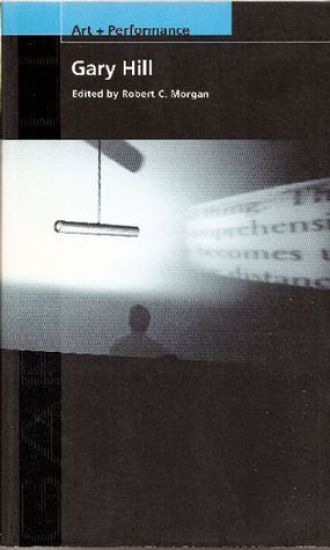
A major work of scholarship on the internationally celebrated video artist Gary Hill, this volume includes many of the important critical essays on his work over more than two decades, along with interviews with Hill, his own writings on video, and two dozen illustrations.
In Gary, Taylor Mac's singular worldview intersects with William Shakespeare's first tragedy, Titus Andronicus. Set during the fall of the Roman Empire just after the blood-soaked conclusion of Shakespeare's play, the years of bloody battles are over, the country has been stolen by madmen, and there are casualties everywhere. And two very lowly servants--Gary and Janice--are charged with cleaning up the bodies. It's the year 400--but it feels like the end of the world.
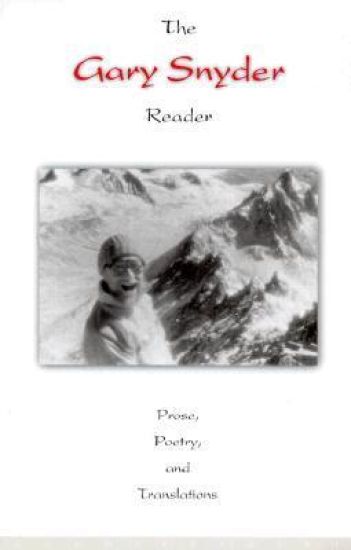
Gary Snyder has been a major cultural force in America for five decades-prize-winning poet, environmental activist, Zen Buddhist, and reluctant counterculture guru. Having expanded far beyond the Beat poems that first brought his work into the public eye, Snyder has produced a wide-ranging body of work that encompasses his fluency in Eastern literature and culture, his commitment to the environment, and his concepts of humanity's place in the cosmos. The Gary Snyder Reader showcases the panoramic range of his literary vision in a single-volume survey that will appeal to students and general readers alike.
One of the central relationships in the Beat scene was the long-lasting friendship of Allen Ginsberg and Gary Snyder. Ginsberg introduced Snyder to the East Coast Beat writers, including Jack Kerouac, while Snyder himself became the model for the serious poet that Ginsberg so wanted to become. Snyder encouraged Ginsberg to explore the beauty of the West Coast and, even more lastingly, introduced Ginsberg to Buddhism, the subject of so many long letter exchanges between them.Beginning in 1956 and continuing through 1995, the two men exchanged more than 850 letters. Bill Morgan, Ginsberg's biographer and an important editor of his papers, has selected the most significant correspondence from this long friendship. The letters themselves paint the biographical and poetic portraits of two of America's most important  and most fascinating  poets.
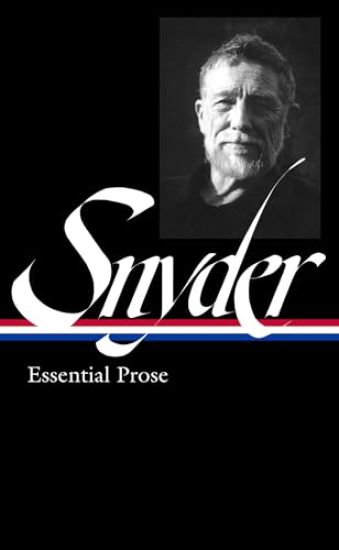
In one volume, the indispensable prose of our "poet laureate of deep ecology" Here is Gary Snyder's own selection of his pathbreaking environmental essays, Buddhist journals, poetic notebooks, and more, including previously uncollected material Gathered for the first time in a single volume and completing the definitive Library of America edition of his works, here is the essential prose of our "poet laureate of deep ecology" philosophical essays, travel journals, poetic notebooks, reflections on Buddhism, environmental polemics, memoirs, speeches, interviews, letters, and other writings spanning the entire arc of Snyder's lauded, seventy-year career. All of Snyder's published prose collections are represented, omitting only items he feels are repetitious or merely occasional, followed by a selection of from his private journals. The volume includes: Earth House Hold describing his life as a fire lookout in Washington State in the early 1950s, and his experiences as an initiate in a Kyoto monastery"Poetry and the Primitive," a kind of "ecological survival technique""Buddhism and the Coming Revolution," which imagines the "nation-shaking implications" of spiritual discoveryHe Who Hunted Birds in His Father's Village, charting Snyder's deep engagements with Native American mythologyPassage Through India about a six-month pilgrimage with his wife and the poet Allen Ginsberg, culminating in a meeting with the Dalai Lama. The Practice of the Wild a classic of American environmental writing in the tradition of Thoreau, Aldo Leopold, and Annie DillardThe essays in A Place in Space and Back on the Fire exploring bioregionalism, forestry practices, sustainability, and the ecosystems of the Sierra Nevada, where Snyder has lived since 1970The Great Clod a mediation on the intersections of nature and culture in Asian history and literature. It's all here, the profound reflections and inspiring meditations of our greatest living guide to the nature of meaning and the meaning of nature.
Long overdue, this first comprehensive survey spans three decades of Simmons’ richly layered, socially engaged art Covering 30 years of sculptures, paintings, works on paper, large-scale wall drawings, installations and site-specific works, this book presents the art of Gary Simmons, one of the most respected artists of his generation. Since the late 1980s, Simmons has played a key role in situating questions of race, class and gender identity within art discourse. He is notable for combining pop-cultural imagery with conceptual artistic strategies to expose and analyze histories of racism inscribed in US visual culture. Over the course of his career, Simmons has revealed traces of these histories in the fields of sports, cinema, literature, music, and architecture and urbanism while drawing on popular genres such as hip-hop, horror and science fiction. His approach is cool and unflinching in its interrogation of historical and cultural narratives, yet the results consistently deliver a strong emotional charge. This publication offers readers the opportunity to gain a holistic understanding of the complex, profoundly moving work of this influential artist. Gary Simmons was born in 1964 in New York City, where he was raised. Today he lives and works in Los Angeles. He received a BFA in 1988 from the School of Visual Arts, New York, and an MFA in 1990 from the California Institute of the Arts, Valencia; he also studied at Hunter College, New York. He has received numerous awards, including the Studio Museum in Harlem Joyce Alexander Wein Prize (2013), the George Gund Foundation USA Gund Fellowship (2007) and the National Endowment for the Arts Interarts Grant (1990).
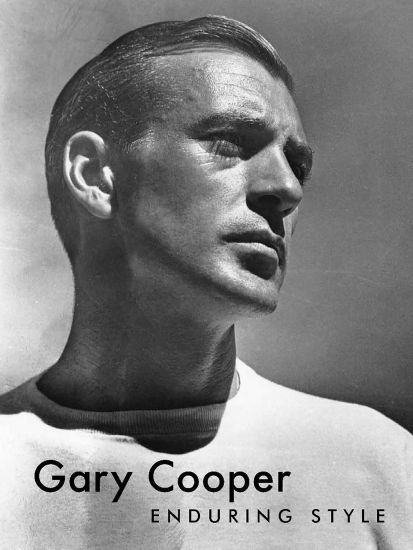
Few things are truly timeless. Martinis, The Beatles, bespoke tweed...and, of course, Gary Cooper. Perhaps the nonpareil of Golden Age Hollywood's gentlemen, Gary Cooper was a beloved icon of manliness and style in his prime--and has aged like fine wine. He is the definition of classic, his style reminiscent of a simpler time in life and fashion. These intimate family scrapbook photos from his personal collection, curated by his daughter, show us Gary Cooper was every inch and stitch the elegant paragon off-screen as on. Dressed up like a million-dollar trouper Tryin' hard to look like Gary Cooper Super duper --"Puttin' on the Ritz," Irving Berlin (revised lyrics, 1946) 1940s heartthrob Gary Cooper never goes out of style (just ask your mother or your grandmother). He's got that straightforward, honest, effortless handsomeness. No matter the costume he donned, he owned it. The camera loved him, and so did the box office. This collection of images, taken from his personal scrapbook, proves that the Gary Cooper we knew and loved on the silver screen was as much a style icon off the red carpet as he was on. He perfected his own debonair style by combining a perfectly tailored European wardrobe with all-American casual sportswear to produce the first--and still finest--example of elegant, international, masculine style of the "American Everyman" ideal. From the most laid-back activewear to the most ceremonious of coat and tails, Cooper carried himself with uncontrived conviction. An inspiration to the likes of Ralph Lauren, Cooper was casual and put together, rugged and classic, and altogether timeless. And when you look at these photos, you can't even hate him for it, because what shines through more than any amount of star power is his unequivocal authenticity. Gary Cooper: Enduring Style gives readers a look at a larger-than-life leading man and the real life he led. The photos you'll see were taken primarily by his wife, Rocky, and include snapshots of his home life, his easy style, and time spent with his friends (which, of course, include artist archetypes Cary Grant and Ernest Hemingway, among others). Regardless of place or present company, Cooper had the model outfit for every occasion, embodying a type of refined masculinity rarely seen--though always in high demand--to this day.
Gary After Dark is a collection of short stories from my life in the 1970's to the 1980's. It begins with the innocence of childhood, through to the hard, raw realities of life.Gary After Dark tells how a misunderstood, fragile youth can easily fall off the rails, what was wrong, seemed right at the time. I rolled along from one occurrence to another and into some pretty rough places, knowing I shouldn't be there, but yet I stayed because I felt I had no place to go.I owned the mistakes I made and dealt with the fallout that crushed my spirit to the point that I felt I had no place in this life. During my journey I gumped my way through life until the baggage of emotional and physical scars that I had been carrying with me could only be healed by the awakening of love. It took my life in a totally new direction and opened my wretched soul to a Grace that saved me from myself.
Discover Math Matters With 15 million books sold worldwide, this award-winning series of easy-to-read books will help young readers ages 5-8 approach math with enthusiasm. Great for fans of MathStart or Step into Reading Math. Gary wants a new soccer ball but doesn't have enough money. With the help of his mom and her garden, he hatches a business idea to sell her flowers in the neighborhood. The catch? He has to help his mom buy supplies and pay for her labor of growing the flowers. Dollars and cents add up quickly as Gary's mom shows him how to calculate his business costs As Gary quickly learns, counting change becomes a challenge when one wrong decimal can change $1 into $10 (Math topic: decimals) With engaging stories that connect math to kids' everyday lives, each book in the Teachers' Choice Award-winning Math Matters series focuses on a single concept and reinforces math vocabulary and skills. Bonus activities in the back of each book feature math and reading comprehension questions, and even more free activities online add to the fun