Kirjahaku
Etsi kirjoja tekijän nimen, kirjan nimen tai ISBN:n perusteella.
1000 tulosta hakusanalla Geoffrey Poitras
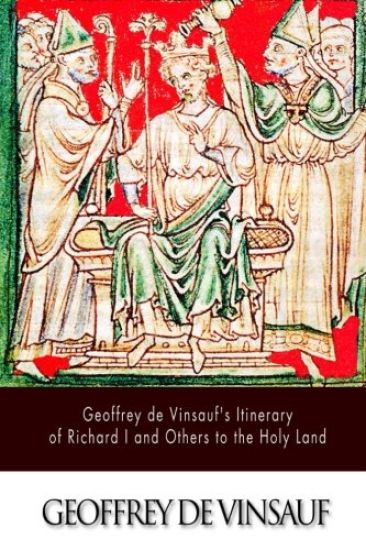
Geoffrey de Vinsauf's Itinerary of Richard I and Others to the Holy Land
Geoffrey De Vinsauf
Createspace Independent Publishing Platform
2014
nidottu
The Complete Works of Geoffrey Chaucer Volume I
Geoffrey Chaucer
Createspace Independent Publishing Platform
2015
nidottu
Geoffrey's Queen: A Mobious' Quest Novel
Gwendolyn Druyor
Createspace Independent Publishing Platform
2015
nidottu
The Story of a Boy, a Girl, a Quest, and a Dragon Geoffrey's Queen is a non-stop adventure that will grab your heart and demand your full attention. When an American woman finds herself in a world where dragons once roamed the skies, she teams up with the one man she knows. A man who doesn't know her. When the orphaned prince of Kaveg finds himself in a world with one moon and no magic, he teams up with a woman he knows. But Nanda doesn't know him. Whether a prince or a nobody, everyone searches for a reason to live. Nanda and Geoffrey find one. And then they lose it. A complex tapestry of true love woven from action, drama, horror, and destiny told through two separate journals, reveals the secret truths behind the legend of how Geoffrey and Nanda met and saved Kaveg. To find out more about Kaveg and why the dragons are sleeping, read Hardt's Tale.
The work of Geoffrey Hill (1932-2016) often provokes bemusement or even hostility; however, he was often referred to as ‘the greatest living poet’ and variants thereof. Oxford Professor of Poetry from 2010-2015, Hill published in 2013 his collected poems, Broken Hierarchies: Poems 1952–2012, which included four previously-unpublished collections and substantial expansions and revisions of existing works, and in 2008 published his Collected Critical Writings, a volume comprising all his published criticism and two new major collections of essays, Inventions of Value and Alienated Majesty. This book sets this later work – from 1996 to 2016 – in its contexts. Providing exegetical and interpretive readings of this work, it reflects, and refracts, its dazzling radiance, setting it within its literary, cultural, intellectual, and historical contexts, and bringing it to specialists on Hill and modern poetry and to a wider audience.
The work of Geoffrey Hill (1932-2016) often provokes bemusement or even hostility; however, he was often referred to as ‘the greatest living poet’ and variants thereof. Oxford Professor of Poetry from 2010-2015, Hill published in 2013 his collected poems, Broken Hierarchies: Poems 1952–2012, which included four previously-unpublished collections and substantial expansions and revisions of existing works, and in 2008 published his Collected Critical Writings, a volume comprising all his published criticism and two new major collections of essays, Inventions of Value and Alienated Majesty. This book sets this later work – from 1996 to 2016 – in its contexts. Providing exegetical and interpretive readings of this work, it reflects, and refracts, its dazzling radiance, setting it within its literary, cultural, intellectual, and historical contexts, and bringing it to specialists on Hill and modern poetry and to a wider audience.
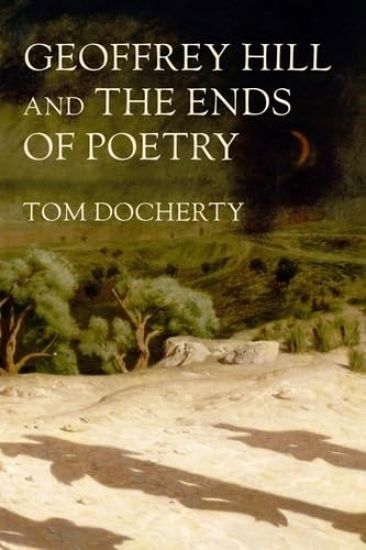
The idea of the end is an essential motivic force in the poetry of Geoffrey Hill (1932–2016). This book shows that Hill’s poems are characteristically ‘end-directed’. They tend towards consummations of all kinds: from the marriages of meanings in puns, or of words in repeating figures and rhymes, to syntactical and formal finalities. The recognition of failure to reach such ends provides its own impetus to Hill's poetry.This is the first book on Hill to take account of his last works. It is a significant contribution to the study of Hill's poems, offering a new thematic reading of his entire body of work. By using Hill's work as an example, the book also touches on questions of poetry's ultimate value: what are its ends and where does it wish to end up?
The Poetical Works of Geoffrey Chaucer
Geoffrey Chaucer
Createspace Independent Publishing Platform
2016
nidottu
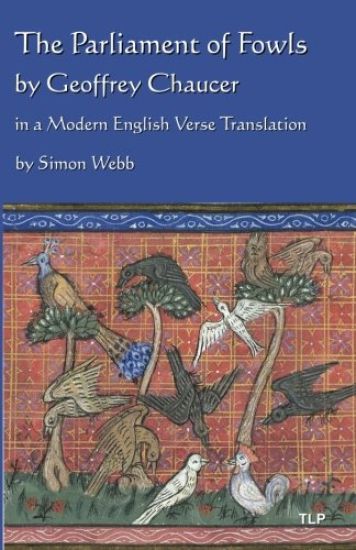
The Parliament of Fowls: by Geoffrey Chaucer, in a Modern English Verse Translation
Geoffrey Chaucer
Createspace Independent Publishing Platform
2016
nidottu
Chaucer's 'Parliament of Fowls' is a story about love, lust, honour, nature . . . and ducks. Simon Webb's highly accessible modern English verse translation conveys the humour and colour of Chaucer's original, and Simon's introduction explains why the poem is now considered to be the work that first introduced the idea of Valentine's Day as we know it.With introduction, glossary and further reading.
The Legend of Good Women. By: Geoffrey Chaucer ( is a poem )
Geoffrey Chaucer
Createspace Independent Publishing Platform
2016
nidottu
Troilus and Criseyde (1385) by: Geoffrey Chaucer
Geoffrey Chaucer
Createspace Independent Publishing Platform
2016
nidottu
Troilus and Criseyde (Modern English: is a poem by Geoffrey Chaucer which re-tells in Middle English the tragic story of the lovers Troilus and Criseyde set against a backdrop of war during the Siege of Troy. It was composed using rime royale and probably completed during the mid 1380s. Many Chaucer scholars regard it as the poet's finest work. As a finished long poem it is more self-contained than the better known but ultimately uncompleted Canterbury Tales. This poem is often considered the source of the phrase: "all good things must come to an end" (3.615). Although Troilus is a character from Ancient Greek literature, the expanded story of him as a lover was of Medieval origin. The first known version is from Beno t de Sainte-Maure's poem Roman de Troie, but Chaucer's principal source appears to have been Boccaccio who re-wrote the tale in his Il Filostrato. Chaucer attributes the story to a "Lollius" (whom he also mentions in The House of Fame), although no writer with this name is known. 1] Chaucer's version can be said to reflect a less cynical and less misogynistic world-view than Boccaccio's, casting Criseyde as fearful and sincere rather than simply fickle and having been led astray by the eloquent and perfidious Pandarus. It also inflects the sorrow of the story with humour.
Geoffrey Moncton: or, The faithless guardian (1855). By: Susanna Moodie: Novel (World's classic's)
Susanna Moodie
Createspace Independent Publishing Platform
2016
nidottu
Susanna Moodie (born Strickland; 6 December 1803 - 8 April 1885) was an English-born Canadian author who wrote about her experiences as a settler in Canada, which was a British colony at the time.Susanna Moodie was born in Bungay, on the River Waveney in Suffolk. She was the younger sister of a family of writers, including Agnes Strickland, Jane Margaret Strickland and Catharine Parr Traill.She wrote her first children's book in 1822, and published other children's stories in London, including books about Spartacus and Jugurtha. In London she was also involved in the Anti-Slavery Society, transcribing the narrative of the former Caribbean slave Mary Prince. 3] On 4 April 1831, she married John Moodie, a retired officer who had served in the Napoleonic Wars. In 1832, with her husband and daughter, Moodie immigrated to Upper Canada. The family settled on a farm in Douro township, near Lakefield, north of Peterborough, where her brother Samuel worked as a surveyor, and where artifacts are housed in a museum. Founded by Samuel, the museum was formerly an Anglican church and overlooks the Otonabee River where Susanna once canoed. It also displays artifacts concerning both Samuel and Catharine Parr Traill. Moodie continued to write in Canada and her letters and journals contain valuable information about life in the colony. She observed life in what was then the backwoods of Ontario, including native customs, the climate, the wildlife, relations between the Canadian population and recent American settlers, and the strong sense of community and the communal work, known as "bees" (which she, incidentally, hated). She suffered through the economic depression in 1836, and her husband served in the militia against William Lyon Mackenzie in the Upper Canada Rebellion in 1837. As a middle-class Englishwoman, Moodie did not particularly enjoy "the bush", as she called it. In 1840 she and her husband moved to Belleville, which she referred to as "the clearings". She studied the Family Compact and became sympathetic to the moderate reformers led by Robert Baldwin, while remaining critical of radical reformers such as William Lyon Mackenzie. This caused problems for her husband, who shared her views, but, as sheriff of Belleville, had to work with members and supporters of the Family Compact. In 1852, she published Roughing it in the Bush, detailing her experiences on the farm in the 1830s. In 1853, she published Life in the Clearings Versus the Bush, about her time in Belleville. She remained in Belleville, living with various family members (particularly her son Robert) after her husband's death, and lived to see Canadian Confederation. She died in Toronto, Ontario on 8 April 1885 and is buried in Belleville Cemetery. Her greatest success was Roughing it in the Bush. The inspiration for the memoir came from a suggestion by her editor that she write an "emigrant's guide" for British people looking to move to Canada. Moodie wrote of the trials and tribulations she found as a "New Canadian", rather than the advantages to be had in the colony. She claimed that her intention was not to discourage immigrants but to prepare people like herself, raised in relative wealth and with no prior experience as farmers, for what life in Canada would be like..............
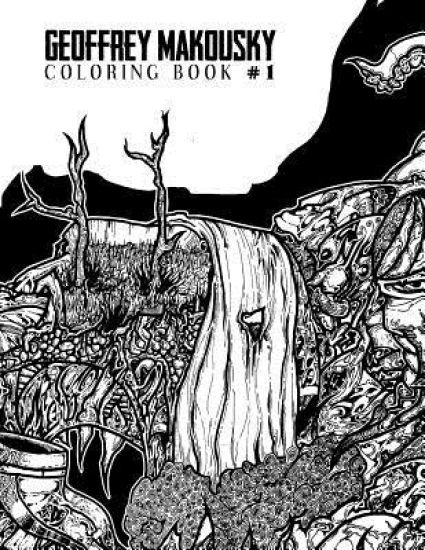
Geoffrey Makousky Coloring Book #1: Let your colors explore this mad labyrinthian underworld of subconscious discovery.
Geoffrey Makousky
Createspace Independent Publishing Platform
2017
nidottu