
Kirjahaku
Etsi kirjoja tekijän nimen, kirjan nimen tai ISBN:n perusteella.
1000 tulosta hakusanalla Georg Muffat


A History of the Beginnings of Moravian Work in America: Being a Translation of Georg Neisser's Manuscripts
Georg Neisser
Literary Licensing, LLC
2012
nidottu

Georg Cassander's Ideen Uber Die Wiedervereinigung Der Christlichen Confessionen in Deutschland
Max Birck
Nabu Press
2012
pokkari
Georg Lukács’ early Marxist philosophy of the 1920s laid the foundations of Critical Theory. However the evaluation of Lukács’ philosophical contribution has been largely determined by one-sided readings of eminent theorists like Adorno, Habermas, Honneth or even Lukács himself. This book offers a new reconstruction of Lukács’ early Marxist work, capable of restoring its dialectical complexity by highlighting its roots in his neo-Kantian, 'pre-Marxist' period. In his pre-Marxist work Lukács sought to articulate a critique of formalism from the standpoint of a dubious mystical ethics of revolutionary praxis. Consequently, Lukács discovered a more coherent and realistic answer to his philosophical dilemmas in Marxism. At the same time, he retained his neo-Kantian reservations about idealist dialectics. In his reading of historical materialism he combined non-idealist, non-systematic historical dialectics with an emphasis on conscious, collective, transformative praxis. Reformulated in this way Lukács’ classical argument plays a central role within a radical Critical Theory.

![Grund-ursachen Und Wahrheiten, Daß S[eine]r Churfürstl[ichen] Durchläucht In Bayern ... Berg- Und Münzraths ... Georg Friderich Jasters J. U. D. Edirte Gedanken Die Rechte Und Zuverläßige Proportion Zwischen Gold Und Silber Unwidersprechlichen Grund](/covers/9781378340516.jpg)
Grund-ursachen Und Wahrheiten, Daß S[eine]r Churfürstl[ichen] Durchläucht In Bayern ... Berg- Und Münzraths ... Georg Friderich Jasters J. U. D. Edirte Gedanken Die Rechte Und Zuverläßige Proportion Zwischen Gold Und Silber Unwidersprechlichen Grund
Georg Friedrich Jaster
Palala Press
2018
pokkari
This work has been selected by scholars as being culturally important, and is part of the knowledge base of civilization as we know it. This work was reproduced from the original artifact, and remains as true to the original work as possible. Therefore, you will see the original copyright references, library stamps (as most of these works have been housed in our most important libraries around the world), and other notations in the work.This work is in the public domain in the United States of America, and possibly other nations. Within the United States, you may freely copy and distribute this work, as no entity (individual or corporate) has a copyright on the body of the work.As a reproduction of a historical artifact, this work may contain missing or blurred pages, poor pictures, errant marks, etc. Scholars believe, and we concur, that this work is important enough to be preserved, reproduced, and made generally available to the public. We appreciate your support of the preservation process, and thank you for being an important part of keeping this knowledge alive and relevant.
Georg Fridrich Stiebers Mecklenburgische Historie Der Gelehrsamkeit
Georg Friedrich Stieber
Palala Press
2018
pokkari
This work has been selected by scholars as being culturally important, and is part of the knowledge base of civilization as we know it. This work was reproduced from the original artifact, and remains as true to the original work as possible. Therefore, you will see the original copyright references, library stamps (as most of these works have been housed in our most important libraries around the world), and other notations in the work.This work is in the public domain in the United States of America, and possibly other nations. Within the United States, you may freely copy and distribute this work, as no entity (individual or corporate) has a copyright on the body of the work.As a reproduction of a historical artifact, this work may contain missing or blurred pages, poor pictures, errant marks, etc. Scholars believe, and we concur, that this work is important enough to be preserved, reproduced, and made generally available to the public. We appreciate your support of the preservation process, and thank you for being an important part of keeping this knowledge alive and relevant.

Japanese Sword guards, Decoration and ornament in the collection of Georg Oeder of Dusseldorf 1916
Georg Oeder
Blurb
2017
sidottu
The Oeder collection was catalogued in 1916 and published in German. The whereabouts of the collection is now unknown as it disappeared from Berlin after the fall to Russia at the end of the Second World War 1945. The current publication contains only those Tsuba in that collection that were illustrated. This edition has been translated into English. 100 Pages
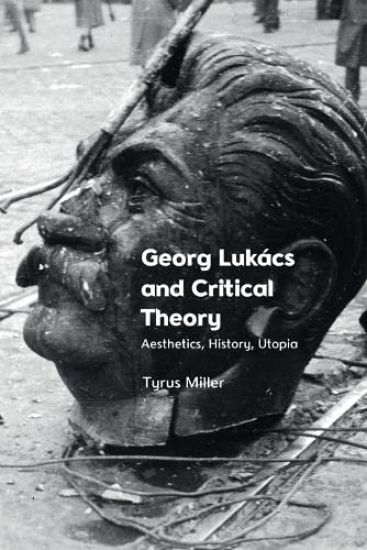
This book examines the heritage of critical theory from the Hungarian Marxist philosopher Georg Lukacs through the early Frankfurt School up to current issues of authoritarian politics and democratisation. Interweaving discussion of art and literature, utopian thought, and the dialectics of high art and mass culture, it offers unique perspectives on an interconnected group of left-wing intellectuals who sought to understand and resist their society's systemic impoverishment of thought and experience. Starting from Lukacs's reflections on art, utopia, and historical action, it progresses to the Frankfurt School philosopher Theodor W. Adorno's analyses of music, media, avant-garde and kitsch. It concludes with discussions of erotic utopia, authoritarianism, postsocialism, and organised deceit in show trials topics in which the legacy of Lukacs and Frankfurt School critical theory continues to be relevant today.
This book examines the heritage of critical theory from the Hungarian Marxist philosopher Georg Lukacs through the early Frankfurt School up to current issues of authoritarian politics and democratisation. Interweaving discussion of art and literature, utopian thought, and the dialectics of high art and mass culture, it offers unique perspectives on an interconnected group of left-wing intellectuals who sought to understand and resist their society's systemic impoverishment of thought and experience. Starting from Lukacs's reflections on art, utopia, and historical action, it progresses to the Frankfurt School philosopher Theodor W. Adorno's analyses of music, media, avant-garde and kitsch. It concludes with discussions of erotic utopia, authoritarianism, postsocialism, and organised deceit in show trials topics in which the legacy of Lukacs and Frankfurt School critical theory continues to be relevant today.
A Homeric Dictionary For Schools And Colleges. Based Upon The German Of Dr. Georg Autenrieth
Georg Autenrich
Read Books
2008
pokkari
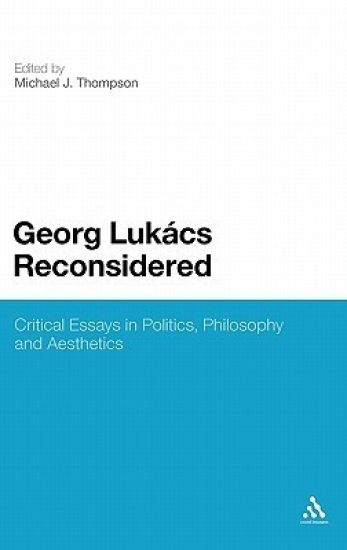
Georg Lukacs Reconsidered
CONTINUUM PUBLISHING CORPORATION
2011
sidottu
Georg Lukcs stands as a towering figure in the areas of critical theory, literary criticism, aesthetics, ethical theory and the philosophy of Marxism and German Idealism. Yet, despite his influence throughout the twentieth century, his contributions to the humanities and theoretical social sciences are marked by neglect. What has been lost is a crucial thinker in the tradition of critical theory, but also, by extension, a crucial set of ideas that can be used to shed new light on the major problems of contemporary society. This book reconsiders Lukcs intellectual contributions in the light of recent intellectual developments in political theory, aesthetics, ethical theory, and social and cultural theory. An international team of contributors contend that Luk ideas and theoretical contributions have much to offer the theoretical paucity of the present. Ultimately the book reintegrates Lukcs as a central thinker, not only in the tradition of critical theory, but also as a major theorist and critic of modernity, of capitalism, and of new trends in political theory, cultural criticism and legal theory.

Georg Lukacs: The Fundamental Dissonance of Existence
CONTINUUM PUBLISHING CORPORATION
2011
sidottu
The end of the Soviet period, the vast expansion in the power and influence of capital, and recent developments in social and aesthetic theory, have made the work of Hungarian Marxist philosopher and social critic Georg Lukcs more vital than ever. The very innovations in literary method that, during the 80s and 90s, marginalized him in the West have now made possible new readings of Lukcs, less in thrall to the positions taken by Lukcs himself on political and aesthetic matters. What these developments amount to, this book argues, is an opportunity to liberate Lukcs's thought from its formal and historical limitations, a possibility that was always inherent in Lukcs's own thinking about the paradoxes of form. This collection brings together recent work on Lukcs from the fields of Philosophy, Social and Political Thought, Literary and Cultural Studies. Against the odds, Lukcs's thought has survived: as a critique of late capitalism, as a guide to the contradictions of modernity, and as a model for a temperament that refuses all accommodation with the way things are.