Kirjojen hintavertailu. Mukana 12 595 353 kirjaa ja 12 kauppaa.

Kirjahaku

Etsi kirjoja tekijän nimen, kirjan nimen tai ISBN:n perusteella.

1000 tulosta hakusanalla Georges FELDIS

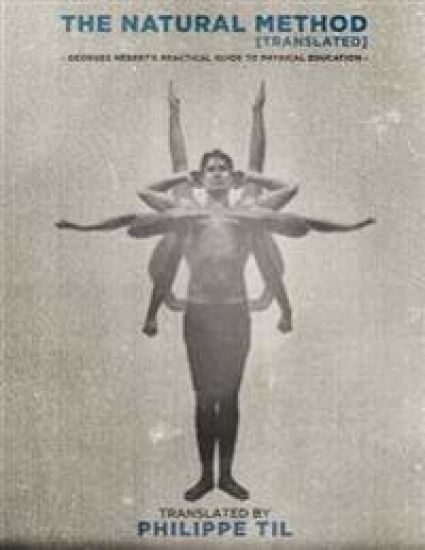
The Natural Method: Georges Hébert's Practical Guide to Physical Education

The Natural Method: Georges Hébert's Practical Guide to Physical Education

Georges Hébert

Createspace Independent Publishing Platform
2014
nidottu
A complete, faithful in content as well as style, translation of H bert's Practical Guide to Physical Education's first part, on the explanation of the method, how to score, assess, baseline and conduct a model training session, with the original pictures and text as made available through existing manuscripts from over a century ago.
The Natural Method: Training Guide: Programming according to Georges Hébert

The Natural Method: Training Guide: Programming according to Georges Hébert

Georges Hébert; Philippe Til

Createspace Independent Publishing Platform
2017
nidottu
A modernized training guide, charted in thee 16-week periods as originally intended by Georges H bert, using equipment most commonly accessible today (barbells, kettlebells, dumbbells etc.) and easily implementable into a gym environment as well as outdoor training. Simple, effective and tested successfully for two years in this present iteration with beautifully captured moves illustrating how to perform the exercises, this Training Guide is the perfect addition to The Natural Method series.
Georges Vanier: Soldier

Georges Vanier: Soldier

Georges Vanier

Dundurn Group Ltd
2000
pokkari
East Sandling Camp. 1 June 1915 "Captain Boyer and I are leaving for London to buy a motor car for the regiment. We will be staying at the Savoy." Flanders. 27 October 1915. Diary entry: 4:00 p.m. "Returned to the trenches. After two days of rain, they are in a deplorable state. There is mud up to our knees. The parapets have collapsed in several spots. The nights are frigid, our feet are cold, and we have not yet received our supplies of wood and charcoal." In the field. 1 August 1918. "You will pardon the brevity and the looseness of this letter when you know under what conditions it has been written. What you wish to know above all I can tell you at once. I am well - in fact I do not think I have ever been quite so well in body and in spirit. I have been protected in a special manner during the last three days. I have seen so many narrow escapes myself that I am beginning to think that one should not worry much about possible eventualities." No. 8 British Red Cross Hospital, Boulogne. 6 September 1918. "By this time you will have received reassuring cablegrams and field postcards and possibly letters from friends of mine."First, to be quite frank, I will admit that I have not been in fit condition to write a coherent letter ..."
Georges Didi-Huberman and Film

Georges Didi-Huberman and Film

Alison Smith

Bloomsbury Academic
2020
sidottu
Georges Didi-Huberman is a philosopher of images whose work is overdue for attention from English-language readers. Since the publication of his first book in 1982, he has published 46 essays, mostly with the prestigious Editions de Minuit, on topics ranging from monographs on individual artists to critical excursions into political philosophy. He is recognised in France and elsewhere in Europe as one of the foremost philosophers of the image writing today. In Georges Didi-Huberman and Film, Alison Smith concentrates on how Didi-Huberman’s work has been informed by cinema, especially in his major (and ongoing) recent work L’Oeil de l’Histoire (The Eye of History). The book traces the development of Didi-Huberman’s visual thought towards a cinematic sensibility already inherent in his early work on images in relationship to each other. After exploring his increasingly political understanding of the vital role of cinematic montage, it traces his growing understanding of cinema as a medium for expressing a dynamic representation of peoples’ memory and experience, and documents his engagement with contemporary filmmakers such as Laura Waddington and Vincent Dieutre.
Correspondence – Georges Bataille and Michel Leiris

Correspondence – Georges Bataille and Michel Leiris

Georges Bataille; Michel Leiris; Liz Heron

SEAGULL BOOKS LONDON LTD
2023
nidottu
Including a number of short essays by Bataille and Leiris on aspects of the other's work as well as excerpts on Bataille from Leiris' diaries, this collection of correspondence throws new light on two of Surrealism's most radical dissidents. In the autumn of 1924, just before André Breton published the Manifeste du surréalisme, two young men met in Paris for the first time. Georges Bataille, 27, starting work at the Bibliothèque Nationale; Michel Leiris, 23, beginning his studies in ethnology. Within a few months, they were both members of the Surrealist group, although their adherence to Surrealism (unlike their affinities with it) would not last long: in 1930 they were among the signatories of "Un cadavre," the famous tract against Breton, the "Machiavelli of Montmartre," as Leiris put it. But their friendship would endure for more than 30 years, and their correspondence, assembled here for the first time in English, would continue until the death of Bataille in 1962.
Georges Braque’s Post-Cubism Masterpieces
Krampf’s exclusive collection of Goerges Braque’s post-Cubist paintings reveals both Braque’s pioneering individuality and craftsmanship in the history of Modern Art. Or as the artist once said himself, ‘I do not do as I want, I do as I can. Progress in art does not consist in expanding one’s limitations, but in knowing them better.’ Focusing on the artist’s transformative period between 1920 and 1960, which arguably produced his best work, this illustrative book explores Braque’s most overlooked post-Cubism art—where he transcends both his own limitations and that of his surroundings, showing readers and collectors alike the timeless and enduring impact of Braque’s work.
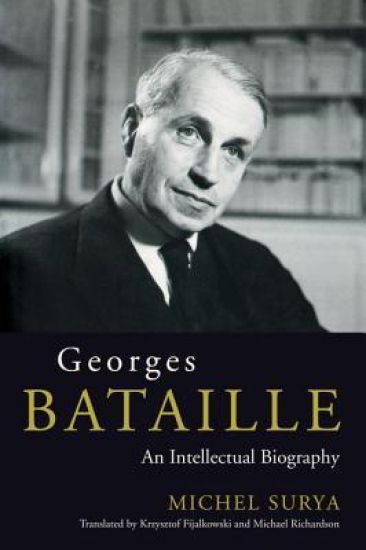
Georges Bataille

Georges Bataille

Michel Surya

Verso Books
2010
nidottu
Georges Bataille was a philosopher, writer, librarian, pornographer and a founder of the influential journals Critique and Acéphale. He has had an enormous impact on contemporary thought, influencing such writers as Barthes, Baudrillard, Derrida, Foucault and Sontag. Many of his books, including the notorious Story of the Eye and the fascinating The Accursed Share, are modern classics.In this acclaimed intellectual biography, Michel Surya gives a detailed and insightful account of Bataille's work against the backdrop of his life - his troubled childhood, his difficult relationship with André Breton and the surrealists and his curious position as a thinker of excess, 'potlatch', sexual extremes and religious sacrifice, one who nonetheless remains at the heart of twentieth century French thought-all of it drawn here in rich and allusive prose. While exploring the source of the violent eroticism that laces Bataille's novels, the book is also an acute guide to the development of Bataille's philosophical thought. Enriched by testimonies from Bataille's closest acquaintances and revealing the context in which he worked, Surya sheds light on a figure Foucault described as 'one of the most important writers of the century'.
Georges Rodenbach: Selected Poems

Georges Rodenbach: Selected Poems

Georges Rodenbach

Arc Publications
2017
nidottu
Rodenbach is known first and foremost for his famous novel Bruges la Morte. Bruges was his muse and poetic source, the landscape in which he attempted to reveal the significance of what appeared lifeless or unconnected to art. Using the symbolist devices of suggestion and mood, Rodenbach sifts the elements that make up the decaying Bruges which he sees as a medieval corpse laid out for him to 'rescue' through his interpretation of its atmosphere of melancholy, its seductive romantic decline and its lonely atmosphere. With rare beauty and delicacy, Rodenbach's poetry spins its web of tonal impressionism and seems always to exist on the border of silence.
Correspondence – Georges Bataille and Michel Leiris

Correspondence – Georges Bataille and Michel Leiris

Georges Bataille; Michel Leiris; Liz Heron

Seagull Books London Ltd
2008
sidottu
In the autumn of 1924, two young men met in Paris for the first time. Georges Bataille was just 27 and had recently started working at the Bibliotheque nationale. Michel Leiris, 23, was beginning his studies in ethnology. They discussed the idea of founding a movement which would displace Dada and of launching a magazine based in a brothel. Instead, within a few months, they both became members of the surrealist group. But their adherence to surrealism would not last long. In 1930 they were signatories to the infamous tract against Breton, the 'Machiavelli of Montmartre', as Leiris put it. But their own friendship would endure for more than thirty years and their correspondence, assembled here for the first time, would continue until the death of Bataille in 1962.As these letters show, their intellectual affinities were extensive and although they followed different trajectories - Leiris spending more and more time in Africa as an ethnologist, whilst Bataille remained in Paris developing the ideas on the sacred, sacrifice and eroticism for which he is best known - they continued to have a profound influence on each other. Including a number of short essays by each of them on aspects of the other's work, and excerpts on Bataille from Leiris' diaries, this collection of their correspondence throws new light on two of surrealism's most radical dissidents.
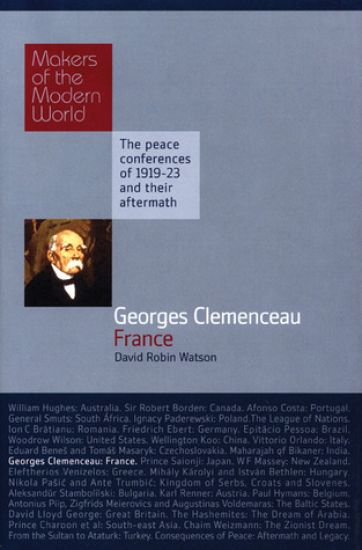
Georges Clemenceau: France

Georges Clemenceau: France

David Watson

Haus Publishing
2008
sidottu
The Anglo-Saxon view of Georges Clemenceau (1841-1929) is based on John Maynard Keynes' misjudged caricature, that he had imposed a treaty that was harsh and oppressive of Germany. French critics' view, however, is that he had been too lenient, and left Germany in a position to challenge the treaty. In fact the treaty was a just settlement, and it could have been maintained. The failure was not in the terms of the treaty but in the subsequent failure to insist on maintaining them in the face of German resistance.
Georges Perec - Wishes

Georges Perec - Wishes

Georges Perec

Wakefield Press
2018
nidottu
Twelve years of Georges Perec’s annual pamphlets filled with homophonic wordplay “In the beginning was the pun,” Samuel Beckett once wrote. And so it was that Georges Perec brought the good word to his friends and acquaintances on a yearly basis, as an expression of his best wishes for the New Year. Wishes gathers together these ten pamphlets of homophonic wordplay that Perec sent out from 1970 until his death in 1982, printed at his own expense in limited quantities. This paean to the pun consists of a series of short prose pieces, each concluding with a list of the everyday bits of language lying at their root. English proverbs, Latin phrases, the names of musicians, filmmakers, novelists and book titles are all fodder for Perec’s homophonic translations: John Coltrane turns into an anecdote about a wanderer with a severe ring around the collar; Antonioni’s first movie transforms into a prophecy of a murderous holiday; the phrase “All’s well that ends well” becomes a pregnant cow named Alice hailed by a drunk Satan; and Maurice Ravel proves to be a warning against corpses with a predilection for root vegetables. These texts and their marriage of sound to meaning present a challenge to any translation, and bring into stark relief the choices translators are often forced to make. This English edition sidesteps such choices, offering two alternate translations: a traditional one focused on the literal content of Perec’s texts, and another focused on their formal phonological play. Georges Perec (1936–82) was a French novelist, essayist and filmmaker whose linguistic talents ranged from fiction to crossword puzzles to palindromes. Winner of the prix Renaudot in 1965 for his first novel, Things, and the prix Médicis in 1978 for his most acclaimed novel, Life A User’s Manual, Perec was also a member of Oulipo.
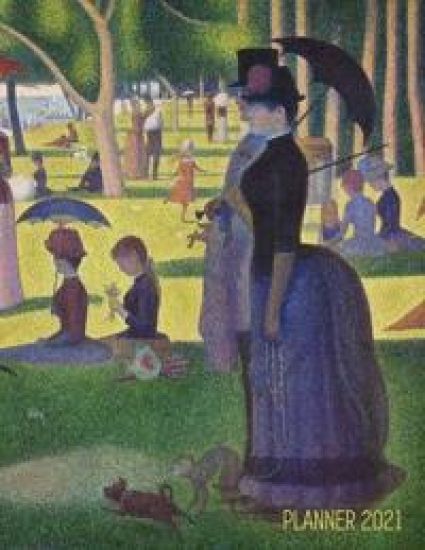
Georges Seurat Planner 2021

Georges Seurat Planner 2021

Shy Panda Notebooks

Semsoli
2020
pokkari
Georges Seurat Planner 2021 (A Sunday on La Grande Jatte) - Schedule Each Appointment and Stay Organized in 2021 Would you like to: - See your schedule at a glance?- Have a clear overview of your to-do list?Then look no further... This beautiful Daily Planner 2021 lets you keep track of everything you care about.Get This 2021 Monthly Planner and Start Organizing Your LifeThis stylish agenda scheduler will make things easy. Take back control of your time, to do what really matters. This is What You Can Use This Planner For: - Keep track of appointments- Birthdays of loved ones- Meetings at the office- Family events- Medical visits- HolidaysBasically, anything you want to plan What Will You Get If You Buy This 2021 Year Planner?- 2021 Calendar: January - December- Monthly calendar spread (2 pages ), giving you a birds-eye view of each month- For every day, space to write down your goals, tasks, and appointments- Large size: lots of space to write + quick overview of your schedule- Perfect bound and printed on high-quality durable paper- Soft, premium coverSo, would you like to be on top of things in 2021?Then don't wait any longer and click the 'Buy' button to get this 2021 planner.
Georges Forest

Georges Forest

Claude de Moissac

Plaines
2018
pokkari
Ce qui nous anime tous, ce qui nous a anim s depuis Louis Riel jusqu' nos jours, c'est la justice qui est due la cause du fran ais au Manitoba. (Georges Forest)Le Franco-Manitobain Georges Forest a consacr une grande partie de sa vie d fendre la cause du fait fran ais au Manitoba. partir de 1960, il n'h sitera pas tenir t te aux plus hautes instances judiciaires -- notamment en se distinguant par son r le dans l'affaire Forest -- pour faire reconna tre le fran ais au m me titre que l'anglais dans sa ch re province, voire sur le plan national.
Georges Ou Dix Années d'Infortune Par Un Breton (Éd.1868)
Georges ou dix annees d'infortune; par un BretonDate de l'edition originale: 1868Sujet de l'ouvrage: Pyrard, GeorgesCe livre est la reproduction fidele d'une oeuvre publiee avant 1920 et fait partie d'une collection de livres reimprimes a la demande editee par Hachette Livre, dans le cadre d'un partenariat avec la Bibliotheque nationale de France, offrant l'opportunite d'acceder a des ouvrages anciens et souvent rares issus des fonds patrimoniaux de la BnF.Les oeuvres faisant partie de cette collection ont ete numerisees par la BnF et sont presentes sur Gallica, sa bibliotheque numerique.En entreprenant de redonner vie a ces ouvrages au travers d'une collection de livres reimprimes a la demande, nous leur donnons la possibilite de rencontrer un public elargi et participons a la transmission de connaissances et de savoirs parfois difficilement accessibles.Nous avons cherche a concilier la reproduction fidele d'un livre ancien a partir de sa version numerisee avec le souci d'un confort de lecture optimal. Nous esperons que les ouvrages de cette nouvelle collection vous apporteront entiere satisfaction.Pour plus d'informations, rendez-vous sur www.hachettebnf.fr