Kirjojen hintavertailu. Mukana 11 244 527 kirjaa ja 12 kauppaa.

Kirjahaku

Etsi kirjoja tekijän nimen, kirjan nimen tai ISBN:n perusteella.

1000 tulosta hakusanalla Gerd Sebald

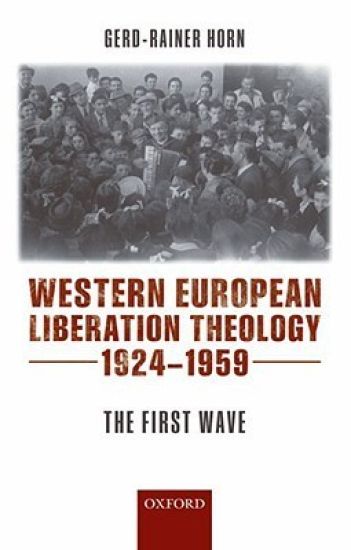
Western European Liberation Theology

Western European Liberation Theology

Gerd-Rainer Horn

Oxford University Press
2008
sidottu
Western European Liberation Theology is the first comprehensive survey of the development of a distinct, progressive variant of Catholicism in twentieth-century Western Europe. This Left Catholicism served to lay the basis for the subsequent events and evolutions associated with Vatican II. Initially emerging within the boundaries of Catholic Action, fuelled by the growing power and self-confidence of the Catholic laity, a series of challenges to received wisdom and an array of novel experiments were launched in various corners of Western Europe. The moment of liberation from Nazi occupation and world war in 1944/45 turned out to be the highpoint of these optimistic paradigm shifts. Concentrating on interrelated developments in theology, Catholic politics and apostolic social action, Gerd-Rainer Horn integrates evidence from Italian, French and Belgian national contexts. Drawing on his research in over twenty archives between Leuven and Rome, he highlights the role of organisations, social movements, and intellectual trends. The pivotal contributions of key individuals are assessed, from theologians such as Jacques Maritain and Emmanuel Mounier, to the millenarian activist priests, Don Zeno Saltini and Don Primo Mazzolari. In conclusion Horn suggests that first-wave Western European Left Catholicism served as an inspiration - and constituted a prototype - for subsequent Third World Liberation Theology.

The Spirit of '68

The Spirit of '68

Gerd-Rainer Horn

Oxford University Press
2007
sidottu
In virtually all corners of the Western world, 1968 witnessed a highly unusual sequence of popular rebellions. In Italy, France, Spain, Vietnam, the United States, West Germany, Czechoslovakia, Mexico, and elsewhere, millions of individuals took matters into their own hands to counter imperialism, capitalism, autocracy, bureaucracy, and all forms of hierarchical thinking. Recent reinterpretations have sought to play down any real challenge to the socio-political status quo in these events, but Gerd-Rainer Horn's book offers a spirited counterblast. 1968, he argues, opened up the possibility that economic and political elites on both sides of the Iron Curtain could be toppled from their position of unnatural superiority to make way for a new society where everyday people could, for the first time, become masters of their own destiny. Furthermore, Horn contends, the moment of crisis and opportunity culminating in 1968 must be seen as part of a larger period of experimentation and revolt. The ten years between 1956 and 1966, characterised above all by the flourishing of iconoclastic cultural rebellions, can be regarded as a preparatory period which set the stage for the non-conformist cum political revolts of the subsequent 'red' decade (1966-1976). Horn's geographic centres of attention are Western Europe, including the first full examination of Mediterranean revolts, and North America. He placed particular emphasis on cultural nonconformity, the student movement, working class rebellions, the changing contours of the Left, and the meaning of participatory democracy. His book will make fascinating reading for anyone interested in this turbulent period and the fundamental changes that were wrought upon societies either side of the Atlantic.
Simply Rational

Simply Rational

Gerd Gigerenzer

Oxford University Press Inc
2015
sidottu
Statistical illiteracy can have an enormously negative impact on decision making. This volume of collected papers brings together applied and theoretical research on risks and decision making across the fields of medicine, psychology, and economics. Collectively, the essays demonstrate why the frame in which statistics are communicated is essential for broader understanding and sound decision making, and that understanding risks and uncertainty has wide-reaching implications for daily life. Gerd Gigerenzer provides a lucid review and catalog of concrete instances of heuristics, or rules of thumb, that people and animals rely on to make decisions under uncertainty, explaining why these are very often more rational than probability models. After a critical look at behavioral theories that do not model actual psychological processes, the book concludes with a call for a "heuristic revolution" that will enable us to understand the ecological rationality of both statistics and heuristics, and bring a dose of sanity to the study of rationality.
The Spirit of '68

The Spirit of '68

Gerd-Rainer Horn

Oxford University Press
2008
nidottu
In virtually all corners of the Western world, 1968 witnessed a highly unusual sequence of popular rebellions. In Italy, France, Spain, Vietnam, the United States, West Germany, Czechoslovakia, Mexico, and elsewhere, millions of individuals took matters into their own hands to counter imperialism, capitalism, autocracy, bureaucracy, and all forms of hierarchical thinking. Recent reinterpretations have sought to play down any real challenge to the socio-political status quo in these events, but Gerd-Rainer Horn's book offers a spirited counterblast. 1968, he argues, opened up the possibility that economic and political elites on both sides of the Iron Curtain could be toppled from their position of unnatural superiority to make way for a new society where everyday people could, for the first time, become masters of their own destiny. Furthermore, Horn contends, the moment of crisis and opportunity culminating in 1968 must be seen as part of a larger period of experimentation and revolt. The ten years between 1956 and 1966, characterised above all by the flourishing of iconoclastic cultural rebellions, can be regarded as a preparatory period which set the stage for the non-conformist cum political revolts of the subsequent 'red' decade (1966-1976). Horn's geographic centres of attention are Western Europe, including the first full examination of Mediterranean revolts, and North America. He placed particular emphasis on cultural nonconformity, the student movement, working class rebellions, the changing contours of the Left, and the meaning of participatory democracy. His book will make fascinating reading for anyone interested in this turbulent period and the fundamental changes that were wrought upon societies either side of the Atlantic.
The Moment of Liberation in Western Europe

The Moment of Liberation in Western Europe

Gerd-Rainer Horn

Oxford University Press
2020
sidottu
The Moment of Liberation in Western Europe, 1943-1948, regards the final two years of World War II and the immediate post-liberation period as a moment in twentieth century history, when the shape and contours of postwar Western Europe appeared highly uncertain and various alternatives and conflicting visions were up for grabs. After close to six years of total war, Nazi terror, and brutal occupation policies, a growing number of Europeans were no longer content solely to fight for national liberation from fascist control. Having staked their lives in military and civilian resistance to Nazism and Italian fascism across the continent, surviving activists were aiming to ensure that such a political and social catastrophe would never befall Europe again. In the closing moments of World War II, hundreds of thousands of antifascist activists had begun to identify with the famous quote penned by the exiled German social theorists, Max Horkheimer, who had boldly proclaimed in early September 1939: 'Whoever is not prepared to talk about capitalism should also remain silent about fascism.' The economic and political elites in prewar societies were increasingly regarded as co-responsible for war, fascism, and occupation policies, from which many had benefited significantly and often enthusiastically. There were extensive popular social movements at work in almost every single state which aimed to construct postwar societies in which grassroots democracy and the free association of rank-and-file activists would replace the profit principle and the top-down Jacobin orientation by traditional elites. This study for the first time reconstructs the parameters of this contest over the shape of postwar Western Europe from a consistently transnational perspective.
The Spirit of Vatican II

The Spirit of Vatican II

Gerd-Rainer Horn

Oxford University Press
2015
sidottu
Vatican II profoundly changed the outlook and the message of the Catholic Church. After decades, if not centuries, in which Catholic public opinion appeared to be primarily oriented towards the distant past and bygone societal models, suddenly the Catholic Church embraced the world as it was, and it joined in the struggle to create a radiant future. The Sixties were a time of great socio-cultural and political ferment in Europe as a whole. Especially the second half of the 1960s and the first half of the 1970s witnessed an astounding range of 'new' and 'old' social movements reaching for the sky. Catholic activists provided fuel to the fire in more ways than one. Catholics had embarked on the quest for new horizons for some years prior to the sudden growth of secular activism in and around the magic year of 1968. When secular radicals joined up with Catholic activists, a seemingly unstoppable dynamic was unleashed. This book covers five crucial contributions by Catholic communities to the burgeoning atmosphere of those turbulent years: a) the theological innovations of Vatican II, which made such an unprecedented engagement of Catholics possible in the first place, but also post-conciliar theological developments; b) the resurgence of the worker priest experiment, and the first-ever creation of autonomous organisations of radical parish priests; c) the simultaneous creation of grassroots organisations - base communities - by (mostly) lay activists across the continent; d) the crucial roles of Catholic students in the multiform student movements shaping Europe in these years; e) the indispensable contributions of Catholic workers who helped shape - and often initiated - the wave of militant contestations shaking up labour relations after 1968.
Rationality for Mortals

Rationality for Mortals

Gerd Gigerenzer

Oxford University Press Inc
2010
nidottu
Gerd Gigerenzer's influential work examines the rationality of individuals not from the perspective of logic or probability, but from the point of view of adaptation to the real world of human behavior and interaction with the environment. Seen from this perspective, human behavior is more rational than it might otherwise appear. This work is extremely influential and has spawned an entire research program. This volume collects recent articles, looking at how people use "fast and frugal heuristics" to calculate probability and risk and make decisions. It includes the revised articles and newly written introduction that were first published in the hardcover edition. Its appeal is to a mixture of cognitive psychologists, philosophers, economists, and others who study decision making. "Gerd Gigerenzer has created new, pathbreaking ways of thinking about human rationality. His ideas build on one another and are best seen as part of a coherent whole that is when the nature of his arguments emerges most clearly."-- Leda Cosmides, University of California Santa Barbara
Continental Strangers

Continental Strangers

Gerd Gemünden

Columbia University Press
2014
sidottu
Hundreds of German-speaking film professionals took refuge in Hollywood during the 1930s and 1940s, making a lasting contribution to American cinema. Hailing from Austria, Hungary, Poland, Russia, and the Ukraine, as well as Germany, and including Ernst Lubitsch, Fred Zinnemann, Billy Wilder, and Fritz Lang, these multicultural, multilingual writers and directors betrayed distinct cultural sensibilities in their art. Gerd Gemunden focuses on Edgar G. Ulmer's The Black Cat (1934), William Dieterle's The Life of Emile Zola (1937), Ernst Lubitsch's To Be or Not to Be (1942), Bertolt Brecht and Fritz Lang's Hangmen Also Die (1943), Fred Zinnemann's Act of Violence (1948), and Peter Lorre's Der Verlorene (1951), engaging with issues of realism, auteurism, and genre while tracing the relationship between film and history, Hollywood politics and censorship, and exile and (re)migration.
Continental Strangers

Continental Strangers

Gerd Gemünden

Columbia University Press
2014
pokkari
Hundreds of German-speaking film professionals took refuge in Hollywood during the 1930s and 1940s, making a lasting contribution to American cinema. Hailing from Austria, Hungary, Poland, Russia, and the Ukraine, as well as Germany, and including Ernst Lubitsch, Fred Zinnemann, Billy Wilder, and Fritz Lang, these multicultural, multilingual writers and directors betrayed distinct cultural sensibilities in their art. Gerd Gemunden focuses on Edgar G. Ulmer's The Black Cat (1934), William Dieterle's The Life of Emile Zola (1937), Ernst Lubitsch's To Be or Not to Be (1942), Bertolt Brecht and Fritz Lang's Hangmen Also Die (1943), Fred Zinnemann's Act of Violence (1948), and Peter Lorre's Der Verlorene (1951), engaging with issues of realism, auteurism, and genre while tracing the relationship between film and history, Hollywood politics and censorship, and exile and (re)migration.
Risk Savvy

Risk Savvy

Gerd Gigerenzer

Penguin Books Ltd
2015
pokkari
A fascinating, practical guide to making better decisions with our money, health and personal lives from Gerd Gigerenzer, the author of Reckoning with Risk.Numbers don't lie - but they often mislead us. From health risks to financial decisions, we often find it hard to make decisions because the statistics have been presented to us by 'experts' who misinterpret the data themselves. Here Gerd Gigerenzer shows how we can all use simple rules to become better-informed, risk-savvy citizens. 'Important, Gigerenzer draws valuable lessons . . . his clear explanations will be a great help to all' Omar Malik, Times Higher Education'Gerd Gigerenzer argues that when it comes to taking risks in life, we are often much better off following our instincts than expert advice' Oliver Burkeman, Guardian'Things will only get better, he shows, when specialists, particularly doctors and investment advisers, improve on their appalling record of analysing and communicating risks in their fields' Clive Cookson, Financial Times, Books of the Year'Gigerenzer is brilliant' Steven PinkerGerd Gigerenzer is Director of the Center for Adaptive Behavior and Cognition at the Max Planck Institute for Human Development in Berlin and former Professor of Psychology at the University of Chicago. He is the author of several books on heuristics and decision making, including Reckoning with Risk.
Lucrecia Martel

Lucrecia Martel

Gerd Gemünden

University of Illinois Press
2019
sidottu
Films like Zama and The Headless Woman have made Lucrecia Martel a fixture on festival marquees and critic's best lists. Though often allied with mainstream figures and genre frameworks, Martel works within art cinema, and since her 2001 debut The Swamp she has become one of international film's most acclaimed auteurs.Gerd Gemünden offers a career-spanning analysis of a filmmaker dedicated to revealing the ephemeral, fortuitous, and endless variety of human experience. Martel's focus on sound, touch, taste, and smell challenge film's usual emphasis on what a viewer sees. By merging of these and other experimental techniques with heightened realism, she invites audiences into film narratives at once unresolved, truncated, and elliptical. Gemünden aligns Martel's filmmaking methods with the work of other international directors who criticize—and pointedly circumvent—the high-velocity speeds of today's cinematic storytelling. He also explores how Martel's radical political critique forces viewers to rethink entitlement, race, class, and exploitation of indigenous peoples within Argentinian society and beyond.
Lucrecia Martel

Lucrecia Martel

Gerd Gemünden

University of Illinois Press
2019
nidottu
Films like Zama and The Headless Woman have made Lucrecia Martel a fixture on festival marquees and critic's best lists. Though often allied with mainstream figures and genre frameworks, Martel works within art cinema, and since her 2001 debut The Swamp she has become one of international film's most acclaimed auteurs.Gerd Gemünden offers a career-spanning analysis of a filmmaker dedicated to revealing the ephemeral, fortuitous, and endless variety of human experience. Martel's focus on sound, touch, taste, and smell challenge film's usual emphasis on what a viewer sees. By merging of these and other experimental techniques with heightened realism, she invites audiences into film narratives at once unresolved, truncated, and elliptical. Gemünden aligns Martel's filmmaking methods with the work of other international directors who criticize—and pointedly circumvent—the high-velocity speeds of today's cinematic storytelling. He also explores how Martel's radical political critique forces viewers to rethink entitlement, race, class, and exploitation of indigenous peoples within Argentinian society and beyond.
How to Stay Smart in a Smart World

How to Stay Smart in a Smart World

Gerd Gigerenzer

MIT PRESS LTD
2022
sidottu
How to stay in charge in a world populated by algorithms that beat us in chess, find us romantic partners, and tell us to "turn right in 500 yards." Doomsday prophets of technology predict that robots will take over the world, leaving humans behind in the dust. Tech industry boosters think replacing people with software might make the world a better place--while tech industry critics warn darkly about surveillance capitalism. Despite their differing views of the future, they all agree: machines will soon do everything better than humans. In How to Stay Smart in a Smart World, Gerd Gigerenzer shows why that's not true, and tells us how we can stay in charge in a world populated by algorithms. Machines powered by artificial intelligence are good at some things (playing chess), but not others (life-and-death decisions, or anything involving uncertainty). Gigerenzer explains why algorithms often fail at finding us romantic partners (love is not chess), why self-driving cars fall prey to the Russian Tank Fallacy, and how judges and police rely increasingly on nontransparent "black box" algorithms to predict whether a criminal defendant will reoffend or show up in court. He invokes Black Mirror, considers the privacy paradox (people want privacy, but give their data away), and explains that social media get us hooked by programming intermittent reinforcement in the form of the "like" button. We shouldn't trust smart technology unconditionally, Gigerenzer tells us, but we shouldn't fear it unthinkingly, either.
How to Stay Smart in a Smart World: Why Human Intelligence Still Beats Algorithms
How to stay in charge in a world populated by algorithms that beat us in chess, find us romantic partners, and tell us to "turn right in 500 yards." Doomsday prophets of technology predict that robots will take over the world, leaving humans behind in the dust. Tech industry boosters think replacing people with software might make the world a better place--while tech industry critics warn darkly about surveillance capitalism. Despite their differing views of the future, they all seem to agree: machines will soon do everything better than humans. In How to Stay Smart in a Smart World, Gerd Gigerenzer shows why that's not true, and tells us how we can stay in charge in a world populated by algorithms. Machines powered by artificial intelligence are good at some things (playing chess), but not others (life-and-death decisions, or anything involving uncertainty). Gigerenzer explains why algorithms often fail at finding us romantic partners (love is not chess), why self-driving cars fall prey to the Russian Tank Fallacy, and how judges and police rely increasingly on nontransparent "black box" algorithms to predict whether a criminal defendant will reoffend or show up in court. He invokes Black Mirror, considers the privacy paradox (people want privacy but give their data away), and explains that social media get us hooked by programming intermittent reinforcement in the form of the "like" button. We shouldn't trust smart technology unconditionally, Gigerenzer tells us, but we shouldn't fear it unthinkingly, either.
The Human Situation

The Human Situation

Gerd Haeffner

University of Notre Dame Press
1989
sidottu
Since the beginning of conscious thought the human animal has questioned the meaning of its existence. Although qualified in numerous ways by time and circumstance, the question has remained. In modern times it has assumed an unusual urgency due to the disintegration of self-understanding caused in part by the Industrial Revolution and the destruction and degradation of this century's wars. We ask again, "What is the nature of human life?" "What qualifies as a meaningful life?" and "How shall we come to understand ourselves in the future?" Using the resources of anthropology, biological research, ad philosophy to plumb the essence of humanity, The Human Situation renews this quest for understanding. Gerh Haeffner leads the reader through an examination of the different levels of human consciousness, beginning with the techniques of biology and the human sciences. Through this approach the reader is progressively made aware of the central question of "What is it to be human?" and is led to an understanding of the unity of human life, the central realities of conscience and freedom, and finally the question of the meaning of life. Other considerations include the basic dimensions of human existence, the mental element of the act, and the unity of human life and its meaning. This work is an excellent general introduction to philosophical anthropology for students in a variety of disciplines, with emphasis on developing issues and problems with a phenomenological method rather than presenting its material within a formal historical framework. Though dealing with concepts that are challenging and demanding, the writing is never technical and is appropriate for undergraduates.
The Human Situation

The Human Situation

Gerd Haeffner

University of Notre Dame Press
1989
nidottu
Since the beginning of conscious thought the human animal has questioned the meaning of its existence. Although qualified in numerous ways by time and circumstance, the question has remained. In modern times it has assumed an unusual urgency due to the disintegration of self-understanding caused in part by the Industrial Revolution and the destruction and degradation of this century's wars. We ask again, "What is the nature of human life?" "What qualifies as a meaningful life?" and "How shall we come to understand ourselves in the future?" Using the resources of anthropology, biological research, ad philosophy to plumb the essence of humanity, The Human Situation renews this quest for understanding. Gerh Haeffner leads the reader through an examination of the different levels of human consciousness, beginning with the techniques of biology and the human sciences. Through this approach the reader is progressively made aware of the central question of "What is it to be human?" and is led to an understanding of the unity of human life, the central realities of conscience and freedom, and finally the question of the meaning of life. Other considerations include the basic dimensions of human existence, the mental element of the act, and the unity of human life and its meaning. This work is an excellent general introduction to philosophical anthropology for students in a variety of disciplines, with emphasis on developing issues and problems with a phenomenological method rather than presenting its material within a formal historical framework. Though dealing with concepts that are challenging and demanding, the writing is never technical and is appropriate for undergraduates.
Linking Civil Society and the State

Linking Civil Society and the State

Gerd Schönwälder

Pennsylvania State University Press
2002
sidottu
With the role of local government becoming more important as Latin American countries moved away from state-led development models in the 1980s, and with social movements helping to bring about the transition to democracy, questions arose about whether and how popular participation at the local level might be able to contribute to the consolidation of democracy from the grassroots upward. This book, based on extensive research in low-income districts of Lima, provides a sophisticated analysis of the relationship between a resurgent civil society and democratization.Exploring the complex interactions among urban popular movements, local government, political parties, and nongovernmental organizations (NGOs), Schönwälder shows that the democratic potential of these movements is genuine but that their influence has been limited. His balanced assessment credits their achievements while illuminating the sources of their failures, mainly a variety of institutional barriers and a persistent threat of manipulation and co-optation by stronger actors, especially political parties. His analysis helps us understand better why the left has so often failed to convert its considerable support at the grassroots into political successes at higher levels.
Otto III

Otto III

Gerd Althoff

Pennsylvania State University Press
2002
pokkari
Otto III (980–1002) was one of the most powerful rulers in Europe in the late tenth century. He is also one of the most enigmatic. The son of the German emperor Otto II and the Greek princess Theophanu, he came to the throne at the age of three and was only twenty-one years old at the time of his death. Nonetheless, his reign had a lasting impact on both Germany and Italy for generations. In this book, Gerd Althoff provides a much-needed biography of this fascinating figure. In the process, he uses Otto’s life to explain how in practice early medieval kingship worked.
Linking Civil Society and the State

Linking Civil Society and the State

Gerd Schönwälder

Pennsylvania State University Press
2004
pokkari
With the role of local government becoming more important as Latin American countries moved away from state-led development models in the 1980s, and with social movements helping to bring about the transition to democracy, questions arose about whether and how popular participation at the local level might be able to contribute to the consolidation of democracy from the grassroots upward. This book, based on extensive research in low-income districts of Lima, provides a sophisticated analysis of the relationship between a resurgent civil society and democratization.Exploring the complex interactions among urban popular movements, local government, political parties, and nongovernmental organizations (NGOs), Schönwälder shows that the democratic potential of these movements is genuine but that their influence has been limited. His balanced assessment credits their achievements while illuminating the sources of their failures, mainly a variety of institutional barriers and a persistent threat of manipulation and co-optation by stronger actors, especially political parties. His analysis helps us understand better why the left has so often failed to convert its considerable support at the grassroots into political successes at higher levels.
In Search of Security

In Search of Security

Gerd Langguth

Praeger Publishers Inc
1995
sidottu
Germany is the only country in the world where two major transformations are taking place at the same time: a process of modernization in the west and a transition from command economy to free market economy in the east. In this work, Langguth highlights the dramatic social and political changes occurring in east and west Germany. He concludes that the increasingly complex European political and social landscape and the new diversity of lifestyles in Germany have raised levels of insecurity among individual Germans. Moreover, the end of the bipolar world, with its rigid political, social, and economic structures, is requiring Germans—particularly German youth—to adjust their political and philosophical positions. This important work will be of interest to scholars and students of Germany and the contemporary European scene.