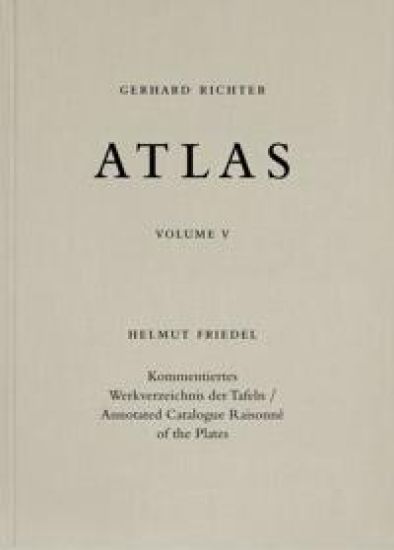
Kirjahaku
Etsi kirjoja tekijän nimen, kirjan nimen tai ISBN:n perusteella.
1000 tulosta hakusanalla Gerhard Hauser
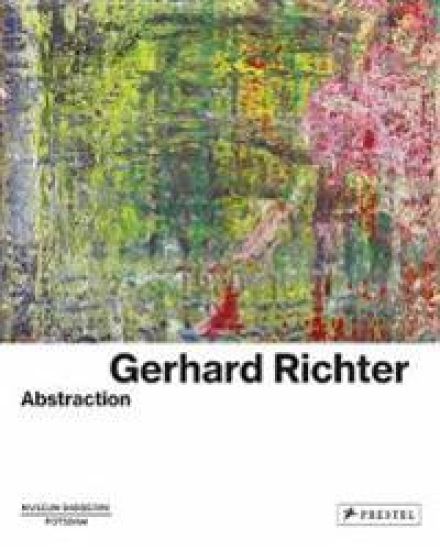
Gerhard Richter
Prestel
2020
pokkari
This publication is the first to focus solely on the abstract strategies and processes contained in Gerhard Richter’s body of work. In the early 1960s, the artist began to call painting into question, an exploration that continues to occupy him to this day. In the 1970s, he responded to the rejection of painting by creating a series of monochrome works in gray. Moreover, he viewed the colour gray as a means of addressing political themes without depicting them in an idealized manner. In his Inpainting series of the 1970s, Richter made brushstrokes and the application of paint his subject. In other works, he photographed small details from his palette and transferred them onto large canvases in a photorealistic manner. In his colour charts, he subjected painting to an objective process by leaving the arrangement of the colours to chance. Since 1976, Richter has created a series of abstract works by applying paint with a brush, scraper, and palette knife, alternating between conscious decision-making and random processes.
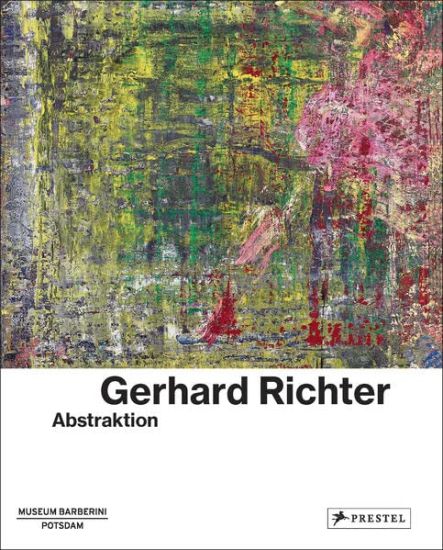
Gerhard Richter
PRESTEL VERLAG
2023
sidottu
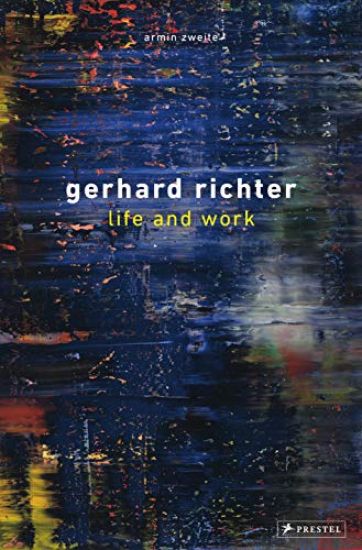
One of the world’s most revered visual artists, Gerhard Richter embraces many concepts in his work and continually thwarts categorisation. In this expansive and authoritative overview, Armin Zweite leads readers through every phase of Richter’s celebrated career including his early artistic education in East Germany and his later prolific output in West Germany: the black and white photo paintings, the brilliantly conceived colour charts and lush, inscrutable grey paintings, installations with glass and mirrors, his landscapes, portraits, and still lifes, and his monumental abstract paintings, which broke records at auction. Also included are selections from Richter’s larger-scale thematic works, such as Atlas, his ongoing collection of photographs and newspaper clippings, and October 18, 1977, a series of paintings commemorating the lives and deaths of members of a German left-wing terrorist group. The beautiful plates sections feature exquisite reproductions of more than 250 of his most famous works, including Ten Large Colour-charts (1966), Annunciation after Titian (1973), Faust (1980), Skull with Candle (1983), Funeral (1988), Strip (2012), and Double Gray (2014). Throughout, Zweite’s clear-eyed commentary offers an expert appraisal of the breadth of Richter’s oeuvre. This six-decade monograph of Richter’s work is a visually stunning and articulate appreciation by one of the world’s foremost experts on the artist and his life.

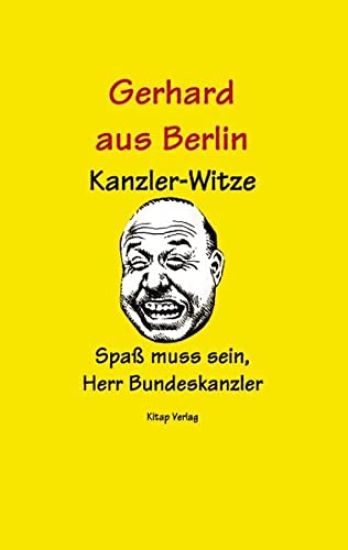
"Was haben Walter Ulbricht und Gerhard Schröder gemeinsam? Ulbricht versprach, nie eine Mauer zu bauen und Schröder versprach, nie die Steuern zu erhöhen." Die Zeit ist reif für das erste Buch mit Kanzler-Witzen. Wer in guten Zeiten in Fernseh-Shows auftritt, muss es sich gefallen lassen, wenn in schlechten Zeiten Witze über ihn gemacht werden. Spaß muss sein, Herr Bundeskanzler.
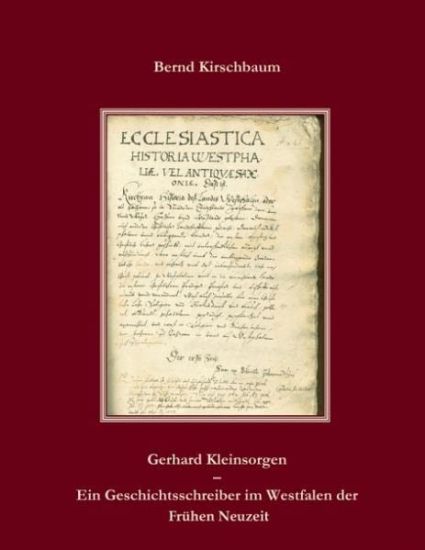
Diese Arbeit über den westfälischen Geschichtsschreiber und kurkölnischen Rat Gerhard Kleinsorgen (1530 - 1591) stößt in ein nach wie vor vernachlässigtes Forschungsfeld vor: Die Geschichte der Geschichtsschreibung in der Frühen Neuzeit. Kleinsorgen gehört insbesondere mit seiner Kirchengeschichte in die erste Reihe westfälischer Geschichtsschreiber und ist einer der am häufigsten explizit und implizit zitierten Gewährsleute der Geschichte Westfalens. Er hat sich von der traditionellen Autorität mit Wahrheitsanspruch gelöst und sich, sozusagen modern, der historischen Wahrheit methodisch genähert. Er war gleichzeitig der erste historische Schriftsteller katholischer Provenienz, der sich in der Region Westfalen bemühte, auf Hochdeutsch zu schreiben, was eine außerordentliche Neuerung darstellte, denn erst Jahrzehnte später folgten ihm andere nach. Im Mittelpunkt des Werkes von Gerhard Kleinsorgen steht die "Ecclesiastica Historia Westphaliae" über die Zeit von ca. 700 bis 1583. Während ihr Druck aus dem 18. Jahrhundert nur neun Bücher umfaßt (bis 1577), wird hier das in älteren Nachrichten erwähnte zehnte Buch auch realiter nachgeweisen, und zwar durchaus als Bestandteil der Kirchengeschichte. Mit mit dem Übersichtsschema der Entstehung des "Diarium Historiae Truchsessianae" wird auch der überraschende Befund dokumentiert ist, daß Kleinsorgen entgegen landläufiger Ansicht eben nicht der Autor dieser Schrift ist.

In 1988, Gerhard Richter created one of the most controversial and fascinating political painting-cycles of all time, with his Baader-Meinhof series. In 2002, he returned to the theme of media and political truth with his artist’s book War Cut. For this project, Richter photographed 216 details of his abstract painting ‘No. 648-2’ (1987), and, working on a long table over a period of several weeks, combined these 4 x 6-inch details with 165 texts on the Iraq war, published in the German Frankfurter Allgemeine Zeitung newspaper on the dates of the war’s outbreak (20 and 21 March 2003). ‘My method was to attach a number of texts to a number of images without having to think about whether something would be better positioned to the left or the right, above or below,’ Richter told an interviewer, for a New York Times feature on the publication. ‘I placed these images so that a connection develops in terms of colours, structures and other characteristics. . . . Some images match the cruelty and the madness described in the texts shockingly well. And others can even serve as illustrations when the texts speak of deserts and other landscapes.’ Originally published only in German in 2004, this long-awaited English version of this important artist’s book presents Richter’s powerful attempt to accommodate the extremity of war. For this edition, Richter applied the same process of text selection to The New York Times, using the same dates of the war’s outbreak.
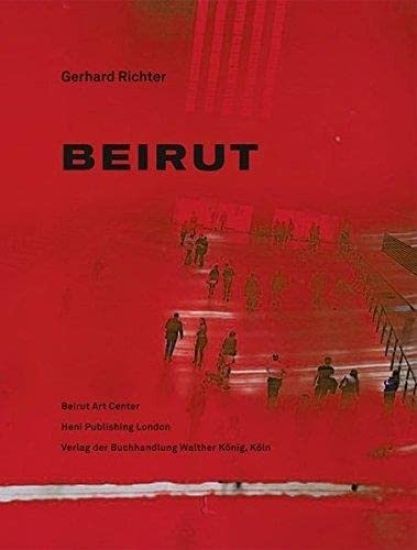
Gerhard Richter. Beirut
Lamia Joreige; Sandra Dagher; Achim Borchardt-Hume
Verlag der Buchhandlung Walther Konig
2024
sidottu
Beirut presents a large gathering of Gerhard Richter's overpainted photographs from the mid-1980s to the present. Rarely seen in print, these works merge the artist's longstanding fascination with the respective languages and textures of photography and abstract painting. The imagery ranges from domestic and family photos to holiday snaps, landscapes, mountain ranges and studio shots, all drawn from Richter's photographic archives. Also featured in this volume is Museum Visit, a series of 234 overpainted photographs, each of which was taken during a typical busy day at the Tate Modern. An essay by Achim Borchardt-Hume considers the overpainted photographs within Richter's wider oeuvre, from the photo paintings of the 1960s to the 18 October 1977 cycle, from Atlas to War Cut. Borchardt-Hume asserts: "The photographs allow an insight into the private world of Richter, albeit an insight that is always seen--quite literally--through the veil of paint and painting."
Gerhard Richter: ATLAS Vol.I-IV
Verlag der Buchhandlung Walther Konig
2015
sidottu
More than 50 years ago, Gerhard Richter began mounting parts of his extensive collection of pictorial material on cardboard, hoping to create order and clarity among his archive of photos, newspaper clippings, sketches, drawings, construction plans, room design, collages, overpainted photographs and drafts of paintings. Richter eschewed chronology--his real interest was in iconographical and typological order. A work in progress, this Atlas soon developed into an independent Gesamtkunstwerk mirroring biographical and historical facts--an artistic cosmos of great autonomy, a source of all of his thought and creation. The artist's book has become an important genre for Richter, and in this large-format, four-volume edition, he has not only reproduced Atlas, but rearranged it. His decision to show all of his plates at a scale of 1:2 makes the monumental archive--with more than 5,000 images--visible in all its details for the first time. Richter himself has redefined the color of his plates, piece by piece, through several correction phases, rendering this epic work accessible in a stunning new publication. Gerhard Richter (born 1932) was born in Dresden, in East Germany. He migrated to West Germany in 1961 and held his first solo exhibition in 1963. Richter's amazingly prolific multimedia output--from photo-paintings, to drawings, to photographs, to landscapes, to portraits, to sculptures--has been exhibited internationally for the last five decades. The artist lives and works in Cologne, Germany.
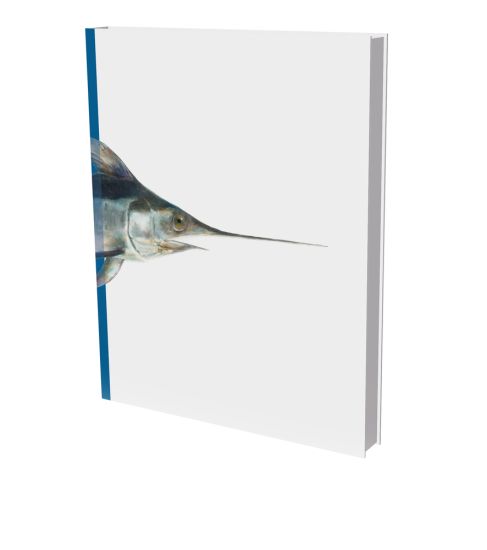
Gerhard Winkler: Fishes and Cephalopods
Gabriele Conrath-Scholl
SNOECK VERLAGSGESELLSCHAFT MBH
2021
sidottu
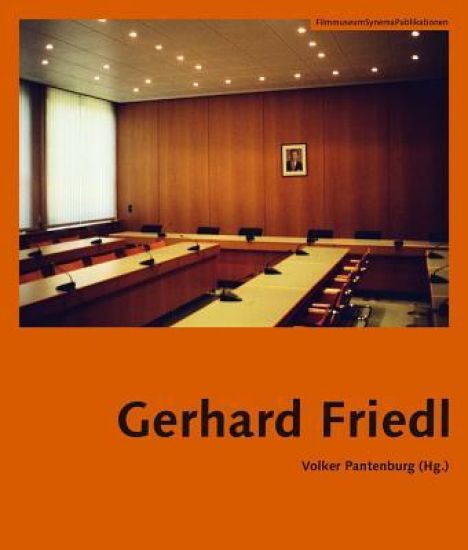
Gerhard Friedl German–language Edition – Ein Arbeitsbuch
Volker Pantenburg
Synema Gesellschaft Fur Film u. Medien
2019
nidottu
Austrian director Gerhard Benedikt Friedl (1967–2009) left a small but singular oeuvre. His two films Knittelfeld: A Town Without a History (1997) and Wolff von Amerongen—Did He Commit Bankruptcy Offenses? (2004) are formally rigorous documentary investigations that combine an erratic voice-over commentary with patient observational camera movements. Informed by his studies of philosophy, consciously building on work by James Benning, Straub/Huillet, and others, Friedl invented a unique method of exposing the conjunction of politics, history, and violence in twentieth-century European capitalism. After the critical acclaim of Wolff von Amerongen, the filmmaker embarked on a project investigating the history of the workers’ struggle in the United States, but decided to abandon it after a research trip to the historical locations convinced him of the difficulties in finding any remaining echoes of this historic movement. Traces of the project can be discerned in his final work, Shedding Details (2009), codirected by artist Laura Horelli.This book sheds light on the work behind Friedl’s films. It combines working process documentation, including photographs, project drafts, and excerpts from his correspondence, with conversations with close collaborators. At the same time, the juxtaposed material traces the path from Friedl’s first short films made at the University of Television and Film Munich (HFF) to several unfinished projects undertaken around the time of his premature death. In addition, it republishes the articles Friedl wrote as a film and art critic and highlights his work as a film teacher and occasional curator.The volume contains contributions by Gerhard Friedl; conversations with Rudolf Barmettler, Ivette Löcker, Laura Horelli, and others; as well as an introductory essay by editor Volker Pantenburg.
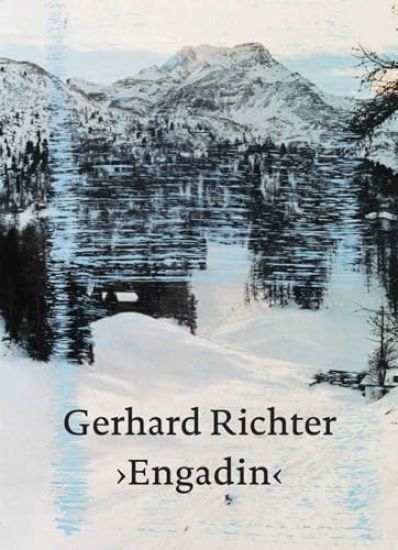
Gerhard Richter
Hauser Wirth
2024
nidottu
Produced to accompany a monumental 2023 exhibition across three Swiss locations, ‘Engadin’ delves into Gerhard Richter’s profound relationship with the Engadin region in the Swiss Alps.Coinciding with the eponymous exhibition happening concurrently at Nietzsche-Haus, Segantini Museum and Hauser & Wirth St. Moritz, Gerhard Richter: Engadin delves into the artist’s deep relationship with the Engadin region in the Swiss Alps, which he first visited in the late eighties. In an insightful essay by Dieter Schwarz, curator of the exhibition, works in the exhibition are discussed to explore the Alpine landscapes’ impact on the artist. With eighty color illustrations, the book features paintings, overpainted photographs, and archival images, with some materials available to see published for the first time.
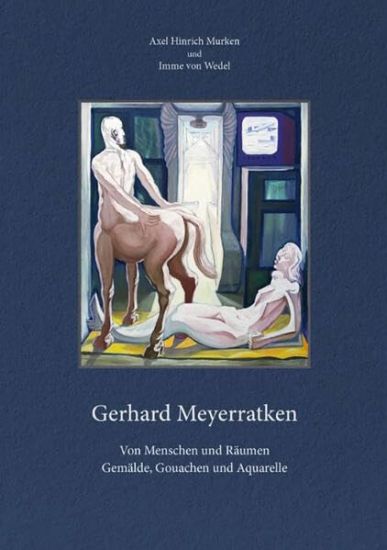
Gerhard Meyerratken. Von Menschen und Räumen.
Axel Hinrich Murken
Studien zur Medizin-, Kunst- und Literaturgeschichte
2023
nidottu
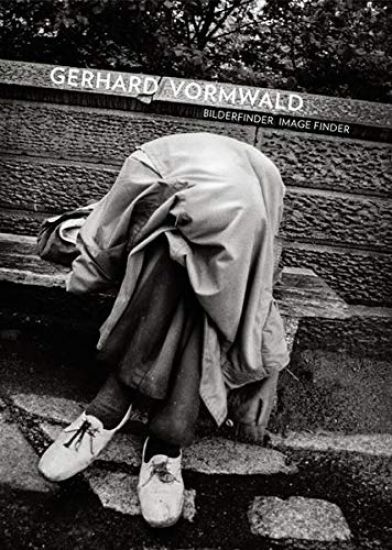
Gerhard Vormwald: Image Finder
Hartmann Books
2019
sidottu