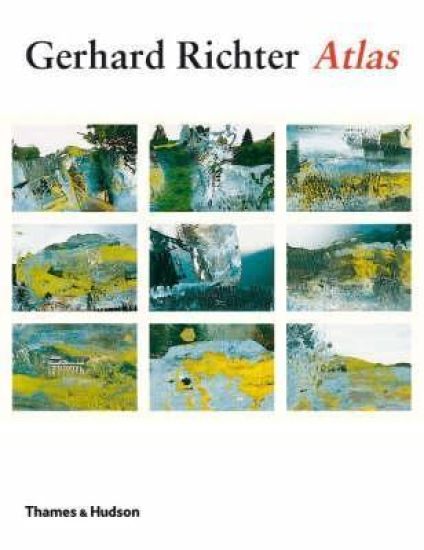
Maps the ideas, processes, life and times of one of the most important painters at work in the world today - Includes 733 full page, multi-panel, colour images. Richter himself devised the books concept and oversaw its creation. Can also be read as a reflection of recent German history.
Gerhard Herzberg (1904-1999), winner of the 1971 Nobel Prize in Chemistry, is considered the founder of molecular spectroscopy. Born and educated in Germany, he started his seven decades of research just as the discovery of quantum mechanics began unraveling the mysteries of the microscopic world. He chose to study spectroscopy, the light emitted and absorbed by atoms and molecules, eventually moving to Canada where he established the spectroscopy laboratory for the National Research Council. His Ottawa laboratory became a mecca for generations of young scientists from around the world. There Herzberg systematized the knowledge of the field in the classic trilogy Molecular Spectra and Molecular Structure, Atomic Spectra, and Atomic Structure. In awarding the Nobel Prize the Swedish Academy said, "It's quite exceptional in the field of science that a single individual, however distinguished, can be a leader of a whole area of research of general importance."
Documents the craft of the organbuilder Gerhard Brunzema (1927-1992) in terms of the organs he built and how his instruments and his approach to organbuilding had an influence on music history. Divided into two parts, Part I contains essays by people who knew Brunzema and his work, and documents his skill both in the restoration of historically significant instruments in Europe, as well as in the building of new organs in his own style throughout the world. Also included in this section are two musical compositions in his memory by Gerhard Krapf and Barrie Cabena. Part II details the organs themselves during the three phases of his career: in Germany (1954-1971) with his partner Jurgen Ahrend; in Quebec, Canada (1972-1979) with Casavant Freres; and in Ontario (1980-1992) in his own workshop. This section features a complete listing of all the organs he built, descriptions of seventy organs, and a complete technical documentation of one of his instruments. Also included are three articles by Brunzema, proposals for organs that were never built, an annotated discography, a listing of the published photographs of his organs, videography, bibliography, 16 black and white photographs and 41 line drawings.
This set of volumes places the labor markets, workplaces, jobs and workers of Europe in comparative perspective. It focuses on the politics, economics, sociology, and history of work and workers in Europe. Authors contribute a variety of methodological and theoretical perspectives, with papers that push the boundaries of evidence and argument. In order to place European workers in comparative perspectives, the volume features articles that analyze specific European countries, industries and firms, analyze Europe as one of a few cases, and analyze many European countries within a cross-national sample. Specific topics covered include: a multilevel study of perceived job insecurity in 27 European countries; work values and job rewards among European workers; managerial intensity and earnings inequality in affluent democracies; cross-national patterns in individual and household employment and work hours by gender and parenthood; the political economy of active social policy in postindustrial democracies; social protection dualism, deindustrialization and cost containment; organized labor in Europe; and, unionization in East European ex-communist countries.
This book reevaluates the art of Gerhard Richter (b. 1932) in relation to his efforts to achieve belonging in the face of West Germany’s increasing individualism between the 1960s and the 1990s.Richter fled East Germany in 1961 to escape the constraints of socialist collectivism. His varied and extensive output in the West attests to his greater freedom under capitalism, but also to his struggles with belonging in a highly individualised society, a problem he was far from alone in facing. The dynamic of increasing individualism has been closely examined by sociologists, but has yet to be employed as a framework for understanding broader trends in recent German art history. Rather than critique this development from a socialist perspective or experiment with new communal structures like a number of his colleagues, Richter sought and found security in traditional modes of bourgeois collectivity, like the family, religion, painting and the democratic capitalist state.The book will be of interest to scholars working in art history as well as German history, culture and politics.
This book reevaluates the art of Gerhard Richter (b. 1932) in relation to his efforts to achieve belonging in the face of West Germany’s increasing individualism between the 1960s and the 1990s.Richter fled East Germany in 1961 to escape the constraints of socialist collectivism. His varied and extensive output in the West attests to his greater freedom under capitalism, but also to his struggles with belonging in a highly individualised society, a problem he was far from alone in facing. The dynamic of increasing individualism has been closely examined by sociologists, but has yet to be employed as a framework for understanding broader trends in recent German art history. Rather than critique this development from a socialist perspective or experiment with new communal structures like a number of his colleagues, Richter sought and found security in traditional modes of bourgeois collectivity, like the family, religion, painting and the democratic capitalist state.The book will be of interest to scholars working in art history as well as German history, culture and politics.
This title was first published in 2000: Catalan-born composer Roberto Gerhard (1896-1970) left significant legacies - both musical and documentary. Exiled in Cambridge with the onset of the Spanish Civil War, he gradually achieved wide recognition by performers and conductors, in both Britain and America, as a composer whose music was essential to the modern repertoire. In this work, Meirion Bowen collects many of the composer's articles, reviews, lectures and broadcasts to demonstrate the full extent and continuity of Gerhard's artistic and creative thinking. The writings have been arranged thematically to emphasize the evolution of Gerhard's musical interests. His attachment to Spanish and Catalonian traditions broadened into a fascination with folk music of all kinds. His studies with Schoenberg in the mid 1920s gave him the key to his own creative individuality; thereafter, his imaginative vitality led him eventually to experiment with electronic and concrete music and he continued breaking new ground, even in his final years.
This title was first published in 2000: Catalan-born composer Roberto Gerhard (1896-1970) left significant legacies - both musical and documentary. Exiled in Cambridge with the onset of the Spanish Civil War, he gradually achieved wide recognition by performers and conductors, in both Britain and America, as a composer whose music was essential to the modern repertoire. In this work, the author collects many of the composer's articles, reviews, lectures and broadcasts to demonstrate the full extent and continuity of Gerhard's artistic and creative thinking. The writings have been arranged thematically to emphasize the evolution of Gerhard's musical interests. His attachment to Spanish and Catalonian traditions broadened into a fascination with folk music of all kinds. His studies with Schoenberg in the mid 1920s gave him the key to his own creative individuality; thereafter, his imaginative vitality led him eventually to experiment with electronic and concrete music and he continued breaking new ground, even in his final years.
Aline Guillermet uncovers Gerhard Richter's appropriation of science and technology from 1960 to the present and shows how this has shaped the artist's well-documented engagement with the canon of Western painting. Through a study of Richter's portraits, history paintings, landscapes and ornamental abstractions, Guillermet reveals the artist's role in affirming the technological condition of painting in the second half of the twentieth century: a historical situation in which the medium and its conventions have become shaped, and to some extent transformed, by technological innovations.
A lavishly illustrated monograph that spans the entire career of Gerhard Richter, one of the most celebrated contemporary artists "Spans the contemporary German artist's six-decade career. . . . [A] stirring exhibition in [its] own right."—New York Times"[A] weighty catalogue... illuminat[es] some less-visited corners of Richter's oeuvre."—New York Review of Books Over the course of his acclaimed 60-year career, Gerhard Richter (b. 1932) has employed both representation and abstraction as a means of reckoning with the legacy, collective memory, and national sensibility of post–Second World War Germany, in both broad and very personal terms. This handsomely designed book features approximately 100 of his key canvases, from photo paintings created in the early 1960s to portraits and later large-scale abstract series, as well as select works in glass. New essays by eminent scholars address a variety of themes: Sheena Wagstaff evaluates the conceptual import of the artist’s technique; Benjamin H. D. Buchloh discusses the poignant Birkenau paintings (2014); Peter Geimer explores the artist’s enduring interest in photographic imagery; Briony Fer looks at Richter’s family pictures against traditional painting genres and conventions; Brinda Kumar investigates the artist’s engagement with landscape as a site of memory; André Rottmann considers the impact of randomization and chance on Richter’s abstract works; and Hal Foster examines the glass and mirror works. As this book demonstrates, Richter’s rich and varied oeuvre is a testament to the continued relevance of painting in contemporary art.Published by The Metropolitan Museum of Art/Distributed by Yale University PressExhibition Schedule:The Met Breuer, New York (March 4–July 5, 2020)Museum of Contemporary Art, Los Angeles (August 14, 2020–January 19, 2021)
This title takes an illuminating look at the unique work and artistic vision of Gerhard Richter. Born in Dresden in 1932, Gerhard Richter was first educated under the prevailing doctrine of Socialist Realism, but retrained after emigrating to West Germany, thus uniquely embodying the division of Germany during the Cold War. This volume brings together new studies of his early career by an international group of scholars. The authors approach the context from a variety of angles including the social and political histories of a divided Germany, the conflicted development of Soviet Socialist Realism in East Germany, a Cold War visuality integrating pre- and post- resettlement works, the archival dimension of the artist's output in relation to "Richter's Atlas", and the artist's involvement in the representation of his work in archives, exhibitions, and catalogues.