Kirjojen hintavertailu. Mukana 11 699 587 kirjaa ja 12 kauppaa.

Kirjahaku

Etsi kirjoja tekijän nimen, kirjan nimen tai ISBN:n perusteella.

1000 tulosta hakusanalla Gerhard Wirth

Gerhard Richter

Gerhard Richter

Richter Gerhard

Verlag der Buchhandlung Walther Konig
2013
sidottu
In 1988, Gerhard Richter created one of the most controversial and fascinating political painting-cycles of all time, with his Baader-Meinhof series. In 2002, he returned to the theme of media and political truth with his artist’s book War Cut. For this project, Richter photographed 216 details of his abstract painting ‘No. 648-2’ (1987), and, working on a long table over a period of several weeks, combined these 4 x 6-inch details with 165 texts on the Iraq war, published in the German Frankfurter Allgemeine Zeitung newspaper on the dates of the war’s outbreak (20 and 21 March 2003). ‘My method was to attach a number of texts to a number of images without having to think about whether something would be better positioned to the left or the right, above or below,’ Richter told an interviewer, for a New York Times feature on the publication. ‘I placed these images so that a connection develops in terms of colours, structures and other characteristics. . . . Some images match the cruelty and the madness described in the texts shockingly well. And others can even serve as illustrations when the texts speak of deserts and other landscapes.’ Originally published only in German in 2004, this long-awaited English version of this important artist’s book presents Richter’s powerful attempt to accommodate the extremity of war. For this edition, Richter applied the same process of text selection to The New York Times, using the same dates of the war’s outbreak.
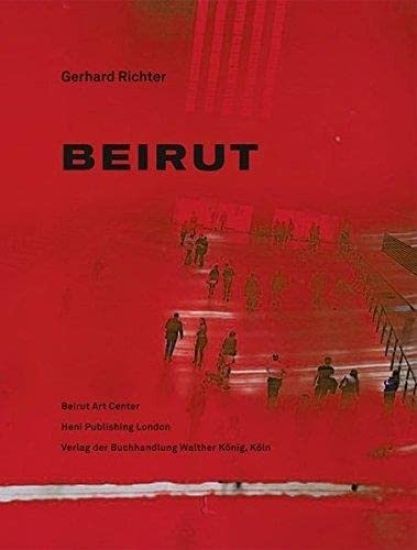
Gerhard Richter. Beirut

Gerhard Richter. Beirut

Lamia Joreige; Sandra Dagher; Achim Borchardt-Hume

Verlag der Buchhandlung Walther Konig
2024
sidottu
Beirut presents a large gathering of Gerhard Richter's overpainted photographs from the mid-1980s to the present. Rarely seen in print, these works merge the artist's longstanding fascination with the respective languages and textures of photography and abstract painting. The imagery ranges from domestic and family photos to holiday snaps, landscapes, mountain ranges and studio shots, all drawn from Richter's photographic archives. Also featured in this volume is Museum Visit, a series of 234 overpainted photographs, each of which was taken during a typical busy day at the Tate Modern. An essay by Achim Borchardt-Hume considers the overpainted photographs within Richter's wider oeuvre, from the photo paintings of the 1960s to the 18 October 1977 cycle, from Atlas to War Cut. Borchardt-Hume asserts: "The photographs allow an insight into the private world of Richter, albeit an insight that is always seen--quite literally--through the veil of paint and painting."
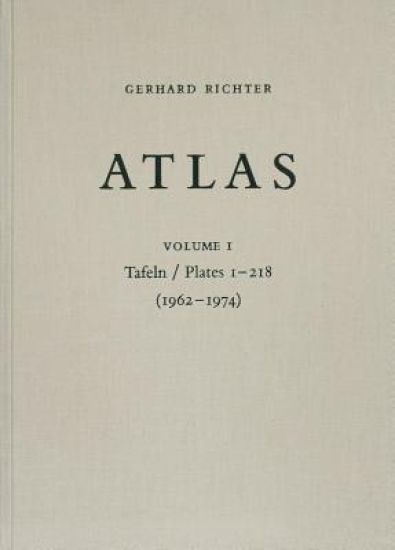
Gerhard Richter: ATLAS Vol.I-IV

Gerhard Richter: ATLAS Vol.I-IV

Verlag der Buchhandlung Walther Konig
2015
sidottu
More than 50 years ago, Gerhard Richter began mounting parts of his extensive collection of pictorial material on cardboard, hoping to create order and clarity among his archive of photos, newspaper clippings, sketches, drawings, construction plans, room design, collages, overpainted photographs and drafts of paintings. Richter eschewed chronology--his real interest was in iconographical and typological order. A work in progress, this Atlas soon developed into an independent Gesamtkunstwerk mirroring biographical and historical facts--an artistic cosmos of great autonomy, a source of all of his thought and creation. The artist's book has become an important genre for Richter, and in this large-format, four-volume edition, he has not only reproduced Atlas, but rearranged it. His decision to show all of his plates at a scale of 1:2 makes the monumental archive--with more than 5,000 images--visible in all its details for the first time. Richter himself has redefined the color of his plates, piece by piece, through several correction phases, rendering this epic work accessible in a stunning new publication. Gerhard Richter (born 1932) was born in Dresden, in East Germany. He migrated to West Germany in 1961 and held his first solo exhibition in 1963. Richter's amazingly prolific multimedia output--from photo-paintings, to drawings, to photographs, to landscapes, to portraits, to sculptures--has been exhibited internationally for the last five decades. The artist lives and works in Cologne, Germany.
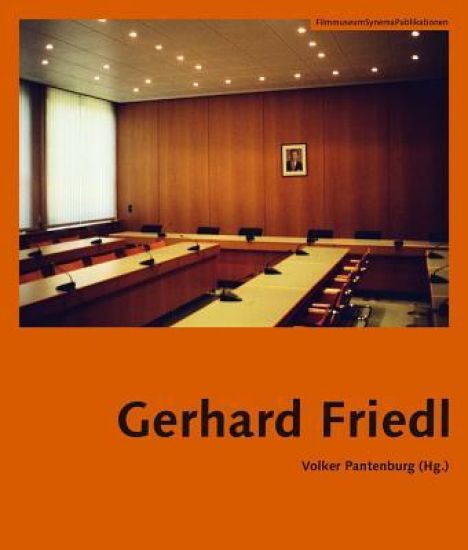
Gerhard Friedl German–language Edition – Ein Arbeitsbuch

Gerhard Friedl German–language Edition – Ein Arbeitsbuch

Volker Pantenburg

Synema Gesellschaft Fur Film u. Medien
2019
nidottu
Austrian director Gerhard Benedikt Friedl (1967–2009) left a small but singular oeuvre. His two films Knittelfeld: A Town Without a History (1997) and Wolff von Amerongen—Did He Commit Bankruptcy Offenses? (2004) are formally rigorous documentary investigations that combine an erratic voice-over commentary with patient observational camera movements. Informed by his studies of philosophy, consciously building on work by James Benning, Straub/Huillet, and others, Friedl invented a unique method of exposing the conjunction of politics, history, and violence in twentieth-century European capitalism. After the critical acclaim of Wolff von Amerongen, the filmmaker embarked on a project investigating the history of the workers’ struggle in the United States, but decided to abandon it after a research trip to the historical locations convinced him of the difficulties in finding any remaining echoes of this historic movement. Traces of the project can be discerned in his final work, Shedding Details (2009), codirected by artist Laura Horelli.This book sheds light on the work behind Friedl’s films. It combines working process documentation, including photographs, project drafts, and excerpts from his correspondence, with conversations with close collaborators. At the same time, the juxtaposed material traces the path from Friedl’s first short films made at the University of Television and Film Munich (HFF) to several unfinished projects undertaken around the time of his premature death. In addition, it republishes the articles Friedl wrote as a film and art critic and highlights his work as a film teacher and occasional curator.The volume contains contributions by Gerhard Friedl; conversations with Rudolf Barmettler, Ivette Löcker, Laura Horelli, and others; as well as an introductory essay by editor Volker Pantenburg.
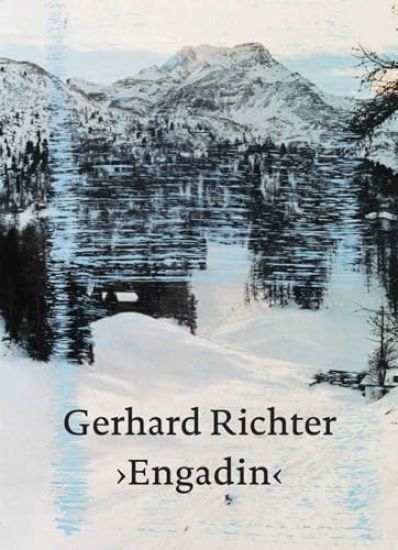
Gerhard Richter

Gerhard Richter

Hauser Wirth
2024
nidottu
Produced to accompany a monumental 2023 exhibition across three Swiss locations, ‘Engadin’ delves into Gerhard Richter’s profound relationship with the Engadin region in the Swiss Alps.Coinciding with the eponymous exhibition happening concurrently at Nietzsche-Haus, Segantini Museum and Hauser & Wirth St. Moritz, Gerhard Richter: Engadin delves into the artist’s deep relationship with the Engadin region in the Swiss Alps, which he first visited in the late eighties. In an insightful essay by Dieter Schwarz, curator of the exhibition, works in the exhibition are discussed to explore the Alpine landscapes’ impact on the artist. With eighty color illustrations, the book features paintings, overpainted photographs, and archival images, with some materials available to see published for the first time.
Gerhard Richter

Gerhard Richter

Hubertus Butin

Verlag der Buchhandlung Walther Konig
2018
sidottu
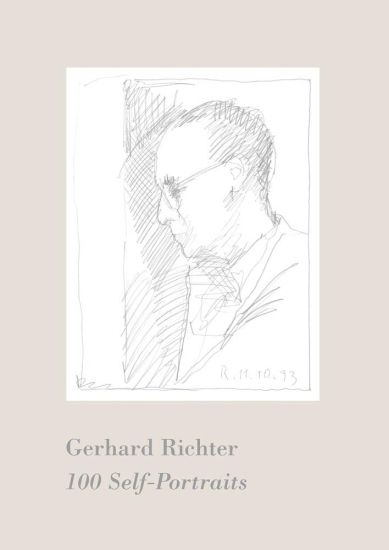
For the subscription edition of Gerhard Richter's (born 1932) Schriften und Interviews, published by Insel Verlag in 1993 in an edition of 100 copies, the artist drew a small "self-portrait" in pencil on the back of a portrait photograph at the front of the book. Enthused by this work, between September and December 1993 he produced a further 94 signed and dated self-portraits on loose sheets of paper, which are published here for the first time. Seen together as a series, Richter's exercise becomes truly impressive: despite the consistency of conception, each instance has an individual formal and aesthetic appearance. These pencil drawings form a series of variations whose aspiration is not the gradual approach toward a perfected final outcome, but rather the serial testing of different but equally weighted possibilities of representation within limited specifications.
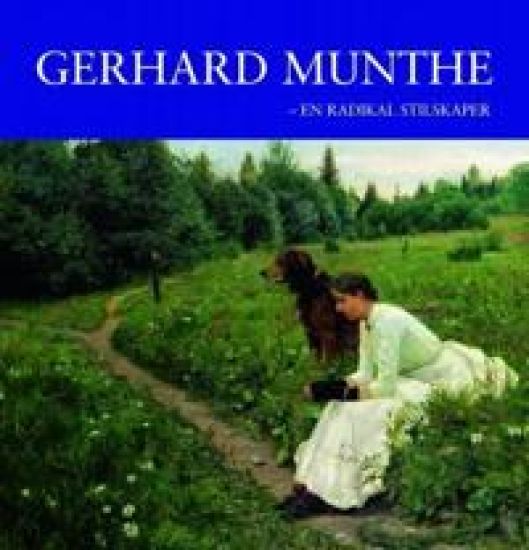
Gerhard Munthe

Gerhard Munthe

Lillehammer kunstmuseum
2011
sidottu
Gerhard Munthe (1849 - 1929) var en av de ledende kunstnere som utgjorde den store 1880 - talls generasjonen i norsk malerkunst. Munthe vokste opp i Elverum. Den rolige østlandsnaturen på flatbygdene i Hedemark kom for all tid til å prege hans landskapskunst. Han malte også figurer, men han var primært en landskapsmaler. Munthe deltok på den første Høstutstilling i 1882. Han var også med i den berømmelige Fleskum - kolonien i Bærum i 1886. Han hadde større dekorative prosjekter, Eventyrværelset på Holmenkollen Turisthotell og illustreringen av den nye praktutgaven av Snorres kongesagaer. Boken utgis i samarbeid med Lillehammer Kunstmuseum som sommeren 2011 har en betydelig utstilling av Gerhard Munthes arbeider. Forfatteren av boken er kunsthistorikeren Jan Kokkin.
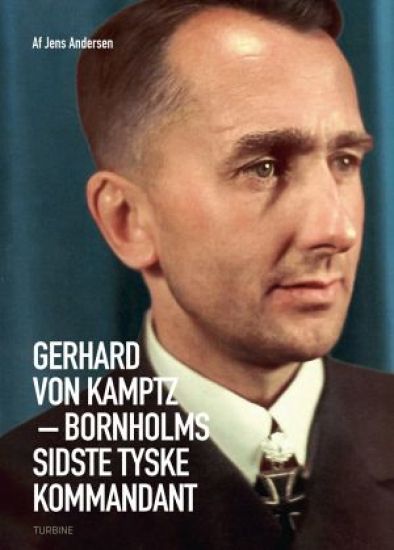
Gerhard von Kamptz – Bornholms sidste tyske kommandant
I maj 1945 la° det meste af Rønne og Neksø i ruiner efter sovjetiske bombeangreb. Alle var dengang enige om, at skylden for ødelæggelserne la° hos den tyske besættelsesmagt og specielt pa° dens kommandant over øen, Gerhard von Kamptz, som i sin “fanatiske og forbryderiske stivnakkethed” havde nægtet at overgive øen til russerne. I tidens løb er synet pa° manden blevet mere nuanceret, for tingene var mere komplicerede, end man ville indrømme i 1945. Faktisk fremsta°r han i den seneste forskning som en ganske almindelig soldat, som handlede uangribeligt i den situation, han stod i.Jens Andersens indga°ende studie af ærkenazisten Gerhard von Kamptz lange liv (1902-1995) giver det til dato bedst dokumenterede billede af mennesket og soldaten Gerhard von Kamptz. Jens Andersens skildring af en tysk soldats og officers militære løbebane er samtidigt meget spændende og bliver krydret med opvækstdetaljer og efterkrigstidsinformation om manden. Forfatteren ser kritisk pa° sit undersøgelsesobjekt, soldaten von Kamptz, og sympatiserer ikke med ham, men afdækker historien ved at bruge det omfangsrige kildemateriale til at tegne et nuanceret billede. Jens Andersen ser det sa°ledes ogsa° fra von Kamptz’ eget udgangspunkt og forsøger dermed at afdække og forklare hans fatale handlema°der ved den sovjetiske invasion af Bornholm.
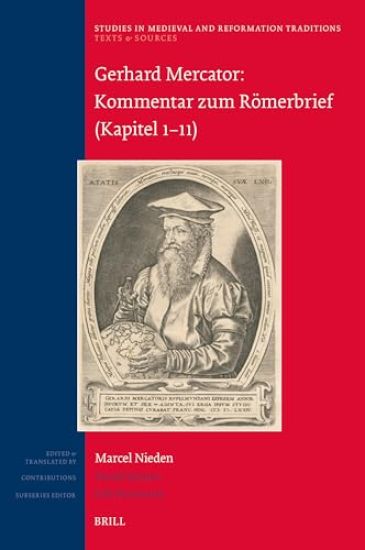
Gerhard Mercator: Kommentar Zum Römerbrief (Röm 1-11)
Gerhard Mercator's (1512-1594) main theological work, previously available only in manuscript form, is presented here for the first time in a critical edition with a German translation. The commentary on the Epistle to the Romans (chapters 1-11) reveals the Duisburg cartographer to be an independent theologian. Engaging critically with the predestination doctrine of John Calvin and Theodor Beza, Mercator defends man's freedom of will and the unconditional goodness of God. His 'doctrinal' interpretation of St. Paul's text sheds light on new previously unexplored aspects of his theological and philosophical thought. This bilingual edition is a valuable source not only for reconstructing the religious foundation of this early modern scholar, but also for researching the cultural conditions under which modern science emerged. Das bislang nur handschriftlich vorliegende theologische Hauptwerk Gerhard Mercators (1512-1594) wird hier erstmals ediert und ins Deutsche bersetzt. Der Kommentar zum R merbrief (Kapitel 1-11) erweist den Duisburger Kartographen als eigenst ndigen Theologen. In kritischer Auseinandersetzung mit den Pr destinationsvorstellungen Johannes Calvins und Theodor Bezas verteidigt Mercator die Willensfreiheit des Menschen sowie die vorbehaltlose G te Gottes. Die 'doktrinale' Auslegung des Paulustextes l sst zahlreiche Facetten des theologischen und philosophischen Denkens Mercators neu oder berhaupt erst sichtbar werden. Mit der zweisprachigen Ausgabe wird eine wertvolle Quelle nicht nur zur Rekonstruktion der religi sen Grundierung des fr hneuzeitlichen Gelehrten, sondern auch zur Erforschung der kulturellen Entstehungsbedingungen moderner Wissenschaft erschlossen.
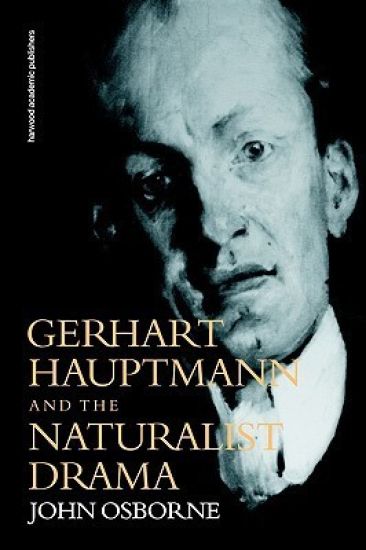
Gerhard Hauptmann and the Naturalist Drama
What was German Naturalism? What were its achievements? How does it compare with its counterparts in other European countries? These are some of the difficult questions addressed by John Osborne in Gerhart Hauptmann and the Naturalist Drama, a revised and updated version of his The Naturalist Drama in Germany, now widely acknowledged as the standard introduction to the subject. The debates to which he contributed, and in some cases initiated, on Naturalism in the German theatre, Naturalist theory in Germany, and the development of the Naturalist movement to the contemporary Social Democrat movement, have remained central issues. This revised edition preserves the structure and approach of the original, including its emphasis on the early dramas of Hauptmann, while taking full account of subsequent scholarship which provides the context in which this Naturalist playwright's work can be placed.