Kirjojen hintavertailu. Mukana 12 390 323 kirjaa ja 12 kauppaa.

Kirjahaku

Etsi kirjoja tekijän nimen, kirjan nimen tai ISBN:n perusteella.

1000 tulosta hakusanalla Giulio Cappi

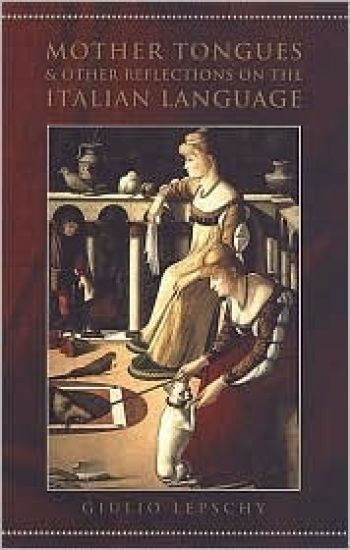
Mother Tongues and Other Reflections on the Italian Language

Mother Tongues and Other Reflections on the Italian Language

Giulio Lepschy

University of Toronto Press
2002
sidottu
Italian is unique among modern European languages, for although it has a history going back eight centuries, it has only consolidated as a spoken national language during the twentieth century. Previously, it was a written, literary language, and people spoke regional dialects that were strikingly different from each other. This has intriguing implications for understanding notions such as mother tongue, native speaker, and literary language, and Giulio Lepschy discusses these and other issues in this collection of six scholarly essays on the Italian language. Lepschy also explores a little understood aspect of Italian prosody (the system of secondary stresses), and analyzes a Venetian play of the Renaissance, La Veniexiana, in which a 'gendered' reading helps to clarify some grammatically controversial passages. These aspects of the play had been examined by Carlo Dionisotti, the eminent Italianist whose life and works are the subject of the final essay. Lepschy's approach combines the insights of modern linguistic theory and the findings of fresh and original philological investigations. His essays will be essential to anyone interested in the Italian language.
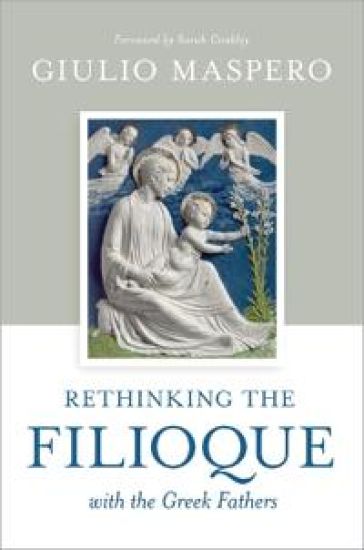
Rethinking the Filioque with the Greek Fathers

Rethinking the Filioque with the Greek Fathers

Giulio Maspero; Sarah Coakley

WILLIAM B EERDMANS PUBLISHING CO
2023
sidottu
Does the Holy Spirit proceed only from the Father--or also from the Son? Protestants and Roman Catholics might immediately answer the latter and wonder why their Orthodox friends protest. Historically one of the major obstacles to Christian unity across the East-West divide, the Filioque--the part of the Latin translation of the Nicene Creed claiming the Holy Spirit proceeds from the Father and the Son--still bedevils Trinitarian theologians today. How can the church possibly achieve unity in the face of this dogmatic difference, implacable for over a millennium? Giulio Maspero shows us how the answer can be found in history. In the fourth century, when Pneumatomachians denied the divinity of the Holy Spirit, the Cappadocian Fathers came to a relational understanding of the most elusive person of the Trinity: the Holy Spirit was conceived of as the glory and power eternally exchanged between the Father and the Son. In fact, this understanding is still fundamentally shared by Eastern and Western Christians. Examining Syriac traditions as an example, Maspero observes that both Syriac and Latin lack the linguistic precision to describe the nature of the Holy Spirit's procession from the Trinity in the same way as Greek, hence the ambiguous Filioque. Yet what might be seen on the surface as a mere translation error reveals deep questions about the triune nature of God. With rigorous theological argument, Maspero ultimately proposes a way forward for East and West--one based not on centuries of polemics, but on a common tradition established by the Greek Fathers. Essential reading for the ecumenically minded theologian, Rethinking the Filioque with the Greek Fathers takes a crucial step toward Christian unity.
Feeling Faint

Feeling Faint

Giulio J. Pertile

Northwestern University Press
2019
nidottu
Feeling Faint is a book about human consciousness in its most basic sense: the awareness, at any given moment, that we live and feel. Such awareness, it argues, is distinct from the categories of selfhood to which it is often assimilated, and can only be uncovered at the margins of first-person experience. What would it mean to be conscious without being a first person—to be conscious in the absence of a self? Such a phenomenon, subsequently obscured by the Enlightenment identification of consciousness and personal identity, is what we discover in scenes of swooning from the Renaissance: consciousness without self, consciousness reconceived as what Frederic Jameson calls "a registering apparatus for transformed states of being." Where the early modern period has often been seen in terms of the rise of self-aware subjectivity, Feeling Faint argues that swoons, faints, and trances allow us to conceive of Renaissance subjectivity in a different guise: as the capacity of the senses and passions to experience, regulate, and respond to their own activity without the intervention of first-person awareness. In readings of Renaissance authors ranging from Montaigne to Shakespeare, Pertile shows how self-loss affords embodied consciousness an experience of itself in a moment of intimate vitality which precedes awareness of specific objects or thoughts—an experience with which we are all familiar, and yet which is tantalizingly difficult to pin down.
Feeling Faint

Feeling Faint

Giulio J. Pertile

Northwestern University Press
2019
sidottu
Feeling Faint is a book about human consciousness in its most basic sense: the awareness, at any given moment, that we live and feel. Such awareness, it argues, is distinct from the categories of selfhood to which it is often assimilated, and can only be uncovered at the margins of first-person experience. What would it mean to be conscious without being a first person—to be conscious in the absence of a self? Such a phenomenon, subsequently obscured by the Enlightenment identification of consciousness and personal identity, is what we discover in scenes of swooning from the Renaissance: consciousness without self, consciousness reconceived as what Frederic Jameson calls "a registering apparatus for transformed states of being." Where the early modern period has often been seen in terms of the rise of self-aware subjectivity, Feeling Faint argues that swoons, faints, and trances allow us to conceive of Renaissance subjectivity in a different guise: as the capacity of the senses and passions to experience, regulate, and respond to their own activity without the intervention of first-person awareness. In readings of Renaissance authors ranging from Montaigne to Shakespeare, Pertile shows how self-loss affords embodied consciousness an experience of itself in a moment of intimate vitality which precedes awareness of specific objects or thoughts—an experience with which we are all familiar, and yet which is tantalizingly difficult to pin down.
The Command of the Air

The Command of the Air

Giulio Douhet

Fine Ant Books
2009
nidottu
The Italian General Giulio Douhet reigns as one of the twentieth century’s foremost strategic air power theorists. As such scholars as Raymond Flugel have pointed out, Douhet’s theories were crucial at a pivotal pre-World War II Army Air Force institution, the Air Corps Tactical School.
The Cappadocian Reshaping of Metaphysics

The Cappadocian Reshaping of Metaphysics

Giulio Maspero

Cambridge University Press
2023
sidottu
In this volume, Giulio Maspero explores both the ontology and the epistemology of the Cappadocians from historical and speculative points of view. He shows how the Cappadocians developed a real Trinitarian Ontology through their reshaping of the Aristotelian category of relation, which they rescued from the accidental dimension and inserted into the immanence of the one divine and eternal substance. This perspective made possible a new conception of individuation. No longer exclusively linked to substantial difference, as in classical Greek philosophy, the concept was instead founded on the mutual relation of the divine Persons. The Cappadocians' metaphysical reshaping was also closely linked to a new epistemological conception based on apophaticism, which shattered the logical closure of their opponents, and anticipated results that modern research has subsequently highlighted, Bridging the late antique philosophy with Patristics, Maspero' s study allows us to find the relational traces within the Trinity in the world and in history.
Living the Modern Way; Form and Color in Interior Decoration
This work has been selected by scholars as being culturally important and is part of the knowledge base of civilization as we know it.This work is in the public domain in the United States of America, and possibly other nations. Within the United States, you may freely copy and distribute this work, as no entity (individual or corporate) has a copyright on the body of the work.Scholars believe, and we concur, that this work is important enough to be preserved, reproduced, and made generally available to the public. To ensure a quality reading experience, this work has been proofread and republished using a format that seamlessly blends the original graphical elements with text in an easy-to-read typeface.We appreciate your support of the preservation process, and thank you for being an important part of keeping this knowledge alive and relevant.