This book is a one-stop comprehensive guide to geographical inquiry. A step-by-step account of the hows and the whys of research methodology. Introduces students to the complexities of geographical perspective and thought, essentials of fieldwork, formulation of research topics, data collection, analysis and interpretation as well as presentation a
This book is a one-stop comprehensive guide to geographical inquiry. The volume: traces the step-by-step account of the whys and the hows of research methodology; introduces complexities of the geographical perspective, selection of research topic, choice of supervisor and formulation of research proposal; fine-tunes the sequence of data collection, analysis, representation and interpretation, and spells out the skill of writing research with geographic flavour; and reinforces concepts and ideas with examples so as not to leave any scope for ambiguity. The second edition updates on the variety of emerging perspectives in geographic research, use of spatial technologies in practice, sampling at different spatial levels and insightful interpretation of data.Lucid, engaging and accessible, this book will be an essential companion for researchers and students of geography, social sciences and South Asian studies.
This book is a one-stop comprehensive guide to geographical inquiry. The volume: traces the step-by-step account of the whys and the hows of research methodology; introduces complexities of the geographical perspective, selection of research topic, choice of supervisor and formulation of research proposal; fine-tunes the sequence of data collection, analysis, representation and interpretation, and spells out the skill of writing research with geographic flavour; and reinforces concepts and ideas with examples so as not to leave any scope for ambiguity. The second edition updates on the variety of emerging perspectives in geographic research, use of spatial technologies in practice, sampling at different spatial levels and insightful interpretation of data.Lucid, engaging and accessible, this book will be an essential companion for researchers and students of geography, social sciences and South Asian studies.
This book focuses on developing a holistic sustainability assessment model for built environment that can help in identifying sustainability issues and parameters for the built environment. It covers a wide range of sustainable built form issues in the local and regional contexts.The volume identifies significant built form sustainability indicators, criteria and sub-criterion while highlighting the importance of incorporating sustainability principles and assessment of sustainability. It also discusses the data collection process for defining priorities of sustainability parameters using the Analytic Hierarchy Process (AHP) technique. The book presents information to obtain fuzzy weights to classify assessed built form. The chapters in this book explain the development of an integrated built environment assessment system for infrastructure projects.This book will be of interest to students, teachers and researchers of planning, architecture, construction, urban studies, interior designing, urban planning and civil engineering. It will also be useful for architects, planners, civil engineers, interior designers, builders, developers, green building assessors and those interested in the sustainable assessment-built environment and urban development.
Business Excellence and Total Quality Management (TQM) models provide a means of measuring the satisfaction of customers, employees and shareholders simultaneously. A number of such models currently exist, but, the author argues, none of these address all dimensions of TQM. This book introduces the principles of TQM, and establishes their use in measuring Business Excellence in an organisational environment. It comparatively evaluates various TQM and Business Excellence models, and discusses the complexities of measuring success. Presenting important, innovative work by one of the most eminent scholars in the field, this book is essential reading for both academics and professionals working in quality management.
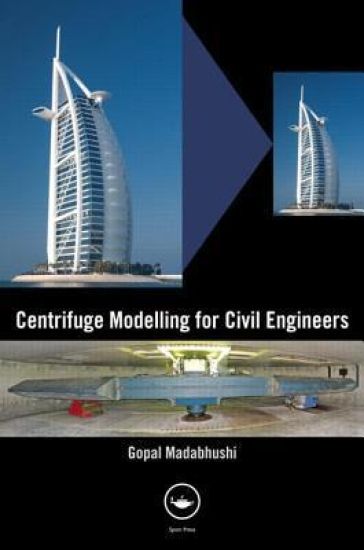
Solve Complex Ground and Foundation ProblemsPresenting more than 25 years of teaching and working experience in a wide variety of centrifuge testing, the author of Centrifuge Modelling for Civil Engineers fills a need for information about this field. This text covers all aspects of centrifuge modelling. Expertly explaining the basic principles, the book makes this technique accessible to practicing engineers and researchers.Appeals to Non-Specialists and Specialists AlikeCivil engineers that are new to the industry can refer to this material to solve complex geotechnical problems. The book outlines a generalized design process employed for civil engineering projects. It begins with the basics, and then moves on to increasingly complex methods and applications including shallow foundations, retaining walls, pile foundations, tunnelling beneath existing pile foundations, and assessing the stability of buildings and their foundations following earthquake-induced soil liquefaction. It addresses the use of modern imaging technique, data acquisition, and modelling techniques. It explains the necessary signal processing tools that are used to decipher centrifuge test data, and introduces the reader to the specialist aspects of dynamic centrifuge modelling used to study dynamic problems such as blast, wind, or wave loading with emphasis on earthquake engineering including soil liquefaction problems.Introduces the equipment and instrumentation used in centrifuge testingPresents in detail signal processing techniques such as smoothing and filteringProvides example centrifuge data that can be used for sample analysis and interpretation Centrifuge Modelling for Civil Engineers effectively describes the equipment, instrumentation, and signal processing techniques required to make the best use of the centrifuge modelling and test data. This text benefits graduate students, researchers, and practicing civil engineers involved with geotechnical issues.
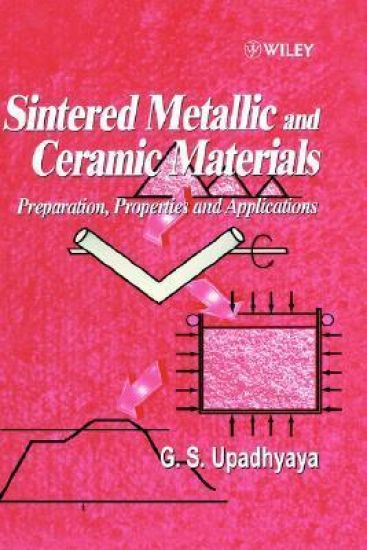
Sintering is fast becoming one of the most important industrial techniques for optimising the capabilities of different materials. Sintered Metallic and Ceramic Materials gives comprehensive coverage of the state-of-the-art of the processing of sintered materials, both metallic and ceramic. Emphasis is placed on the relationship between the composition of the material, the powder processing techniques used and the properties of the materials and the applications of end products. Materials covered include: ferrous (low and high alloy steels) and nonferrous (light and heavy) alloys, rare earth intermetallics, ceramics (oxide and nonoxide) and cermets. The various applications of sintered materials in the automotive, aerospace and defence, machine tool and power industries and in magnetic, electrical and electronic applications are discussed in the final chapter. The book will be used by engineers working with sintering techniques and sintered materials and engineering students studying powder metallurgy. The author is internationally renowned for his work on sintering and sintered materials.
Ensinando Rainbow Kids Yoga um guia detalhado e pr tico para o ensino de yoga para crian as e fam lias de forma divertida e cativante. Focado em maneiras criativas de ensinar yoga em aula l dicas - incluindo t cnicas de respira o, aten o plena e consci ncia corporal - com o objetivo de encorajar um maior senso de bem-estar em crian as de todas as idades.Recheado de conhecimento e considerado a "b blia" do yoga para crian as, este guia definitivo - dos mais amados treinamento de professores em yoga para crian as do mundo - fornece tudo o que voc precisa saber para ensinar com muito sucesso e anima o aulas para crian as e fam lias.Como fazer a yoga divertida para cada faixa et riaT cnicas de administra o para aulas pac ficas+350 posturas de yoga com imagens coloridasRespira o, medita o, relaxamento, jogos e brincadeiras divertidas para crian asAcrobacias em dupla, pir mides humanas e yoga voadoraYoga para crian as com necessidades adicionaisYoga em fam lia para pais e filhos
Ense ando Rainbow Kids Yoga es una gu a completa y pr ctica para ense ar yoga divertido y atractivo para ni os y familias. Enfocada en maneras creativas de dar clases de yoga con alegr a - incluyendo t cnicas de respiraci n, concentraci n y consciencia del cuerpo - para fomentar un mayor sentido de bienestar para ni os de todas las edades.Lleno de conocimientos y considerado la "biblia" del yoga para ni os, esta gu a definitiva - del m s querido entrenamiento para maestros de yoga para ni os en el mundo - proporciona todo lo que necesitas saber para dar clases de manera exitosa y fascinante para ni os y familias.- C mo hacer el yoga divertido para cada grupo de edad- T cnicas de manejo de clases armoniosas- M s de 350 posturas de yoga para ni os con im genes a todo color- Divertidos juegos de respiraci n, meditaci n y relajaci n en yoga para ni os- Acrobacias de pareja, pir mides humanas y yoga volador- Yoga para ni os con necesidades especiales- Yoga familiar para padres e hijos
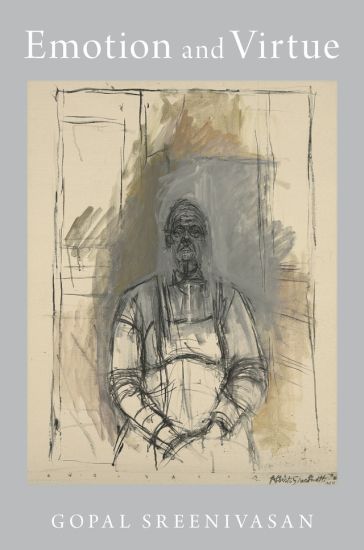
A novel approach to the crucial role emotion plays in virtuous actionWhat must a person be like to possess a virtue in full measure? What sort of psychological constitution does one need to be an exemplar of compassion, say, or of courage? Focusing on these two examples, Emotion and Virtue ingeniously argues that certain emotion traits play an indispensable role in virtue. With exemplars of compassion, for instance, this role is played by a modified sympathy trait, which is central to enabling these exemplars to be reliably correct judges of the compassionate thing to do in various practical situations. Indeed, according to Gopal Sreenivasan, the virtue of compassion is, in a sense, a modified sympathy trait, just as courage is a modified fear trait.While he upholds the traditional definition of virtue as a species of character trait, Sreenivasan discards other traditional precepts. For example, he rejects the unity of the virtues and raises new questions about when virtue should be taught. Unlike orthodox virtue ethics, moreover, his account does not aspire to rival consequentialism and deontology. Instead Sreenivasan repudiates the ambitions of virtue imperialism.Emotion and Virtue makes significant contributions to moral psychology and the theory of virtue alike.
Discover an important tool in the development of new marketing strategies for satisfying online customers! Edited by two experts in the fields of business and marketing, Customer Relationship Management in Electronic Markets is designed to help you build Internet relationships that lead to customer retention and long-term loyalty. With this book, you will be able to offer customers the benefits they seek in the virtual marketplace and serve their best interests. Examining Web sites, e-mail, data mining, and other technology, this valuable tool can help you attract and keep the customers who will be the most profitable for your business. Despite many predictions that electronic marketing would create high profits for lower costs, many businesses have been discouraged by low yields due to ineffectual methods of obtaining and maintaining customers. Customer Relationship Management in Electronic Markets provides multiple frameworks, strategies, and techniques around which to organize your company’s electronic marketing plans. It shows you how to calculate trends, predict customer loss and gain, and prevent dissolution through analysis of the customer’s ever-changing needs. This volume also utilizes examples of real successful companies that have used the Internet to the fullest extent, like Staples, Dell, and Amazon.com. Customer Relationship Management in Electronic Markets is an excellent resource for individuals engaged in any aspect of business relationships, from customer service managers, consultants and corporate trainers in marketing, to owners of major corporations, online businesses and entrepreneurs, and students in the field. Specifically, you will gain information on the following: business-to-business (B2B) and business-to-customer (B2C) exchangessimilarities, differences, and how the Internet has changed these relationships the prospects of the Internet for marketing and customer relationshipspredictions, positive effects, and negative effects from its inception to today how to develop and maintain a loyal customer base via the Internet improving B2B exchanges and business buyer relationship management through seamless Internet integration how to create a Web site that satisfies loyal customers and draws in new customers Featuring several charts, tables, and graphs, this guide provides effective measures that you can institute to ensure your company’s longevity. Customer Relationship Management in Electronic Markets will help you create marketing strategies that will successfully meet the needs of your customers and enhance your business reputation.
Discover an important tool in the development of new marketing strategies for satisfying online customers! Edited by two experts in the fields of business and marketing, Customer Relationship Management in Electronic Markets is designed to help you build Internet relationships that lead to customer retention and long-term loyalty. With this book, you will be able to offer customers the benefits they seek in the virtual marketplace and serve their best interests. Examining Web sites, e-mail, data mining, and other technology, this valuable tool can help you attract and keep the customers who will be the most profitable for your business. Despite many predictions that electronic marketing would create high profits for lower costs, many businesses have been discouraged by low yields due to ineffectual methods of obtaining and maintaining customers. Customer Relationship Management in Electronic Markets provides multiple frameworks, strategies, and techniques around which to organize your company’s electronic marketing plans. It shows you how to calculate trends, predict customer loss and gain, and prevent dissolution through analysis of the customer’s ever-changing needs. This volume also utilizes examples of real successful companies that have used the Internet to the fullest extent, like Staples, Dell, and Amazon.com. Customer Relationship Management in Electronic Markets is an excellent resource for individuals engaged in any aspect of business relationships, from customer service managers, consultants and corporate trainers in marketing, to owners of major corporations, online businesses and entrepreneurs, and students in the field. Specifically, you will gain information on the following: business-to-business (B2B) and business-to-customer (B2C) exchangessimilarities, differences, and how the Internet has changed these relationships the prospects of the Internet for marketing and customer relationshipspredictions, positive effects, and negative effects from its inception to today how to develop and maintain a loyal customer base via the Internet improving B2B exchanges and business buyer relationship management through seamless Internet integration how to create a Web site that satisfies loyal customers and draws in new customers Featuring several charts, tables, and graphs, this guide provides effective measures that you can institute to ensure your company’s longevity. Customer Relationship Management in Electronic Markets will help you create marketing strategies that will successfully meet the needs of your customers and enhance your business reputation.
Multiprocessor Execution of Logic Programs addresses the problem of efficient implementation of logic programming languages, specifically Prolog, on multiprocessor architectures. The approaches and implementations developed attempt to take full advantage of sequential implementation technology developed for Prolog (such as the WAM) while exploiting all forms of control parallelism present in logic programs, namely, or-parallelism, independent and-parallelism and dependent and-parallelism. Coverage includes a thorough survey of parallel implementation techniques and parallel systems developed for Prolog. Multiprocessor Execution of Logic Programs is recommended for people implementing parallel logic programming systems, parallel symbolic systems, parallel AI systems, and parallel theorem proving systems. It will also be useful to people who wish to learn about the implementation of parallel logic programming systems.
From force field analysis to `zero defects', from `brainstorming' to the Deming Wheel, this volume meets the need for a short, accessible reference to the 100 most frequently adopted methods for implementing total quality management. Central to the book is a broad interpretation of TQM - the methods addressed are relevant to all those interested in using explicit tools, qualitative and quantitative, to assist problem-solving, analysis and evaluation in the management process. After an introduction briefly outlining the basic principles of TQM, the bulk of the book then provides clear, concise outlines of the 100 methods. It describes their purpose, application - `how to use' - and benefits, with examples. A classification of the methods is also provided, utilizing the broad schema's of: management methods, idea generation, data collection and analysis.
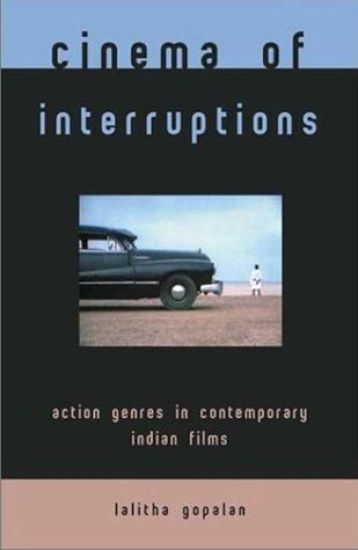
A framework for understanding the distinctiveness of Indian cinema as a national cinema within a global context dominated by Hollywood is proposed by this book. With its sudden explosions into song-and-dance sequences, half-time intermissions and heavy traces of censorship, Indian cinema can be identified as a "Cinema of Interruptions". To the uninitiated viewer, brought up on the seamless linear plotting of Hollywood narrative, this unfamiliar tendency towards digression may appear random and superfluous, yet this book argues that such devices assist in the construction of a distinct visual and narrative time-space. In the hands of imaginative directors, the conventions of Indian cinema become opportunities for narrative play and personal expression in such films as "Sholay" (1975), "Nayakan" (1987), "Parinda" (1989), "Hathyar" (1981) and "Hey Ram!" (1999). "Cinema of Interruptions" places commercial Indian film within a global system of popular cinemas, but also points out its engagement with the dominant genre principles implemented by Western film. By focusing on the action-genre work of leading contemporary directors J.P. Dutta, Mani Rutnam, and Vidhu Vinod Chopra, brazen national style is shown to interact with international genre films to produce a hybrid form that reworks the gangster film, the western and the avenging woman genre. Central to this study is the relationship Indian cinema shares with its audience, and an understanding of the pleasures it offers the cinephile. In articulating this bond the book presents not only a fresh framework for understanding popular Indian cinema but also a contribution to film genre studies.
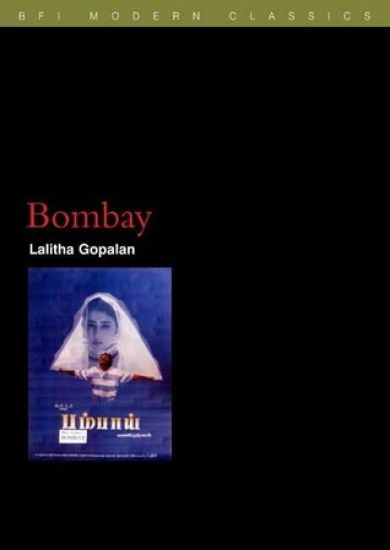
A Landmark in recent Indian cinema, by acclaimed director Mani Ratnam. In January 1993 sectarian rioting left 2,000 Hindus and Muslims dead in Bombay. Only two years later Mani Ratnam's audacious Tamil film Bombay (1995) used these events as a backdrop to a love story between a Hindu boy and a Muslim girl. Bombay was condemned by Muslim critics for misrepresentation and it was embroiled in censorship controversies. These served only to heighten interest and the film ran to packed houses in India and abroad. Lalitha Gopolan shows how Bombay struggles to find a narrative that can reconcile communal differences. She looks in detail at the way official censors tried to change the film under the influence of powerful figures in both the Muslim and the Hindu communities. In going on to analyse the aesthetics of Bombay, she shows how themes of social and gender difference are rendered through performance, choreography, song and cinematography. This is a fascinating account of a landmark in recent Indian cinema.
This work has been selected by scholars as being culturally important and is part of the knowledge base of civilization as we know it.This work is in the public domain in the United States of America, and possibly other nations. Within the United States, you may freely copy and distribute this work, as no entity (individual or corporate) has a copyright on the body of the work.Scholars believe, and we concur, that this work is important enough to be preserved, reproduced, and made generally available to the public. To ensure a quality reading experience, this work has been proofread and republished using a format that seamlessly blends the original graphical elements with text in an easy-to-read typeface.We appreciate your support of the preservation process, and thank you for being an important part of keeping this knowledge alive and relevant.