

Kirjahaku
Etsi kirjoja tekijän nimen, kirjan nimen tai ISBN:n perusteella.
1000 tulosta hakusanalla Gregory F. Randolph


Jesus Will F-ck Up Your Life is a down and dirty look at the God of the Bible, Jesus, Angels and Christians. Experience the story you've never heard in a way it's never been told. Be careful The truth will set you free. Gregory and his wife live on the Navajo Indian Reservation where they love to hang out with the people who surround them, write books and teach the true story of the cosmic war in which we live.

Gregory the Great V2: His Place in History and Thought
F. Homes Dudden
Literary Licensing, LLC
2014
nidottu

Gregory The Great V1: His Place In History And Thought
F. Homes Dudden
Literary Licensing, LLC
2014
nidottu

The Mathematical Writings of Duncan Farquharson Gregory
Duncan F. Gregory; William (EDT) Walton; Robert Leslie (INT) Ellis
Kessinger Pub
2007
pokkari

Securing the Network: F. Scott Yeager and the Rise of the Commercial Internet
Nathan Gregory
Independently Published
2016
nidottu
Commercial use of the Internet was a new and radical concept There is much more to the origin of the network than the story of ARPANET. This is the inside story, told by those who were there, of how the highly restricted, government-funded network playground of the government, military, and academia was usurped to create the modern Commercial Internet. This book provides not just the inside story but immense volumes of supporting information, documentation, videos and more.One man with drive and conviction became the visionary who united a collection of scrappy upstart ISPs for the formation of MAE-East, drove the creation of the long-haul Commercial Internet backbone at MFS Datanet, and then became a pioneer of the media-rich streaming data services that came into being at the ill-fated Enron Broadband Services prior to the Dot-com bubble burst in March of 2000.In 1991, the Internet was owned and operated by the National Science Foundation and was strictly limited in the things for which it could be used. In particular, the NSF had an Acceptable Uses Policy, a.k.a. the AUP, which prohibited anything which could be considered personal or commercial usage of the Internet.The NSF was looking to "sell" the Internet to a corporate entity and get out of the operation of the network. Many in the Internet community believed that when IBM teamed with Merit and MCI to form a partnership in a new company, they would win a contract to be this new backbone. Many in the Internet community assumed that if this happened, they would own the Internet and dictate usage just as the NSF had done.They bristled at this prospect.This new Merit/IBM/MCI company was called Advanced Network and Services (ANS) and operated the Internet NOC in Ann Arbor Michigan as part of the venture.Many of the small private Internet providers profoundly disliked ANS. They considered ANS a threat to the openness of the Internet. There was a joke at the time that said "The only thing missing from ANS is U" which appeared on a popular T-Shirt at Interop 1992.Debate raged about who was going to "own" the Internet when the NSF turned off the government-funded backbone. Small IP Services Providers began carrying traffic by interconnecting. From this debate emerged an independent entity beyond the control of the NSF, an interconnection point called MAE-East.From there, the Commercial Internet evolved and grew, and became the Internet we know today. The book "Securing the Network" tells the story of how this happened and the role of myself, many of my friends and co-workers, and especially that of my close friend and business partner F. Scott Yeager.If you use the Internet, work with the Internet, or are just interested in the history of the Internet, you need to read this book.Educate yourself. Buy "Securing the Network" today

A Class-Book of Physical Geography ... New Edition, Revised and Largely Rewritten by R. A. Gregory.
William F R G S Hughes; Richard Arman Gregory
British Library, Historical Print Editions
2011
pokkari

Aelfric's Anglo-Saxon Homily On The Birthday Of St. Gregory And Collateral Extracts From King Alfred's Version Of Bede's Ecclesiastical History And From The Saxon Chronicle
Louis F. (TRN) Klipstein
Kessinger Pub
2007
pokkari
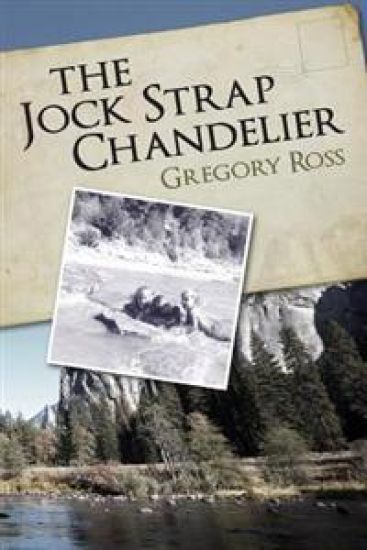
The Jock Strap Chandelier: A wonderful family journey during the 1970's, through our National Parks as seen through the eyes of a little boy. A f
Gregory Ross
Createspace Independent Publishing Platform
2012
nidottu

Catalogue of the Chess Collection of ... George Allen, by F.a. Jackson and G.B. Keen
George Allen; Francis Aristide Jackson; Gregory Bernard Keen
Franklin Classics
2018
sidottu
Where as other Lectionary Commentaries tend to take small numbers of readings and assign them to a large number of people, this commentary will assign each Gospel to one commentator. Each commentator will therefore be able to concentrate on the overall progression of each Gospel, and to indicate how the passages in the lectionary reflect the distinctive emphasis of that Gospel. The introduction and commentary to each Gospel is academically rigorous, drawing fully on modern critical scholarship, intended as preparatory aid for those who will preach.

Examples Of The Processes Of The Differential And Integral Calculus
Duncan F. Gregory
KESSINGER PUBLISHING, LLC
2007
sidottu
In a recent survey, 20 percent of the workers interviewed reported that they had either experienced religious prejudice while at work or knew of a coworker who had been subjected to some form of discriminatory conduct. Indeed, according to the Equal Employment Opportunity Commission, the filing of religious discrimination charges under Title VII of the Civil Rights Act of 1964 (which prohibits discrimination in employment based on race, color, national origin, sex, and religion) increased 75 percent between 1997 and 2008. The growing desire on the part of some religious groups to openly express their faith while at work has forced their employers and coworkers to reconsider the appropriateness of certain aspects of devotional conduct. Religion in the workplace does not sit well with all workers, and, from the employer's perspective, the presence of religious practice during the workday may be distracting and, at times, divisive. A thin line separates religious self-expression—by employees and employers—from unlawful proselytizing. In Encountering Religion in the Workplace, Raymond F. Gregory presents specific cases that cast light on the legal ramifications of mixing religion and work—in the office, on the factory floor, even within religious organizations. Court cases arising under Title VII and the First Amendment must be closely studied, Gregory argues, if we are to fully understand the difficulties that arise for employers and employees alike when they become involved in workplace disputes involving religion, and his book is an ideal resource for anyone hoping to understand this issue.

In a recent survey, 20 percent of the workers interviewed reported that they had either experienced religious prejudice while at work or knew of a coworker who had been subjected to some form of discriminatory conduct. Indeed, according to the Equal Employment Opportunity Commission, the filing of religious discrimination charges under Title VII of the Civil Rights Act of 1964 (which prohibits discrimination in employment based on race, color, national origin, sex, and religion) increased 75 percent between 1997 and 2008. The growing desire on the part of some religious groups to openly express their faith while at work has forced their employers and coworkers to reconsider the appropriateness of certain aspects of devotional conduct. Religion in the workplace does not sit well with all workers, and, from the employer's perspective, the presence of religious practice during the workday may be distracting and, at times, divisive. A thin line separates religious self-expression—by employees and employers—from unlawful proselytizing. In Encountering Religion in the Workplace, Raymond F. Gregory presents specific cases that cast light on the legal ramifications of mixing religion and work—in the office, on the factory floor, even within religious organizations. Court cases arising under Title VII and the First Amendment must be closely studied, Gregory argues, if we are to fully understand the difficulties that arise for employers and employees alike when they become involved in workplace disputes involving religion, and his book is an ideal resource for anyone hoping to understand this issue.

Nearly every American woman will, at some point during her working life, be sexually harassed, according to Raymond F. Gregory, a lawyer specializing in employment and discrimination law. Unwelcome and Unlawful provides information for those victims as well as for those suffering same-sex harassment and for male victims of sexual harassment. Gregory analyzes sexual harassment from the perspective of existing federal law and describes the legal rights that may be asserted by victims of harassment to obtain either injunctive or monetary relief. Conduct of a sexual nature that occurs in normal workplace socialization is generally not unlawful, but it will be considered to have crossed the line of legality if it is unwelcome and is sufficiently severe or pervasive to undermine an employee's work life. Questions typically arising in a sexual harassment case include: *What types of workplace conduct are classified as sexually harassing? *When is sexual conduct considered unwelcome? *When is sexual conduct perceived as severe or pervasive? *What are the obligations of an employee to report acts of sexual harassment? *If sexual harassment is proven, what monetary damages and other relief may the victim expect to be awarded? *When is an employer liable for acts of sexual harassment committed by its workers and supervisors? *What privacy rights does an employee claiming sexual harassment have? By clarifying little-understood aspects of the law barring sexual harassment, the author presents an indispensable resource for victims seeking to learn what to expect from the legal system if they contest the actions of their harassers in the courts.

Attorney Raymond F. Gregory addresses the millions of women who think they might be facing sexual discrimination and explains federal measures enacted to assist workers in contesting unlawful employer conduct. He presents actual court cases to demonstrate the ways that women have challenged their employers. The cases illustrate legal principles in real-life experiences. Many of the cases relate compelling stories of workers caught up in a web of employer discriminatory conduct. Gregory has eliminated legal jargon, ensuring that all concepts are clear to his readers. Individuals will turn to this book again and again to obtain authoritative background on this important topic.Topics covered include:The increasing incidence of sexual harassment in the workplaceCommon forms of sex discriminationDiscrimination against older womenDiscrimination against women of colorDiscrimination against women in the professionsDiscrimination against pregnant womenDiscrimination against women with childrenSex discrimination in hiring, promotion, terminationEmployer liability for workplace sexual harassmentEmployer retaliation against workersProving sex discrimination in the courtroomCompensatory and punitive damagesBack pay, front pay, and other remedies


Examples of the Processes of the Differential and Integral Calculus
Duncan F. Gregory; William (EDT) Walton
Kessinger Pub
2007
pokkari

A Treatise on the Application of Analysis to Solid Geometry
Duncan F. Gregory; William Walton
Kessinger Pub
2007
pokkari