Kirjojen hintavertailu. Mukana 11 462 137 kirjaa ja 12 kauppaa.

Kirjahaku

Etsi kirjoja tekijän nimen, kirjan nimen tai ISBN:n perusteella.

1000 tulosta hakusanalla Guillermo Matta

Growth, Employment, and Poverty in Latin America

Growth, Employment, and Poverty in Latin America

Guillermo Cruces; Gary S. Fields; David Jaume; Mariana Viollaz

Oxford University Press
2017
sidottu
This is an open access title available under the terms of a CC BY-NC-SA 3.0 IGO licence. It is free to read at Oxford Scholarship Online and offered as a free PDF download from OUP and selected open access locations. This book examines the links between economic growth, changing employment conditions, and the reduction of poverty in Latin America in the 2000s. Our analysis answers the following broad questions: Has economic growth resulted in gains in standards of living and reductions in poverty via improved labour market conditions in Latin America in the 2000s, and have these improvements halted or been reversed since the international crisis of 2008? How do the rate and character of economic growth, changes in the various employment and earnings indicators, and changes in poverty and inequality indicators relate to each other? Our contribution is an in-depth study of the multi-pronged growth-employment-poverty nexus based on a large number of labour market indicators (twelve employment and earnings indicators and four poverty and inequality indicators) for a large number of Latin American countries (sixteen of them). The book presents a positive and hopeful set of findings for the period 2000 to 2012/13. Economic growth took place and brought about improvements in almost all labour market indicators and consequent reductions in poverty rates. But not all improvements were equal in size or caused by the same things. Some macroeconomic factors were associated with changes in labour market conditions, some of them always in the welfare-improving direction and some others always in the welfare-reducing direction. Most countries in the region suffered a deterioration in at least some labour market indicators as a consequence of the international crisis of 2008, but the negative effects were reversed very quickly in most countries.

What Is Mathematical Logic?

What Is Mathematical Logic?

Guillermo Badia; John N. Crossley; John C. Stillwell; Christopher J. Ash †; Christopher J. Brickhill †; Neil H. Williams

Oxford University Press
2025
sidottu
Mathematical logic has grown from an exotic branch of mathematics into an indispensable tool in computer science as well as other parts of mathematics. This concise book presents the subject of mathematical logic in a lively and approachable fashion although logic can be a formidably abstruse topic, even for mathematicians. This second edition of What is Mathematical Logic?, originally published 50 years ago, deals with important ideas in modern mathematical logic, without the detialed mathematical work required of those with a professional interest in logic. The ideas are set forth simply and clearly in a pleasant style and, despite the book's relative brevity, all the basic material is covered in these pages. Three new chapters have been added, coevering automatic theorem proving, logic beyond traditional first order logic, and other logics including intuitionistic, free, and modal logics. Students of computer science and mathematical logic will find it a stimulating introduction and valuable supplement for courses, including current further reading suggestions in this lively area at the intersection of mathematics, philosophy, and computer science.
Democracy, Agency, and the State

Democracy, Agency, and the State

Guillermo O'Donnell

Oxford University Press
2010
sidottu
Democracy, Agency, and the State aims to contribute to a comparatively informed theory of democracy. Professor O'Donnell begins by arguing that conceptions of 'the state' and 'democracy', and their respective defining features, significantly influence each other. Using an approach that is both historical and analytical, he traces this relationship through the idea of legally sanctioned and backed agency which grounds democratic citizenship. From this standpoint he explores several aspects of the democratic regime and of the state, distinguishing four constitutive dimensions (bureaucracy, legality, focus of collective identity, and filter). He goes on to examine the role played by the idea of 'the nation' or 'the people', and the ways in which the state represents itself to different sections of society, especially in countries marred by deep inequality and pervasive poverty. Drawing on the examples of democratic and non-democratic regime, he discusses the dialogical spaces congenial to democracy, as well as examining the options that may or may not enable agency, and the complex comparative and ethical issues raised by the intersection of agency with globalization and legal pluralism.Throughout these discussions several comparative vistas are opened, especially but not exclusively toward Latin America. The book concludes by offering a justification of democracy, even of the flawed democracies that nowadays abound. Oxford Studies in Democratization is a series for scholars and students of comparative politics and related disciplines. Volumes concentrate on the comparative study of the democratization process that accompanied the decline and termination of the cold war. The geographical focus of the series is primarily Latin America, the Caribbean, Southern and Eastern Europe, and relevant experiences in Africa and Asia. The series editor is Laurence Whitehead, Official Fellow, Nuffield College, University of Oxford.
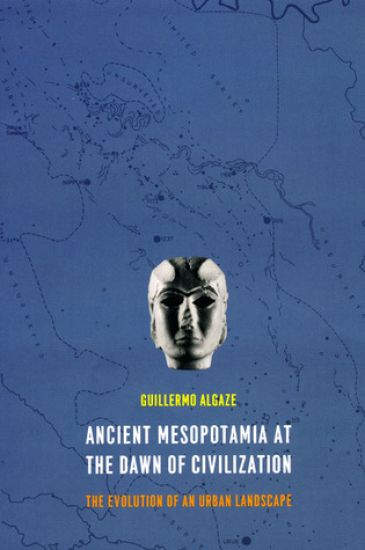
Ancient Mesopotamia at the Dawn of Civilization

Ancient Mesopotamia at the Dawn of Civilization

Guillermo Algaze

University of Chicago Press
2008
sidottu
The alluvial lowlands of the Tigris and Euphrates rivers in southern Mesopotamia are widely known as the 'cradle of civilization' owing to the scale of the processes of urbanization that had taken place in the area by the second half of the fourth millennium BC.In "Ancient Mesopotamia at the Dawn of Civilization", Guillermo Algaze draws on the work of modern economic geographers to explore how the unique river-based ecology and geography of the Tigris-Euphrates alluvium impacted the development of urban civilization in southern Mesopotamia. He argues that these natural conditions granted southern polities significant competitive advantages over their landlocked rivals elsewhere in Southwest Asia, most importantly the ability to easily transport commodities.In due course, this resulted in increased trade and economic activity and higher population densities in the south than were possible elsewhere. As southern polities grew in scale and complexity throughout the fourth millennium, revolutionary new forms of labor organization and record keeping were created, and it is these socially created innovations, Algaze argues, that ultimately account for why fully developed city-states emerged earlier in southern Mesopotamia than elsewhere in Southwest Asia or the world.
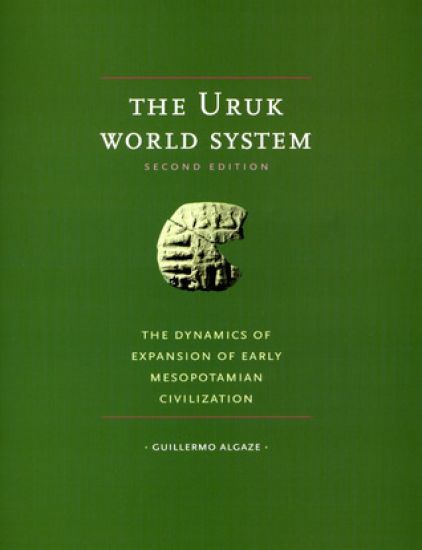
The Uruk World System

The Uruk World System

Guillermo Algaze

University of Chicago Press
1993
nidottu
Most archaeologists and historians of the ancient Near East have focused on the internal transformations that led to the emergence of early cities and states. In The Uruk World System, Guillermo Algaze concentrates on the unprecedented and wide-ranging process of external expansion that coincided with the rapid initial crystallization of Mesopotamian civilization. In this extensive study, he contends that the rise of early Sumerian polities cannot be understood without also taking into account the developments in surrounding peripheral areas. This new edition includes a substantial new chapter that explores recent data and interpretations of the expansion of Uruk settlements across Syro-Mesopotamia.
Ancient Mesopotamia at the Dawn of Civilization

Ancient Mesopotamia at the Dawn of Civilization

Guillermo Algaze

University of Chicago Press
2014
nidottu
The alluvial lowlands of the Tigris and Euphrates rivers in southern Mesopotamia are widely known as the "cradle of civilization," owing to the scale of the processes of urbanization that took place in the area by the second half of the fourth millennium BCE. In Ancient Mesopotamia at the Dawn of Civilization, Guillermo Algaze draws on the work of modern economic geographers to explore how the unique river-based ecology and geography of the Tigris-Euphrates alluvium affected the development of urban civilization in southern Mesopotamia. He argues that these natural conditions granted southern polities significant competitive advantages over their landlocked rivals elsewhere in Southwest Asia, most importantly the ability to easily transport commodities. In due course, this resulted in increased trade and economic activity and higher population densities in the south than were possible elsewhere. As southern polities grew in scale and complexity throughout the fourth millennium, revolutionary new forms of labor organization and record keeping were created, and it is these socially created innovations, Algaze argues, that ultimately account for why fully developed city-states emerged earlier in southern Mesopotamia than elsewhere in Southwest Asia or the world.
What Is Anatomic Pathology?

What Is Anatomic Pathology?

Guillermo Quinonez

Tellwell Talent
2022
pokkari
This compendium is written to be read at nights, weekends, and holidays. It has been elaborated with the intention to demonstrate "What is Anatomic Pathology?" and to serve as educational material for pathology residents, pathologist assistants, practicing pathologists, medical students, and as an extension to the education of other health care professionals. For pathology residents and pathologist assistants, the intention is to introduce the foundations of knowledge in the discipline of anatomic pathology using medical history, something not particularly addressed in a training program. It assumes that the trainees are committed to become pathologists and pathologist assistants and, because of that, are ready to walk an extra mile to dive into the intricacies of their science. The extra effort pays off later. To medical students who are in the process of selecting a post-graduate education, it gives them a picture of what can be expected if they decide to follow pathology as their specialty. These pages will also be useful to practicing pathologists because it addresses questions about the "meaning" of our daily activities, questions that are not frequently asked. It also should be of interest to other health care professionals, such as oral pathologists and surgeons in particular. Curious readers can learn about what pathologists think and do.
What Is Anatomic Pathology?

What Is Anatomic Pathology?

Guillermo Quinonez

Tellwell Talent
2022
sidottu
This compendium is written to be read at nights, weekends, and holidays. It has been elaborated with the intention to demonstrate "What is Anatomic Pathology?" and to serve as educational material for pathology residents, pathologist assistants, practicing pathologists, medical students, and as an extension to the education of other health care professionals. For pathology residents and pathologist assistants, the intention is to introduce the foundations of knowledge in the discipline of anatomic pathology using medical history, something not particularly addressed in a training program. It assumes that the trainees are committed to become pathologists and pathologist assistants and, because of that, are ready to walk an extra mile to dive into the intricacies of their science. The extra effort pays off later. To medical students who are in the process of selecting a post-graduate education, it gives them a picture of what can be expected if they decide to follow pathology as their specialty. These pages will also be useful to practicing pathologists because it addresses questions about the "meaning" of our daily activities, questions that are not frequently asked. It also should be of interest to other health care professionals, such as oral pathologists and surgeons in particular. Curious readers can learn about what pathologists think and do.
Educación, Colapso Mental

Educación, Colapso Mental

Guillermo Rojas Quiceno

Lulu.com
2018
pokkari
La crisis sist mica en que estamos inmersos en estos tiempos, nos lleva a cuestionarnos respecto a la educaci n, la vida y el ser humano, entre otros fen menos. Es incre ble pensar que en esta dura realidad civilizatoria predomina el mal sobre el bien y, lo m s cr tico, vemos una sociedad fundamentada en la confusi n. Nos preguntamos qu est sucediendo? No pretendemos revelar responsables sobre los problemas sociales que vive el mundo, pero es necesario tratar de entender, a trav s de la formaci n impartida en la escuela, la sociedad, la familia y la iglesia, el valor de la vida, el manejo de las emociones, el control de las pasiones, pero ante todo abrir y despertar consciencia.
Macroeconomics in Times of Liquidity Crises
An examination of Liquidity Crunch in triggering and characterizing financial crises.Since the subprime mortgage crisis that began in 2007, advanced economies have felt a nagging sense of insecurity. In parallel, the profession has witnessed phenomena that are alien to mainstream macroeconomic models. Financial crises are systemic, occurring simultaneously in different economies. In this book, Guillermo Calvo focuses on liquidity factors as a commonality in financial crises. Specifically, he examines the role of "liquidity crunch" in triggering crises. He also identifies a fundamental (but overlooked) idea in Keynes's General Theory, termed by Calvo the price theory of money, to rationalize the resiliency of the U.S. dollar when other dollar-backed assets suffered a devastating liquidity crunch.Calvo shows that a sharp focus on liquidity reveals some characteristics of liquid assets that are easy to miss otherwise. He argues for liquidity's centrality, presenting what he calls the Liquidity Approach. He shows that simple extensions of standard monetary models help rationalize the implications of the liquidity crunch, and then examines slightly more technical models that highlight liquidity issues. He explores the empirical effects of liquidity crunch by studying systemic sudden stops (of capital inflows), presuming that they are triggered by liquidity crunch-type phenomena.
Counterpoints

Counterpoints

Guillermo O'Donnell

University of Notre Dame Press
1999
sidottu
The central, driving theme of this volume is democracy, its vicissitudes and its possibilities in Latin America. Guillermo O'Donnell considers the pattern of political and social alliances that have shaped Argentina's agitated history, and focuses on the tensions and intrinsic weaknesses of bureaucratic-authoritarianism, especially in its most repressive guises, at a time when it projected itself as an enduring, efficient, and potentially legitimate form of political authority. He includes detailed empirical analysis of daily life under extremely repressive regimes and argues throughout that the struggle for democracy is the most appropriate way, both morally and strategically, to take advantage of the fissures and tensions that close examination discovers behind the bureaucratic-authoritarianism facade. Counterpoints is a successful mix of personal experience and meticulous scholarship—a trajectory of O'Donnell's work that starts with the critique of authoritarianism and ends with a close examination of presently existing democracies in Latin America. His discussion of the flaws of the new democracies originating from defective institutionalism and extreme social inequalities is especially valuable for scholars of democracy and democratization, comparative politics, and Latin American politics.
Dissonances

Dissonances

Guillermo O'Donnell

University of Notre Dame Press
2007
nidottu
Guillermo O'Donnell here brings together a collection of significant recent essays in which he considers both the method for and substance of critiques of democracies. While progress has been made in democratization, the authoritarian legacy hangs as a shadow over that advancement. O'Donnell engages in his analysis while keeping a firm gaze on that dangerous past. O'Donnell's work has influenced a generation of political scientists. The essays in this volume bring forward and develop many of the ideas presented in his earlier collection, Counterpoints: Selected Essays on Authoritarianism and Democracy
Dissonances

Dissonances

Guillermo O'Donnell

UNIVERSITY OF NOTRE DAME PRESS
2022
sidottu
Guillermo O'Donnell here brings together a collection of significant recent essays in which he considers both the method for and substance of critiques of democracies. While progress has been made in democratization, the authoritarian legacy hangs as a shadow over that advancement. O'Donnell engages in his analysis while keeping a firm gaze on that dangerous past. O'Donnell's work has influenced a generation of political scientists. The essays in this volume bring forward and develop many of the ideas presented in his earlier collection, Counterpoints: Selected Essays on Authoritarianism and Democracy
México Profundo

México Profundo

Guillermo Bonfil Batalla

University of Texas Press
1996
pokkari
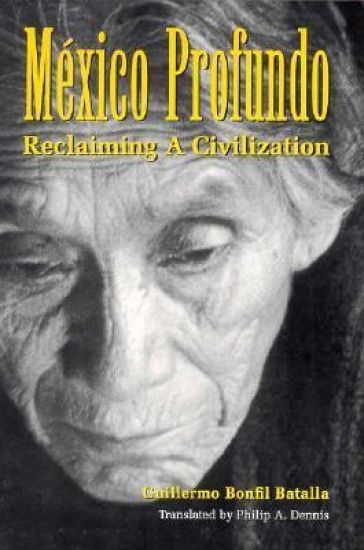
This translation of a major work in Mexican anthropology argues that Mesoamerican civilization is an ongoing and undeniable force in contemporary Mexican life.For Guillermo Bonfil Batalla, the remaining Indian communities, the "de-Indianized" rural mestizo communities, and vast sectors of the poor urban population constitute the México profundo. Their lives and ways of understanding the world continue to be rooted in Mesoamerican civilization. An ancient agricultural complex provides their food supply, and work is understood as a way of maintaining a harmonious relationship with the natural world. Health is related to human conduct, and community service is often part of each individual's life obligation. Time is circular, and humans fulfill their own cycle in relation to other cycles of the universe.Since the Conquest, Bonfil argues, the peoples of the México profundo have been dominated by an "imaginary México" imposed by the West. It is imaginary not because it does not exist, but because it denies the cultural reality lived daily by most Mexicans.Within the México profundo there exists an enormous body of accumulated knowledge, as well as successful patterns for living together and adapting to the natural world. To face the future successfully, argues Bonfil, Mexico must build on these strengths of Mesoamerican civilization, "one of the few original civilizations that humanity has created throughout all its history."
The Cultural Life of the Automobile

The Cultural Life of the Automobile

Guillermo Giucci

University of Texas Press
2012
nidottu
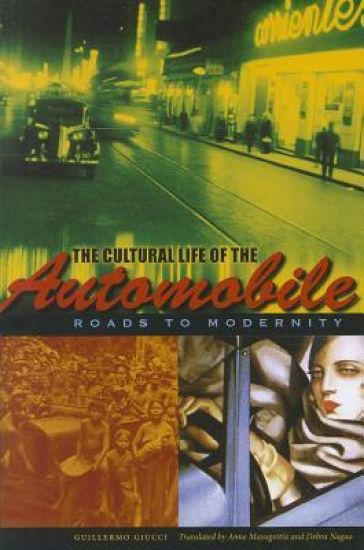
From its invention in Europe at the end of the nineteenth century, the automobile crisscrossed the world, completely took over the cities, and became a feature of daily life. Considered basic to the American lifestyle, the car reflected individualism, pragmatism, comfort, and above all modernity. In Latin America, it served as a symbol of distinction, similar to jewelry or fine clothing. In The Cultural Life of the Automobile, Guillermo Giucci focuses on the automobile as an instrument of social change through its “kinetic modernity” and as an embodiment of the tremendous social impact of technology on cultural life.Material culture-how certain objects generate a wide array of cultural responses-has been the focus of much scholarly discussion in recent years. The automobile wrought major changes and inspired images in language, literature, and popular culture. Focusing primarily on Latin America but also covering the United States, Europe, Asia, and Africa, Giucci examines how the automobile was variously adapted by different cultures and how its use shaped and changed social and economic relationships within them. At the same time, he shows how the “automobilization” of society became an essential support for the development of modern individualism, and the automobile its clearest material manifestation.
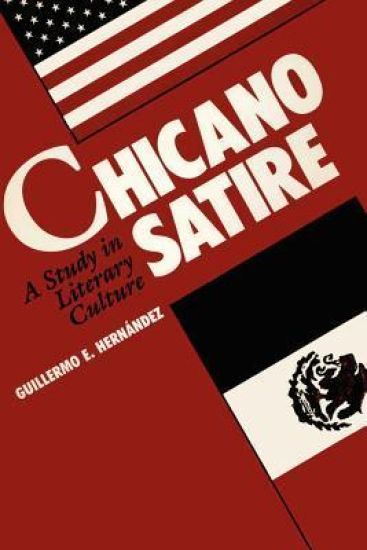
Chicano Satire

Chicano Satire

Guillermo Hernandez

University of Texas Press
2012
pokkari
Geographically close to Mexico, but surrounded by Anglo-American culture in the United States, Chicanos experience many cultural tensions and contradictions. Their lifeways are no longer identical with Mexican norms, nor are they fully assimilated to Anglo-American patterns. Coping with these tensions-knowing how much to let go of, how much to keep-is a common concern of Chicano writers, who frequently use satire as a means of testing norms and deviations from acceptable community standards. In this groundbreaking study, Guillermo HernÁndez focuses on the uses of satire in the works of three authors-Luis Valdez, Rolando Hinojosa, and JosÉ Montoya-and on the larger context of Chicano culture in which satire operates.HernÁndez looks specifically at the figures of the pocho (the assimilated Chicano) and the pachuco (the zoot-suiter, or urbanized youth). He shows how changes in their literary treatment-from simple ridicule to more understanding and respect-reflect the culture's changes in attitude toward the process of assimilation.HernÁndez also offers many important insights into the process of cultural definition that engaged Chicano writers during the 1960s and 1970s. He shows how the writers imaginatively and syncretically formed new norms for the Chicano experience, based on elements from both Mexican and United States culture but congruent with the historical reality of Chicanos.With its emphasis on culture change and creation, Chicano Satire will be of interest across a range of human sciences.
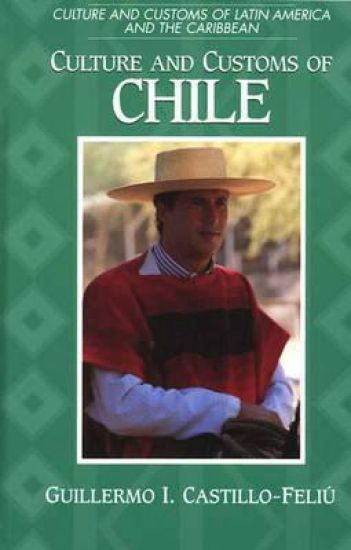
Culture and Customs of Chile

Culture and Customs of Chile

Guillermo I. Castillo-Feliu

Greenwood Press
2000
sidottu
Chile's natural beauty, fascinating history, cultural traditions, and warm people are uniquely evoked in Culture and Customs of Chile. Chilean American Castillo-Feliu effectively conveys how Chile's geography has helped to shape it into a modern, socially responsible model in Latin America. Students and other readers will learn how this small country has contributed to the hemisphere's stature, from a stable political scene to seafood-inspired cuisine. Chile's lively history forms the backdrop for a survey of a wealth of social riches. The literary lion Pablo Neruda, Andean music, and fine wine are just a few of the highlights found herein.Because it has been such a model country, except for a troubled period in the 1970s and 1980s under the dictator Augusto Pinochet, Chile often stays out of headline news in the United States. Through chapters on history and people, religion, social customs, broadcasting and print media, literature, performing arts, and the arts and architecture, Culture and Customs of Chile will introduce Chile to a wider audience who can appreciate its understated charms. A chronology and appendix of the Spanish of Chile are indispensable aids.
Cardiovascular Outcomes of Treatments available for Patients with Type 1 and 2 Diabetes, An Issue of Endocrinology and Metabolism Clinics of North America
This issue of Endocrinology and Metabolism Clinics, edited by Dr. Guillermo E. Umpierrez, will focus on Cardiovascular Outcomes of Treatments available for Patients with Type 1 and 2 Diabetes. Topics include--but are not limited to--Diabetes and CAD and PVD; Prediabetes and CVD- DM prevention; Pathogenesis of atherosclerosis/CVD in diabetes Intensive Diabetes Treatment and CV Outcomes in T1D; Intensive blood glucose control and vascular outcomes in patients with type 2 diabetes, Diabetes and Stroke; Cardiovascular outcome trials of glucose-lowering drugs or strategies in type 2 diabetes; Heart Failure in Diabetes Mellitus; Individualizing Glucose Lowering Therapy in the Patient with Diabetes and Heart Disease; Managing Dyslipidemia in Type 2 Diabetes; Blood pressure control and cardiovascular and renal outcomes; Hyperglycemia in acute coronary syndromes; Hospital Glucose Control; Managing Diabetes and cardiovascular risk in chronic kidney disease; and more.
Oxford Murders

Oxford Murders

Guillermo Martinez

Little, Brown Book Group
2006
pokkari
* A compelling and sophisticated crime novel in the tradition of award-winning Jose Carlos Somoza. * Using rules and axioms, there will always be some propositions that can't be proved either true or false... But can this apply to murder?