Kirjojen hintavertailu. Mukana 11 342 296 kirjaa ja 12 kauppaa.

Kirjahaku

Etsi kirjoja tekijän nimen, kirjan nimen tai ISBN:n perusteella.

1000 tulosta hakusanalla H Conscience

The Best Science Fiction Stories of H. G. Wells

The Best Science Fiction Stories of H. G. Wells

H.G. Wells

Dover Publications Inc.
2018
nidottu
Hailed as the founder of modern science fiction, H. G. Wells (1866-1946) wrote a brilliant succession of novels and short stories that remain in the first rank of the genre. In fantasies made credible by their simple realism, his enduringly relevant tales gave symbolic expression to the ideas and anxieties of his era.This collection contains the best of H. G. Wells's science-fiction short stories: favorites like "The Crystal Egg," "Aepyornis Island," "The Strange Orchid," "The Man Who Could Work Miracles," "A Dream of Armageddon," "The Sea Raiders," and other tales about fourth-dimensional adventure, biological monstrosities, marvelous inventions, time distortions, cosmic catastrophe, and other intriguing events. In addition to these 17 short stories, this anthology features the novel The Invisible Man in its entirety. One of Wells's most popular stories, it offers both a serious study of egotism as well as a first-rate science-fiction thriller.
H. G. J. Moseley

H. G. J. Moseley

J. L. Heilbron

University of California Press
2022
pokkari
H. G. J. Moseley (1887 - 1915), the son and grandson of distinguished English scientists, a favorite student of Rutherford's and a colleague of Bohr's, completed researches of capital importance for atomic physics just before the outbreak of World War I. He was urged to devote himself to scientific war work in England, but his duty as he aw it was to join the battle. He procured himself command of a signaling section in the Royal Engineers, a speedy trip to Gallipoli, and death in the bloody battle for Sari Bair. In this work the author presents a full record of Moseley's brief and brilliant career. It gives instructive detail about Eton, which, as Heilbron shows, offered more opportunity for acquiring a foundation in science than its emphasis on Greek and games would suggest; about Oxford, a scientific backwater in Moseley's time; and about Rutherford's thriving laboratory at the University of Manchester. It describes in detail Moseley's apprenticeship in experimental physics, his growth under the tight supervision of Manchester, and his classical independent work on X rays, which almost certainly would have brought him the Nobel Prize. An epilogue sketches the chief results secured by other in the decade after his death in the research lines he opened. Heilbron's account is informed by an unequaled acquaintance with the relevant manuscript material, including all of Moseley's known correspondence (most of which he discovered) and the paper of colleagues such as Bohr, W. H. Bragg, G. H. Darwin, F. A. Lindemann (Lord Cherwell), Rutherford, Henry Tizard, Georges Ubrain, and G. von Hevesy. An important feature of the book is the publication, in extenso, of Moseley's surviving correspondence. These letters are not only a rich source for historians of science and of education. Tehy are also splendid reading: well-written records of the maturing of a strong mind, pithy commentaries on the Establishment as Moseley saw it, and exciting notices of the course of one of the most important researches in modern physical science. This title is part of UC Press's Voices Revived program, which commemorates University of California Press's mission to seek out and cultivate the brightest minds and give them voice, reach, and impact. Drawing on a backlist dating to 1893, Voices Revived makes high-quality, peer-reviewed scholarship accessible once again using print-on-demand technology. This title was originally published in 1974.
H. G. J. Moseley

H. G. J. Moseley

J. L. Heilbron

University of California Press
2022
sidottu
H. G. J. Moseley (1887 - 1915), the son and grandson of distinguished English scientists, a favorite student of Rutherford's and a colleague of Bohr's, completed researches of capital importance for atomic physics just before the outbreak of World War I. He was urged to devote himself to scientific war work in England, but his duty as he aw it was to join the battle. He procured himself command of a signaling section in the Royal Engineers, a speedy trip to Gallipoli, and death in the bloody battle for Sari Bair. In this work the author presents a full record of Moseley's brief and brilliant career. It gives instructive detail about Eton, which, as Heilbron shows, offered more opportunity for acquiring a foundation in science than its emphasis on Greek and games would suggest; about Oxford, a scientific backwater in Moseley's time; and about Rutherford's thriving laboratory at the University of Manchester. It describes in detail Moseley's apprenticeship in experimental physics, his growth under the tight supervision of Manchester, and his classical independent work on X rays, which almost certainly would have brought him the Nobel Prize. An epilogue sketches the chief results secured by other in the decade after his death in the research lines he opened. Heilbron's account is informed by an unequaled acquaintance with the relevant manuscript material, including all of Moseley's known correspondence (most of which he discovered) and the paper of colleagues such as Bohr, W. H. Bragg, G. H. Darwin, F. A. Lindemann (Lord Cherwell), Rutherford, Henry Tizard, Georges Ubrain, and G. von Hevesy. An important feature of the book is the publication, in extenso, of Moseley's surviving correspondence. These letters are not only a rich source for historians of science and of education. Tehy are also splendid reading: well-written records of the maturing of a strong mind, pithy commentaries on the Establishment as Moseley saw it, and exciting notices of the course of one of the most important researches in modern physical science. This title is part of UC Press's Voices Revived program, which commemorates University of California Press's mission to seek out and cultivate the brightest minds and give them voice, reach, and impact. Drawing on a backlist dating to 1893, Voices Revived makes high-quality, peer-reviewed scholarship accessible once again using print-on-demand technology. This title was originally published in 1974.

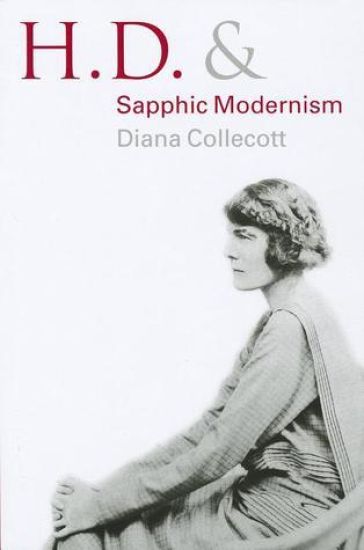
H.D. and Sapphic Modernism 1910–1950

H.D. and Sapphic Modernism 1910–1950

Diana Collecott

Cambridge University Press
2008
pokkari
Diana Collecott proposes that Sappho's presence in H. D.'s work is as significant as that of Homer in Pound's and of Dante in Eliot's. She undertakes a radical revision of H. D.'s Hellenism and her Imagism, relating both to the literary and sexual politics of the First World War period. She then pursues H. D.'s career to the end of the Second World War, discovering en route important intertextualities with Swinburne, Wilde and Shakespeare. Connecting the fragmentary condition of Sappho's writings with the erasure of women within modernism and the silencing of lesbians in the wider culture, she traces the Sapphic in H .D.'s prose and poetry an in its modern contexts. Her exploration develops a lesbian poetics not only for H. D. but also for contemporaries such as Bryher, Amy Lowell and Virginia Woolf and for successors such as Audre Lorde, Adrienne Rich and Olga Broumas.
H. D. and Hellenism

H. D. and Hellenism

Eileen Gregory

Cambridge University Press
2009
pokkari
H. D. and Hellenism: Classic Lines concerns a prominent aspect of the writing of the modern American poet H. D. (Hilda Doolittle): a lifelong engagement with hellenic literature, mythology and art. H. D.'s hellenic intertextuality is examined in the context of classical fictions operative at the turn of the century: the war of words among literary critics establishing a new 'classicism' in reaction to romanticism; the fictions of classical transmission and the problem of women within the classical line; nineteenth-century romantic hellenism, represented in the writing of Walter Pater; and the renewed interest in ancient religion brought about by anthropological studies, represented in the writing of Jane Ellen Harrison. Eileen Gregory explores at length H. D.'s intertextual engagement with specific classical writers: Sappho, Theocritus and the Greek Anthology, Homer and Euripides. The concluding chapter sketches chronologically H. D.'s career-long study and reinvention of Euripidean texts. An appendix catalogues classical subtexts in Collected Poems, 1912-1944, edited by Louis Martz.
H. D. and the Victorian Fin de Siècle

H. D. and the Victorian Fin de Siècle

Cassandra Laity

Cambridge University Press
2009
pokkari
H. D and the Victorian Fin de Siecle argues foremost that H. D. eluded the male modernist flight from Romantic 'effeminacy' and 'personality' by embracing the very cults of personality in the Decadent Romanticism of Oscar Wilde, A. C. Swinburne, Walter Pater and D. G. Rossetti that her male contemporaries most deplored: the cult of the demonic femme fatale and of the 'effeminate' Aesthete androgyne. H. D., Laity maintains, used these sexually aggressive masks to shape a female modernism that freely engaged female and male androgyny, homoeroticism, narcissism and maternal eroticism. Focusing on the early Sea Garden, the plays and poetry of the 1920s and her late epic Trilogy, H. D. and the Victorian Fin de Siecle demonstrates H. D.'s shift from the homoerotic 'white', vanishing tropology of the male androgyne fashioned by Pater and Wilde to the 'abject' monstrously sexual body of the Pre-Raphaelite and Decadent femme fatale.
H. E. Armstrong and the Teaching of Science 1880–1930
Originally published in 1973, this is a selection of the educational writings of H. E. Armstrong, edited with a full introduction by W. H. Brock. Henry Armstrong (1848–1937) was a controversial and energetic publicist for reforms in science teaching and curricula. He was concerned to make teaching at all levels less didactic and authoritarian, more practical and experimental; where possible a student should be prompted by his own curiosity, and should learn things first hand. He called his approach 'heuristic' - meaning learning through discovery - and sought to establish it through public platforms like the British Association, schools and through his own training of teachers. In his introduction Dr Brock offers a historical critique of Dr Armstrong's methods and achievements, and considers to what extent he can be seen as a progenitor of subsequent curriculum reforms.
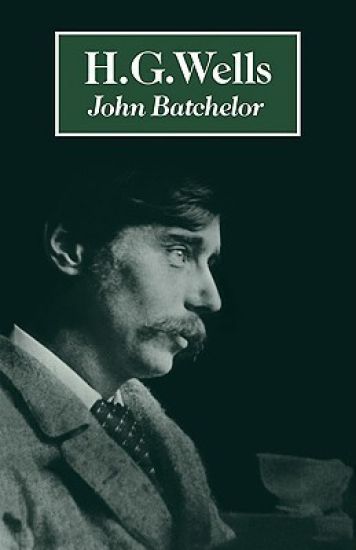
H. G. Wells

H. G. Wells

John Batchelor

Cambridge University Press
1985
pokkari
H. G. Wells wrote almost a hundred books, yet he is generally remembered for only a handful of them. He is known above all as a writer who heralded the future, yet throughout his life he clung to fixed attitudes from the Victorian past. He began his career as a draper's apprentice; by the age of forty-five he had secured an international reputation as the author of The Time Machine, The War of the Worlds, Kipps and Tono Bungay; he went on to establish himself as an influential educator, polemicist and sage. In this book John Batchelor offers a readable introduction to Wells's huge and varied output as a writer and thinker. He guides the reader through the whole oeuvre, and argues persuasively that at his best Wells was a great artist: a man with a remarkable, restless imagination (not limited, as many critics have implied, merely to his early romances) and with a coherent and responsible theory of fiction.
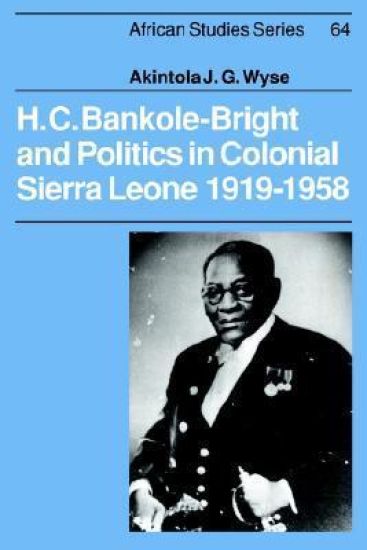
H. C. Bankole-Bright and Politics in Colonial Sierra Leone, 1919–1958
This substantial and thoroughly documented book is a political biography of an important figure in Sierra Leone. It is also a comment on two of the major themes of the country’s history - the relations between the Colony (Krio society) and the Protectorate (the earlier inhabitants of the territory) and, more importantly, the position of the imperial regime vis-á-vis its colonial subjects. The author, a Sierra Leonean and a Krio himself, skilfully examines the country’s recent history through the life of Dr H. C. Bankole-Bright, an important leader of the Krio people. The Krio, descendants of the freed slaves, were the elite of Sierra Leone for more than a century, but ultimately they failed to master mass electorial politics during the period of decolonization leading to independence. Dr Bankole-Bright’s failure is seen as emblematic of the disappointed hopes of the Krio as a political group in Sierra Leone. An underlying theme of the book is the misrepresentation of the Krio people in Sierra Leone historiography.
H. D. and Hellenism

H. D. and Hellenism

Eileen Gregory

Cambridge University Press
1997
sidottu
H. D. and Hellenism concerns a prominent aspect of the writing of the modern American poet H. D. (Hilda Doolittle): her career-long engagement with Hellenic literature, mythology, and art. H. D.’s Hellenic intertextuality is examined in the context of classical fictions operative at the turn of the century: the war of words among literary critics establishing a new ‘classicism’ in reaction to romanticism; the fictions of classical transmission, and the problem of women within the classical line; nineteenth-century romantic Hellenism, represented in the writing of Walter Pater; and the renewed interest in ancient religion brought about by anthropological studies, represented in the writing of Jane Ellen Harrison. Eileen Gregory explores at length H. D.’s intertextual engagement with specific classical writers; Sappho, Theocritus, Homer, and Euripides. The concluding chapter sketches chronologically H. D.’s career-long study and reinvention of Euripidean texts.
H. C. Bankole-Bright and Politics in Colonial Sierra Leone, 1919–1958
This substantial and thoroughly documented book is a political biography of an important figure in Sierra Leone. It is also a comment on two of the major themes of the country’s history - the relations between the Colony (Krio society) and the Protectorate (the earlier inhabitants of the territory) and, more importantly, the position of the imperial regime vis-á-vis its colonial subjects. The author, a Sierra Leonean and a Krio himself, skilfully examines the country’s recent history through the life of Dr H. C. Bankole-Bright, an important leader of the Krio people. The Krio, descendants of the freed slaves, were the elite of Sierra Leone for more than a century, but ultimately they failed to master mass electorial politics during the period of decolonization leading to independence. Dr Bankole-Bright’s failure is seen as emblematic of the disappointed hopes of the Krio as a political group in Sierra Leone. An underlying theme of the book is the misrepresentation of the Krio people in Sierra Leone historiography.
H.D. and Sapphic Modernism 1910–1950

H.D. and Sapphic Modernism 1910–1950

Diana Collecott

Cambridge University Press
1999
sidottu
Diana Collecott proposes that Sappho's presence in H. D.'s work is as significant as that of Homer in Pound's and of Dante in Eliot's. She undertakes a radical revision of H. D.'s Hellenism and her Imagism, relating both to the literary and sexual politics of the First World War period. She then pursues H. D.'s career to the end of the Second World War, discovering en route important intertextualities with Swinburne, Wilde and Shakespeare. Connecting the fragmentary condition of Sappho's writings with the erasure of women within modernism and the silencing of lesbians in the wider culture, she traces the Sapphic in H .D.'s prose and poetry an in its modern contexts. Her exploration develops a lesbian poetics not only for H. D. but also for contemporaries such as Bryher, Amy Lowell and Virginia Woolf and for successors such as Audre Lorde, Adrienne Rich and Olga Broumas.
H. D. and the Victorian Fin de Siècle

H. D. and the Victorian Fin de Siècle

Cassandra Laity

Cambridge University Press
1996
sidottu
H. D and the Victorian Fin de Siecle argues foremost that H. D. eluded the male modernist flight from Romantic 'effeminacy' and 'personality' by embracing the very cults of personality in the Decadent Romanticism of Oscar Wilde, A. C. Swinburne, Walter Pater and D. G. Rossetti that her male contemporaries most deplored: the cult of the demonic femme fatale and of the 'effeminate' Aesthete androgyne. H. D., Laity maintains, used these sexually aggressive masks to shape a female modernism that freely engaged female and male androgyny, homoeroticism, narcissism and maternal eroticism. Focusing on the early Sea Garden, the plays and poetry of the 1920s and her late epic Trilogy, H. D. and the Victorian Fin de Siecle demonstrates H. D.'s shift from the homoerotic 'white', vanishing tropology of the male androgyne fashioned by Pater and Wilde to the 'abject' monstrously sexual body of the Pre-Raphaelite and Decadent femme fatale.
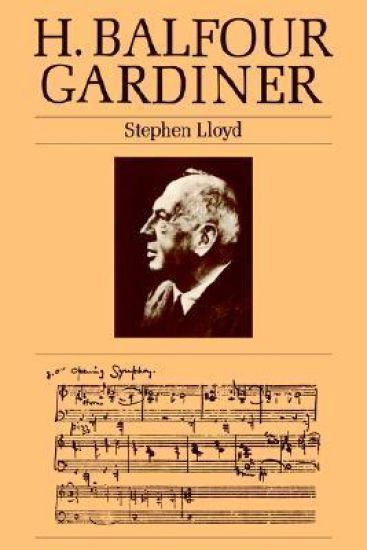
H. Balfour Gardiner

H. Balfour Gardiner

Stephen Lloyd

Cambridge University Press
2005
pokkari
This is the first study of the life and music of Balfour Gardiner (1877–1950), a composer of some distinction and a generous patron of British music. But it is necessarily more than the story of just one man: it is an account of many friendships (chiefly musical) during that exciting period of British music's struggle out of mediocrity to prominence. It was Balfour Gardiner who, before the First World War, launched in Queen's Hall a remarkable series of concerts that did much to establish the reputations of several young composers. It was he, too, who made possible in a war-torn England the first performance of Holst's The Planets, and who gave considerable assistance to his close friend Delius, the plight of whose last years forms a tragic undercurrent to this book. Stephen Lloyd brings to light for the first time the full story of this once greatly respected musician and benefactor. He has traced Gardiner's student days in Germany, his early struggles as a composer, his involvement first in the folk-song movement and later with the ill-fated Musical League, his extensive patronage of music, his dabbling in architecture, and his eventual forsaking of composition for afforestation, which proved an equally remarkable undertaking.
H.M. Bark Endeavour Box Set

H.M. Bark Endeavour Box Set

Ray Parkin

MELBOURNE UNIVERSITY PRESS
2020
sidottu
Ray Parkin, sailor, artist and author, set out in the 1970s to discover everything he could about Captain James Cook's Endeavour, one of the most famous ships in maritime history. The result is the most painstaking study of the ship ever undertaken and a unique account of a great journey: Endeavour's voyage up the east coast of Australia in 1770.Writing for general reader and mariner alike, Parkin sets out to re-create the experience of being on board the Endeavour. Through meticulous research he reveals how it looked, how it sailed, how it smelled and what daily life would have been like for those on board. No aspect of ship life was too insignificant for his enquiries. How many strands of yarn were there in the ship's cable? (954.) Did the ship have a lightning conductor? (Yes.) What was the diameter of her main mast? (21 inches.)Parkin's text is illustrated by plans and figures depicting the ship's architecture and construction, its deck plan, rigging, sails, armament, boats, cables, anchors and accommodation. To enable detailed examination these are reproduced in original size in the box accompanying this volume.The text also contains a composite log of Endeavour's voyage. Extracts from journals kept by those on board are supplemented by an interpretive commentary and explanatory charts.H.M. Bark Endeavour is an absorbing book: discursive, erudite, at times poetic, full of wisdom, insight and information.