Kirjojen hintavertailu. Mukana 11 699 587 kirjaa ja 12 kauppaa.

Kirjahaku

Etsi kirjoja tekijän nimen, kirjan nimen tai ISBN:n perusteella.

1000 tulosta hakusanalla H.G Solari

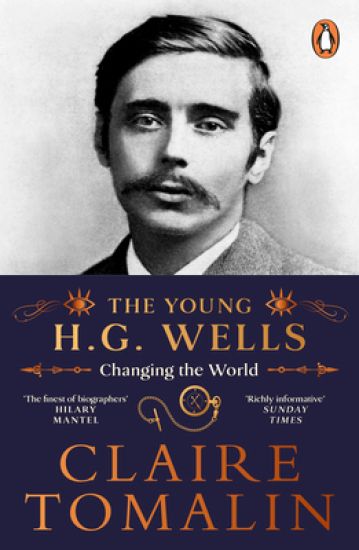
The Young H.G. Wells

The Young H.G. Wells

Claire Tomalin

PENGUIN BOOKS LTD
2022
pokkari
A fascinating journey into the life of H.G. Wells, from one of Britain's best biographersHow did the first forty years of H. G. Wells' life shape the father of science fiction?From his impoverished childhood in a working-class English family, to his determination to educate himself at any cost, to the serious ill health that dominated his twenties and thirties, his complicated marriages, and love affair with socialism, the first forty years of H. G. Wells' extraordinary life would set him on a path to become one of the world's most influential writers. The sudden success of The Time Machine and The War of The Worlds transformed his life and catapulted him to international fame; he became the writer who most inspired Orwell and countless others, and predicted men walking on the moon seventy years before it happened.In this remarkable, empathetic biography, Claire Tomalin paints a fascinating portrait of a man like no other, driven by curiosity and desiring reform, a socialist and a futurist whose new and imaginative worlds continue to inspire today.'The finest of biographers' Hilary Mantel'A most intelligent and sympathetic biographer' Daily Telegraph'One of the best biographers of her generation' Guardian
The Critical Response to H.G. Wells

The Critical Response to H.G. Wells

William J. Scheick

Greenwood Press
1995
sidottu
H. G. Wells was one of the most influential authors of the late 19th and early 20th centuries. He is best remembered today as the author of classic works of science fiction, such as The Invisible Man, The War of the Worlds, and The First Men in the Moon. He was also the author of The Outline of World History, an ambitious chronicle of the world from antiquity to the beginning of the 20th century. Through essays and reviews, this volume traces the critical reception of his works.An introductory essay overviews Wells's literary career and provides a context for understanding his works. Each of the sections that follow treats one of his major works, according to the publication date of his story. Within each section are reviews, essays, or excerpts that exemplify the critical response to that particular work from the time of its appearance to the present day. A bibliography at the end of the volume lists the most important modern critical studies of Wells and indicates the tremendous contemporary interest in Wells as an author.
The Correspondence of H.G. Wells
This collection of H.G. Wells's correspondence draws on over 50 archives and libraries worldwide, including the papers of Wells's daughter by Amber Reeves. The book contains over 2,000 letters, and while a few are business – to publishers, agents and secretaries – the majority are much more personal. Wells's private correspondence extends from letters to President Franklin Roosevelt and Prime Ministers Winston Churchill and A.J. Balfour, to persons such as ‘Mark Benney’, who wrote novels based on his life in the slums and his time in prison. There is correspondence too with his many female friends and lovers, among them Rebecca West, Eileen Power, Gertrude Stein, Marie Stopes, Lilah MacCarthy and Dorothy Richardson. For example, a letter from Moura Budberg, with whom Wells had a long-standing affair, which announces that she is pregnant by him and about to have an abortion, reveals how an advocate of birth control is himself caught out. Wells also enjoyed correspondence with the press, particularly during the two World Wars, and with various BBC officials and people who worked on his films.Some of his letters on the controversies of free love, socialism, birth control, the Fabian Society, and the nature of the curriculum of the new London University in the 1890s are included. Interspersed chronologically with Wells's letters is a small selection of about 40 letters to Wells, where letters from him are not extant. Among these are letters from Ray Lankester, Joseph Conrad, C.G. Jung, Trotsky, Hedy Gatternigg (the woman who attempted suicide in Wells's flat), and J.C. Smuts. The letters are arranged in these periods: Volume 1 1878–1900; Volume 2 1901–1912; Volume 3 1913–1930; and Volume 4 1930–1946. H.G. Wells's works include The Time Machine (1895), The Invisible Man (1897), The War of the Worlds (1898), The History of Mr Polly (1910), and A Short History of the World (1922).
The Correspondence of H.G. Wells
This collection of H.G. Wells's correspondence draws on over 50 archives and libraries worldwide, including the papers of Wells's daughter by Amber Reeves. The book contains over 2,000 letters, and while a few are business – to publishers, agents and secretaries – the majority are much more personal. Wells's private correspondence extends from letters to President Franklin Roosevelt and Prime Ministers Winston Churchill and A.J. Balfour, to persons such as ‘Mark Benney’, who wrote novels based on his life in the slums and his time in prison. There is correspondence too with his many female friends and lovers, among them Rebecca West, Eileen Power, Gertrude Stein, Marie Stopes, Lilah MacCarthy and Dorothy Richardson. For example, a letter from Moura Budberg, with whom Wells had a long-standing affair, which announces that she is pregnant by him and about to have an abortion, reveals how an advocate of birth control is himself caught out. Wells also enjoyed correspondence with the press, particularly during the two World Wars, and with various BBC officials and people who worked on his films.Some of his letters on the controversies of free love, socialism, birth control, the Fabian Society, and the nature of the curriculum of the new London University in the 1890s are included. Interspersed chronologically with Wells's letters is a small selection of about 40 letters to Wells, where letters from him are not extant. Among these are letters from Ray Lankester, Joseph Conrad, C.G. Jung, Trotsky, Hedy Gatternigg (the woman who attempted suicide in Wells's flat), and J.C. Smuts. The letters are arranged in these periods: Volume 1 1878–1900; Volume 2 1901–1912; Volume 3 1913–1930; and Volume 4 1930–1946. H.G. Wells's works include The Time Machine (1895), The Invisible Man (1897), The War of the Worlds (1898), The History of Mr Polly (1910), and A Short History of the World (1922).
The Correspondence of H.G. Wells
This collection of H.G. Wells's correspondence draws on over 50 archives and libraries worldwide, including the papers of Wells's daughter by Amber Reeves. The book contains over 2,000 letters, and while a few are business – to publishers, agents and secretaries – the majority are much more personal. Wells's private correspondence extends from letters to President Franklin Roosevelt and Prime Ministers Winston Churchill and A.J. Balfour, to persons such as ‘Mark Benney’, who wrote novels based on his life in the slums and his time in prison. There is correspondence too with his many female friends and lovers, among them Rebecca West, Eileen Power, Gertrude Stein, Marie Stopes, Lilah MacCarthy and Dorothy Richardson. For example, a letter from Moura Budberg, with whom Wells had a long-standing affair, which announces that she is pregnant by him and about to have an abortion, reveals how an advocate of birth control is himself caught out. Wells also enjoyed correspondence with the press, particularly during the two World Wars, and with various BBC officials and people who worked on his films.Some of his letters on the controversies of free love, socialism, birth control, the Fabian Society, and the nature of the curriculum of the new London University in the 1890s are included. Interspersed chronologically with Wells's letters is a small selection of about 40 letters to Wells, where letters from him are not extant. Among these are letters from Ray Lankester, Joseph Conrad, C.G. Jung, Trotsky, Hedy Gatternigg (the woman who attempted suicide in Wells's flat), and J.C. Smuts. The letters are arranged in these periods: Volume 1 1878–1900; Volume 2 1901–1912; Volume 3 1913–1930; and Volume 4 1930–1946. H.G. Wells's works include The Time Machine (1895), The Invisible Man (1897), The War of the Worlds (1898), The History of Mr Polly (1910), and A Short History of the World (1922).
The Correspondence of H.G. Wells
This collection of H.G. Wells's correspondence draws on over 50 archives and libraries worldwide, including the papers of Wells's daughter by Amber Reeves. The book contains over 2,000 letters, and while a few are business – to publishers, agents and secretaries – the majority are much more personal. Wells's private correspondence extends from letters to President Franklin Roosevelt and Prime Ministers Winston Churchill and A.J. Balfour, to persons such as ‘Mark Benney’, who wrote novels based on his life in the slums and his time in prison. There is correspondence too with his many female friends and lovers, among them Rebecca West, Eileen Power, Gertrude Stein, Marie Stopes, Lilah MacCarthy and Dorothy Richardson. For example, a letter from Moura Budberg, with whom Wells had a long-standing affair, which announces that she is pregnant by him and about to have an abortion, reveals how an advocate of birth control is himself caught out. Wells also enjoyed correspondence with the press, particularly during the two World Wars, and with various BBC officials and people who worked on his films.Some of his letters on the controversies of free love, socialism, birth control, the Fabian Society, and the nature of the curriculum of the new London University in the 1890s are included. Interspersed chronologically with Wells's letters is a small selection of about 40 letters to Wells, where letters from him are not extant. Among these are letters from Ray Lankester, Joseph Conrad, C.G. Jung, Trotsky, Hedy Gatternigg (the woman who attempted suicide in Wells's flat), and J.C. Smuts. The letters are arranged in these periods: Volume 1 1878–1900; Volume 2 1901–1912; Volume 3 1913–1930; and Volume 4 1930–1946. H.G. Wells's works include The Time Machine (1895), The Invisible Man (1897), The War of the Worlds (1898), The History of Mr Polly (1910), and A Short History of the World (1922).
The Correspondence of H.G. Wells
This collection of H.G. Wells's correspondence draws on over 50 archives and libraries worldwide, including the papers of Wells's daughter by Amber Reeves. The book contains over 2,000 letters, and while a few are business – to publishers, agents and secretaries – the majority are much more personal. Wells's private correspondence extends from letters to President Franklin Roosevelt and Prime Ministers Winston Churchill and A.J. Balfour, to persons such as ‘Mark Benney’, who wrote novels based on his life in the slums and his time in prison. There is correspondence too with his many female friends and lovers, among them Rebecca West, Eileen Power, Gertrude Stein, Marie Stopes, Lilah MacCarthy and Dorothy Richardson. For example, a letter from Moura Budberg, with whom Wells had a long-standing affair, which announces that she is pregnant by him and about to have an abortion, reveals how an advocate of birth control is himself caught out. Wells also enjoyed correspondence with the press, particularly during the two World Wars, and with various BBC officials and people who worked on his films.Some of his letters on the controversies of free love, socialism, birth control, the Fabian Society, and the nature of the curriculum of the new London University in the 1890s are included. Interspersed chronologically with Wells's letters is a small selection of about 40 letters to Wells, where letters from him are not extant. Among these are letters from Ray Lankester, Joseph Conrad, C.G. Jung, Trotsky, Hedy Gatternigg (the woman who attempted suicide in Wells's flat), and J.C. Smuts. The letters are arranged in these periods: Volume 1 1878–1900; Volume 2 1901–1912; Volume 3 1913–1930; and Volume 4 1930–1946. H.G. Wells's works include The Time Machine (1895), The Invisible Man (1897), The War of the Worlds (1898), The History of Mr Polly (1910), and A Short History of the World (1922).
The Correspondence of H.G. Wells
This collection of H.G. Wells's correspondence draws on over 50 archives and libraries worldwide, including the papers of Wells's daughter by Amber Reeves. The book contains over 2,000 letters, and while a few are business – to publishers, agents and secretaries – the majority are much more personal. Wells's private correspondence extends from letters to President Franklin Roosevelt and Prime Ministers Winston Churchill and A.J. Balfour, to persons such as ‘Mark Benney’, who wrote novels based on his life in the slums and his time in prison. There is correspondence too with his many female friends and lovers, among them Rebecca West, Eileen Power, Gertrude Stein, Marie Stopes, Lilah MacCarthy and Dorothy Richardson. For example, a letter from Moura Budberg, with whom Wells had a long-standing affair, which announces that she is pregnant by him and about to have an abortion, reveals how an advocate of birth control is himself caught out. Wells also enjoyed correspondence with the press, particularly during the two World Wars, and with various BBC officials and people who worked on his films.Some of his letters on the controversies of free love, socialism, birth control, the Fabian Society, and the nature of the curriculum of the new London University in the 1890s are included. Interspersed chronologically with Wells's letters is a small selection of about 40 letters to Wells, where letters from him are not extant. Among these are letters from Ray Lankester, Joseph Conrad, C.G. Jung, Trotsky, Hedy Gatternigg (the woman who attempted suicide in Wells's flat), and J.C. Smuts. The letters are arranged in these periods: Volume 1 1878–1900; Volume 2 1901–1912; Volume 3 1913–1930; and Volume 4 1930–1946. H.G. Wells's works include The Time Machine (1895), The Invisible Man (1897), The War of the Worlds (1898), The History of Mr Polly (1910), and A Short History of the World (1922).
The Correspondence of H.G. Wells
This collection of H.G. Wells's correspondence draws on over 50 archives and libraries worldwide, including the papers of Wells's daughter by Amber Reeves. The book contains over 2,000 letters, and while a few are business – to publishers, agents and secretaries – the majority are much more personal. Wells's private correspondence extends from letters to President Franklin Roosevelt and Prime Ministers Winston Churchill and A.J. Balfour, to persons such as ‘Mark Benney’, who wrote novels based on his life in the slums and his time in prison. There is correspondence too with his many female friends and lovers, among them Rebecca West, Eileen Power, Gertrude Stein, Marie Stopes, Lilah MacCarthy and Dorothy Richardson. For example, a letter from Moura Budberg, with whom Wells had a long-standing affair, which announces that she is pregnant by him and about to have an abortion, reveals how an advocate of birth control is himself caught out. Wells also enjoyed correspondence with the press, particularly during the two World Wars, and with various BBC officials and people who worked on his films.Some of his letters on the controversies of free love, socialism, birth control, the Fabian Society, and the nature of the curriculum of the new London University in the 1890s are included. Interspersed chronologically with Wells's letters is a small selection of about 40 letters to Wells, where letters from him are not extant. Among these are letters from Ray Lankester, Joseph Conrad, C.G. Jung, Trotsky, Hedy Gatternigg (the woman who attempted suicide in Wells's flat), and J.C. Smuts. The letters are arranged in these periods: Volume 1 1878–1900; Volume 2 1901–1912; Volume 3 1913–1930; and Volume 4 1930–1946. H.G. Wells's works include The Time Machine (1895), The Invisible Man (1897), The War of the Worlds (1898), The History of Mr Polly (1910), and A Short History of the World (1922).
The Correspondence of H.G. Wells
This collection of H.G. Wells's correspondence draws on over 50 archives and libraries worldwide, including the papers of Wells's daughter by Amber Reeves. The book contains over 2,000 letters, and while a few are business – to publishers, agents and secretaries – the majority are much more personal. Wells's private correspondence extends from letters to President Franklin Roosevelt and Prime Ministers Winston Churchill and A.J. Balfour, to persons such as ‘Mark Benney’, who wrote novels based on his life in the slums and his time in prison. There is correspondence too with his many female friends and lovers, among them Rebecca West, Eileen Power, Gertrude Stein, Marie Stopes, Lilah MacCarthy and Dorothy Richardson. For example, a letter from Moura Budberg, with whom Wells had a long-standing affair, which announces that she is pregnant by him and about to have an abortion, reveals how an advocate of birth control is himself caught out. Wells also enjoyed correspondence with the press, particularly during the two World Wars, and with various BBC officials and people who worked on his films.Some of his letters on the controversies of free love, socialism, birth control, the Fabian Society, and the nature of the curriculum of the new London University in the 1890s are included. Interspersed chronologically with Wells's letters is a small selection of about 40 letters to Wells, where letters from him are not extant. Among these are letters from Ray Lankester, Joseph Conrad, C.G. Jung, Trotsky, Hedy Gatternigg (the woman who attempted suicide in Wells's flat), and J.C. Smuts. The letters are arranged in these periods: Volume 1 1878–1900; Volume 2 1901–1912; Volume 3 1913–1930; and Volume 4 1930–1946. H.G. Wells's works include The Time Machine (1895), The Invisible Man (1897), The War of the Worlds (1898), The History of Mr Polly (1910), and A Short History of the World (1922).
The Correspondence of H.G. Wells: Volumes 1–4
This collection of H.G. Wells's correspondence draws on over 50 archives and libraries worldwide, including the papers of Wells's daughter by Amber Reeves. The book contains over 2,000 letters, and while a few are business – to publishers, agents and secretaries – the majority are much more personal. Wells's private correspondence extends from letters to President Franklin Roosevelt and Prime Ministers Winston Churchill and A.J. Balfour, to persons such as ‘Mark Benney’, who wrote novels based on his life in the slums and his time in prison. There is correspondence too with his many female friends and lovers, among them Rebecca West, Eileen Power, Gertrude Stein, Marie Stopes, Lilah MacCarthy and Dorothy Richardson. For example, a letter from Moura Budberg, with whom Wells had a long-standing affair, which announces that she is pregnant by him and about to have an abortion, reveals how an advocate of birth control is himself caught out. Wells also enjoyed correspondence with the press, particularly during the two World Wars, and with various BBC officials and people who worked on his films.Some of his letters on the controversies of free love, socialism, birth control, the Fabian Society, and the nature of the curriculum of the new London University in the 1890s are included. Interspersed chronologically with Wells's letters is a small selection of about 40 letters to Wells, where letters from him are not extant. Among these are letters from Ray Lankester, Joseph Conrad, C.G. Jung, Trotsky, Hedy Gatternigg (the woman who attempted suicide in Wells's flat), and J.C. Smuts. The letters are arranged in these periods: Volume 1 1878–1900; Volume 2 1901–1912; Volume 3 1913–1930; and Volume 4 1930–1946. H.G. Wells's works include The Time Machine (1895), The Invisible Man (1897), The War of the Worlds (1898), The History of Mr Polly (1910), and A Short History of the World (1922).
A Preface to H G Wells

A Preface to H G Wells

John R. Hammond

Routledge
2001
nidottu
John Hammond offers an introduction to the life and work of H G Wells which is of interest and value to both the student and the general reader. Although Wells is studied at undergradute level there is no introductory text available as yet, instead students can only consult full length detailed biographies. John Hammond provides a concise overview allowing the student to read Wells with greater critical appreciation and to undertand the main areas of discussion and disagreement concerning the author.
The Utopian Vision of H.G. Wells

The Utopian Vision of H.G. Wells

Justin E.A. Busch

McFarland Co Inc
2009
pokkari
This book examines and develops the evolutionary utopian ideas of H.G. Wells. It begins with a detailed consideration of the types of individuals who could create and live in ideal societies, as well as the social, aesthetic and intellectual aspects of utopian life in Wells's books. It then discusses the role of the state and how Wells's utopian thought requires a permanent commitment to expanding freedom. The final chapter covers death and how utopian thought can profoundly reshape the reader's understanding of his or her own position relative to current and future societies.
Bernard Shaw and H.G. Wells

Bernard Shaw and H.G. Wells

Bernard Shaw; H.G. Wells

University of Toronto Press
1995
sidottu
Bernard Shaw and H.G. Wells are among the best-known and most controversial literary figures of the twentieth century. Both were rebelliously critical of the social and political, familial and sexual conventions and structures of their time. They shared broadly similar interests, but their lifestyles differed sharply - as did their views on many subjects, including those discussed in their correspondence: religion, socialism, science, war and world history, the theatre, the profession of authorship, and more. The letters are always forthright, often abusive and quarrelsome, sometimes suggesting that the relationship cannot last. They are also often warm, good-natured, playful, and generous - reflecting a fundamental mutual respect and similarity of outlook, however contrasting the temperament and style. The great majority of the two writers' correspondence is published here for the first time. This volumes comprises the personal correspondence of Shaw and Wells through the course of their friendship of more than forty years, and includes and introductory essay by J. Percy Smith. The letters are fully annotated, and are accompanied by information about the circumstances under which each was written, to enable the reader to follow the course of the frequently tempestuous relationship.
The Reception of H.G. Wells in Europe

The Reception of H.G. Wells in Europe

Continuum International Publishing Group Ltd.
2005
sidottu
The Reception of British Authors in Europe series includes literary and political figures, as well as philosophers, historians and scientists. Each volume provides new research on the ways in which selected authors have been translated, published, distributed, read, reviewed A pioneering scholarly collection of essays outlining the breadth and significance of H. G. Wells's literary and political impact throughout 20th-century Europe H.G. Wells was described by one of his European critics as a 'seismograph of his age'. He is one of the founding fathers of modern science fiction, and as a novelist, essayist, educationalist and political propagandist his influence has been felt in every European country. This collection of essays by scholarly experts shows the varied and dramatic nature of Wells's reception, including translations, critical appraisals, novels and films on Wellsian themes, and responses to his own well-publicized visits to Russia and elsewhere. The authors chart the intense ideological debate that his writings occasioned, particularly in the inter-war years, and the censorship of his books in Nazi Germany and Francoist Spain. This book offers pioneering insights into Wells's contribution to 20th century European literature and to modern political ideas, including the idea of European union.
The Last Books of H.G. Wells

The Last Books of H.G. Wells

HG Wells; Rudy Rucker; Colin Wilson

Monkfish Book Publishing Company
2006
pokkari
This volume contains the two last works by HG Wells. Nearing the end of his life, increasingly distressed over the war, Wells deals with death and apocalypse, mortality and religion, and with "human insufficiency." Mind at the End of its Tether "One approaches it with awe. You come across references to it everywhere: Colin Wilson, Priestly, Koestler. It seems to have been a wounding work; something no one could agree with, but something that couldn't be taken lightly."--Art Beck "In the face of our universal inadequacy . . . man must go steeply up or down and the odds seem to be all in favor of his going down and out. If he goes up, then so great is the adaptation demanded of him that he must cease to be a man. Ordinary man is at the end of his tether."--HG Wells The Happy Turning Wells' barbed fantasies about the afterlife take the forms of "happy" dream walks. In one he converses with Jesus: But being crucified upon the irreparable things that one has done, realizing that one has failed, that you have let yourself down and your poor silly disciples down and mankind down, that the God in you has deserted you--that was the ultimate torment. Even on the cross I remember shouting out something about it.""Eli. Eli, lama sabachthani?" I said."Did someone get that down?" he replied."Don't you read the Gospels?""Good God, No " he said. "How can I? I was crucified before all that."
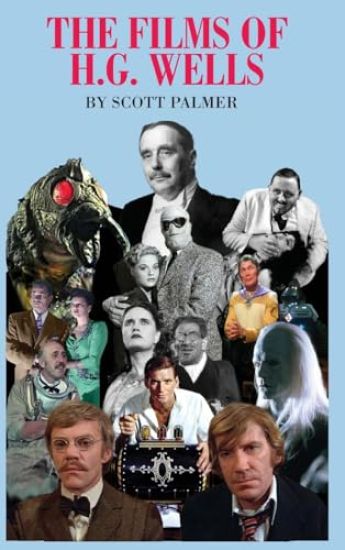
The Films of H.G. Wells

The Films of H.G. Wells

Scott V Palmer

IngramSpark
2024
sidottu
This is a reference book about films made from the worls of H.G. Wells. There are 25 productions included, covering the years from 1932-2002. The book includes all films in date order, comnplete cast lists, numerous photographs, directorial credits, running times, and a story synopsis for each production