Kirjojen hintavertailu. Mukana 11 518 949 kirjaa ja 12 kauppaa.

Kirjahaku

Etsi kirjoja tekijän nimen, kirjan nimen tai ISBN:n perusteella.

1000 tulosta hakusanalla Harold Schechter

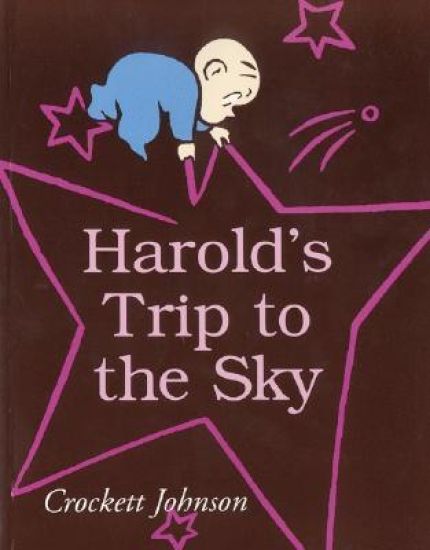
Harold's Trip to the Sky

Harold's Trip to the Sky

Crockett Johnson

Harpercollins
1981
nidottu
From the treasured author of Harold and the Purple Crayon, Crockett Johnson, comes another adventure for Harold and his magical purple crayon.One night Harold, with his trusty purple crayon, decides to go to on a voyage to Mars. He flies past planets, comets, and even the moon. But will Harold arrive safely back on earth, just in time for breakfast? "Very zany adventures of the very resourceful Harold." --Library Journal
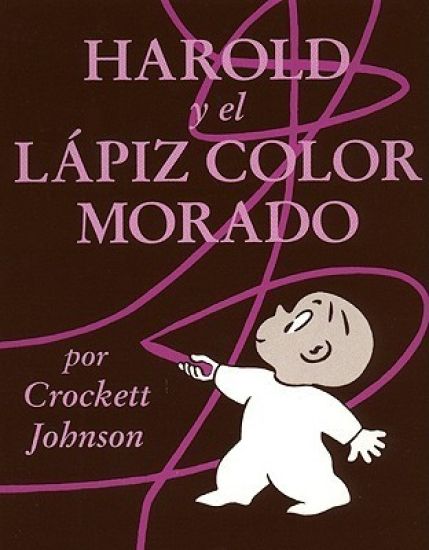
HAROLD AND THE PURPLE CRAYON

HAROLD AND THE PURPLE CRAYON

CROCKETT JOHNSON

HARPERCOLLINS PUBLISHERS INC
2011
nidottu
This high-quality Spanish-language book can be enjoyed by fluent Spanish speakers as well as those learning the language, whether at home or in a classroom.Una noche, Harold decide dar un paseo a la luz de la luna. Pero hay un peque o problema: La luna no esta fuera Por suerte, Harold lleva consigo su lapiz color morado y en un abrir y cerrar de ojos, se "" las pinta solo"" para enredarse en toda clase de aventuras.
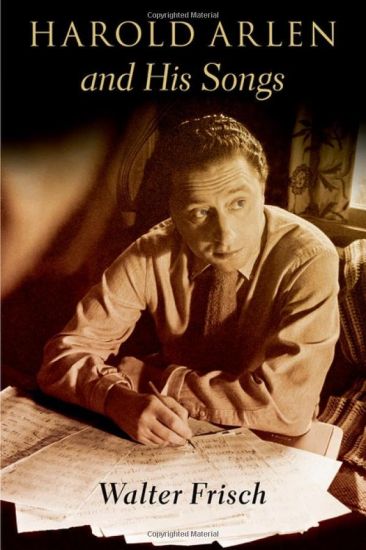
Harold Arlen and His Songs

Harold Arlen and His Songs

Walter Frisch

OXFORD UNIVERSITY PRESS INC
2024
sidottu
Harold Arlen and His Songs is the first comprehensive book about the music of one of the great song composers of the twentieth century. Arlen wrote many standards of the American Songbook-including "Get Happy," "Over the Rainbow, "Stormy Weather," "Come Rain or Come Shine," and "The Man That Got Away" - that today rank among the best known and loved. Author Walter Frisch places these and other songs in the context of a long career that took Arlen from Buffalo, New York; to Harlem's Cotton Club; to Broadway stages; and to the film studios of Hollywood. Even with their complex melodies, harmonies, and formal structures, Arlen's tunes remain accessible and memorable. As Frisch shows, he blended influences from his father's Jewish cantorial tradition, his experience as a jazz arranger and performer, and peers like Gershwin, Kern, and Berlin. Arlen always emphasized the collaborative nature of songwriting, and he worked with the top lyricists of his day, including Ted Koehler, Yip Harburg, Johnny Mercer, and Ira Gershwin. Harold Arlen and His Songs is structured around these and Arlen's other partnerships, analyzing individual songs as well as the shows or films in which they appear. The book also treats Arlen's performances of his own music as a vocalist and pianist, through numerous recordings and appearances on radio and television. A final chapter explores the interpretations of his songs by great singers, including many who worked with him, among them Ethel Waters, Lena Horne, Judy Garland, Frank Sinatra, and Ella Fitzgerald.
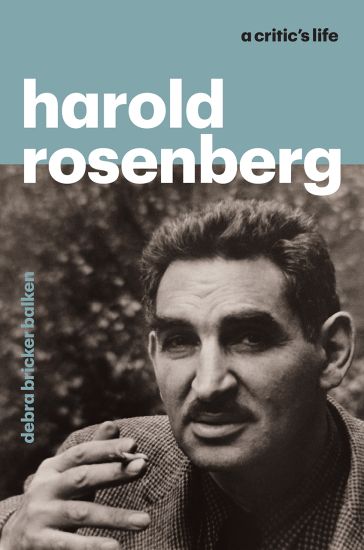
Harold Rosenberg

Harold Rosenberg

Debra Bricker Balken

University of Chicago Press
2021
sidottu
Despite being one of the foremost American intellectuals of the mid-twentieth century, Harold Rosenberg (1906–1978) was utterly incapable of fitting in—and he liked it that way. Signature cane in one hand and a cigarette in the other, he cut a distinctive figure on the New York City culture scene, with his radiant dark eyes and black bushy brows. A gangly giant at six foot four, he would tower over others as he forcefully expounded on his latest obsession in an oddly high-pitched, nasal voice. And people would listen, captivated by his ideas. With Harold Rosenberg: A Critic’s Life, Debra Bricker Balken offers the first-ever complete biography of this great and eccentric man. Although he is now known mainly for his role as an art critic at the New Yorker from 1962 to 1978, Balken weaves together a complete tapestry of Rosenberg’s life and literary production, cast against the dynamic intellectual and social ferment of his time. She explores his role in some of the most contentious cultural debates of the Cold War period, including those over the commodification of art and the erosion of individuality in favor of celebrity, demonstrated in his famous essay “The Herd of Independent Minds.” An outspoken socialist and advocate for the political agency of art, he formed deep alliances with figures such as Hannah Arendt, Saul Bellow, Paul Goodman, Mary McCarthy, Jean-Paul Sartre, Willem de Kooning, and Jackson Pollock, all of whom Balken brings to life with vivid accounts from Rosenberg’s life. Thoroughly researched and captivatingly written, this book tells in full Rosenberg’s brilliant, fiercely independent life and the five decades in which he played a leading role in US cultural, intellectual, and political history.
Harold Bloom's Shakespeare

Harold Bloom's Shakespeare

Palgrave Macmillan
2002
sidottu
Harold Bloom's Shakespeare examines the sources and impact of Bloom's Shakespearean criticism. Through focused and sustained study of this writer and his best-selling book, this collection of essays addresses a wide range of issues pertinent to both general readers and university classes: the cultural role of Shakespeare and of a new secular humanism addressed to general readers and audiences; the author as literary origin; the persistence of character as a category of literary appreciation; and the influence of Shakespeare within the Anglo-American educational system. Together, the essays reflect on the ethics of literary theory and criticism.
Harold Lloyd

Harold Lloyd

Annette M. D'Agostino

Greenwood Press
1994
sidottu
One of the most significant contributors to the early years of the motion picture industry, Harold Lloyd was also a shrewd businessman and became the wealthiest man in Hollywood at the peak of his career. Perhaps more than any other major star of the silent era, his characters mirrored his times and captivated his contemporaries. His experiments with camera placement and motion were vital to the evolution of filmmaking techniques.This book includes a short biography of Lloyd and detailed information about all of his performances. The biography overviews his childhood, his adolescent stage career, his work in silent and talking pictures, his family life, and the work of his major contemporaries. A chapter on his film work includes entries for all of his shorts and features, including cameo roles and newsreels. Other chapters describe Lloyd's radio and television work, sheet music and recordings inspired by his films, and his many awards and honors. An annotated bibliography cites books, magazines, newspapers, oral histories, and interviews. Eleven photographs illustrate his work.
Harold Pinter and the New British Theatre

Harold Pinter and the New British Theatre

D. Keith Peacock

Praeger Publishers Inc
1997
sidottu
Harold Pinter is universally described as Britain's leading dramatist. This book evaluates the justification for this appellation. It examines his work in relation to changes taking place in the New British Theatre after the so-called theatrical revolution of 1956, and draws attention to those autobiographical experiences that have been transmuted into his art. Beginning with a look at the nature of British theatre prior to 1956, Peacock then describes Pinter's early life in the East End of London, his career as an actor, and his early writing. The discussion follows Pinter's life and work from ^IThe Room^R in 1957 to his most recent play, Ashes to Ashes in 1996. The author argues that although Pinter has not instigated an aesthetic revolution, he has, more significantly, through his representation of human behavior, provoked a new way of viewing the world.
Harold Laski

Harold Laski

M. Newman

Palgrave Macmillan
1993
sidottu
Harold Laski (1893-1950) was perhaps the best known socialist intellectual of his era, with influence in the USA, India and mainland Europe as well as Britain. But he was always a controversial figure and his reputation has never recovered from the effort to discredit him that took place during the Cold War. This new biography argues that Laski has been misrepresented. It maintains that he dedicated his life to the quest for a just society, and that his thought remains highly relevant for our own times.
Harold Pinter

Harold Pinter

M. Regal

Palgrave Macmillan
1995
sidottu
Harold Pinter: A Question of Timing focuses on the ways in which Pinter conceives of and dramatises time according to the particular medium with which he is working. It goes beyond Pinter's obvious fascination with false and true memory to trace the various textual and non-textual strategies he employs to distort sequence and duration in his plays. Further, it shows how Pinter undermines the temporal assumptions of naturalism and realism to form a uniquely relativistic world in which time is a central feature.
Harold Macmillan and Britain’s World Role
When Harold Macmillan became prime minister in 1957, Britain had reached a critical point in its contemporary history. There was still evidence of Britain's status as a great power, yet the previous year's humiliation at Suez had undermined its credibility. By taking key areas of overseas policy - summitry, the Middle East, defence, Empire, and Europe - this volume looks at Macmillan's attempts to establish a new foreign policy agenda after Suez. Based on research in public and private archives in Britain, America and Germany, Harold Macmillan and Britain's World Role offers a critical reappraisal of British foreign policy between 1957 and 1963, addressing how successfully Macmillan answered his own key question: 'Why should the UK stay in the big game?'
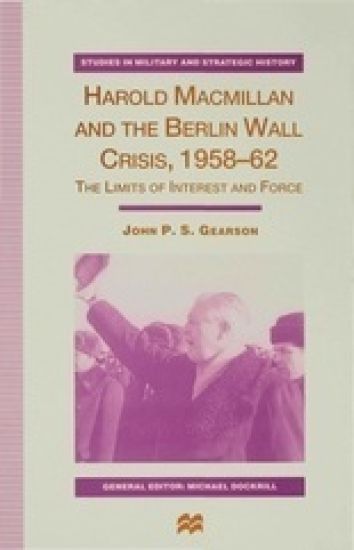
Harold Macmillan and the Berlin Wall Crisis, 1958-62
Drawing on newly released government papers, John Gearson assesses the development of Harold Macmillan's foreign policy during the Berlin Wall Crisis. Tracing the bitter alliance disputes of the crisis, Dr Gearson shows how Macmillan's attempts to chart an independent course, crucially undermined his standing with his European partners and revealed his confused approach to European security. Berlin is placed at the centre of consideration of British foreign policy, making this book an important contribution to the historiography of the period.
Harold Macmillan: Aspects of a Political Life
Even 35 years after Harold Macmillan's resignation in 1963, opinions are sharply divided over his achievements as a politician and prime minister. This volume contributes to the debate about Macmillan's political role, his successes and his failures, by examining key aspects of his political life. Biographers, historians, and contemporaries present facets of Macmillan's life, his political visions, his skills, successes and failures in his personal life as well as in his domestic and foreign policies. With most official papers covering his active political life until his resignation now in the public domain, a more considered judgement about his party political and his governmental activities is possible. Taking account of this newly-available documentary evidence, there is much yet to be written on Harold Macmillan's career, but this collection bears witness to the fact that his was a magnificent life.
Harold Monro

Harold Monro

D. Hibberd

Palgrave Macmillan
2001
sidottu
Troubled by his complex sexuality, Monro was a tormented soul whose aim was to serve the cause of poetry. Hibberd's revealing and beautifully-written biography will help rescue Monro from the graveyard of literary history and claim for him the recognition he deserves. Poet and businessman, ascetic and alcoholic, socialist and reluctant soldier, twice-married yet homosexual, Harold Monro probably did more than anyone for poetry and poets in the period before and after the Great War, and yet his reward has been near oblivion. Aiming to encourage the poets of the future, he befriended, among many others, T.S. Eliot, Ezra Pound and the Imagists; Rupert Brooke and the Georgians; Marinetti the Futurist; Wilfred Owen and other war poets; and the noted women poets, Charlotte Mew and Amma Wickham.
Harold Peabody & the Magic Glasses

Harold Peabody & the Magic Glasses

Dawn Kopman Whidden; O M Faye

Lulu.com
2018
pokkari
Harold dreams of being a hero like his father, a Navy SEAL, but_he is what you might call an easy target. He's short, he's almost legally blind, and he's the new kid in town! When the biggest bully in school smashes Harold's glasses and he has to get a new pair, something amazing happens. Suddenly, Harold can see anyone's greatest fear. Do you know what this means? R-E-V-E-N-G-E. And it has never tasted so sweet. One by one, Harold is going to make bullies pay. But, in the end, what if Harold becomes the villain in the story . . . instead of the hero?
Harold Is A Dog.

Harold Is A Dog.

Harley Hay

Lulu.com
2019
nidottu
Harold is a dog, a very exceptional Canadian dog, decades from now. He has many best friends, animal and human, he loves to drive cars, time-travel, and take trips to the moon. Also, he loves to tell stories. Harold is one of those rare and valuable genetically modified dogs that could make Big Al and Steady Eddy very rich. But they've never kidnapped a dog like Harold before. Until now.
Harold Pinter

Harold Pinter

Guido Almansi; Simon Henderson

TAYLOR FRANCIS LTD
2023
nidottu
First published in 1983, Harold Pinter is an original study into the work of one of Britain’s foremost dramatists.The book celebrates Pinter’s elusiveness as a writer. It considers his position as a specifically contemporary writer of the post-modernist tradition, and explores his use of language as a sophisticated means of non-communication, acting as a smokescreen behind which his characters lie. The book presents the language games used by Pinter according to their strategic importance, beginning with his earlier works and suggesting a chronological progression. It also discusses Pinter’s later developments, such as the screenplay for The French Lieutenant’s Woman. Harold Pinter is ideal for anyone with an interest in the work and literary techniques of contemporary writers and dramatists.