
Kirjahaku
Etsi kirjoja tekijän nimen, kirjan nimen tai ISBN:n perusteella.
1000 tulosta hakusanalla Harriet Pyne Grove

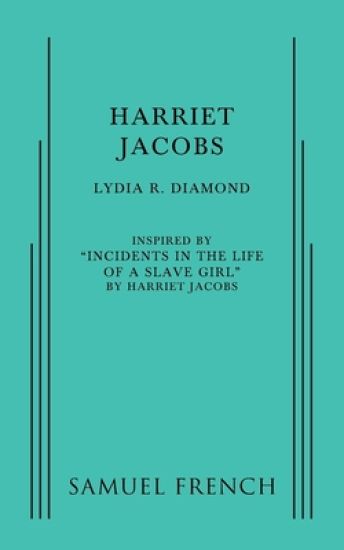
In her book Incidents in the Life of a Slave Girl, Harriet Jacobs describes with brutal honesty the hardships she endures under slavery, including the extraordinary choices she makes to be near her children. To survive, she escapes into her imagination and through writing, discovers hope for a better life. Accompanied by the rich musical traditions of slave spirituals, Harriet Jacobs is an inspiring look at a young woman's fascinating journey from slavery to freedom.
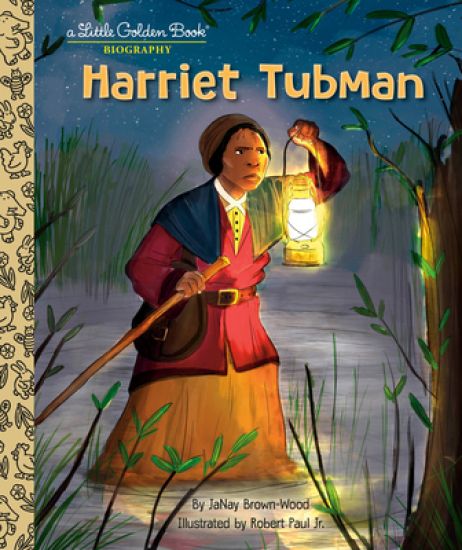
Harriet Tubman: A Little Golden Book Biography
Janay Brown-Wood; Robert Paul Jr.
RANDOM HOUSE USA INC
2022
sidottu
Inspire and educate your little one with a Little Golden Book biography about Harriet Tubman It's the perfect introduction to nonfiction for preschoolers. This Little Golden Book about Harriet Tubman--a true hero who helped to free enslaved Black people as a conductor on the Underground Railroad--is an inspiring read-aloud for young children. Look for Little Golden Book biographies about these other inspiring people: Queen Elizabeth IIBarack ObamaSonia SotomayorDr. FauciJoe BidenKamala HarrisMisty CopelandFrida KahloRuth Bader GinsburgJackie RobinsonMartin Luther King Jr.Johnny Appleseed
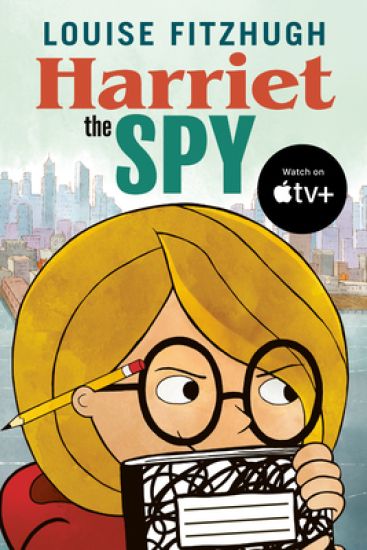
Soon to be an Apple TV+ animated series starring Golden Globe nominee Beanie Feldstein and Emmy Award winner Jane Lynch, it's no secret that Harriet the Spy is a timeless classic that kids will love Harriet M. Welsch is a spy. In her notebook, she writes down everything she knows about everyone, even her classmates and her best friends. Then Harriet loses track of her notebook, and it ends up in the wrong hands. Before she can stop them, her friends have read the always truthful, sometimes awful things she's written about each of them. Will Harriet find a way to put her life and her friendships back together? "What the novel showed me as a child is that words have the power to hurt, but they can also heal, and that it's much better in the long run to use this power for good than for evil."--New York Times bestselling author Meg Cabot
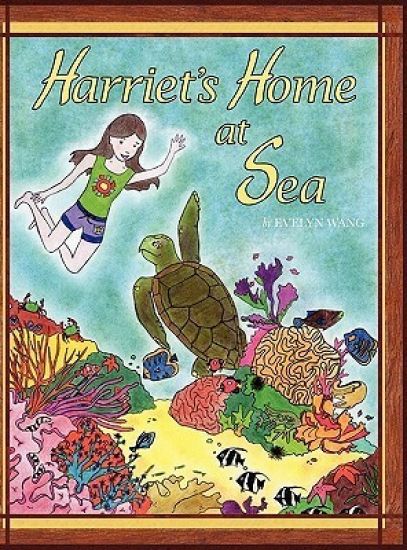
Situated off the lush and tropical shores of Australia, the story takes readers into the heart of the Great Barrier Reef.There, little Harriet resides with her father on a fishing boat. Harriet loves her home and spends her time exploring the vast reef systems teeming with exotic plants and animals. All seem well in the land of lavender corals and tangerine sunsets until an oil spill occurs...Blackness covers the once pristine beaches, as fish, sea birds, and turtles lie sick in the thick grease. Harriet witnesses the devastating eff ects of oil pollution on people and wildlife, and is simply inconsolable.Determined to save her home, Harriet departs on a thrilling adventure fi lled with unexpectedfriends. See how Harriet manages to save the day in this poignant and uplift ing tale.
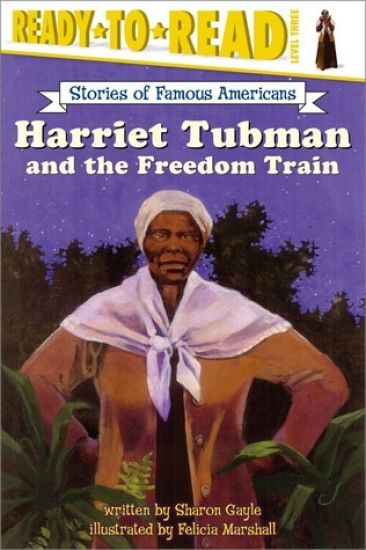
Harriet Tubman and the Freedom Train: Ready-To-Read Level 3
Sharon Gayle
Simon Spotlight
2003
nidottu
Discover the inspiring true story of Harriet Tubman in this Level 3 Ready-to-Read storybook. Harriet Tubman was born a slave. But she always knew that someday she would be free. After realizing her dream, Harriet decided she had to help others find freedom, too. So she became a guide on the Underground Railroad. Little did this courageous woman know just how many people she would help.
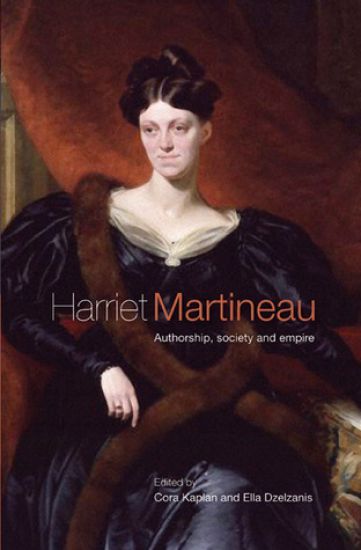
Harriet Martineau
Manchester University Press
2010
sidottu
Harriet Martineau responds to the strong revival of interest in her life and writing, exploring Martineau’s controversial views through her innovative use of popular cultural forms—journalism, travel writing, didactic fiction, novels, translation, autobiography and history. This is the first collection of essays to revisit and reassess Martineau’s leading place in Victorian culture and in the development of nineteenth-century liberalism. Distinguished contributors—including Isobel Armstrong, Lauren Goodlad, Catherine Hall, Deborah Logan and Linda Peterson—offer critical analyses of her trailblazing career as a professional ‘woman of letters’.The essays collected here move from personal to global concerns in Martineau’s oeuvre. The opening essays centre on her bold self-fashioning as a writer, while the second section focuses on the domestic complexities of laissez-faire liberalism in her economic and social vision. Finally, the volume analyses her provocative writings on race, Empire and history – from Atlantic slavery to the Indian Mutiny – demonstrating the international breadth and impact of a remarkable career.

It is 1887, and Henry Ward Beecher lies dying. Reporters from around the world, eager for one last story about the most lurid scandal of their time, descend on Brooklyn Heights, their presence signaling the beginning of the voracious appetite for fallen celebrities we know so well today. When Henry Ward Beecher was put on trial for adultery in 1875, the question of his guilt or innocence was ferociously debated. His trial not only split the country, it split apart his family, causing a particularly bitter rift between his sisters, Harriet Beecher Stowe, author of Uncle Tom's Cabin, and Isabella Beecher Hooker, an ardent suffragist. Harriet remained loyal to Henry, while Isabella called publicly for him to admit his guilt. What had been a loving, close relationship between two sisters plummeted into bitter blame and hurt. Harriet and Isabella each had a major role in the social revolutions unfolding around them, but what happened in their hearts when they were forced to face a question of justice much closer to home? Now they struggle: who best served Henry -- the one who was steadfast or the one who demanded honesty?
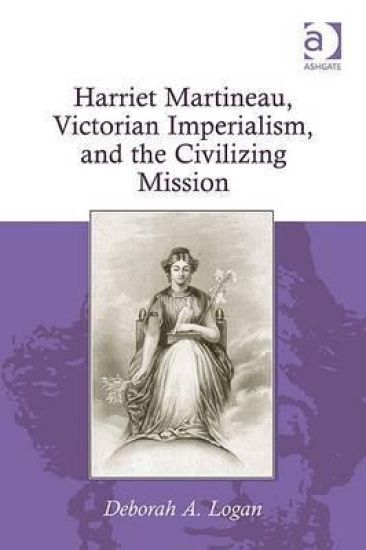
Harriet Martineau, Victorian Imperialism, and the Civilizing Mission
Deborah A. Logan
Ashgate Publishing Limited
2009
sidottu
In her in-depth study of Harriet Martineau's writings on the evolution of the British Empire in the nineteenth century, Deborah A. Logan elaborates the ways in which Martineau's works reflect Victorian concerns about radically shifting social ideologies. To understand Martineau's interventions into the Empire Question, Logan argues, is to recognize her authority as an insightful political commentator, historian, economist, and sociologist whose eclectic studies and intellectual curiosity positioned her as a shrewd observer and recorder of the imperial enterprise. Logan's primary sources are Martineau's nonfiction works, particularly those published in periodicals, complemented by telling references from Martineau's didactic fiction, correspondence, and autobiography. Key texts include History of The Peace; Letters from Ireland and Endowed Schools of Ireland; Illustrations of Political Economy; Eastern Life, Present and Past; and History of British Rule in India and Suggestions for the Future Rule of India. Logan shows Martineau negotiating the inevitable conflict that arises when the practices of Victorian imperialism are measured against its own stated principles, and especially against Martineau's idea of both the Civilizing Mission and the indigenous cultural integrity often compromised in the process. The picture of Martineau that emerges is complex and fascinating. Both an advocate and a critic of British imperialism, Martineau was a persistent champion of the Civilizing Mission. Written with an awareness that she was recording contemporary history for future generations, Martineau’s commentary on this perpetually fascinating, often tragic, and always instructive chapter in British and world history offers important insights that enhance and complicate our understanding of imperialism and globalization.
Harriet Beecher Stowe: The Inspiring Life Story of the Abolition Advocate
Brenda Haugen
Compass Point Books
2016
sidottu
In the years leading up to the bloody Civil War, the issue of slavery divided the United States. Harriet Beecher Stowe hated slavery and used her gift of writing to fight its injustice. Her novel, Uncle Tom's Cabin, revealed the cruelties of slavery and further split an already divided country.

This illuminating graphic novel biography about Harriet Tubman sheds new light on one of American history's bravest heroes. Harriet Tubman did something exceptionally courageous: She escaped slavery. Then she did something impossible: She went back. She underwent some thirteen missions to rescue around seventy enslaved people, using and expanding a network of abolitionists that became known as the Underground Railroad. She spent her life as an activist, speaking out for Black people and women's suffrage. This modern account of her trip to save her brothers is detailed and authentic. Illustrated with care for the historical record, it offers insight into the life and mind of Tubman, displaying her as a woman with an unshakable desire to break the chains of an unjust society. It is a perfect anti-racist narrative for our times and deepens an understanding of just what freedom means to those who must fight for it.
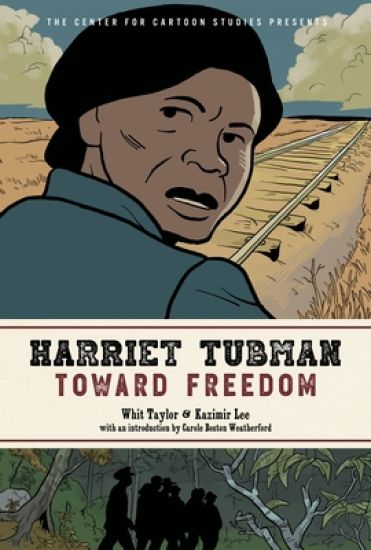
Harriet Tubman did something exceptionally courageous: she escaped slavery. Then she did something impossible: she went back. She underwent some thirteen missions to rescue around seventy enslaved people, using and expanding a network of abolitionists that became known as the Underground Railroad. She spent her life as an activist, speaking out for Black people and women's suffrage. This modern account of her trip to save her brothers is detailed and authentic. Illustrated with care for the historical record, it offers insight into the life and mind of Tubman, displaying her as a woman with an unshakable desire to break the chains of an unjust society. It is a perfect anti-racist narrative for our times and leaves one with an understanding of just what freedom means to those whomust fight for it.
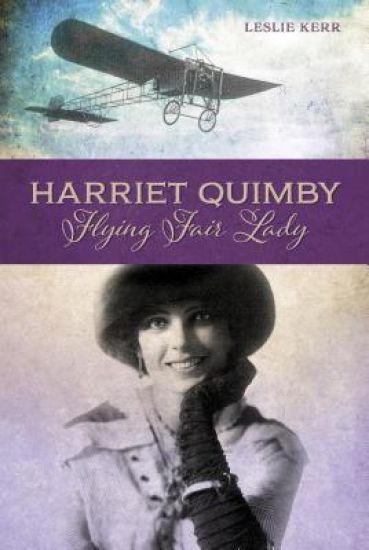
One of the first women to fly, the fashionable Harriet Quimby (1875–1912) came of age in the fading years of a gilded era, determined to have more than the life of a farmer's wife. Beautiful, intelligent, and forever seeking the next adventure when her life ended tragically at age thirty-seven, this extraordinary pioneer had accomplished what most—women or men—only dream about. Here is the remarkable story of Quimby's groundbreaking work in aviation, photojournalism, fashion design, script writing, and advertising. As a celebrity journalist in New York, she was also a mouthpiece for women, minorities, and social justice issues. "I think I shall do something someday," she once remarked. This recognition of her legacy is long overdue.
Harriet Brooks
Marelene F. Rayner-Canham; Geoffrey W. Rayner-Canham
McGill-Queen's University Press
1992
sidottu
After completing a master's degree at McGill University under Rutherford's tutelage, Brooks continued her post-graduate work at Bryn Mawr College and Cambridge University, eventually returning to McGill to work again with Rutherford. In 1904 she left Canada to work at Barnard College in New York City, and then with Curie in Paris. Brooks had a significant career as a nuclear scientist, but her success was hampered by the fact that she was a woman. She eventually married and left research. Her premature death at age fifty-six was probably related to her work with radiation.