

Kirjahaku
Etsi kirjoja tekijän nimen, kirjan nimen tai ISBN:n perusteella.
1000 tulosta hakusanalla Harris

Harris in Pieces is a cheeky cabinet of comic miniatures-short stories and poems that tilt the everyday theatre of modern life into the light and let it sparkle. One minute, a head teacher is MacGyver-ing a shambolic school f te into triumph with nothing but duct tape, diplomacy, and tea. The next, a slippery minister sashays back to his old school for a PR waltz-polish on the surface, chaos in the wings. The joy is in the reveal: the distance between how we perform in society and who we really are. The cast is gloriously, recognisably human. Parents keep up appearances on the school run. Critics and politicians buffing their images for a fickle press. Ordinary strivers who can turn even simple plans into slapstick. The laughs land fast with smart dialogue, razor-sharp asides, and social observations that make you wince, then cackle. Threaded between the tales are nimble, mischievous poems that stretch the grin: a light-footed tour of French rituals and appetites; a gleeful "what if" about printed houses that spooks bankers and pundits; riffs on convenience, culture, and the small myths we live by. The verse is musical without being precious, generous without going soft. What binds it all is a humane streak. Even the blowhards get a wink; even the chancers get their moment. Grace keeps popping up where you don't expect it, like on the touchline, under a PTA tent, in the breath held before a photo-op. Dip in anywhere or read straight through. Either way, you'll get crisp setups, satisfying payoffs, and that aftertaste of recognition that lingers long after the laugh. For fans of social comedy and modern satire, Harris in Pieces offers bite with benevolence-laugh-out-loud scenes, quotable lines, and the warm shock of seeing ourselves, just slightly askew.

Harris in Pieces is a cheeky cabinet of comic miniatures-short stories and poems that tilt the everyday theatre of modern life into the light and let it sparkle. One minute, a head teacher is MacGyver-ing a shambolic school f te into triumph with nothing but duct tape, diplomacy, and tea. The next, a slippery minister sashays back to his old school for a PR waltz-polish on the surface, chaos in the wings. The joy is in the reveal: the distance between how we perform in society and who we really are. The cast is gloriously, recognisably human. Parents keep up appearances on the school run. Critics and politicians buffing their images for a fickle press. Ordinary strivers who can turn even simple plans into slapstick. The laughs land fast with smart dialogue, razor-sharp asides, and social observations that make you wince, then cackle. Threaded between the tales are nimble, mischievous poems that stretch the grin: a light-footed tour of French rituals and appetites; a gleeful "what if" about printed houses that spooks bankers and pundits; riffs on convenience, culture, and the small myths we live by. The verse is musical without being precious, generous without going soft. What binds it all is a humane streak. Even the blowhards get a wink; even the chancers get their moment. Grace keeps popping up where you don't expect it, like on the touchline, under a PTA tent, in the breath held before a photo-op. Dip in anywhere or read straight through. Either way, you'll get crisp setups, satisfying payoffs, and that aftertaste of recognition that lingers long after the laugh. For fans of social comedy and modern satire, Harris in Pieces offers bite with benevolence-laugh-out-loud scenes, quotable lines, and the warm shock of seeing ourselves, just slightly askew
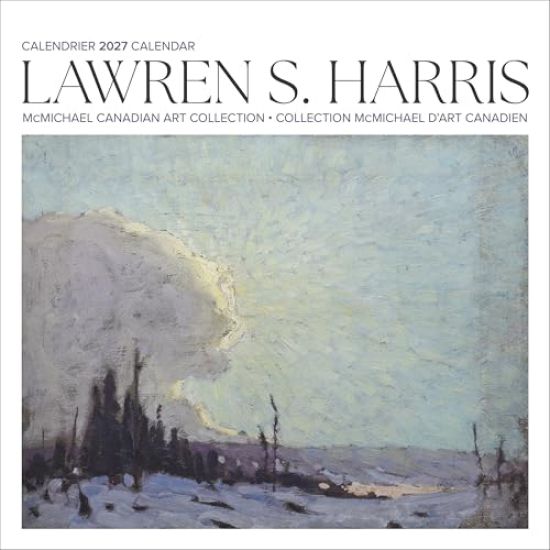
Schooled in French Impressionism and filled with national pride, a small community of artists came together in 1920 to form the Group of Seven, whose objective was to produce distinctly Canadian imagery. The impetus for this association was Lawren S. Harris, who firmly believed in the need for a national art movement. Harris painted the Canadian landscape with enthusiasm, capturing the majesty of its wilderness and its inherent spirituality.

Harris Township, Ottawa County, Ohio
VDM Publishing House
2010
nidottu
Observera att förlaget som ger ut denna produkt baserar innehållet i sina produkter på fria källor som Wikipedia. Boken är med stor sannolikhet endast ett utdrag ur dessa informationskällor, alltså inte en vanlig bok i den bemärkelsen.

Harris Affine Region Detector
VDM Publishing House
2010
nidottu
Observera att förlaget som ger ut denna produkt baserar innehållet i sina produkter på fria källor som Wikipedia. Boken är med stor sannolikhet endast ett utdrag ur dessa informationskällor, alltså inte en vanlig bok i den bemärkelsen.

Harris Brothers
OmniScriptum
2026
nidottu

Harris County, Texas
VDM Publishing House
2010
nidottu
Observera att förlaget som ger ut denna produkt baserar innehållet i sina produkter på fria källor som Wikipedia. Boken är med stor sannolikhet endast ett utdrag ur dessa informationskällor, alltså inte en vanlig bok i den bemärkelsen.

Harris (train)
OmniScriptum
2026
pokkari


Harrisons Manual of Oncology 2/E
Bruce Chabner; Thomas Lynch; Dan Longo
McGraw-Hill Medical
2014
nidottu
Publisher's Note: Products purchased from Third Party sellers are not guaranteed by the publisher for quality, authenticity, or access to any online entitlements included with the product.A CONCISE YET THOROUGH OVERVIEW OF THE MEDICATIONS AND APPROACHES USED IN CANCER CARE--BACKED BY THE AUTHORITY OF HARRISON'SHarrison's Manual of Oncology is a carry-anywhere guide to the care of patients with cancer. Enhanced by the latest published results, this valuable clinical companion features numerous tables and succinct, outline-style text that puts important information at your fingertips. You will find content that goes beyond the treatment of primary or metastatic disease to encompass the treatment of all therapeutic complications.The opening sections of Harrison's Manual of Oncology are devoted to the classes of agents used to treat cancer and reviews their pharmacology and mechanisms of action. This section is followed by a detailed discussion of the diagnosis, staging, and treatment of all major types of cancer. There is a strong focus on symptom management and complications of treatment, including pain, nausea and vomiting, anemia, febrile neutropenia, metabolicemergencies, thrombosis, psychological issues, and end-of-life care.

Harrisons Manual of Medicine
Kasper Dennis; Fauci Anthony; Stephen Hauser; Dan Longo; J. Larry Jameson; Loscalzo Joseph
McGraw-Hill Professional
2016
nidottu
Essential Clinical Information Drawn From Harrison’s Harrison’s Manual of Medicine is a concise, bedside resource derived from content found in Harrison’s Principles of Internal Medicine, Nineteenth Edition. Perfect for use at the point of care, the Manual presents clinical information covering key aspects of the diagnosis, clinical manifestations, and treatment of the major diseases that are likely to be encountered in medical practice.Presented in full color and incorporating an efficient blend of succinct text, bullet points, algorithms, and tables Harrison’s Manual of Medicine, Nineteenth Edition covers every area of clinical medicine, including:· Etiology and Epidemiology· Clinically Relevant Pathophysiology· Signs and Symptoms· Differential Diagnosis· Physical and Laboratory Findings· Therapeutics· Practice Guidelines

Harrison, R: MYP Mathematics 3: Online Course Book
OUP Oxford
2021
muu
Build solid mathematical understanding and develop key conceptual connections. The inquiry-based approach integrates the MYP key concepts, helping you shift to a concept-based classroom and cement mathematical comprehension. Fully comprehensive and matched to the Revised MYP to support achievement.Progress your learners into IB Diploma - fully comprehensive and matched to the MYP Next Chapter curriculumDevelop conceptual understanding in the best way for your learners - learn by mathematical unit or by key concept Drive active, critical exploration of mathematical principles - build rounded comprehension framed within the key and related concepts Develop meaningful cross-curricular connections that help learners recognize and manipulate mathematical ideas in other disciplines Support higher level thinking skills through an approach grounded in factual, conceptual and debatable questions Build a solid foundation of practical skills with extensive practice equipping learners to apply skills Fully prepare learners for the MYP eAssessmentThe online Student Book will be available on Oxford Education Bookshelf until 2028. Access is facilitated via a unique code, which is sent in the mail. The code must be linked to an email address, creating a user account. Access may be transferred once to an additional user.
Harrison Decoded
Oxford University Press
2020
sidottu
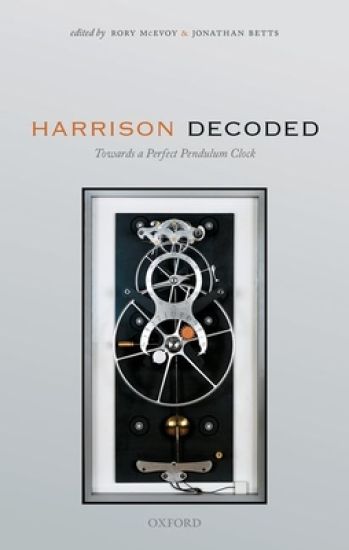
Brings together the output of a forty-year collaborative research project that unpicked and put into practice the fine details of John Harrison's extraordinary pendulum clock system. Harrison predicted that his unique method of making pendulum clocks could provide as much as one-hundred-times the stability of those made by his contemporaries. However, his final publication, which promised to describe the system, was a chaotic jumble of information, much of which had nothing to do with clockwork. One contemporary reviewer of Harrison's book could only suggest that the end result was a product of Harrison's 'superannuated dotage.' The focus of this book centres on the making, adjusting, and testing of Clock B which was the subject of various trials at the Royal Observatory, Greenwich. The modern history of Clock B is accompanied by scientific analysis of the clock system, Clock B's performance, the methods of data-gathering alongside historical perspectives on Harrison's clockmaking, that of his contemporaries, and some evaluation of the possible influence of early 18th century scientific thought.
Harrison Decoded
Oxford University Press
2023
nidottu
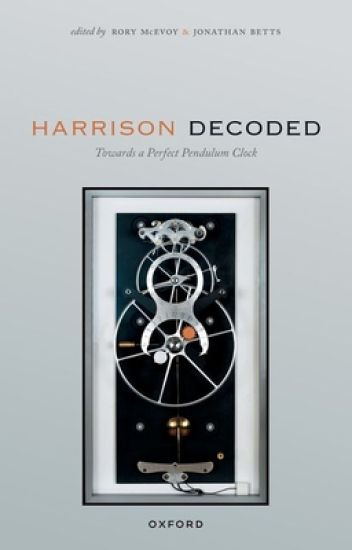
Harrison Decoded: Towards a Perfect Pendulum Clock brings together the output of a forty-year collaborative research project that unpicked and put into practice the fine details of John Harrison's extraordinary pendulum clock system. Harrison predicted that his unique method of making pendulum clocks could provide as much as one-hundred-times the stability of those made by his contemporaries. However, his final publication, which promised to describe the system, was a chaotic jumble of information, much of which had nothing to do with clockwork. One contemporary reviewer of Harrison's book could only suggest that the end result was a product of Harrison's 'superannuated dotage.' The focus of this book centres on the making, adjusting, and testing of Clock B which was the subject of various trials at the Royal Observatory, Greenwich. The modern history of Clock B is accompanied by scientific analysis of the clock system, Clock B's performance, the methods of data-gathering alongside historical perspectives on Harrison's clockmaking, that of his contemporaries, and some evaluation of the possible influence of early 18th century scientific thought.

Harrison and Apple Jack...the Little Tree That Could
Tim And Lori Redden
Tellwell Talent
2024
pokkari
Have you ever thought... Maybe a tree doesn't want to be where he is at? Maybe he doesn't want to stay there for twenty or thirty years, planted in one spot.Join us on the journey of a little sapling who is unhappy with the way his life is going. Pay attention, along the way, to how others help him to help himself.

Harrison and Apple jack...the Little Tree That Could
Tim And Lori Redden
Tellwell Talent
2024
sidottu
Have you ever thought... Maybe a tree doesn't want to be where he is at? Maybe he doesn't want to stay there for twenty or thirty years, planted in one spot.Join us on the journey of a little sapling who is unhappy with the way his life is going. Pay attention, along the way, to how others help him to help himself.
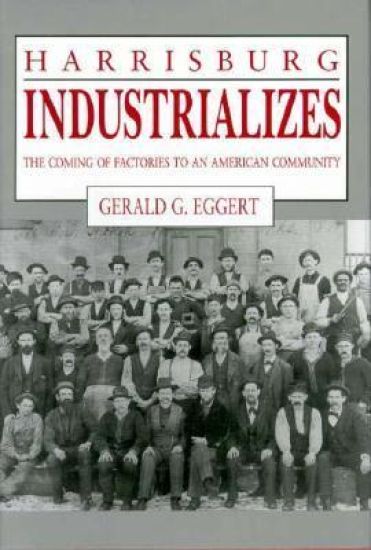
In 1850, Harrisburg, Pennsylvania, was a community like many others in the U. S., employing most of its citizens in trade and commerce. Unlike its larger neighbors, Pittsburgh and Philadelphia, Harrisburg had not yet experienced firsthand the Industrial Revolution. Within a decade, however, Harrisburg boasted a cotton textile mill, two blast furnaces and several iron rolling mills, a railroad car manufactory, and a machinery plant. This burst of industrial activity naturally left its mark on the community, by within two generations most industry had left Harrisburg, and its economic base was shifting toward white-collar governmental administration and services. Harrisburg Industrializes looks at this critical episode in Harrisburg's history to discover how the coming of the factory system affected the life of the community.Eggert begins with the earliest years of Harrisburg, describing its transformation from a frontier town to a small commercial and artisanal community. He identifies the early entrepreneurs who built the banking, commercial, and transportation infrastructure, which would provide the basis for industry at mid-century. Eggert then reconstructs the development of the principal manufacturing firms from their foundings, through the expansive post-Civil War era, to the onset of deindustrialization near the end of the century. Through census and company records, he is able to follow the next generation of craftsmen and entrepreneurs as well as the new industrial workers—many of then minorities—who came to the city after 1850.Eggert sees Harrisburg's experience with the factory system as "second-stage," or imitative, industrialization, which was typical of many, if not most, communities that developed factory production. At those relatively few industrial centers (Lowell and Pittsburgh, for example) where new technologies arose and were aggressively impose on workers, the consequences were devastating, often causing alienation, rebellion, and repression. By contrast, at secondary centers like Harrisburg (or Reading, Scranton, or Wilmington), industrialization came later, was derivative rather than creative, was modest in scale, and focused on local and regional markets. Because the new factories did not compete with local crafts, few displaced artisans became factory hands. At the same time, an adequate supply of local native-born workers forestalled an influx of immigrants, so Harrisburg experienced little ethnic hostility. Ultimately, therefore, Eggert concludes that the introduction of an industrial order was much less disruptive in Harrisburg than in the major industrial sites, primarily because it did not alter so profoundly the existing economic and social order.
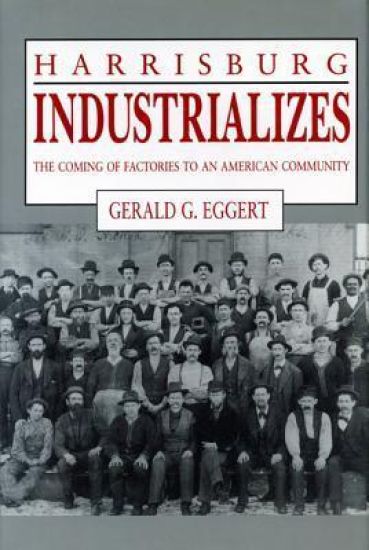
In 1850, Harrisburg, Pennsylvania, was a community like many others in the U. S., employing most of its citizens in trade and commerce. Unlike its larger neighbors, Pittsburgh and Philadelphia, Harrisburg had not yet experienced firsthand the Industrial Revolution. Within a decade, however, Harrisburg boasted a cotton textile mill, two blast furnaces and several iron rolling mills, a railroad car manufactory, and a machinery plant. This burst of industrial activity naturally left its mark on the community, by within two generations most industry had left Harrisburg, and its economic base was shifting toward white-collar governmental administration and services. Harrisburg Industrializes looks at this critical episode in Harrisburg's history to discover how the coming of the factory system affected the life of the community.Eggert begins with the earliest years of Harrisburg, describing its transformation from a frontier town to a small commercial and artisanal community. He identifies the early entrepreneurs who built the banking, commercial, and transportation infrastructure, which would provide the basis for industry at mid-century. Eggert then reconstructs the development of the principal manufacturing firms from their foundings, through the expansive post-Civil War era, to the onset of deindustrialization near the end of the century. Through census and company records, he is able to follow the next generation of craftsmen and entrepreneurs as well as the new industrial workers—many of then minorities—who came to the city after 1850.Eggert sees Harrisburg's experience with the factory system as "second-stage," or imitative, industrialization, which was typical of many, if not most, communities that developed factory production. At those relatively few industrial centers (Lowell and Pittsburgh, for example) where new technologies arose and were aggressively impose on workers, the consequences were devastating, often causing alienation, rebellion, and repression. By contrast, at secondary centers like Harrisburg (or Reading, Scranton, or Wilmington), industrialization came later, was derivative rather than creative, was modest in scale, and focused on local and regional markets. Because the new factories did not compete with local crafts, few displaced artisans became factory hands. At the same time, an adequate supply of local native-born workers forestalled an influx of immigrants, so Harrisburg experienced little ethnic hostility. Ultimately, therefore, Eggert concludes that the introduction of an industrial order was much less disruptive in Harrisburg than in the major industrial sites, primarily because it did not alter so profoundly the existing economic and social order.

A hilarious, fast-moving and gripping story with endearing characters, from Gary Paulsen, one of the USA's most successful modern children's writers.