
Kirjahaku
Etsi kirjoja tekijän nimen, kirjan nimen tai ISBN:n perusteella.
1000 tulosta hakusanalla Henry T. Cheever

Beautiful Homes. Or, Hints in House Furnishing
Henry T. Williams; C. S. Jones
Hutson Street Press
2025
nidottu
Beautiful Homes, Or, Hints in House Furnishing, originally published in 1878, offers a fascinating glimpse into the Victorian era's approach to domestic aesthetics. Written by Henry T. Williams and Mrs. C. S. Jones, this book provides practical advice and insights on creating elegant and comfortable living spaces. From selecting furniture and fabrics to arranging rooms and incorporating decorative elements, the authors guide readers through the principles of tasteful home furnishing. Explore the styles and trends that defined Victorian interior design, and discover timeless tips for enhancing the beauty and functionality of any home. A valuable resource for design enthusiasts and anyone interested in the history of domestic life, "Beautiful Homes" remains an engaging and informative read. This work has been selected by scholars as being culturally important, and is part of the knowledge base of civilization as we know it. This work was reproduced from the original artifact, and remains as true to the original work as possible. Therefore, you will see the original copyright references, library stamps (as most of these works have been housed in our most important libraries around the world), and other notations in the work. This work is in the public domain in the United States of America, and possibly other nations. Within the United States, you may freely copy and distribute this work, as no entity (individual or corporate) has a copyright on the body of the work. As a reproduction of a historical artifact, this work may contain missing or blurred pages, poor pictures, errant marks, etc. Scholars believe, and we concur, that this work is important enough to be preserved, reproduced, and made generally available to the public. We appreciate your support of the preservation process, and thank you for being an important part of keeping this knowledge alive and relevant.

Cultural Conflict and Adaptation
Henry T. Trueba; Lila Jacobs; Elizabeth Kirton
TAYLOR FRANCIS LTD
2022
sidottu
Cultural Conflict and Adaptation (1990) examines the alienation and cultural conflicts faced at school by the children of a small group of Hmong who have settled in La Playa, California. The educational process for these children is an example of cultural conflict and adjustment patterns which may be found in many other populations in the world.

Cultural Conflict and Adaptation
Henry T. Trueba; Lila Jacobs; Elizabeth Kirton
TAYLOR FRANCIS LTD
2024
nidottu
Cultural Conflict and Adaptation (1990) examines the alienation and cultural conflicts faced at school by the children of a small group of Hmong who have settled in La Playa, California. The educational process for these children is an example of cultural conflict and adjustment patterns which may be found in many other populations in the world.

Healing Multicultural America
Henry T. Trueba; Cirenio Rodriguez; Yali Zou; José Cintrón
TAYLOR FRANCIS LTD
2022
sidottu
Healing Multicultural America (1993) looks at a group of Mexican immigrants who managed to understand and use the US democratic system to gain access to the ‘American Dream’. The book aims to assist its readers to understand the significance of the politics of education for ethnic minorities. The authors point up the gravity of the problems experienced by minority groups worldwide which cannot be underestimated: problems such as inter-ethnic conflict, cultural tensions, poverty, alienation, violence and self-rejection.

Healing Multicultural America
Henry T. Trueba; Cirenio Rodriguez; Yali Zou; José Cintrón
TAYLOR FRANCIS LTD
2024
nidottu
Healing Multicultural America (1993) looks at a group of Mexican immigrants who managed to understand and use the US democratic system to gain access to the ‘American Dream’. The book aims to assist its readers to understand the significance of the politics of education for ethnic minorities. The authors point up the gravity of the problems experienced by minority groups worldwide which cannot be underestimated: problems such as inter-ethnic conflict, cultural tensions, poverty, alienation, violence and self-rejection.

First published in 1937, The Criminals We Deserve asks what kind of criminals does our society deserve? Some people thought that our crime problem was less serious than formerly. Mr. Rhodes, on the other hand, shows how profound changes which took place in our social institutions during the thirty years before 1937, had altered the nature of modern crime, making it more dangerous to society. He explains how our social organization determined the nature of our crime problem, and illustrates his thesis with many strange and arresting examples of criminal behaviour in which tragedy and comedy are often mingled. This book will be of interest to students of criminology, history and sociology.

First published in 1937, The Criminals We Deserve asks what kind of criminals does our society deserve? Some people thought that our crime problem was less serious than formerly. Mr. Rhodes, on the other hand, shows how profound changes which took place in our social institutions during the thirty years before 1937, had altered the nature of modern crime, making it more dangerous to society. He explains how our social organization determined the nature of our crime problem, and illustrates his thesis with many strange and arresting examples of criminal behaviour in which tragedy and comedy are often mingled. This book will be of interest to students of criminology, history and sociology.
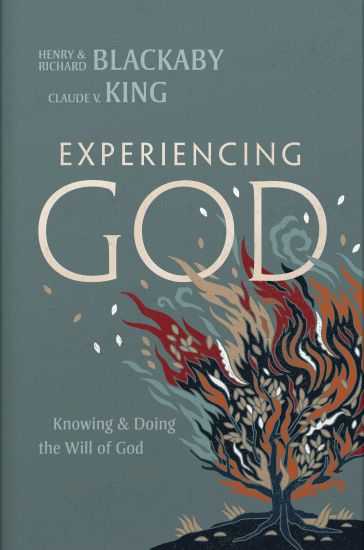
When you open this book, you'll find that you aren't just reading. No, you are being remade, reoriented, restored from the frustration of what you may have known as stale religion. Captured not by a concept but by your Creator, reborn in relationship. Here's the Experiencing God that has already impacted millions of people. Only it's bigger, and better, and ready to lead you again--or for the very first time--into an experience with God. Carefully listening to His voice will anchor you in His plan, and set you free to live it with boldness and freedom. After a thorough revision, this landmark volume returns with seven new chapters, as well as dozens of true stories from people who, through this book, have experienced God.

Fret Sawing For Pleasure And Profit, first published in 1877 by Henry T. Williams, New York, NY. Introductory essay by Gary Roberts on the historical context of Fret Sawing For Pleasure And Profit and fret-work in 19th century America. Illustrated by 103 images of fret work patterns and tools."Fret Sawing For Pleasure And Profit, is like those which have preceded it, a most excellent manual of the particular art which it pictures and describes. Beginning with a chapter devoted to materials and implements, it tells all about the proper kinds of wood to be used in Fret Sawing, their qualities and peculiarities. It gives illustrations and diagrams of tools and presses, furnishes a quantity of beautiful designs, and teaches how to gild, dye and stain wood to produce picturesque effects. There is also a chapter upon hand-carving, and easy directions for inlaying and over-laying, in addition to many useful suggestions in regard to the adaptability of material and design to work. To amateurs and lovers of this beautiful work, it will prove an invaluable auxiliary, and we strongly recommend it to their consideration." Demorest's Family Magazine, Volume 14, 1878.Gary Roberts, publisher of The Toolemera Press imprint, returns classic books on early crafts, trades and industries to print publication. All titles are selected from his personal collection and produced in-house, to the highest quality, in facsimile.






The geologist Sir Henry Thomas De la Beche (1796–1855) made important contributions as both a surveyor and a theorist. Elected to the Royal Society in 1823, he mapped geological strata in Devon during the 1830s and became the founding director of the British Geological Survey, the world's first national geological survey. In 1847, he was elected president of the Geological Society of London. Reflecting the scope of his scientific knowledge, the present work covers a wide range of topics, including the density of planets, the mineralisation of organic remains, and what could be inferred from the fossils thus created. The book was first published in 1834, the year he became embroiled in an argument with his contemporary Roderick Murchison. Lasting several years, the dispute became known as the 'The Great Devonian Controversy'. De la Beche's Geological Manual (third edition, 1833) has also been reissued in this series.

Sir Henry Thomas De la Beche (1796–1855) served as president of the Geological Society from 1847 to 1849, having contributed greatly to the development of geological science and surveying in the first half of the nineteenth century. He was also instrumental in the establishment of the Museum of Practical Geology in London. Reissued here in its 1831 first edition (which Darwin had with him aboard the Beagle), this work sought to help students to grasp the fundamentals of a rapidly advancing science. The first section considers the Earth's shape, density, temperature and other characteristics. The next part includes discussion of beaches, volcanos, and coastal processes. De la Beche then presents descriptions of various rock types, reflecting the state of contemporary geological knowledge. Highly successful, the book went through two further English editions; the expanded third edition is also reissued in this series.


Hong Kong To Manilla And The Lakes Of Luzon, In The Philippine Isles, In The Year 1856 (1859)
Henry T. Ellis
KESSINGER PUBLISHING, LLC
2009
pokkari