
Kirjahaku
Etsi kirjoja tekijän nimen, kirjan nimen tai ISBN:n perusteella.
1000 tulosta hakusanalla Humphry W Woolrych

Humphry Clinker is an unchanged, high-quality reprint of the original edition of 1791. Hansebooks is editor of the literature on different topic areas such as research and science, travel and expeditions, cooking and nutrition, medicine, and other genres. As a publisher we focus on the preservation of historical literature. Many works of historical writers and scientists are available today as antiques only. Hansebooks newly publishes these books and contributes to the preservation of literature which has become rare and historical knowledge for the future.

The Collected Works of Sir Humphry Davy. Vol. IX. Salmonia and Consolation in Travel
Humphry Davy; John Davy
Antigonos Verlag
2025
nidottu

Humphry Berkeley
VDM Publishing House
2010
nidottu
Observera att förlaget som ger ut denna produkt baserar innehållet i sina produkter på fria källor som Wikipedia. Boken är med stor sannolikhet endast ett utdrag ur dessa informationskällor, alltså inte en vanlig bok i den bemärkelsen.

Humphry Repton
OmniScriptum
2026
pokkari

Humphry's Adventure
Xlibris Us
2026
pokkari

Mary Ward (1851-1920) had a furiously active public career, her literary and philanthropic activities transforming her from an eminent Victorian into a pre-eminent Edwardian. The granddaughter of Thomas Arnold, she found herself at the centre of an intellectual and cultural coterie comprising the Arnold, Huxley, and Trevelyan families. Her novel, Robert Elsmere (1888), the first of a series of bestsellers, earned her both unprecedented sums of money and the critical respect of writers such as Henry James. She helped found Somerville College, Oxford, the University's first institution for the higher education of women, and inaugurated a number of play centres for the children of London's working women, despite being a fierce opponent of women's suffrage. As the first female reporter to visit the trenches in 1916, she was instrumental in bringing America into the war. Yet for all her achievements, her private life was overshadowed - often tragically so - by misfortune. Her parents's marriage was seriously affected by her father's religious doubts; she eclipsed her husband, a Times journalist and art critic, while her indolent son frittered away her financial and emotional resources. John Sutherland's fascinating study of the private suffering of this predominantly public person also provides useful insights into the restrictions placed upon women in the late-Victorian-Edwardian era. This title also appears in the Oxford General Books catalogue for Autumn 1990.

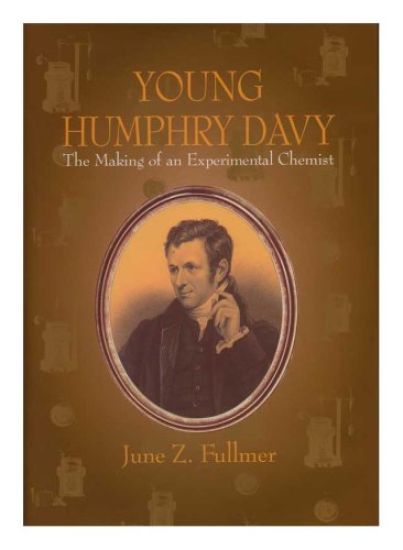
Humphry Davy's contemporaries bestowed on him their highest honors. Since Davy's death in 1829, each scholarly generation has accrued info. about him & his colleagues. His startling discoveries of the scientifically novel, his isolation & identification of 7 new elements, & his association of electrical properties & chemical behavior coupled with his fame as a lecturer, made him a popular cultural hero. Others saw him as the man who had made agriculture "scientific." Davy's refusal to profit financially from his invention of the miners' safety lamp endeared him to those humanitarians who idealized scientists as members of an altruistic brotherhood. Here is a readable, thoroughly researched biography of Davy's early life. Illus.
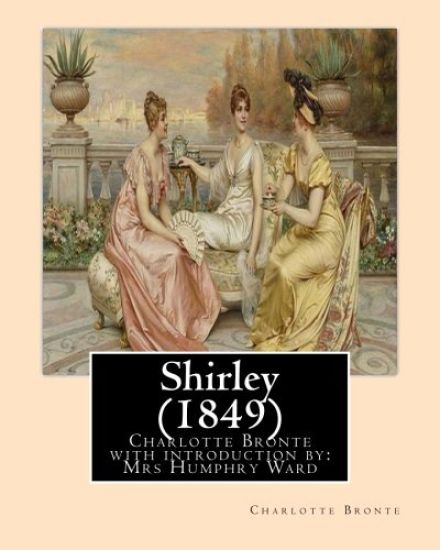
Shirley (1849), by Charlotte Bronte with introduction by Mrs Humphry Ward: Mrs Humphry Ward(11 June 1851 - 24 March 1920)
Mrs Humphry Ward; Charlotte Bronte
Createspace Independent Publishing Platform
2016
nidottu
Shirley is an 1849 social novel(illustrated) by the English novelist Charlotte Bronte. It was Bronte's second published novel after Jane Eyre (originally published under Bronte's pseudonym Currer Bell). The novel is set in Yorkshire in the period 1811-12, during the industrial depression resulting from the Napoleonic Wars and the War of 1812. The novel is set against a backdrop of the Luddite uprisings in the Yorkshire textile industry. The novel's popularity led to Shirley's becoming a woman's name. The title character was given the name that her father had intended to give a son. Before the publication of the novel, Shirley was an uncommon - but distinctly male - name and would have been an unusual name for a woman.Today it is regarded as a distinctly female name and an uncommon male name.Robert Moore is a mill owner noted for apparent ruthlessness toward his employees - more than any other mill owner in town. He has laid off many of them, apparently indifferent to their resulting poverty. But in fact he has no choice, since the mill is deep in debt. The mill was inefficiently run by his late father and is already mortgaged. As the novel opens, Robert awaits delivery of new labour-saving machinery to the mill. The new machinery will let him lay off additional employees. Robert, with some friends, watches all night, but the machinery is destroyed on the way by angry millworkers. Robert's business difficulties continue, due in part to the continuing labour unrest, but even more so to the Napoleonic Wars and the accompanying Orders in Council which forbid British merchants from trading in American markets. Robert is very close to Caroline Helstone, who comes to his house to learn French from his sister, Hortense. Caroline worships Robert and he likes her too. Caroline's father is dead and her mother had abandoned her, leaving her to be brought up by her uncle, the local parson, Rev. Helstone. Caroline is penniless, and to keep himself from falling in love with her, Robert keeps his distance from her, since he cannot afford to marry for pleasure or love. He has to marry for money if he is to get his mill going again. Caroline realizes that Robert is growing increasingly distant and withdraws into herself. Her uncle does not sympathise with her 'fancies', and she has no money of her own, so she cannot leave the place, which is what she longs to do. She suggests taking up the job of a governess but her uncle dismisses it and assures her that she need not work. Caroline cheers up a great deal, however, when she meets Shirley. Shirley is a landowner, an independent heiress whose parents are dead and who lives with Mrs. Pryor, an old governess. Shirley is lively, cheerful, full of ideas about how to use her money and how to help people, and very interested in business concerns. Caroline and Shirley soon become very close friends. They both dislike social hypocrisy and wish they could do something significant with their lives. As Caroline gets closer to Shirley, she notices that Shirley and Robert get along very well, which makes her think that they would end up marrying each other. Shirley likes Robert, is very interested in his work, and is concerned about him and the threats he gets from laid-off millworkers. Both good and bad former employees are depicted. Some passages show the real suffering of those who were honest workers and can no longer find good employment; other passages show how some people use losing their jobs as an excuse to get drunk, fight with their previous employers, and incite other people to violence. Shirley uses her money to help the poorest of the lot, but she is also motivated by the desire to prevent any attack on Robert, a motive that makes Caroline both happy and unhappy...Mary Augusta Ward was a British novelist who wrote under her married name as Mrs Humphry Ward (11 June 1851 - 24 March 1920)
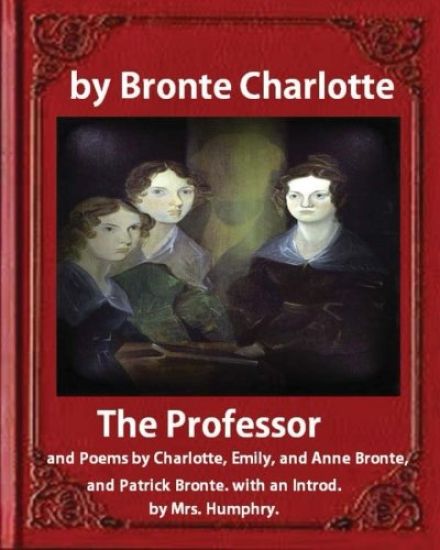
The Professor (1857), by Charlotte Bronte and Mrs Humphry Ward: The Professor, and Poems by Charlotte, Emily, and Anne Bronte, and Patrick Bronte. wit
Mrs Humphry Ward; Charlotte Bronte
Createspace Independent Publishing Platform
2016
nidottu

The tenant of Wildfell Hall, by Anne Bronte and Mrs. Humphry Ward: Mary Augusta Ward ( 11 June 1851 - 24 March 1920)
Mrs Humphry Ward; Anne Bronte
Createspace Independent Publishing Platform
2016
nidottu
The daughter of Patrick Bront , a poor Irish clergyman in the Church of England, Anne Bront lived most of her life with her family at the parish of Haworth on the Yorkshire moors. She also attended a boarding school in Mirfield between 1836 and 1837.The Tenant of Wildfell Hall is the second and final novel by the English author Anne Bront . It was first published in 1848 under the pseudonym Acton Bell. Probably the most shocking of the Bront s' novels, it had an instant and phenomenal success, but after Anne's death her sister Charlotte prevented its re-publication.Her second and last novel, The Tenant of Wildfell Hall, which is considered to be one of the first sustained feminist novels, appeared in 1848. The Tenant of Wildfell Hall is the second and final novel by the English author Anne Bront . It was first published in 1848 under the pseudonym Acton Bell. Probably the most shocking of the Bront s' novels, it had an instant and phenomenal success, but after Anne's death her sister Charlotte prevented its re-publication. The novel is framed as a series of letters from Gilbert Markham to his friend and brother-in-law about the events leading to his meeting his wife. A mysterious young widow arrives at Wildfell Hall, an Elizabethan mansion which has been empty for many years, with her young son and servant. She lives there in strict seclusion under the assumed name Helen Graham and very soon finds herself the victim of local slander. Refusing to believe anything scandalous about her, Gilbert Markham, a young farmer, discovers her dark secrets. In her diary, Helen writes about her husband's physical and moral decline through alcohol, and the world of debauchery and cruelty from which she has fled. This novel of marital betrayal is set within a moral framework tempered by Anne's optimistic belief in universal salvation.The Tenant of Wildfell Hall is mainly considered to be one of the first sustained feminist novels. May Sinclair, in 1913, said that the slamming of Helen's bedroom door against her husband reverberated throughout Victorian England. In escaping her husband, Helen violates not only social conventions, but also English law.Part One (Chapters 1 to 15): Gilbert Markham narrates how a mysterious widow, Mrs Helen Graham, arrives at Wildfell Hall, a nearby mansion. A source of curiosity for the small community, the reticent Mrs Graham and her young son Arthur are slowly drawn into the social circles of the village. Initially Gilbert Markham casually courts Eliza Millward, despite his mother's belief that he can do better. His interest in Eliza wanes as he comes to know Mrs Graham. In retribution Eliza spreads (and perhaps creates) scandalous rumours about Helen. With gossip flying, Gilbert is led to believe that his friend Mr Lawrence is courting Mrs Graham.
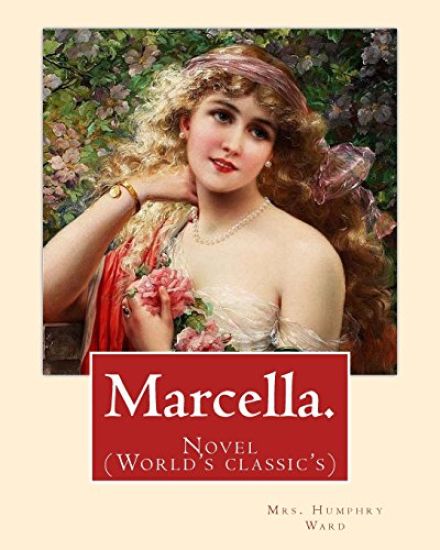
Marcella. By: Mrs. Humphry Ward: Novel (World's classic's)
Mrs Humphry Ward
Createspace Independent Publishing Platform
2016
nidottu
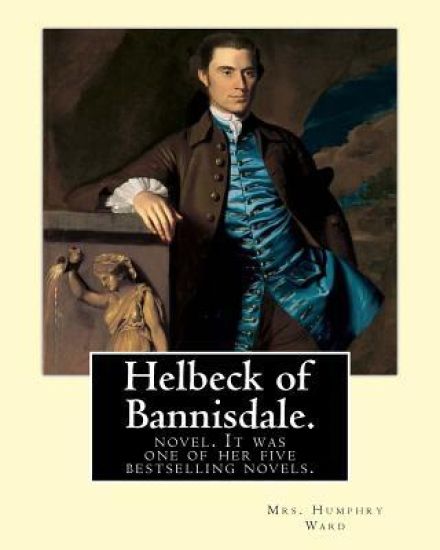
Helbeck of Bannisdale. By: Mrs. Humphry Ward: Helbeck of Bannisdale is a novel by Mary Augusta Ward, first published in 1898. It was one of her f
Mrs Humphry Ward
Createspace Independent Publishing Platform
2016
nidottu
Helbeck of Bannisdale (1898). By: Mrs. Humphry Ward (Volume 1). Original Classics: Helbeck of Bannisdale is a novel by Mary Augusta Ward, first publis
Mrs Humphry Ward
Createspace Independent Publishing Platform
2016
nidottu
Helbeck of Bannisdale (1898). By: Mrs. Humphry Ward (Volume 2).Original Classics: Helbeck of Bannisdale is a novel by Mary Augusta Ward, first publish
Mrs Humphry Ward
Createspace Independent Publishing Platform
2016
nidottu
Helbeck of Bannisdale (1898). By: Mrs. Humphry Ward (Complete set volume 1, 2).Original Classics: Helbeck of Bannisdale is a novel by Mary Augusta War
Mrs Humphry Ward
Createspace Independent Publishing Platform
2016
nidottu
The Marriage of William Ashe (1905). By: Mrs. Humphry Ward (Volume 1). Original Classics: The Marriage of William Ashe is a novel by Mary Augusta Ward
Mrs Humphry Ward
Createspace Independent Publishing Platform
2016
nidottu