This engaging and original study, by one of Britain's leading scholars of rational choice theory, explores the course of British parliamentary politics over the last 150 years. McLean marries an appealing combination of social science and analytical narrative history to the great turning points in British politics - the Repeal of the Corn Law; the Victorian crisis of the Liberal and Conservative Parties; the Irish Question and Lloyd George's solution to it; the New Liberal origins of the welfare state; the politics of race and empire under Chamberlain and Powell; and the politics of 'there is no alternative' under Margaret Thatcher.
This engaging and original study, by one of Britain's leading scholars of rational choice theory, explores the course of British parliamentary politics over the last 150 years. McLean marries an appealing combination of social science and analytical narrative history to the great turning points in British politics - the Repeal of the Corn Law; the Victorian crisis of the Liberal and Conservative Parties; the Irish Question and Lloyd George's solution to it; the New Liberal origins of the welfare state; the politics of race and empire under Chamberlain and Powell; and the politics of 'there is no alternative' under Margaret Thatcher.
Mani or Manichaios was a major religious figure in early Sasanian Mesopotamia (third century CE) renowned as a healer, a visionary, an artist, and a public sage. The community that he founded, the religion of Manichaeism, spread across Eurasia from the late Roman world of the Mediterranean to south China, where it lasted into the early modern period. Due to its prominent success in Central Asia through the latter part of the first millennium, it played a major role as a conduit for ideas, literatures, and practices between east and west. Mani authored many letters in Aramaic during the years of his public mission (ca. 240–270s CE). These letters were collected together to become one 'book' in his new scriptures and the letters were regarded as canonical by followers of Manichaeism. They were translated into numerous languages and read for centuries as guides to life and faith, as well as being utilized in liturgical contexts. No complete version of The Letters survives from antiquity, but there are many remnants and quotations scattered across a diverse set of sources and languages: lengthy citations from individual letters in Latin preserved by Augustine of Hippo and his circle; codex pages preserved in Coptic and Middle Persian recovered during the twentieth century from Egypt and Xinjiang; references throughout other Manichaean literature in Coptic, Sogdian, Uighur, Chinese etc.; a list of titles preserved in Arabic by Ibn al-Nadim; and forgeries used in polemical texts that circulated in the ancient world. This major new study, the first ever dedicated to the topic, contains both a detailed study of the available evidence and a new English translation of all the relevant texts, citations, and allusions. A considerable amount of the material included is either entirely new to scholarship or only known to a small circle of specialists working on original manuscripts in diverse languages.
Equity & Trusts Concentrate is written and designed to help you succeed. Written by experts and covering all key topics, Concentrate guides go above and beyond, not only consolidating your learning but focusing your revision and maximising your exam performance. Each guide includes revision tips, advice on how to achieve extra marks, and a thorough and focused breakdown of the key topics and cases. Revision guides you can rely on: trusted by lecturers, loved by students... "I am hugely impressed by this little textbook on the substance: it does a better and clearer job at explaining key issues than many of the core texts." - Dr Eleni Frantziou, Associate Professor in Public Law & Human Rights, Durham University "The Concentrate books are my favourite revision guides as the quality of the information is always more comprehensive than others." - Carly Hatchard, law student, University of Bolton "This revision guide is excellent ... I would certainly recommend it as a revision aid" - Claudia Carr, Principal Lecturer, Hertfordshire Law School, University of Hertfordshire "The Concentrate structure is extremely good, it makes it so much easier to revise ... no key information is left out, it's a great series." - Emma Wainwright, law student, Oxford Brookes University "A really good overview of the key themes, tensions, and debates encourages students to go that bit further to increase their chances of scoring better in the assessment." - Professor Nicola Glover-Thomas, Professor of Law, University of Manchester "Undoubtedly a good resource would certainly recommend it as additional material for modules assessed by examination." - Dr Ben Stanford, School of Law, Liverpool John Moores University "The detail in this revision textbook is phenomenal and is just what is needed to push your exam preparation to the next level" - Stephanie Lomas, law student, University of Central Lancashire Digital formats and resources The ninth edition is available for students and institutions to purchase in a variety of formats, and is supported by extensive online resources to take your learning further (www.oup.com/lawrevision/). The e-book offers a mobile experience and convenient access along with functionality tools, navigation features, and links that offer extra learning support: www.oxfordtextbooks.co.uk/ebooks The online resources include: - advice on revision and exam technique from experienced examiner Nigel Foster; - a diagnostic test to help you pinpoint areas to focus your revision on; - interactive glossary and key cases to help you revise key terminology, facts, and principles; - multiple choice questions to test your knowledge; and - outline answers to questions in the book.
This is the first survey of Unionism, the ideology of most of the rulers of the United Kingdom for the last 300 years. Because it was taken so much for granted, it has never been properly studied. Now that we stand in the twilight of Unionism, it is possible to see it as it casts its long shadow over British and imperial history since 1707. The book looks at all the crucial moments in the history of Unionism. In 1707, the parliaments and (more important) executives of England and Scotland were united. During the 18th century, although not immediately after 1707, that union blossomed and brought benefits to both parties. It facilitated the first and second British Empires. The Union of Great Britain and Ireland in 1800-01 was formally similar but behaviourally quite different. It was probably doomed from the start when George III refused to accept Catholic Emancipation. Nevertheless, no leading British politician heeded the Irish clamour for Home Rule until Gladstone in 1886. That cataclysmic year has determined the shape of British and Irish politics ever since. Having refused to concede Irish Home Rule through the heyday of primordial Unionism from 1886 to 1920, British politicians had to accept Irish independence in 1921, whereupon primordial Unionism fell apart except in Northern Ireland. Twentieth-century Unionism has been instrumental - valuing the Union for its consequences, not because it was intrinsically good. As Unionism was inextricably tied up with the British Empire, it nevertheless remained as a strong but unexamined theme until the end of Empire. The unionist parties (Conservative and Labour) responded to the upsurge of Scottish and Welsh nationalism, and of violence in Northern Ireland, in the light of their mostly unexamined unionism in the 1960s. With the departure from politics of the last Unionists (Enoch Powell and John Major), British politics is now subtly but profoundly different.
In this provocative new study, Iain McLean argues that the traditional story of the British constitution does not make sense. It purports to be both positive and normative: that is, to describe both how people actually behave and how they ought to behave. In fact, it fails to do either; it is not a correct description and it has no persuasive force. The book goes on to offer a reasoned alternative. The position that still dominates the field of constitutional law is that of parliamentary sovereignty (or supremacy). According to this view, the supreme lawgiver in the United Kingdom is Parliament. Some writers in this tradition go on to insist that Parliament in turn derives its authority from the people, because the people elect Parliament. An obvious problem with this view is that Parliament, to a lawyer, comprises three houses: monarch, Lords, and Commons. The people elect only one of those three houses. This book aims to show, contrary to the prevailing view, that the UK exists by virtue of a constitutional contract between two previously independent states. Professor McLean argues that the work of the influential constitutional theorist A.V. Dicey has little to offer those who really want to understand the nature of the constitution. Instead, greater understanding can be gleaned from considering the 'veto plays' and 'credible threats' available to politicians since 1707. He suggests that the idea that the people are sovereign dates back to the 17th century (maybe the 14th in Scotland), but has gone underground in English constitutional writing. He goes on to show that devolution and the UK's relationship with the rest of Europe have taken the UK along a constitutionalist road since 1972, and perhaps since 1920. He concludes that no intellectually defensible case can be made for retaining an unelected house of Parliament, an unelected head of state, or an established church. The book will be essential reading for political scientists, constitutional lawyers, historians, and politicians alike.
Many current questions in biology are probed by using a range of biophysical methods, often in tandem. These increasingly powerful and sophisticated tools allow us to study the structure and dynamics of the complicated mixture of interacting molecules that make up the living cell. Biophysical Techniques explains in a readily-accessible way the basics of the various methods available - including those used to study molecular structure, cell structure, and dynamic interactions - so that students can understand the principles behind the different methods used, and begin to appreciate which tools can be used to probe different biological questions, and the pros and cons of each. Exploring the latest enhancements to classical techniques, and introducing computational techniques that have emerged relatively recently, the book provides a broad survey of the range of techniques now at the disposal of an investigator. The biophysical techniques introduced can be explained in physical and mathematical terms; instead of assuming a detailed knowledge of physics or maths, however, the book uses a series of Tutorials and Boxes to provide essential background guidance on these topics, giving the reader extra support in fully understanding the subject. Learning and understanding is supported still further with thought-provoking end-of-chapter problems to illustrate to the reader how a range of biophysical techniques have been used in contemporary research. In an age in which we are probing the working of biological systems in more detail, and with more refinement, than ever before, Biophysical Techniques is the ideal guide for any student who needs to understand the power of biophysical techniques in biological research.
In this provocative new study, Iain McLean argues that the traditional story of the British constitution does not make sense. It purports to be both positive and normative: that is, to describe both how people actually behave and how they ought to behave. In fact, it fails to do either; it is not a correct description and it has no persuasive force. The book goes on to offer a reasoned alternative. The position that still dominates the field of constitutional law is that of parliamentary sovereignty (or supremacy). According to this view, the supreme lawgiver in the United Kingdom is Parliament. Some writers in this tradition go on to insist that Parliament in turn derives its authority from the people, because the people elect Parliament. An obvious problem with this view is that Parliament, to a lawyer, comprises three houses: monarch, Lords, and Commons. The people elect only one of those three houses. This book aims to show, contrary to the prevailing view, that the UK exists by virtue of a constitutional contract between two previously independent states. Professor McLean argues that the work of the influential constitutional theorist A.V. Dicey has little to offer those who really want to understand the nature of the constitution. Instead, greater understanding can be gleaned from considering the 'veto plays' and 'credible threats' available to politicians since 1707. He suggests that the idea that the people are sovereign dates back to the 17th century (maybe the 14th in Scotland), but has gone underground in English constitutional writing. He goes on to show that devolution and the UK's relationship with the rest of Europe have taken the UK along a constitutionalist road since 1972, and perhaps since 1920. He concludes that no intellectually defensible case can be made for retaining an unelected house of Parliament, an unelected head of state, or an established church. The book will be essential reading for political scientists, constitutional lawyers, historians, and politicians alike.
Why do businesses contribute to political parties? Is money a universal language? Do business contributions to political parties convey different messages in different countries? This book answers these questions based on intensive case studies of Australia, Canada, and Germany, as well as data from other countries. Business money does talk politics. In liberal Australia and Canada, the competitive short-term focus of firms generated substantial demand for private goods that could help firms develop an advantage over their rivals. Thus, business financing of parties conveyed a pragmatic message: in exchange for small but certain financial benefits, contributing businesses expect, as a reciprocation, to receive special consideration of their lobbying efforts. Australia's left-right party system created an awareness of policy risk, which motivated ideological payments, but there was no ideological bias in business financing of politics in centrist Canada. In Germany's co-ordinated economy, the most important policies for firms tend to be the public goods defined, championed, and delivered by their business associations. In this context, the pragmatic motivation for contributions to political parties is weak. The combination of consensual political institutions and constrained parties means there is a very low risk of major policy change from election to election. So, there is also little interest in ideological financing of political parties. If money talks, what does it say? places business financing of political parties in the context of debates about political corruption and offers advice on political reform. Comparative Politics is a series for students, teachers, and researchers of political science that deals with contemporary government and politics. Global in scope, books in the series are characterised by a stress on comparative analysis and strong methodological rigour. The series is published in association with the European Consortium for Political Research. For more information visit: www.ecprnet.eu The Comparative Politics series is edited by Professor David M. Farrell, School of Politics and International Relations, University College Dublin, Kenneth Carty, Professor of Political Science, University of British Columbia, and Professor Dirk Berg-Schlosser, Institute of Political Science, Philipps University, Marburg.
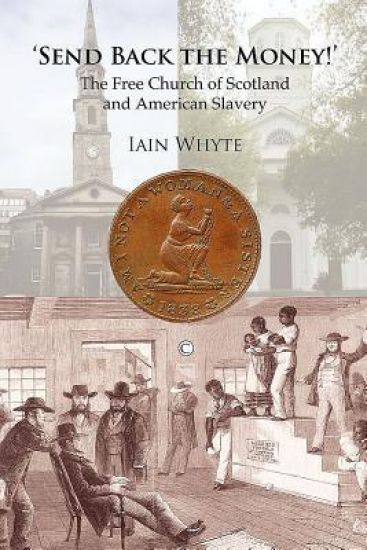
'Send Back the Money!' is a thorough and gripping examination of a fascinating and forgotten aspect of Scottish and American relations and Church history. A seminal period of Abolition activity is exposed by Iain Whyte through a study of the fiery 'Send back the Money!' campaign named after 'the hue and cry of the day' that encapsulated the argument that divided families, communities, and the Free Church itself. This examination of the Free Church's involvement with American Presbyterianism in the nineteenth century reveals the ethical furore caused by a Church wishing to emancipate itself from the religious and civil domination supported by the established religion of the state. The Free Church therefore found an affinity with those oppressed elsewhere, but subsequently found itself financially supported by the Southern slave states of America. Whyte sensitively handles this inherent contradiction in the political, ecclesiastical, and theological institutions, while informing the reader of the roles of charismatic characters such as Robert Burns, Thomas Chalmers and Frederick Douglass. These key individuals shaped contemporary culture with action, great oratory, and rhetoric. The author adroitly draws parallels from the twentieth century onwards, bringing the reader to a fuller understanding of the historic and topical issues within global Christianity, and the contentious topic of slavery. 'Send back the Money!' throws light upon nineteenth-century culture, British and American Abolitionists, and ecclesiastical politics, and is written in a clear and engaging style.
This innovative introduction to environmental planning is designed for an international readership. Each of the book's chapters focuses on a key question in environmental planning and works through principles which are appropriate in any national context. Case studies from around the world show how the principles apply in practice.
This innovative introduction to environmental planning is designed for an international readership. Each of the book's chapters focuses on a key question in environmental planning and works through principles which are appropriate in any national context. Case studies from around the world show how the principles apply in practice.
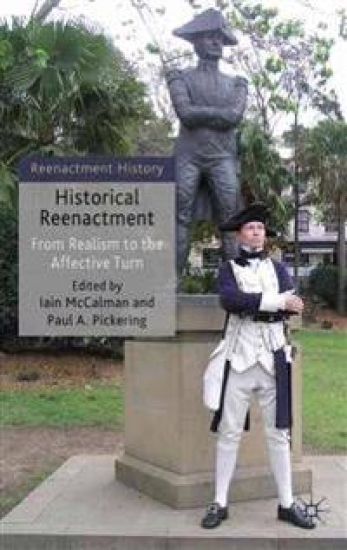
Since the late 1700s new forms of visual entertainment have tried to simulate the details of nature: reenactment has now become the most widely-consumed form of popular history. This book engages with the quest for definition and appropriate delimitation of reenactment as well as questions about the relationship between realism and affect.
When children are born with sex attributes that do not fit expectations about male and female anatomy, it is standard medical practice to make their bodies look as “normal” as possible. Doctors seek to reduce or remove intersex characteristics through early childhood surgery—cutting down clitorises, remaking penises, and even performing sterilizations. For decades, intersex medicine has sparked outrage from patient groups, lawmakers, intergovernmental organizations, and scholars. It has been condemned for causing trauma, scars, nerve damage, and the loss of bodily autonomy. Yet it continues.Iain Morland, an intersex scholar and advocate—and a former patient—explores why medicalization is so embedded in contemporary society and how to challenge it. He provides breakthrough accounts of the traumatic effects of surgery, the consequences for attachments between children and parents, and the paradoxes of the pursuit of normality. Weaving together theoretical analysis with autobiographical insights, Morland grapples with the complexity of dismantling intersex medicine. Accessibly written and passionately argued, this book exposes the contradictions of the medical management of intersex. With a bold mix of critical theory, psychology, queer theory, and philosophy, it provides fresh insights for scholars of intersex, gender, sexuality, and science, as well as for activists and their allies.
When children are born with sex attributes that do not fit expectations about male and female anatomy, it is standard medical practice to make their bodies look as “normal” as possible. Doctors seek to reduce or remove intersex characteristics through early childhood surgery—cutting down clitorises, remaking penises, and even performing sterilizations. For decades, intersex medicine has sparked outrage from patient groups, lawmakers, intergovernmental organizations, and scholars. It has been condemned for causing trauma, scars, nerve damage, and the loss of bodily autonomy. Yet it continues.Iain Morland, an intersex scholar and advocate—and a former patient—explores why medicalization is so embedded in contemporary society and how to challenge it. He provides breakthrough accounts of the traumatic effects of surgery, the consequences for attachments between children and parents, and the paradoxes of the pursuit of normality. Weaving together theoretical analysis with autobiographical insights, Morland grapples with the complexity of dismantling intersex medicine. Accessibly written and passionately argued, this book exposes the contradictions of the medical management of intersex. With a bold mix of critical theory, psychology, queer theory, and philosophy, it provides fresh insights for scholars of intersex, gender, sexuality, and science, as well as for activists and their allies.
New adventures for Erimem, former companion of Doctor Who. From her new home in 21st Century London, Erimem is keen to explore the universe now that she has acquired technology that can transport she and her friends through space and time. Curiosity drives them to explore the past, the future and far off distant worlds, discovering new friends and new dangers everywhere they go... INTO THE UNKNOWN. A collection of short stories by a mixture of experienced and first-time authors including Jim Mortimore, Ian Farrington, Claire Bartlett, Kaitlin Moore, Iain McLaughlin and Julianne Todd.
Two more adventures for Erimem, former companion of the Fifth Doctor Who... Erimem and her friends travel first to the future and then to past... The deep-space probe ship Clinton has been out of communication with Earth since its encounter with an interstellar comet. Erimem and her friends arrive on a space station high in Earth orbit just before the almost derelict Clinton is due to dock... a derelict that is not as dead as everyone believes... Erimem travels centuries into the past in search of her friend, Andy, who is lost in a dangerous era of pirates and Highwaymen. While Erimem, Helena and Ibrahim find themselves on a Caribbean island which comes under attack, Andy takes to the roads of England behind a mask before encountering the most deadly pirate terrorising the Caribbean...