Kirjojen hintavertailu. Mukana 11 244 527 kirjaa ja 12 kauppaa.

Kirjahaku

Etsi kirjoja tekijän nimen, kirjan nimen tai ISBN:n perusteella.

163 tulosta hakusanalla Intaek Oh

Satiation, Satiety and the Control of Food Intake
With growing concerns about the rising incidence of obesity, there is interest in understanding how the human appetite contributes to energy balance and how it might be affected by the foods we consume, as well as other cultural and environmental factors. Satiation, satiety and the control of food intake provides a concise and authoritative overview of these areas. Part one introduces the concepts of satiation and satiety and discusses how these concepts can be quantified. Chapters in part two focus on biological factors of satiation and satiety before part three moves on to explore food composition factors. Chapters in part four discuss hedonic, cultural and environmental factors of satiation and satiety. Finally, part five explores public health implications and evaluates consumer understanding of satiation and satiety and related health claims.
Recommendations for a New Rock Dusting Standard to Prevent Coal Dust Explosions in Intake Airways

Recommendations for a New Rock Dusting Standard to Prevent Coal Dust Explosions in Intake Airways

Centers for Disease Cont And Prevention; National Institute Fo Safety and Health; D. Human Services

Createspace Independent Publishing Platform
2013
nidottu
The workings of a bituminous coal mine produce explosive coal dust for which adding rock dust can reduce the potential for explosions. Accordingly, guidelines have been established by the Mine Safety and Health Administration (MSHA) about the relative proportion of rock dust that must be present in a mine's intake and return airways. Current MSHA regulations require that intake airways contain at least 65% incombustible content and return airways contain at least 80% incombustible content. The higher limit for return airways was set in large part because finer coal dust tends to collect in these airways. Based on extensive in-mine coal dust particle size surveys and large-scale explosion tests, the National Institute for Occupational Safety and Health (NIOSH) recommends a new standard of 80% total incombustible content (TIC) be required in the intake airways of bituminous coal mines in the absence of methane. MSHA inspectors routinely monitor rock dust inerting efforts by collecting dust samples and measuring the percentage of TIC, which includes measurements of the moisture in the samples, the ash in the coal, and the rock dust. These regulations were based on two important findings: a survey of coal dust particle size that was performed in the 1920s, and large-scale explosion tests conducted in the U.S. Bureau of Mines' Bruceton Experimental Mine (BEM) using dust particles of that survey's size range to determine the amount of inerting material required to prevent explosion propagation. Mining technology and practices have changed considerably since the 1920s, when the original coal dust particle survey was performed. Also, it has been conclusively shown that as the size of coal dust particles decreases, the explosion hazard increases. Given these factors, NIOSH and MSHA conducted a joint survey to determine the range of coal particle sizes found in dust samples collected from intake and return airways of U.S. coal mines. Results from this survey show that the coal dust found in mines today is much finer than in mines of the 1920s. This increase in fine dust is presumably due to the increase in mechanization. In light of this recent comprehensive dust survey, NIOSH conducted additional large-scale explosion tests at the Lake Lynn Experimental Mine (LLEM) to determine the degree of rock dusting necessary to abate explosions. The tests used Pittsburgh seam coal dust blended as 38% minus 200 mesh and referred to as medium-sized dust. This medium-sized blend was used to represent the average of the finest coal particle size collected from the recent dust survey. Explosion tests indicate that medium-sized coal dust required 76.4% TIC to prevent explosion propagation. Even the coarse coal dust (20% minus 200 mesh or 75 μm), representative of samples obtained from mines in the 1920s, r equired approximately 70% TIC to be rendered inert in the larger LLEM, a level higher than the current regulation of 65% TIC. Given the results of the extensive in-mine coal dust particle size surveys and large-scale explosion tests, NIOSH recommends a new standard of 80% TIC be required in the intake airways of bituminous coal mines in the absence of methane. The survey results indicate that in some cases there are no substantial differences between the coal dust particle size distributions in return and intake air courses in today's coal mines. The survey results indicate that the current requirement of 80% TIC in return airways is still appropriate in the absence of background methane.
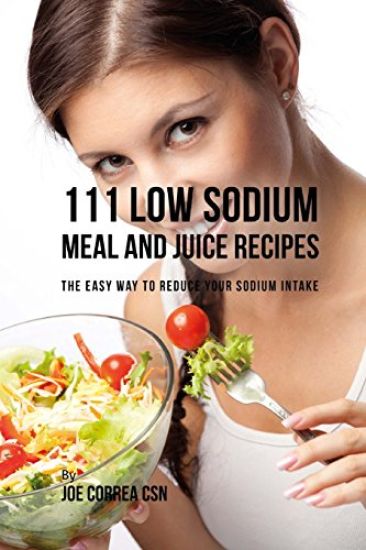
111 Low Sodium Meal and Juice Recipes: The Easy Way to Reduce Your Sodium Intake

111 Low Sodium Meal and Juice Recipes: The Easy Way to Reduce Your Sodium Intake

Joe Correa Csn

Createspace Independent Publishing Platform
2018
nidottu
111 Low Sodium Meal and Juice Recipes: The Easy Way to Reduce Your Sodium Intake By Joe Correa CSN Most of the time people are concerned about the amounts of sugar in their diet, but large amounts of salt can also cause some serious health problems. The main source of sodium in your everyday diet is salt. Unfortunately, most people are not aware of the amounts of salt they consume every day. Some statistics suggest that the average American eats five or even more teaspoons of salt every single day which is about 20 times more than what the body actually needs. This results in holding the excess fluid in the body which creates a significant burden on the heart followed by serious, lifethreatening conditions. Fortunately, this problem can easily be solved through a healthy diet and some small changes that will keep your health and well-being in check. Following a low-sodium diet means reducing the amounts of salt in your everyday meals which can easily be done while cooking. The actual problem lies in buying highly processed foods that often contain some ridiculously high amounts of salt. Make sure to check the nutrition labels of the foods you're buying when you go to the supermarket. Adopting these healthy habits will reduce fluid accumulation in your body and ease the job of the kidneys which will result in significantly improved overall health.
National Pollutant Discharge Elimination System - Final Regulations To Establish Requirements for Cooling Water Intake Structures (US Environmental Pr
National Pollutant Discharge Elimination System - Final Regulations To Establish Requirements for Cooling Water Intake Structures (US Environmental Protection Agency Regulation) (EPA) (2018 Edition) The Law Library presents the complete text of the National Pollutant Discharge Elimination System - Final Regulations To Establish Requirements for Cooling Water Intake Structures (US Environmental Protection Agency Regulation) (EPA) (2018 Edition). Updated as of May 29, 2018 On November 1, 2004, EPA published a proposal that contained several options for the control of cooling water intake structures at existing Phase III facilities and at new offshore oil and gas extraction facilities. This rule establishes categorical section 316(b) requirements for intake structures at new offshore oil and gas extraction facilities that have a design intake flow threshold of greater than 2 million gallons per day and that withdraw at least 25 percent of the water exclusively for cooling purposes. For existing Phase III facilities, EPA determined that uniform national standards are not the most effective way at this time to address cooling water intake structures at these facilities. Instead, EPA believes that it is better to continue to rely upon the existing National Pollutant Discharge Elimination System (NPDES) program, which implements section 316(b) for existing facilities not covered under the Phase II rule on a case-by-case, best professional judgment basis. This final action constitutes Phase III of EPA's section 316(b) regulation development. This rule does not alter the regulatory requirements for facilities subject to the Phase I or Phase II regulations. This book contains: - The complete text of the National Pollutant Discharge Elimination System - Final Regulations To Establish Requirements for Cooling Water Intake Structures (US Environmental Protection Agency Regulation) (EPA) (2018 Edition) - A table of contents with the page number of each section
Preston Catholic College, The Last Intake 1977-1982
Preston Catholic College grammar school opened its doors to its first 11 pupils in 1865; it provided an education to young boys from the city and surrounding areas for more than a century afterwards.Thousands of students spent their formative years at the institution, until the last cohort entered in the autumn of 1977. For the duration of their secondary school life, these pupils remained the youngest year group in attendance, making their time at the college a highly unusual experience.In this book, we get to meet those boys almost 50 years later and hear their reminiscences and memories of life as the 'last intake'. The stories in its pages reveal plenty of common preoccupations and shared highs and lows from the time. But they also provide fascinatingly different perspectives on the teaching the college offered, as well as an illustration of the varied futures its alumni went on to follow when they went their separate ways.Together, these recollections add up to a wonderful social history of a very particular place, at a very particular time.
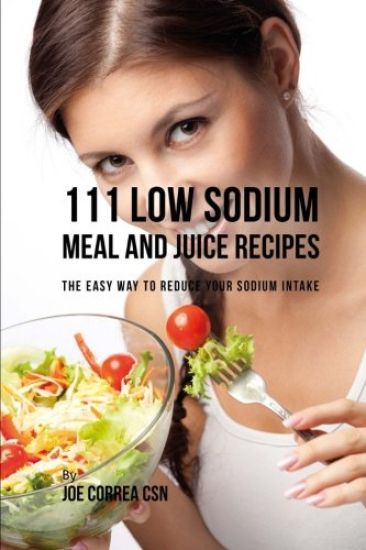
111 Low Sodium Meal and Juice Recipes: The Easy Way to Reduce Your Sodium Intake

111 Low Sodium Meal and Juice Recipes: The Easy Way to Reduce Your Sodium Intake

Joe Correa Csn

Createspace Independent Publishing Platform
2017
nidottu
111 Low Sodium Meal and Juice Recipes: The Easy Way to Reduce Your Sodium Intake By Joe Correa CSN Most of the time people are concerned about the amounts of sugar in their diet, but large amounts of salt can also cause some serious health problems. The main source of sodium in your everyday diet is salt. Unfortunately, most people are not aware of the amounts of salt they consume every day. Some statistics suggest that the average American eats five or even more teaspoons of salt every single day which is about 20 times more than what the body actually needs. This results in holding the excess fluid in the body which creates a significant burden on the heart followed by serious, life-threatening conditions. Fortunately, this problem can easily be solved through a healthy diet and some small changes that will keep your health and well-being in check. Following a low-sodium diet means reducing the amounts of salt in your everyday meals which can easily be done while cooking. The actual problem lies in buying highly processed foods that often contain some ridiculously high amounts of salt. Make sure to check the nutrition labels of the foods you're buying when you go to the supermarket. Adopting these healthy habits will reduce fluid accumulation in your body and ease the job of the kidneys which will result in significantly improved overall health. Low sodium doesn't have to be low in taste These recipes will give you an entirely new definition of flavor and will taste great. This juice and meal recipe book is a wonderful collection of low-sodium juice recipes that I like to prepare for myself and I am sure you will enjoy and benefit from. They are full of flavor and nutrition.
Desserts and Sugar (or the lack of it): 30 Sugar-free Recipes to help you Reduce your Sugar Intake
Sugar is great until it starts to pose problems. It is one of the remote causes of potentially terminal diseases like cancer, heart diseases, and the most common sugar disease, diabetes. Why don't you be a step ahead and take good care of yourself? In this case, this means that you have to cut down your sugar intake. You do not see yourself doing that, huh? Why not? You do not know any substitute for sugar? No, there are lots of sugar-free recipes - so close to sugary substances that you will not notice the difference. A good number of them come in the form of desserts, and they are the best, really. You will not have to go on a wild search for them because some of them have been compiled into this book. All you need to do now is to grab it and start your sugar-free journey.
Lectins - A 360° Analysis - Why Lectins make you sick and how we can reduce our Lectin intake to live more healthy lives - background, guidelines, dietary change, recipes
Lectins - A 360 Analysis - Why Lectins make you sick and how we can reduce our Lectin intake to live more healthy lives - background, guidelines, dietary change, recipes Would it not be wonderful if you could change your eating habits to control your food intolerance, to live healthier and longer and at the same time end your stomach problems once and for all? If all you need to do is reduce your intake of lectins?Intolerances like Lactose, Gluten, Sorbitol, Histamines and Fructose are well known. But have you heard of Lectins? If not, you are probably thinking here comes the next diet trend. In reality, it is a form of nutrition which is slowly becoming better known.Lectins are substances which are not well absorbed into the body and which can cause discomfort or sickness. Lectins do not belong to the classical group of intolerances. However, if you eat low-lectin foods, a whole range of intolerances can be reduced, all at once. About the author of this book, Lutz Schneider: Ever since he studied the biology of evolution, over 20 years ago, he has been interested in marginal health subjects, which are often hidden from the main stream, but which are scientifically well accepted. He teaches this knowledge, not only to his students, but also reaches a wider audience in Germany with his various publications.In his books, he speaks about subjects which are very close to his heart and on which he can pass on his own experiences. All of his publications, therefore, are based on indisputable scientific facts, but also encompass his own very personal experiences and knowledge.Read about fascinating background information, scientific findings, experience reports and secret tips which are tailor-made for your needs and which will help you to achieve a healthier, longer and more fulfilling life. Get your copy of this book today and discover ...... What Lectins are and how they work... Why Lectins have an adverse effect on our bodies... How you can change your eating habits and control your food intolerances. Content of this book: What are Lectins?Introduction to LectinsLectins and blood groupsDifferent types of LectinsWhat happens in our intestines?What happens outside our intestines?Lectins causing disorders and diseasesPositive characteristics of LectinsThe Leaky Gut SyndromeHow are the bowels structured?What is the leaky gut syndrome?How do you recognise leaky gut syndrome?Which autoimmune diseases does it cause?How is it diagnosed?What should you be aware of with leaky gut syndrome?Diet for leaky gut syndromeDiet without LectinsThe Gundry TheoryList of foodsCasein A2 MilkMaking Lectins harmlessFurther tips for every dayChanging your diet, step by stepPhase 1: Cleansing/restorationPhase 2: Repair and restorePhase 3: Reap the rewardsThe Keto Intensive Care ProgrammeOther disruptive factors which disable a healthy gutLosing weight without LectinsWhy low-carb diets do not help long-termThe paleo conceptThe Keto dietRecipes