Kirjojen hintavertailu. Mukana 11 342 296 kirjaa ja 12 kauppaa.

Kirjahaku

Etsi kirjoja tekijän nimen, kirjan nimen tai ISBN:n perusteella.

1000 tulosta hakusanalla JAMES JOYCE

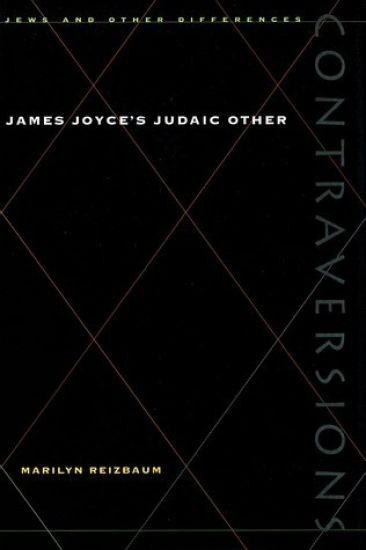
James Joyce's Judaic Other

James Joyce's Judaic Other

Marilyn Reizbaum

Stanford University Press
1999
sidottu
How does recent scholarship on ethnicity and race speak to the Jewish dimension of James Joyce's writing? What light has Joyce himself already cast on the complex question of their relationship? This book poses these questions in terms of models of the other drawn from psychoanalytic and cultural studies and from Jewish cultural studies, arguing that in Joyce the emblematic figure of otherness is "the Jew." The work of Emmanuel Levinas, Sander Gilman, Gillian Rose, Homi Bhabha, among others, is brought to bear on the literature, by Jews and non-Jews alike, that has forged the representation of Jews and Judaism in this century. Joyce was familiar with this literature, like that of Theodor Herzl. Joyce sholarship has largely neglected even these sources, however, including Max Nordau, who contributed significantly to the philosophy of Zionism, and the literature on the "psychobiology" of race—so prominent in the fin de siècle—all of which circulates around and through Joyce's depictions of Jews and Jewishness. Several Joyce scholars have shown the significance of the concept of the other for Joyce's work and, more recently, have employed a variety of approaches from within contemporary deliberations of the ideology of race, gender, and nationality to illuminate its impact. The author combines these approaches to demonstrate how any modern characterization of otherness must be informed by historical representations of "the Jew" and, consequently, by the history of anti-Semitism. She does so through a thematics and poetics of Jewishness that together form a discourse and method for Joyce's novel.
James Joyce’s Judaic Other

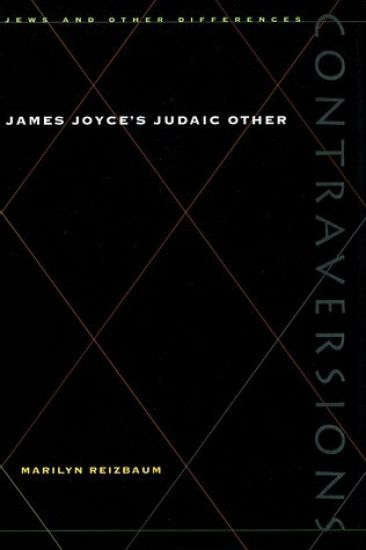
James Joyce’s Judaic Other

Marilyn Reizbaum

Stanford University Press
1999
pokkari
How does recent scholarship on ethnicity and race speak to the Jewish dimension of James Joyce’s writing? What light has Joyce himself already cast on the complex question of their relationship? This book poses these questions in terms of models of the other drawn from psychoanalytic and cultural studies and from Jewish cultural studies, arguing that in Joyce the emblematic figure of otherness is “the Jew.” The work of Emmanuel Levinas, Sander Gilman, Gillian Rose, Homi Bhabha, among others, is brought to bear on the literature, by Jews and non-Jews alike, that has forged the representation of Jews and Judaism in this century. Joyce was familiar with this literature, like that of Theodor Herzl. Joyce sholarship has largely neglected even these sources, however, including Max Nordau, who contributed significantly to the philosophy of Zionism, and the literature on the “psychobiology” of race—so prominent in the fin de siècle—all of which circulates around and through Joyce’s depictions of Jews and Jewishness. Several Joyce scholars have shown the significance of the concept of the other for Joyce’s work and, more recently, have employed a variety of approaches from within contemporary deliberations of the ideology of race, gender, and nationality to illuminate its impact. The author combines these approaches to demonstrate how any modern characterization of otherness must be informed by historical representations of “the Jew” and, consequently, by the history of anti-Semitism. She does so through a thematics and poetics of Jewishness that together form a discourse and method for Joyce’s novel.
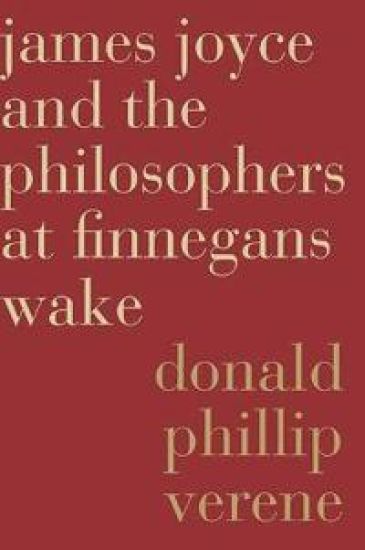
James Joyce and the Philosophers at Finnegans Wake

James Joyce and the Philosophers at Finnegans Wake

Donald Phillip Verene

Northwestern University Press
2016
nidottu
James Joyce and the Philosophers at Finnegans Wake explores how Joyce used the philosophers Nicholas Cusanus, Giordano Bruno, and Giambattista Vico as the basis upon which to write Finnegans Wake. Very few Joyce critics know enough about these philosophers and therefore often miss their influence on Joyce’s great work. Joyce embraces these philosophic companions to lead him through the underworld of history with all its repetitions and resurrections, oppositions and recombinations.We as philosophical readers of the Wake go along with them to meet everybody and in so doing are bound “to encounter for the millionth time the reality of experience and to forge in the smithy” of our souls the “uncreated conscience” of humankind. Verene builds his study on the basis of years of teaching Finnegans Wake side by side with Cusanus, Bruno, and Vico, and his book will serve as a guide to readers of Joyce’s novel.
James Joyce: A Critical Introduction

James Joyce: A Critical Introduction

Harry Levin

NEW DIRECTIONS PUBLISHING CORPORATION
1960
nidottu
Because Harry Levin's view is large, as opposed to the many necessary exegeses and close textual studies, he leads the reader easily into the delights to be found in Joyce, from the comparatively simple prose of Dubliners, through Ulysses and into the complexities of Finnegans Wake. The insight and brilliance of this "critical introduction," first published by New Directions in 1941, make it as rewarding for the expert as the student. For this revised edition, Mr. Levin, who is Irving Babbitt Professor of Comparative Literature at Harvard, has made revisions and added a new preface and a long "postscript" which he calls "Revising Joyce." He examines the works that have come to light in the last few years and some of the important later biographical writings about Joyce.
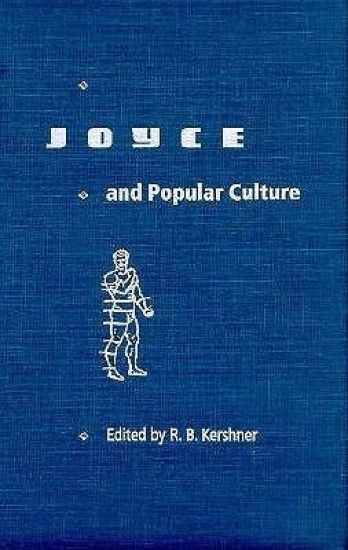
James Joyce and Popular Culture

James Joyce and Popular Culture

University Press of Florida
1996
sidottu
Joyce not only used popular culture, he contributed to it. These essays employ a variety of critical techniques to bring out his involvement in the popular culture of his time. Treating all of Joyce's work from ""Dubliners"" through ""Finnegan's Wake"", they question the conventional idea that popular culture is the inverse of modernist high art, showing instead how popular culture intertwines with modernist (and postmodernist) art. In a general historical introduction, R.B. Kershner looks at the entire question of Joyce and popular cutlure within the context of Joyce criticism and the cultural studies movement.
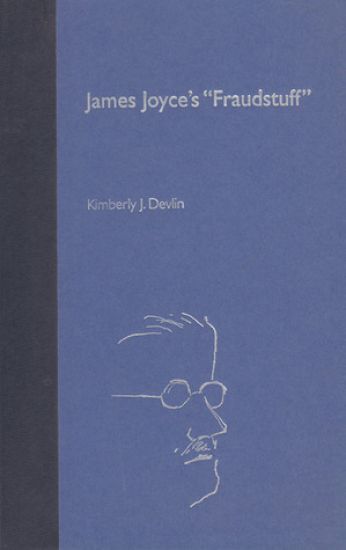
James Joyce's Fraudstuff

James Joyce's Fraudstuff

Kimberly J. Devlin

University Press of Florida
2002
sidottu
In James Joyce's ""Fraudstuff,"" Kimberly Devlin considers Stephen Hero in illuminating juxtaposition to the developing artistic subject portrayed in Portrait and Ulysses. By tracing the concepts of ""fraudulence"" and ""inauthenticity"" in Joyce, Devlin reveals his increasingly sophisticated exploration of modern identity from Stephen Hero to Finnegans Wake. Devlin examines Joyce's continual rethinking of what it means to have a ""self,"" of the acting that passes as being. She demonstrates how Joyce explored the various ways identity is constructed, sustained, subverted, and dissolved. Whereas Stephen Hero presents a narrator who feels authentic compared to the fraudulence all around him, the Stephen of Portrait becomes aware of how his own identity is a pastiche of borrowed narratives and his actions a series of posturings. Moving deftly from Stephen Hero, to Portrait, to Ulysses and Finnegans Wake, Devlin traces Joyce's increasing interest in and experimentation with the theatrical props that support identity, from his early concern with moments of epiphanic truth and authentic insight to an obsessive celebration of selfhood as imposture and fraud - and as an ultimately unknowable entity. Building on studies of the performative dimension of selfhood, Devlin demonstrates that Joyce grew increasingly skeptical about locating a core of being, and she explores his ""Fraudstuff"" in an array of forms: mimetic identifications, female masquerade, male parade, trans-gender impersonations, verbal mimicry, and police fantasies that induce elaborate posturings. In a refreshingly clear application of Lacanian theory, she also shows how modern identity, for Joyce, is based on the imagined gaze of the ""Other."" Her sophisticated, nonreductive application of contemporary psychoanalytic theory to Joyce's preoccupation with identity will challenge established Joyce scholars and will appeal broadly to scholars and students of literary modernism.
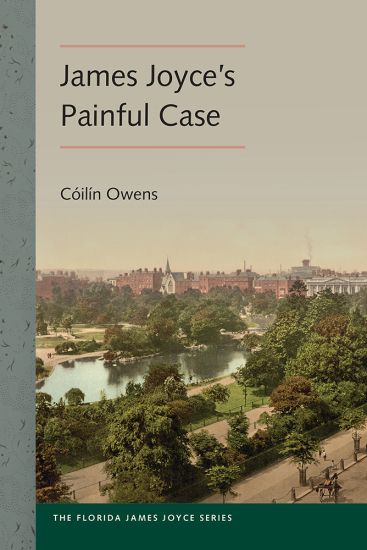
James Joyce's Painful Case

James Joyce's Painful Case

Cóilín Owens

University Press of Florida
2017
nidottu
In order to demonstrate that one story from the Dubliners is not only a turning point in that book but also a microcosm of a wide range of important Joycean influences and preoccupations, Cóilín Owens examines the dense intertextuality of "A Painful Case." Assuming the position of the ideal contemporary Irish reader that Joyce might have anticipated, Owens argues that the main character, James Duffy, is a "spoiled priest," emotionally arrested by his guilt at having rejected the call to the priesthood. Duffy's intellectual life thereafter progresses through German idealism to eventual nihilism. The contrast of nihilist thought and Christian belief is Owens's main focus, and he demonstrates how this dichotomy is evident at various points in the life of James Duffy. From this springboard, Owens constructs a larger discussion of Joyce's cultural influences, including Schopenhauer, Wagner, Tolstoy, and others. He considers many other complex interrelationships that inform Joyce's text--theology, philosophy, music, opera, literary history, Irish cultural history, and Joyce's own poetry--and offers detailed elucidations informed by historical, geographical, linguistic, and biographical information.
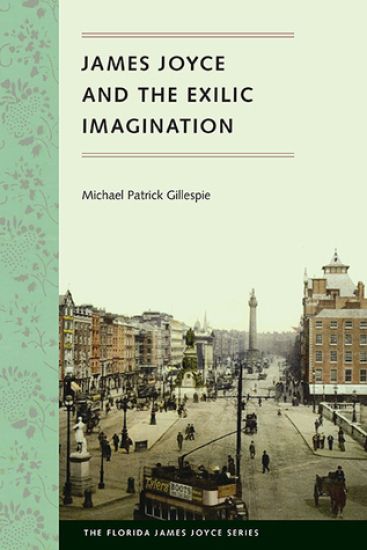
James Joyce and the Exilic Imagination

James Joyce and the Exilic Imagination

Michael Patrick Gillespie

University Press of Florida
2015
nidottu
James Joyce left Ireland in 1904 in self-imposed exile. Though he never permanently returned to Dublin, he continued to characterize the city in his prose throughout the rest of his life. This volume elucidates the ways Joyce wrote about his homeland with conflicting bitterness and affection - a common ambivalence in expatriate authors, whose time in exile tends to shape their creative approach to the world. Yet this duality has not been explored in Joyce’s work until now.The first book to read Joyce’s writing through the lens of exile studies, James Joyce and the Exilic Imagination challenges the tendency of scholars to stress the writer’s negative view of Ireland. Instead, it showcases the often-overlooked range of emotional attitudes imbuing Joyce’s work and produces a fuller understanding of Joyce’s canon.
James Joyce and Censorship

James Joyce and Censorship

Paul Vanderham

New York University Press
1997
sidottu
When James Joyce's Ulysses began to appear in installments in 1918, it provoked widespread outrage and disgust. The novel violated a long list of taboos by denigrating English royalty, describing masturbation, and mingling the erotic with the excremental--in a style that some early reviewers called literary bolshevism. As a result, U.S. Postal authorities denied several installments of Ulysses access to the mails, initiating a series of suppressions that would result in a thirteen-year ban on Joyce's novel. Obscenity trials spanned the next decade. Using personal interviews and primary sources never before discussed in depth, James Joyce and Censorship closely examines the legal trials of Ulysses from 1920 to 1934. Paying particular attention to the decision that lifted the ban on Ulysses in 1933, a decision that the ACLU cites to this day in cases involving censorship, Vanderham traces the growth of the fallacy that literature is incapable of influencing individuals. He argues persuasively that underneath every esthetic lie ethical, political, philosophical, and religious convictions.The legal and the literary aspects of the Ulysses controversy, Vanderham insists, are virtually inseparable. By analyzing the writing and revising of Ulysses in the context of Joyce's lifelong struggle with the censors, he argues that the censorship of Ulysses affected not only the critical reception of the novel but its very shape.
James Joyce and Heraldry

James Joyce and Heraldry

Michael J. O'Shea

State University of New York Press
1986
pokkari
James Joyce and Heraldry demonstrates that heraldry is an essential key to the symbols of Joyce's major works. It is a clear, witty introduction to heraldry and the use of heraldic imagery by Western writers, including Dante, Chaucer, Shakespeare, Jonson, and Sterne.Michael O'Shea shifts the focus from the aural imagery of Joyce to reveal the visual impact deriving from Joyce's use of the symbols and language of heraldry. He cites biographical and textual evidence of Joyce's deep interest in coats of arms, crests, and other heraldic emblems; and demonstrates that Joyce used these visual symbols as well as "the curious jargons of heraldry" in his writings. O'Shea succeeds in compiling an indispensable reference work that sheds new light on Joyce's major texts, A Portrait of the Artist as a Young Man, Ulysses, and Finnegans Wake. His commentary is thoroughly illustrated and includes a glossary of heraldic terms keyed to Joyce's usage of them.
James Joyce, Books and Pamphlets Relating to the Author and His Works

James Joyce, Books and Pamphlets Relating to the Author and His Works

James Fuller 1899- Spoerri

Hassell Street Press
2021
sidottu
This work has been selected by scholars as being culturally important and is part of the knowledge base of civilization as we know it.This work is in the public domain in the United States of America, and possibly other nations. Within the United States, you may freely copy and distribute this work, as no entity (individual or corporate) has a copyright on the body of the work.Scholars believe, and we concur, that this work is important enough to be preserved, reproduced, and made generally available to the public. To ensure a quality reading experience, this work has been proofread and republished using a format that seamlessly blends the original graphical elements with text in an easy-to-read typeface.We appreciate your support of the preservation process, and thank you for being an important part of keeping this knowledge alive and relevant.
James Joyce, Books and Pamphlets Relating to the Author and His Works

James Joyce, Books and Pamphlets Relating to the Author and His Works

James Fuller 1899- Spoerri

Hassell Street Press
2021
nidottu
This work has been selected by scholars as being culturally important and is part of the knowledge base of civilization as we know it.This work is in the public domain in the United States of America, and possibly other nations. Within the United States, you may freely copy and distribute this work, as no entity (individual or corporate) has a copyright on the body of the work.Scholars believe, and we concur, that this work is important enough to be preserved, reproduced, and made generally available to the public. To ensure a quality reading experience, this work has been proofread and republished using a format that seamlessly blends the original graphical elements with text in an easy-to-read typeface.We appreciate your support of the preservation process, and thank you for being an important part of keeping this knowledge alive and relevant.
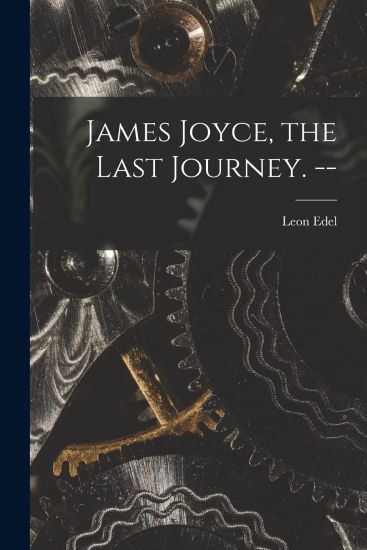
James Joyce, the Last Journey. --

James Joyce, the Last Journey. --

Leon 1907- Edel

Hassell Street Press
2021
sidottu
This work has been selected by scholars as being culturally important and is part of the knowledge base of civilization as we know it.This work is in the public domain in the United States of America, and possibly other nations. Within the United States, you may freely copy and distribute this work, as no entity (individual or corporate) has a copyright on the body of the work.Scholars believe, and we concur, that this work is important enough to be preserved, reproduced, and made generally available to the public. To ensure a quality reading experience, this work has been proofread and republished using a format that seamlessly blends the original graphical elements with text in an easy-to-read typeface.We appreciate your support of the preservation process, and thank you for being an important part of keeping this knowledge alive and relevant.
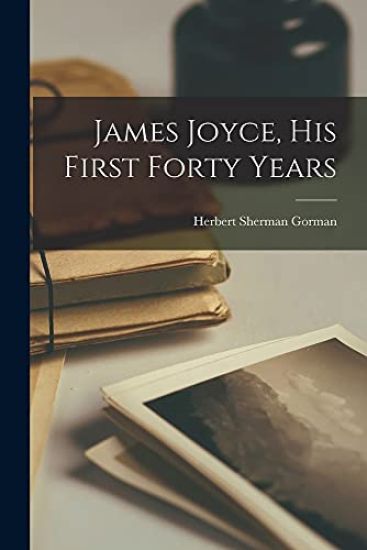
James Joyce, His First Forty Years

James Joyce, His First Forty Years

Herbert Sherman 1893-1954 Gorman

Hassell Street Press
2021
sidottu
This work has been selected by scholars as being culturally important and is part of the knowledge base of civilization as we know it.This work is in the public domain in the United States of America, and possibly other nations. Within the United States, you may freely copy and distribute this work, as no entity (individual or corporate) has a copyright on the body of the work.Scholars believe, and we concur, that this work is important enough to be preserved, reproduced, and made generally available to the public. To ensure a quality reading experience, this work has been proofread and republished using a format that seamlessly blends the original graphical elements with text in an easy-to-read typeface.We appreciate your support of the preservation process, and thank you for being an important part of keeping this knowledge alive and relevant.
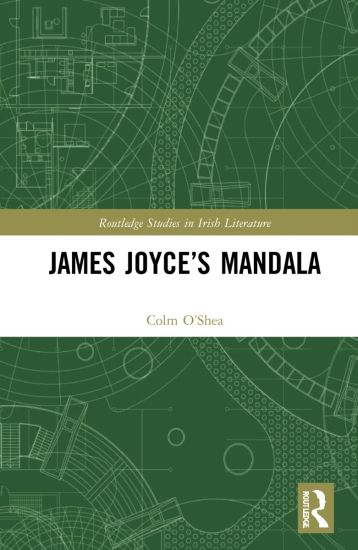
James Joyce’s Mandala

James Joyce’s Mandala

Colm O’Shea

TAYLOR FRANCIS LTD
2022
sidottu
The Sanskrit word mandala can be translated as "sacred circle." Within the circle sits a microcosm of the universe and/or consciousness, repre-sented by icons. Eastern civilizations developed the spiritual-artistic practice of creating mandalas—with sand, paint, and architecture—to high technical sophistication, making manifest a geometry with layers of esoteric meaning for both the mandala artist and the initiated spectator. James Joyce’s Mandala outlines and explains this iconic sacred geometry, and assesses to what extent Joyce’s works of literature, in particular Finnegans Wake, can be understood as mandalic constructs. Using exam-ples from Dubliners to the Wake, we see how fundamental to Joyce’s fiction is the issue of spiritual paralysis (a problem the mandala attempts to dissolve) and also how fascinated he was by geometric imagery and symmetry, the technical devices employed in mandala construction. This is the first book-length comparison of Joyce’s work with the mythic structure of the mandala. Never discounting the richness of Joyce’s genius, it uses his "collideorscape" to explore the secrets of the mandala principle as much as it uses mandala theory to illuminate his famed book of the night.
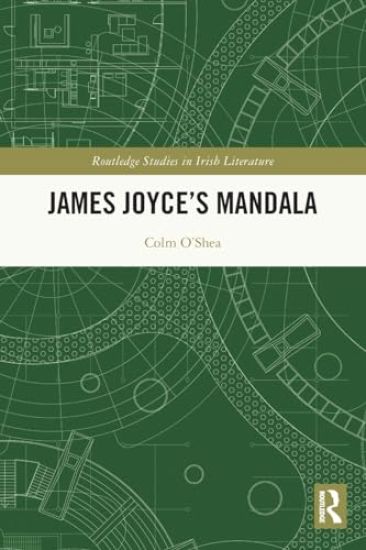
James Joyce’s Mandala

James Joyce’s Mandala

Colm O’Shea

TAYLOR FRANCIS LTD
2024
nidottu
The Sanskrit word mandala can be translated as "sacred circle." Within the circle sits a microcosm of the universe and/or consciousness, repre-sented by icons. Eastern civilizations developed the spiritual-artistic practice of creating mandalas—with sand, paint, and architecture—to high technical sophistication, making manifest a geometry with layers of esoteric meaning for both the mandala artist and the initiated spectator. James Joyce’s Mandala outlines and explains this iconic sacred geometry, and assesses to what extent Joyce’s works of literature, in particular Finnegans Wake, can be understood as mandalic constructs. Using exam-ples from Dubliners to the Wake, we see how fundamental to Joyce’s fiction is the issue of spiritual paralysis (a problem the mandala attempts to dissolve) and also how fascinated he was by geometric imagery and symmetry, the technical devices employed in mandala construction. This is the first book-length comparison of Joyce’s work with the mythic structure of the mandala. Never discounting the richness of Joyce’s genius, it uses his "collideorscape" to explore the secrets of the mandala principle as much as it uses mandala theory to illuminate his famed book of the night.
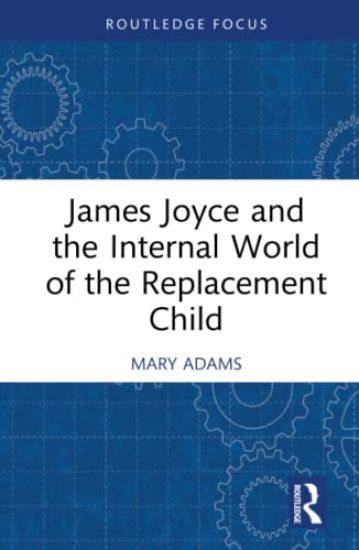
James Joyce and the Internal World of the Replacement Child
This book is an exploration of the internal world of James Joyce with particular emphasis on his being born into his parents’ grief at the loss of their firstborn son, offering a new perspective on his emotional difficulties.Mary Adams links Joyce’s profound sense of guilt and abandonment with the trauma of being a ‘replacement child’ and compares his experience with that of two psychoanalytic cases, as well as with Freud and other well-known figures who were replacement children. Issues such as survivor guilt, sibling rivalry, the ‘illegitimate’ replacement son, and the ‘dead mother’ syndrome are discussed. Joyce is seen as maturing from a paranoid, fearful state through his writing, his intelligence, his humour and his sublime poetic sensibility. By escaping the oppressive aspects of life in Dublin, in exile he could find greater emotional freedom and a new sense of belonging. A quality of claustrophobic intrusive identification in Ulysses contrasts strikingly with a new levity, imaginative identification, intimacy and compassion in Finnegans Wake. James Joyce and the Internal World of the Replacement Child highlights the concept of the replacement child and the impact this can have on a whole family.The book will be of interest to psychoanalysts, psychoanalytic psychotherapists and child psychotherapists as well as students of English literature, psychoanalytic studies and readers interested in James Joyce.Readers can find an additional piece by the author online at http://replacementchildforum.com/a-white-bird-trapped-inside-me-beating-scared-wings/
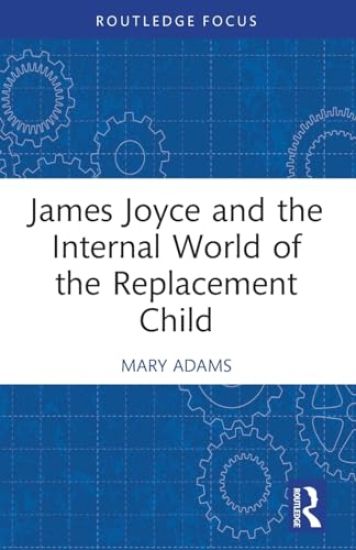
James Joyce and the Internal World of the Replacement Child
This book is an exploration of the internal world of James Joyce with particular emphasis on his being born into his parents’ grief at the loss of their firstborn son, offering a new perspective on his emotional difficulties.Mary Adams links Joyce’s profound sense of guilt and abandonment with the trauma of being a ‘replacement child’ and compares his experience with that of two psychoanalytic cases, as well as with Freud and other well-known figures who were replacement children. Issues such as survivor guilt, sibling rivalry, the ‘illegitimate’ replacement son, and the ‘dead mother’ syndrome are discussed. Joyce is seen as maturing from a paranoid, fearful state through his writing, his intelligence, his humour and his sublime poetic sensibility. By escaping the oppressive aspects of life in Dublin, in exile he could find greater emotional freedom and a new sense of belonging. A quality of claustrophobic intrusive identification in Ulysses contrasts strikingly with a new levity, imaginative identification, intimacy and compassion in Finnegans Wake. James Joyce and the Internal World of the Replacement Child highlights the concept of the replacement child and the impact this can have on a whole family.The book will be of interest to psychoanalysts, psychoanalytic psychotherapists and child psychotherapists as well as students of English literature, psychoanalytic studies and readers interested in James Joyce.Readers can find an additional piece by the author online at http://replacementchildforum.com/a-white-bird-trapped-inside-me-beating-scared-wings/