Kirjojen hintavertailu. Mukana 11 342 296 kirjaa ja 12 kauppaa.

Kirjahaku

Etsi kirjoja tekijän nimen, kirjan nimen tai ISBN:n perusteella.

1000 tulosta hakusanalla JAMES W. LEE
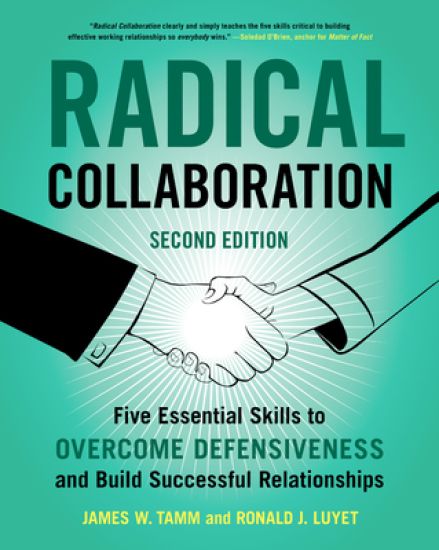
Radical Collaboration, 2nd Edition

Radical Collaboration, 2nd Edition

James W. Tamm; Ronald J. Luyet
HarperCollins Publishers
2020
nidottu
The second edition of the essential guide, updated with new research and observations to help twenty-first century organizations create models for effective collaboration.Collaborative skills have never been more important to a company’s success and these skills are essential for every worker today. Radical Collaboration is a how-to-manual for creating trusting, cooperative environments, and transforming groups into motivated and empowered teams. James W. Tamm and Ronald J. Luyet provide tools that will help you increase your ability to work successfully with others, learn to be more aware of colleagues, and better problem-solve and negotiate. Radical Collaboration is an eye-opener for leaders, managers, HR professionals, agents, trainers, and consultants who are seeking constructive ways of getting the results they want.
Observation Oriented Modeling

Observation Oriented Modeling

James W. Grice

Academic Press Inc
2011
sidottu
This book introduces a new data analysis technique that addresses long standing criticisms of the current standard statistics. Observation Oriented Modelling presents the mathematics and techniques underlying the new method, discussing causality, modelling, and logical hypothesis testing. Examples of how to approach and interpret data using OOM are presented throughout the book, including analysis of several classic studies in psychology. These analyses are conducted using comprehensive software for the Windows operating system.
Can Science Explain Religion?

Can Science Explain Religion?

James W. Jones

Oxford University Press Inc
2016
sidottu
The "New Atheist" movement of recent years has put the science-versus-religion controversy back on the popular cultural agenda. Anti-religious polemicists are convinced that the application of the new sciences of the mind to religious belief gives them the final weapons in their battle against irrationality and superstition. What used to be a trickle of research papers scattered in specialized scientific journals has now become a torrent of books, articles, and commentary in the popular media pressing the case that the cognitive science of religion can finally fulfill the enlightenment dream of shrinking religion into insignificance, if not eliminating it altogether. James Jones argues that these claims are demonstrably false. He notes that cognitive science research is religiously neutral; it can be deployed in many different ways in relation to the actual belief in and practice of religion: to undermine it, to simply study it, and to support it. These differences are differences in interpretation of the data and, Jones suggests, a reflection of the background assumptions and viewpoints brought to the data. The goal of this book is not to defend either a general religious outlook or a particular religious tradition but to make the case that while there is much to learn from the cognitive scientific study of religion, attempts to use it to "explain" religion are exaggerated and misguided. Drawing on scientific research and logical argument Can Science Explain Religion? directly confronts the claims of these debunkers of religion, providing an accessibly written, persuasive account of why they are not convincing.
All the Facts

All the Facts

James W. Cortada

Oxford University Press Inc
2016
sidottu
All the Facts presents a history of the role of information in the United States since 1870, when the nation began a nearly 150-year period of economic prosperity and technological and scientific transformations. James Cortada argues that citizens and their institutions used information extensively as tools to augment their work and private lives and that they used facts to help shape how the nation evolved during these fourteen decades. He argues that information's role has long been a critical component of the work, play, culture, and values of this nation, and no more so than during the twentieth century when its function in society expanded dramatically. While elements of this story have been examined by thousands of scholars---such as the role of radio, newspapers, books, computers, and the Internet, about such institutions as education, big business, expanded roles of governments from town administration to the state house, from agriculture to the services and information industries---All the Facts looks at all of these elements holistically, providing a deeper insight into the way the United States evolved over time. An introduction and 11 chapters describe what this information ecosystem looked like, how it evolved, and how it was used. For another vast layer of information about this subject the reader is directed to the detailed bibliographic essay in the back of this book. It includes a narrative history, case studies in the form of sidebars, and stories illustrating key points. Readers will find, for example, the story of how the US postal system helped create today's information society, along with everything from books and newspapers to TV, computers, and the Internet. The build-up to what many today call the Information Age took a long time to achieve and continues to build momentum. The implications for the world, and not just for the United States, are as profound as any mega-trend one could identify in the history of humankind. All the Facts presents this development thoroughly in an easy-to-digest format that any lover of history, technology, or the history of information and business will enjoy.
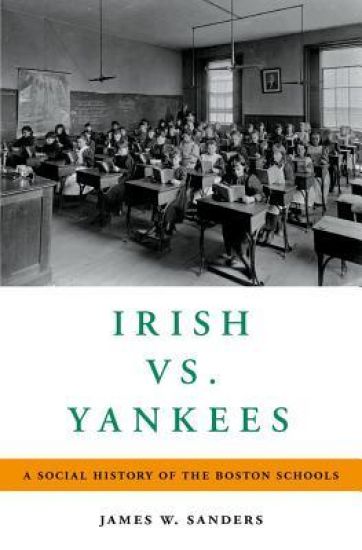
Irish vs. Yankees

Irish vs. Yankees

James W. Sanders

Oxford University Press Inc
2018
sidottu
Boston entered the twentieth century as an Irish Catholic city, no longer the "Yankee" town of its Puritan past. The dominance of the Irish Catholic population, swelled by the "potato famine" masses, gave it political control of the city, and significantly, control of its public schools. Unlike in other American cities, Boston Catholics had little need for a large or influential parochial system: they had the School Committee, school principals, and the teachers. In Irish vs. Yankees, James W. Sanders takes a new look at this critical period in the development of Boston schools, from 1822, when Boston officially became a city, to the Second World War. Framing the discussion around the Catholic hierarchy, he considers the interplay of social forces in the nineteenth and early twentieth centuries that led to the political rise of the Irish Catholic over the native Brahmin and the way this development shaped Boston's schools. From Bishop John Fitzpatrick to Boston College, Sanders introduces a cast of colorful characters and institutions to this tale of the education and religion in one of America's most prominent cities.
Living Religion

Living Religion

James W. Jones

Oxford University Press Inc
2019
sidottu
Is it reasonable to live a religiously oriented life, or is such a life the height of irrationality? Has neuroscience shown that religious experiences are akin to delusions, or might neuroscience actually support the validity of such experiences? In Living Religion James W. Jones offers a new approach to understanding religion after the Decade of the Brain. The modern tendency to separate theory from practice gives rise to a number of dilemmas for those who think seriously about religion. Claims about God, the world, and the nature and destiny of the human spirit have been ripped from their context in religious practice and treated as doctrinal abstractions to be justified or refuted in isolation from the living religious life that is their natural home. Jones argues that trends in contemporary psychology, especially an emphasis on embodiment and relationality, can help the thoughtful religious person return theory to practice, thereby opening up new avenues of religious knowing and new ways of supporting the commitment to a religiously lived life. This embodied-relational model offers new ways of understanding our capacity to transform and transcend our ordinary awareness and shows that it can be meaningful and reasonable to speak of a "spiritual sense." The brain's complexity, integration, and openness, and the many ways embodiment influences our understanding of ourselves and the world, all significantly impact our thinking about religious understanding. When linked to contemporary neuroscientific theories, the long-standing tradition of a spiritual sense is brought up to date and deployed in support of the argument of this book that reason is on the side of those who choose a religiously lived life.
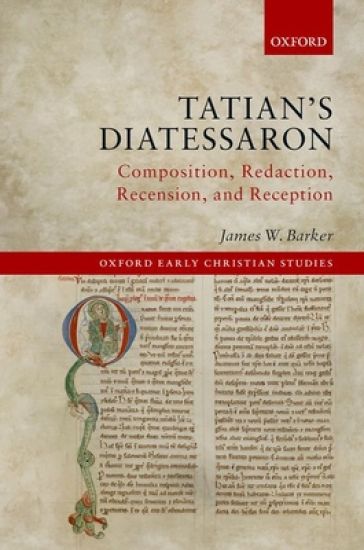
Tatian's Diatessaron

Tatian's Diatessaron

James W. Barker

Oxford University Press
2021
sidottu
In the late-second century, Tatian the Assyrian constructed a new Gospel by intricately harmonizing Matthew, Mark, Luke, and John. Tatian's work became known as the Diatessaron, since it was derived 'out of the four' eventually canonical Gospels. Though it circulated widely for centuries, the Diatessaron disappeared in antiquity. Nevertheless, numerous ancient and medieval harmonies survive in various languages. Some texts are altogether independent of the Diatessaron, while others are definitely related. Yet even Tatian's known descendants differ in large and small ways, so attempts at reconstruction have proven confounding. In this book James W. Barker forges a new path in Diatessaron studies. Covering the widest array of manuscript evidence to date, Tatian's Diatessaron reconstructs the compositional and editorial practices by which Tatian wrote his Gospel. By sorting every extant witnesses according to its narrative sequence, the macrostructure of Tatian's Gospel becomes clear. Despite many shared agreements, there remain significant divergences between eastern and western witnesses. This book argues that the eastern ones preserve Tatian's order, whereas the western texts descend from a fourth-century recension of the Diatessaron. Victor of Capua and his scribe used the recension to produce the Latin Codex Fuldensis in the sixth century. More controversially, Barker offers new evidence that late medieval texts such as the Middle Dutch Stuttgart harmony independently preserve traces of the western recension. This study uncovers the composition and reception history behind one of early Christianity's most elusive texts.
Studies in South Asian Linguistics

Studies in South Asian Linguistics

James W. Gair

Oxford University Press Inc
1998
sidottu
This volume collects twenty-nine published and unpublished papers by the linguist James Gair, considered the foremost western scholar of the Sri Lankan languages Sinhala and Jaffna Tamil. Ranging over thirty years, his work also considers issues in a variety of Indian languages, including Hindi, Marathi, Tamil, Malayalam, and Bengali. The collection reflects the wide range of Gair's interests, from morpho-syntactic questions to questions regarding historical and areal linguistics, especially language contact and diglossia, and extending to language acquisition. By collecting these papers and making them newly accessible, this volume will provide an important resource not only for scholars of these languages but for linguists interested in the theoretical issues Gair explores.
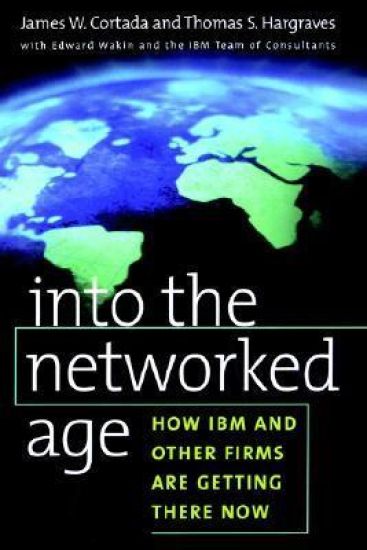
Into the Networked Age

Into the Networked Age

James W. Cortada; Thomas S. Hargraves; Edward Wakin
Oxford University Press Inc
1999
sidottu
In this dynamic book, based on the most effective strategies of IBM and other market leaders, managers will learn to successfully transform their organizations into a business prepared to compete in a networked age. Mainframes, client servers, PCs, networks, e-business, the Internet, databases, technical management--indeed, in the brave new business world facing today's firms only one thing is certain: change. And when looking for a model for corporate change, one should look no further than IBM. In this decade, IBM has gone from a company with less than $60 billion in unprofitable revenue to a highly profitable $85 billion-plus enterprise. In a company whose major source of revenue was once hardware, services now account for more than a third of its revenue. IBM Global Services, only seven years old and $25 billion strong, draws most of its revenue from helping businesses to do successfully what IBM has done: transform themselves. In five down-to-earth sections, the authors share their vast experience, apply case studies, chart trends and describe in-depth the practices that allowed IBM to transform itself, and to show the way for other firms. The result is an essential handbook for anyone charged with leading their firm in an economy that is global, increasingly reliant on information systems, and teeming with rapidly emerging markets--and competitors. Written by a staff of experts and renowned business thinkers, Into the Networked Age is today's ultimate guide for success in tomorrow's business world.
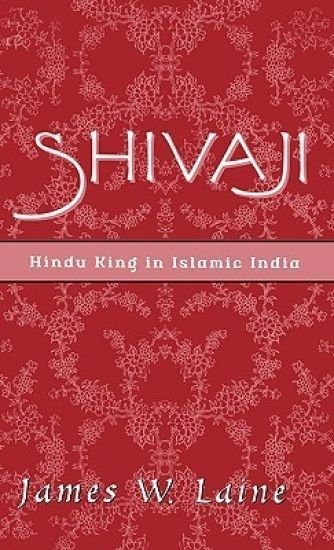
Shivaji

Shivaji

James W. Laine

Oxford University Press Inc
2003
sidottu
Shivaji was a 17th-century hero in western India, where his legend is well known and an important part of Hindu nationalist ideology. His legend expresses deeply held convictions about what Hinduism is, and how it is opposed to Islam. James Laine traces the origin and development of the Shivaji legend, examining its meaning for those who have composed and read it, and paints a complex picture of the past four centuries of Hindu-Muslim relations.
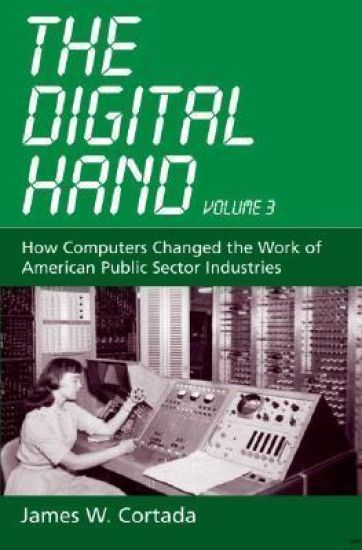
The Digital Hand, Vol 3

The Digital Hand, Vol 3

James W. Cortada

Oxford University Press Inc
2007
sidottu
In The third volume of The Digital Hand, James W. Cortada completes his sweeping survey of the effect of computers on American industry, turning finally to the public sector, and examining how computers have fundamentally changed the nature of work in government and education. This book goes far beyond generalizations about the Information Age to the specifics of how industries have functioned, now function, and will function in the years to come. Cortada combines detailed analysis with narrative history to provide a broad overview of computings and telecommunications role in the entire public sector, including federal, state, and local governments, and in K-12 and higher education. Beginning in 1950, when commercial applications of digital technology began to appear, Cortada examines the unique ways different public sector industries adopted new technologies, showcasing the manner in which their innovative applications influenced other industries, as well as the U.S. economy as a whole. He builds on the surveys presented in the first volume of the series, which examined sixteen manufacturing, process, transportation, wholesale and retail industries, and the second volume, which examined over a dozen financial, telecommunications, media, and entertainment industries. With this third volume, The Digital Hand trilogy is complete, and forms the most comprehensive and rigorously researched history of computing in business since 1950, providing a detailed picture of what the infrastructure of the Information Age really looks like and how we got there. Managers, historians, economists, and those working in the public sector will appreciate Cortada's analysis of digital technology's many roles and future possibilities.
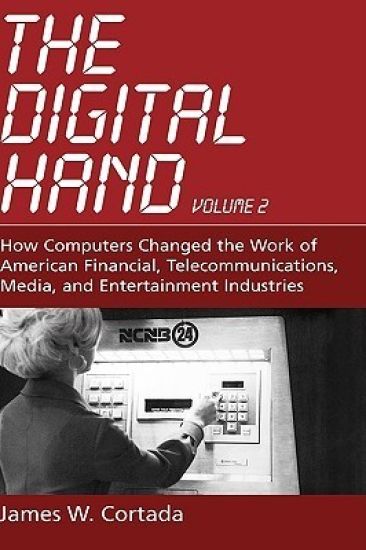
The Digital Hand: How Computers Changed the Work of American Financial, Telecommunications, Media, and Entertainment Industries
The Digital Hand, Volume 2 is an historical survey of how computers and telecommunications have been deployed in over a dozen industries in the financial, telecommunications, media, and entertainment sectors over the past half century. It is part of a sweeping three-volume description of how management in some forty industries embraced the computer and changed the American economy.
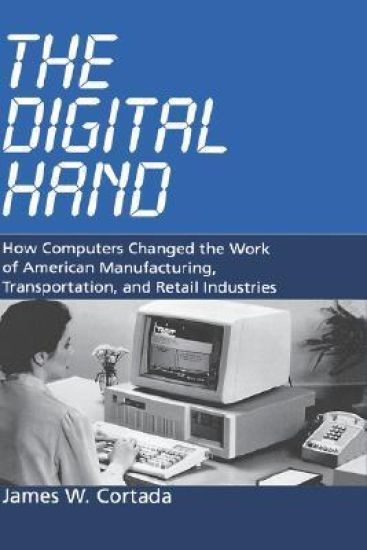
The Digital Hand

The Digital Hand

James W. Cortada

Oxford University Press Inc
2004
sidottu
In The Digital Hand, James W. Cortada combines detailed analysis with narrative history to provide a broad overview of computing's role in sixteen industries, accounting for nearly half of the U.S. economy. Beginning in 1950, when commercial applications of digital technology began to appear, Cortada examines the ways different industries adopted new technologies, as well as the ways their innovative applications influenced other industries and the U.S economy. In addition, to this account of computers' impact on industry, Cortada also demonstrates how industries themselves influenced the nature of digital technology. Managers, economists, and anyone interested in the history of modern business will appreciate this historical analysis of digital technology's many roles and its future possibilities in a wide array of industries. A detailed picture of what the infrastructure of the Information Age really looks like and how we got there, The Digital Hand is a sweeping survey of how computers transformed the American economy.
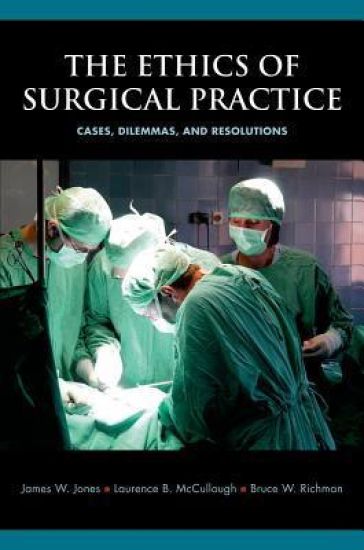
The Ethics of Surgical Practice

The Ethics of Surgical Practice

James W. Jones; Laurence B. McCullough; Bruce W. Richman

Oxford University Press Inc
2008
sidottu
Surgical ethics is the application of ethics to issues specific to surgery. This volume provides a collection of clinical case studies representing a wide range of the ethical issues surgeons confront today. It is an excellent text for teaching surgical ethics to surgical residents and medical students and a fascinating read for practicing surgeons. It is intended to engage the reader into participating in evidence-based ethical conflicts. The authors escort us through 71 brief, realistic, and ethically complex problems, offering a series of five possible resolutions to each and guiding us through the relative benefits and weaknesses of the options until a best ethical choice is defended. The volume includes sections on Consent and Disclosure, Self-Regulation, Research and Innovation, Conflicts of Interest, Business Dealings, and End of Life Issues, each with a brief introduction by the authors.
The Guardian of Every Other Right

The Guardian of Every Other Right

James W. Ely

Oxford University Press Inc
2007
sidottu
The Guardian of Every Other Right chronicles the pivotal role of property rights in fashioning the American constitutional order from the colonial era to the current controversies over eminent domain and land use controls. The book emphasizes the interplay of law, ideology, politics, and economic change in shaping constitutional thought and provides a historical perspective on the contemporary debate about property rights. Since publication of the original edition of this work, both academic and popular interest in the constitutional rights of property owners has markedly increased. Now in its third edition, this text has been revised to incorporate a full treatment of important judicial decisions, notable legislation, and scholarship since the second edition appeared in 1997. In particular, Ely provides helpful background and context for understanding the controversial Kelo decision relating to the exercise of eminent domain power for "public use." Covering the entire history of property rights in the United States, this new edition continues to fill a major gap in the literature of constitutional history and is an ideal text for students of legal and constitutional history.
The Guardian of Every Other Right

The Guardian of Every Other Right

James W. Ely

Oxford University Press Inc
2007
nidottu
The Guardian of Every Other Right chronicles the pivotal role of property rights in fashioning the American constitutional order from the colonial era to the current controversies over eminent domain and land use controls. The book emphasizes the interplay of law, ideology, politics, and economic change in shaping constitutional thought and provides a historical perspective on the contemporary debate about property rights. Since publication of the original edition of this work, both academic and popular interest in the constitutional rights of property owners has markedly increased. Now in its third edition, this text has been revised to incorporate a full treatment of important judicial decisions, notable legislation, and scholarship since the second edition appeared in 1997. In particular, Ely provides helpful background and context for understanding the controversial Kelo decision relating to the exercise of eminent domain power for "public use." Covering the entire history of property rights in the United States, this new edition continues to fill a major gap in the literature of constitutional history and is an ideal text for students of legal and constitutional history.
Ranked Choice Voting

Ranked Choice Voting

James W. Endersby; Michael J. Towle

OXFORD UNIVERSITY PRESS INC
2025
nidottu
Ranked choice voting (RCV) is an electoral and political reform sweeping across North America, already adopted in a variety of places, including New York City, the state of Maine, and cities and towns in Minnesota, California, and Utah. In localities using RCV, voters don't cast just a single vote for one candidate, but rank candidates according to preference: first choice, second choice, third, and so forth. To be elected, a candidate must win a majority--not a plurality--of votes. Though touted by proponents as way to enhance voter satisfaction with elections, promote trust in government, and increase voter turnout, the implementation of RCV is not without its challenges. In Ranked Choice Voting, James W. Endersby and Michael J. Towle provide a comprehensive and balanced analysis of RCV systems, drawing from examples across the United States to evaluate how they function. Using a wealth of data from observed elections outcomes to election theory, from political history to interviews with advocates and election administrators, the authors detail the history, strengths, and weaknesses of RCV and preferential voting more generally. Broad-ranging, even-handed, and evidence-based, this authoritative overview of an increasingly popular format for democratic elections in the US will appeal to anyone interested in electoral reform and American democracy more generally.
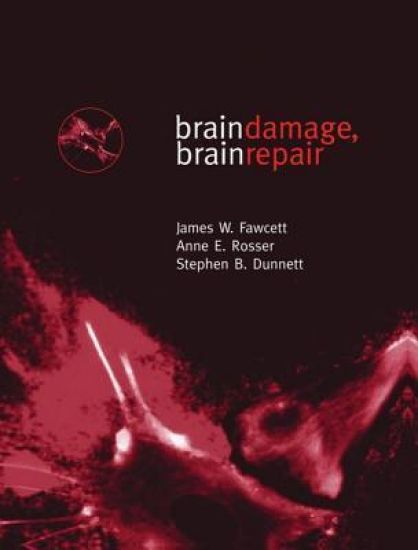
Brain Damage, Brain Repair

Brain Damage, Brain Repair

James W. Fawcett; Anne E. Rosser; Stephen B. Dunnett

Oxford University Press
2002
nidottu
Now available in paperback. Many neurological conditions are caused by damage to neurons and glial cells. For most of these diseases there are at present no effective treatments to minimise the extent of neuronal and glial loss, and no effective way of replacing what has been lost. This picture is rapidly changing. Developments in basic neuroscience have produced various potential therapies that can protect neurons and glia followiing traumatic, anoxic, infectious and immunological damage. The old doctrine that axons cannot be made to regenerate, and dead neurons cannot be replaced is no longer tenable, and a wide variety of reconstructive techniques for the nervous system are under development. These and other basic science discoveries will progress into clinical practice, and lead to a revolution in neurology and neurosurgery. This book describes the various conditions that lead to damage to the nervous system, and the ways in which they may be ameliorated. It covers the burgeoning science of reconstruction of the nervous system, through neuronal, glial and stem cell transplantation, axon regeneration, remyelination, plasticity and pharmacological interventions. The clinical conditions to which these treatments will be applied and their assessment are described. This is the first book to cover this enormous and expanding field of neuroscience and neurology. It will be useful to students and scientists working in the field of nervous system damage and reconstruction, and also to clinicians who wish to look forward to the developments which will shape the future of their practice.
Aquatic Geochemical Oceanography

Aquatic Geochemical Oceanography

James W. Murray

Oxford University Press
2025
sidottu
Aquatic Geochemical Oceanography provides a comprehensive review of the quantitative study of the geochemistry of the ocean. It outlines the basic principles of aquatic chemistry, with instruction and tools to develop an in-depth understanding of the distribution of elements and compounds in the ocean and how they transform based on their fundamental chemical properties. Geochemical oceanography includes processes that occur on a wide range of spatial and temporal scales; from global to regional to local to microscopic spatial dimensions and time scales from geological epochs to glacial-interglacial to millennial, decadal, interannual, seasonal, diurnal and all the way to microseconds. Emphasis has been placed on trace elements, the carbonate system, gases and oxidation-reduction environments. Geochemical oceanography will continue to be an exciting, dynamic and vibrant field as the earth's population deals with the effects of the increase in fossil fuel CO2 and other anthropogenic trace gases causing global warming and ocean acidification. Students of this material will obtain the core marine chemical skillset and familiarity with current research topics to address the key questions in addressing global change, preparing them for a diverse range of future career paths.