Kirjojen hintavertailu. Mukana 12 556 211 kirjaa ja 12 kauppaa.

Kirjahaku

Etsi kirjoja tekijän nimen, kirjan nimen tai ISBN:n perusteella.

1000 tulosta hakusanalla JOHN D. BARRY

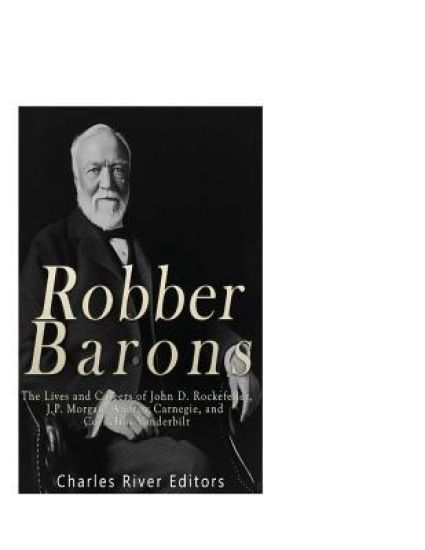
Robber Barons: The Lives and Careers of John D. Rockefeller, J.P. Morgan, Andrew Carnegie, and Cornelius Vanderbilt
*Includes pictures *Includes the business magnates' quotes about life and work *Includes online resources and a bibliography for further reading The Gilded Age and the dawn of the 20th century are often remembered as an era full of monopolies, trusts, and economic giants in heavy industries like oil and steel. Men like Andrew Carnegie built empires like Carnegie Steel, and financiers like J.P. Morgan merged and consolidated them. The era also made names like Astor, Cooke, and Vanderbilt instantly recognizable across the globe. Over time, the unfathomable wealth generated by the businesses made the individuals on top incredibly rich, and that in turn led to immense criticism and an infamous epithet used to rail against them: robber barons. Dozens of men were called "robber barons", but few of them were as notorious as Cornelius Vanderbilt, who also happened to be one of the nation's first business titans. Vanderbilt was a railroad and shipping magnate at a time that the industry was almost brand new, but he rode his success to become one of the richest and most powerful men in American history. When historians are asked to name the richest man in history, a name that often pops up is that of John D. Rockefeller, who co-founded Standard Oil and turned it into the first real trust in the United States. Rockefeller had been groomed ambitiously by a huckster father nicknamed "Devil Bill", who was just as willing to cheat his son as an unsuspecting public, and John certainly chased his dreams of living long and large. Rockefeller forged his empire in the first few decades of his life and nearly worked himself to death by the time he was 50, which helped compel him to retire for the last several decades of his life. At one point, Rockefeller's wealth was worth more than 1.5% of the entire country's gross domestic product, and by adjusting for inflation, he is arguably the richest man in American history if not world history. When robber barons across America took the reins of vast industries, they needed financing, and many of them turned to the most famous banker of all: John Pierpont Morgan. It was J.P. Morgan who bankrolled the consolidation of behemoth corporations across various industries, including the merging of Edison General Electric and Thomson-Houston Electric Company, which subsequently became General Electric, still known simply as GE across the world today. Similarly, he financed Federal Steel Company and consolidated various other steel businesses to help form the United States Steel Corporation. While critics complained about the outsized influence that these gigantic businesses had, Morgan's massive wealth also gave him unprecedented power in the financial sector and the ability to deal with politicians. In fact, Morgan played an important part in the Panic of 1907 and the subsequent decision to create the Federal Reserve as a monetary oversight. Ironically, one of America's most famous robber barons, Andrew Carnegie, epitomized the American Dream, migrating with his poor family to America in the mid-19th century and rising to the top of the business world in his adopted country. A prodigious writer in addition to his keen sense of business, Carnegie was one of the most outspoken champions of capitalism at a time when there was pushback among lower social classes who witnessed the great disparities in wealth; as he once put it, "Upon the sacredness of property civilization itself depends-the right of the laborer to his hundred dollars in the savings bank, and equally the legal right of the millionaire to his millions." In a similar vein, he said, "Those who would administer wisely must, indeed, be wise, for one of the serious obstacles to the improvement of our race is indiscriminate charity."
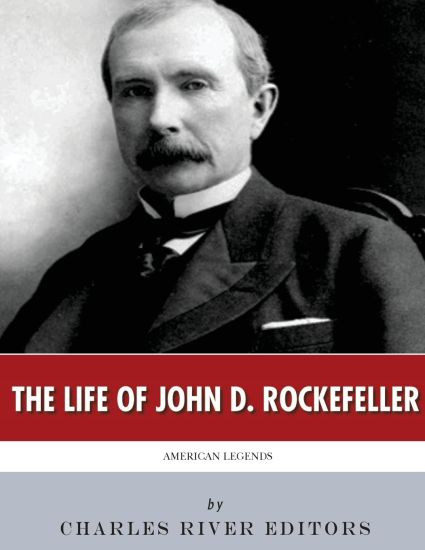
American Legends: The Life of John D. Rockefeller

American Legends: The Life of John D. Rockefeller

Charles River

Createspace Independent Publishing Platform
2018
nidottu
*Includes pictures *Includes Rockefeller's own quotes about his life and career *Includes a bibliography for further reading "I believe it is a religious duty to get all the money you can, fairly and honestly; to keep all you can, and to give away all you can." - John D. Rockefeller, 1928 The Gilded Age and the dawn of the 20th century are often remembered as an era full of monopolies, trusts, and economic giants in heavy industries like oil and steel. Men like Andrew Carnegie built empires like Carnegie Steel, and financiers like J.P. Morgan merged and consolidated them. The era also made names like Astor, Cooke, and Vanderbilt instantly recognizable across the globe. Over time, the unfathomable wealth generated by the businesses made the individuals on top incredibly rich, and that in turn led to immense criticism and an infamous epithet used to rail against them: robber barons. Dozens of men were called "robber barons", but none were as notorious or rich as John D. Rockefeller, who co-founded Standard Oil and turned it into the first real trust in the United States. Rockefeller had been groomed ambitiously by a huckster father nicknamed "Devil Bill", who was just as willing to cheat his son as an unsuspecting public, and John certainly chased his dreams of living long and large. Rockefeller forged his empire in the first few decades of his life and nearly worked himself to death by the time he was 50, which helped compel him to retire for the last several decades of his life. At one point, Rockefeller's wealth was worth more than 1.5% of the entire country's gross domestic product, and by adjusting for inflation, he is arguably the richest man in American history if not world history. Rockefeller was often demonized for being greedy, and there's no question that he was a capitalist par excellence, if not an outright proponent of Social Darwinism. Rockefeller often asserted that growing a business "is merely a survival of the fittest," and he even bragged, "I have ways of making money that you know nothing of." To charges that he was making his riches off the backbreaking work of others, Rockefeller admitted, "I would rather earn 1% off 100 people's efforts than 100% of my own efforts." The industrial might wielded by men like Rockefeller directly led to a public backlash and made President Teddy Roosevelt the "trust buster", and there has since been countless regulations to attempt to avoid the types of monopolies found over 100 years ago. However, many 20th century historians and writers pushed back against the allegations hurled at the "robber barons" and even took issue with the name. Libertarian writer John Stossel argued, "They weren't robbers, because they didn't steal from anyone, and they weren't barons-they were born poor...Rockefeller got rich selling oil. First competitors and then the government called him a monopolist, but he wasn't. At the time he had well over a hundred competitors. No one was forced to buy his oil. Rockefeller enticed people to buy it by selling it for less. That's what his competitors hated. His finding cheaper ways to get oil from the ground to the gas pump made life better for millions. Working-class people, who used to go to bed when it got dark, could suddenly afford fuel for lanterns, so they could stay up and read at night. Rockefeller's greed might have even saved the whales, because when he lowered the price of kerosene and gasoline, he eliminated the need for whale oil. The mass slaughter of whales suddenly stopped." American Legends: The Life of John D. Rockefeller looks at the life and career of one of America's most famous industrialists and the leader of Standard Oil. Along with pictures of important people, places, and events, you will learn about Rockefeller like never before, in no time at all.
Orpah; a Religious and Historical Novel With the Principal Scenes in Missouri, Immediately Preceeding, During and Following the Great Civil War. By Richard H. Tatlow and John D. Crisp
This work has been selected by scholars as being culturally important, and is part of the knowledge base of civilization as we know it. This work was reproduced from the original artifact, and remains as true to the original work as possible. Therefore, you will see the original copyright references, library stamps (as most of these works have been housed in our most important libraries around the world), and other notations in the work.This work is in the public domain in the United States of America, and possibly other nations. Within the United States, you may freely copy and distribute this work, as no entity (individual or corporate) has a copyright on the body of the work.As a reproduction of a historical artifact, this work may contain missing or blurred pages, poor pictures, errant marks, etc. Scholars believe, and we concur, that this work is important enough to be preserved, reproduced, and made generally available to the public. We appreciate your support of the preservation process, and thank you for being an important part of keeping this knowledge alive and relevant.
A Memorial of the Life and Services of John D. Philbrick
A Memorial of the Life and Services of John D. Philbrick is an unchanged, high-quality reprint of the original edition of 1887. Hansebooks is editor of the literature on different topic areas such as research and science, travel and expeditions, cooking and nutrition, medicine, and other genres. As a publisher we focus on the preservation of historical literature. Many works of historical writers and scientists are available today as antiques only. Hansebooks newly publishes these books and contributes to the preservation of literature which has become rare and historical knowledge for the future.
Logbook of the Mattapoisett (Bark) out of New Bedford, MA, mastered by John D. Silva and kept by Henry Bingham; Thomas G. Sloan, on a whaling voyage between 1879 and 1881
Reprint of the original, first published in 1879. The Antigonos publishing house specialises in the publication of reprints of historical books. We make sure that these works are made available to the public in good condition in order to preserve their cultural heritage.