
Kirjahaku
Etsi kirjoja tekijän nimen, kirjan nimen tai ISBN:n perusteella.
1000 tulosta hakusanalla JOHN MILTON
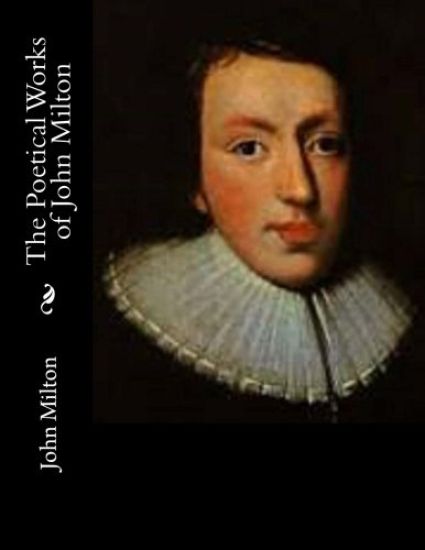
The Poetical Works of John Milton
John Milton
Createspace Independent Publishing Platform
2014
nidottu
The Complete Poems of John Milton: V4 Harvard Classics
John Milton
Literary Licensing, LLC
2014
nidottu
The Poetical Works of John Milton
John Milton
Createspace Independent Publishing Platform
2015
nidottu
The Poetical Works of John Milton
John Milton
Createspace Independent Publishing Platform
2015
nidottu
The Poetical Works of John Milton
John Milton
Createspace Independent Publishing Platform
2016
nidottu
Paradise Regained, is a poem by English poet John Milton (poetry): John Milton (9 December 1608 - 8 November 1674) was an English poet, polemicist, an
John Milton
Createspace Independent Publishing Platform
2016
nidottu
Paradise Regained is a poem by English poet John Milton, first published in 1671 by John Macock. The volume in which it appeared also contained the poet's closet drama Samson Agonistes. Paradise Regained is connected by name to his earlier and more famous epic poem Paradise Lost, with which it shares similar theological themes; indeed, its title, its use of blank verse, and its progression through Christian history recall the earlier work. However, this effort deals primarily with the temptation of Christ as recounted in the Gospel of Luke.An interesting anecdote recounted by a Quaker named Thomas Ellwood provides some insight into Paradise Regained's development. After studying Latin with Milton and reading the poet's epic Paradise Lost, Ellwood remarked, "Thou hast said much here of Paradise lost, but what hast thou to say of Paradise found?" Hearing this, Milton at first "sat some time in a muse" before changing the subject; however, later on he showed to Ellwood a new manuscript entitled Paradise Regained. Some maintain that although he seemed to express gratitude to Ellwood in a letter, Milton in truth "passed on a friendly if impish fabrication" that made Ellwood feel like the inspiration for the poem. Milton composed Paradise Regained at his cottage in Chalfont St Giles in Buckinghamshire. The poem is four books long, in contrast with Paradise Lost's twelve. As such, Barbara K. Lewalski has labelled the work a "brief epic."Whereas Paradise Lost is ornate in style and decorative in its verse, Paradise Regained is carried out in a fairly plain style. Specifically, Milton reduces his use of simile and deploys a simpler syntax in Paradise Regained than he does in Paradise Lost, and this is consistent with Jesus's sublime plainness in his life and teachings (in the epic, he prefers Hebrew psalms to Greek poetry). Modern editors believe the stylistics of Paradise Regained evince Milton's poetic maturity. No longer is the poet out to dazzle his readers with bombastic verse and lengthy epic similes. This is not to say that the poem bears no affinities with Milton's earlier work, but scholars continue to agree with Northrop Frye's suggestion that Paradise Regained is "practically sui generis" in its poetic execution............ John Milton (9 December 1608 - 8 November 1674) was an English poet, polemicist, and man of letters, and a civil servant for the Commonwealth of England under Oliver Cromwell. He wrote at a time of religious flux and political upheaval, and is best known for his epic poem Paradise Lost (1667), written in blank verse. Milton's poetry and prose reflect deep personal convictions, a passion for freedom and self-determination, and the urgent issues and political turbulence of his day. Writing in English, Latin, Greek, and Italian, he achieved international renown within his lifetime, and his celebrated Areopagitica (1644)-written in condemnation of pre-publication censorship-is among history's most influential and impassioned defences of free speech and freedom of the press. William Hayley's 1796 biography called him the "greatest English author", and he remains generally regarded "as one of the preeminent writers in the English language", though critical reception has oscillated in the centuries since his death (often on account of his republicanism). Samuel Johnson praised Paradise Lost as "a poem which...with respect to design may claim the first place, and with respect to performance, the second, among the productions of the human mind", though he (a Tory and recipient of royal patronage) described Milton's politics as those of an "acrimonious and surly republican"....
Paradise Lost is an epic poem in blank verse by the 17th-century English poet John Milton. It was originally published in 1667 in ten books; a second edition followed in 1674, redivided into twelve books (in the manner of the division of Virgil's Aeneid) with minor revisions throughout and a note on the versification. The poem concerns the Judeo-Christian story of the Fall of Man; the temptation of Adam and Eve by the fallen angel Satan and their expulsion from the Garden of Eden. Milton's purpose, stated in Book I, is "justify the ways of God to men" and elucidate the conflict between God's eternal foresight and free will.
John Milton poet, polemicist, public servant, and author of one of the greatest masterpieces in English literature, Paradise Lost is revered today as a great writer and a proponent of free speech. In his time, however, his ideas far exceeded the orthodoxy of English life; spurred by his conscience and an iron grip on logic, Milton was uncompromising in his beliefs at a time of great religious and political flux in England.In John Milton, David Hawkes expertly interweaves details from Milton's public and private life, providing new insight into the man and his prophetic stance on politics and the social order. By including a broad range of Milton's iconoclastic views on issues as diverse as politics, economics, and sex, Hawkes suggests that Milton's approach to market capitalism, political violence, and religious terrorism continues to be applicable even in the twenty-first century.This insightful biography closely examines Milton's participation in the English civil war and his startlingly modern ideas about capitalism, love, and marriage, reminding us that human liberty and autonomy should never be taken for granted.
Paradise Regained by John Milton, Poetry, Classics, Literary Collections
John Milton
Aegypan
2007
pokkari
Paradise Regained, By: John Milton: Epic poem, religious
John Milton
Createspace Independent Publishing Platform
2018
nidottu
John Milton (9 December 1608 - 8 November 1674) was an English poet, polemicist, man of letters, and civil servant for the Commonwealth of England under Oliver Cromwell. He wrote at a time of religious flux and political upheaval, and is best known for his epic poem Paradise Lost (1667), written in blank verse............. Paradise Regained is a poem by English poet John Milton, first published in 1671 by John Milton. The volume in which it appeared also contained the poet's closet drama Samson Agonistes. Paradise Regained is connected by name to his earlier and more famous epic poem Paradise Lost, with which it shares similar theological themes; indeed, its title, its use of blank verse, and its progression through Christian history recall the earlier work. However, this effort deals primarily with the temptation of Christ as recounted in the Gospel of Luke. An interesting anecdote recounted by a Quaker named Thomas Ellwood provides some insight into Paradise Regained's development. After studying Latin with Milton and reading the poet's epic Paradise Lost, Ellwood remarked, "Thou hast said much here of Paradise lost, but what hast thou to say of Paradise found?" Hearing this, Milton at first "sat some time in a muse" before changing the subject; however, sometime thereafter he showed to Ellwood a new manuscript entitled Paradise Regained. Some maintain that although he seemed to express gratitude to Ellwood in a letter, Milton in truth "passed on a friendly if impish fabrication" that made Ellwood feel like the inspiration for the poem. Milton composed Paradise Regained at his cottage in Chalfont St Giles in Buckinghamshire. The poem is four books long, in contrast with Paradise Lost's twelve; 2,065 lines long, while Paradise Lost comprises 10,565. As such, Barbara K. Lewalski has labelled the work a "brief epic." Whereas Paradise Lost is ornate in style and decorative in its verse, Paradise Regained is carried out in a fairly plain style. Specifically, Milton reduces his use of simile and deploys a simpler syntax in Paradise Regained than he does in Paradise Lost, and this is consistent with Jesus's sublime plainness in his life and teachings (in the epic, he prefers Hebrew psalms to Greek poetry). Modern editors believe the stylistics of Paradise Regained evince Milton's poetic maturity. No longer is the poet out to dazzle his readers with bombastic verse and lengthy epic similes. This is not to say that the poem bears no affinities with Milton's earlier work, but scholars continue to agree with Northrop Frye's suggestion that Paradise Regained is "practically sui generis" in its poetic execution. Frontispiece of Paradise Regained, circa 1671. One major concept emphasized throughout Paradise Regained is the idea of reversals. As implied by its title, Milton sets out to reverse the "loss" of Paradise. Thus, antonyms are often found next to each other, reinforcing the idea that everything that was lost in the first epic will be regained by the end of this "brief epic". Additionally, the work focuses on the idea of "hunger", both in a literal and in a spiritual sense. After wandering in the wilderness for forty days, Jesus is starving for food. Satan, too blind to see any non-literal meanings of the term, offers Christ food and various other temptations, but Jesus continually denies him. Although Milton's Jesus is remarkably human, an exclusive focus on this dimension of his character obscures the divine stakes of Jesus's confrontation with Satan; Jesus emerges victorious, and Satan falls, amazed....
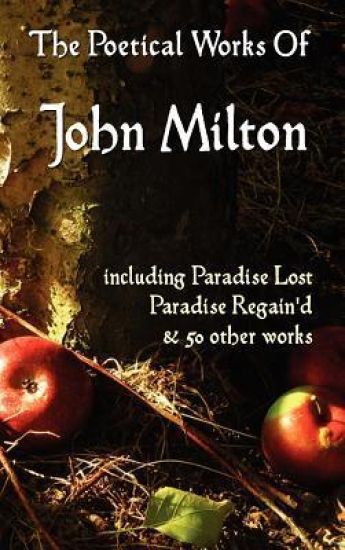
Paradise Lost, Paradise Regained, and Other Poems. The Poetical Works Of John Milton
John Milton
BENEDICTION CLASSICS
2012
sidottu
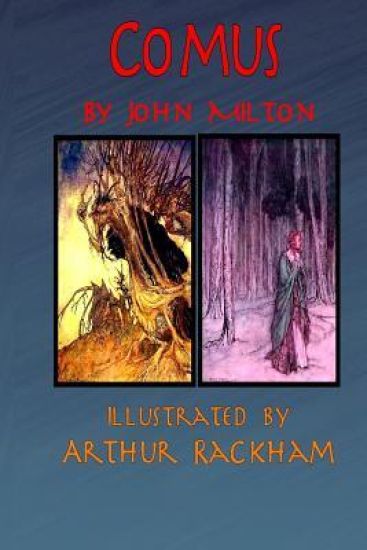
Comus is a masque, written by John Milton and first performed in 1634. The plot concerns two brothers and their sister, simply called "the Lady", lost in a journey through the woods. The Lady becomes fatigued, and the brothers wander off in search of sustenance. While alone, she encounters the debauched Comus, a character inspired by the god of revelry, who is disguised as a villager and who claims he will lead her to her brothers. Deceived by his amiable countenance, the Lady follows him, only to be captured, brought to his palace and victimized by his necromancy.This edition contains the illustrations by Arthur Rackham, which include 24 beautiful, full color paintings vibrantly reproduced, as well as all the smaller, black and white drawings.
Paradise Lost (1674) by: John Milton ( epic poem )
John Milton
Createspace Independent Publishing Platform
2017
nidottu
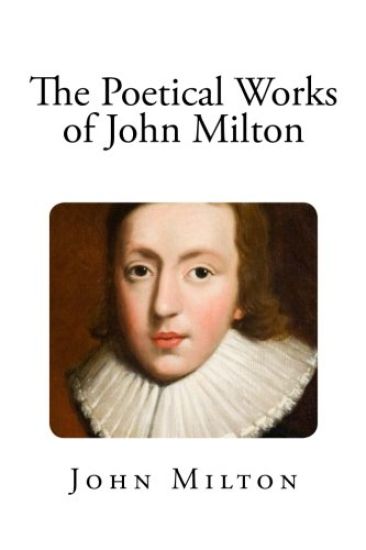
The Poetical Works of John Milton
John Milton
Createspace Independent Publishing Platform
2017
nidottu