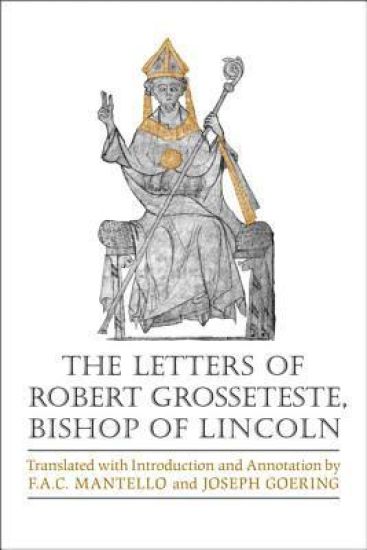
Robert Grosseteste (c.1170-1253) was an English statesman, philosopher, theologian, and bishop of Lincoln, and also one of the most controversial figures in his country's episcopate. His long life coincided with the central period of institutional, intellectual, and religious consolidation in medieval Europe and his letters provide important insights into the practices and preoccupations of the English clergy and laity in the first half of the thirteenth century. This volume contains the first complete translation of Grosseteste's collected Latin letters and shows that these were most likely chosen and arranged by Grosseteste himself. Shedding light on some of the period's crucial debates on issues of theology, law, pastoral care, and episcopal authority, Frank Mantello and Joseph Goering's richly annotated English translation makes his letters more accessible than ever for scholars and students, and for those interested in medieval history, religion, and culture.
After graduation from the Naval Academy in 1932, Wylie served in the heavy cruiser USS Augusta (CA-31) under Captain Chester Nimitz. He had duty in the Naval Academy’s executive department and was in the commissioning crews of three destroyers: USS Reid (DD-369), USS Bristol (DD-453), and USS Fletcher (DD-445). The latter was in the famous 12-13 November night surface action off Guadalcanal. Later in the war he commanded the destroyer minesweeper USS Trever (DMS-16) and the destroyer USS Ault (DD-698). His personal letters in the appendices give further details on his wartime destroyer experiences. Other tours of duty described in the volume include the Office of Naval Research, the Naval War College as student and staff member, and the Destroyer Flotilla One staff. He commanded the attack cargo ship USS Arneb (AKA-56) and heavy cruiser USS Macon (CA-132) and was Commander Cruiser-Destroyer Flotilla Nine. Later staff duty was with Commander Amphibious Group Two, in OpNav, and for Supreme Allied Commander Atlantic and Commander in Chief Atlantic Fleet. Before retiring in 1972, he rounded out his career as Deputy Commander in Chief U.S. Naval Forces Europe and, finally, as Commandant of the First Naval District. Admiral Wylie was a delightful storyteller and an officer with a broad view of naval operations.
After graduation from the Naval Academy in 1932, Wylie served in the heavy cruiser USS Augusta (CA-31) under Captain Chester Nimitz. He had duty in the Naval Academy’s executive department and was in the commissioning crews of three destroyers: USS Reid (DD-369), USS Bristol (DD-453), and USS Fletcher (DD-445). The latter was in the famous 12-13 November night surface action off Guadalcanal. Later in the war he commanded the destroyer minesweeper USS Trever (DMS-16) and the destroyer USS Ault (DD-698). His personal letters in the appendices give further details on his wartime destroyer experiences. Other tours of duty described in the volume include the Office of Naval Research, the Naval War College as student and staff member, and the Destroyer Flotilla One staff. He commanded the attack cargo ship USS Arneb (AKA-56) and heavy cruiser USS Macon (CA-132) and was Commander Cruiser-Destroyer Flotilla Nine. Later staff duty was with Commander Amphibious Group Two, in OpNav, and for Supreme Allied Commander Atlantic and Commander in Chief Atlantic Fleet. Before retiring in 1972, he rounded out his career as Deputy Commander in Chief U.S. Naval Forces Europe and, finally, as Commandant of the First Naval District. Admiral Wylie was a delightful storyteller and an officer with a broad view of naval operations.
Darstellung der Rolle des US-Botschafters in Tokyo, Joseph C. Grew, wahrend der entscheidenden Phase in den Verhandlungen zwischen Japan und den USA von Herbst 1939 bis Pearl Harbor. Anhand der Person des Botschafters wird der Versuch unternommen, die Frage zu klaren, inwieweit ein Botschafter die Politik seines Landes direkt zu beeinflussen vermag, indem die von den damaligen aussenpolitischen Perzeptionen der US-Regierung abweichenden Vorstellungen Grews alternativ aufgezeigt werden; auf die Hintergunde der politischen Verhaltungsweisen beider Seiten wird ausfuhrlich eingegangen."
This book is an account of the striking parallelism between the symbolic significance of the Pantheon and the life and thought of Paul Chenavard. More broadly, it illuminates the relationship of every artist to his environment. Chenavard was the only painter to attempt a complete exemplification of the epic idea that is found in the writings of such men as Hugo, Ballanche, and Quinet.Originally published in 1962.A UNC Press Enduring Edition -- UNC Press Enduring Editions use the latest in digital technology to make available again books from our distinguished backlist that were previously out of print. These editions are published unaltered from the original, and are presented in affordable paperback formats, bringing readers both historical and cultural value.


![The Christ That Is to Be. a Latter-Day Romance. [By Joseph C. Rickett.]](/covers/9781241386238.jpg)