

Kirjahaku
Etsi kirjoja tekijän nimen, kirjan nimen tai ISBN:n perusteella.
1000 tulosta hakusanalla Jacob Knapp

Jacob Talmon: Combining histories and presents is not the biography of a historian. Rather, it is a discourse on a mind tormented by fear of the masses as well as the mistakes of the leadership. Talmon often applied his views on contemporary events and trends to his own actions as a humanist and historian. The changing role of the university, the decline of the liberal arts in favour of technology and the social sciences and the displacement of humanism by the market economy were of particular concern. His brilliant and paradoxically prophetic interactions with Arnold Toynbee, David Ben-Gurion, and Menahem Begin have been vindicated by the very history he sought to avoid. This new work in the English language makes Talmonic wisdom available for the first time to a much larger audience
Jacob Vernet (1698-1789) was the most important and influential Genevan pastor of his day, successively holding the posts of Professor of Belles-Lettres (1739) and of Theology (1756) at the city’s Académie. A ‘liberal’ theologian, he had personal contacts with several of the leading philosophes, all of which turned sour after a time. This book describes Vernet’s contacts with Montesquieu, d’Alembert, Voltaire and Rousseau. It also investigates a charge made repeatedly by his enemies, namely that he was a hypocrite who disguised his real beliefs. Vernet’s religious and philosophical opinions are thus reviewed as expressed in his major works, Traité de la vérite de la religion chrétienne, Instruction chrétienne and Lettres critiques d’un voyageur anglais. The connection between Vernet’s ideas and the social and political situation in his native Geneva is also studied in depth. The pastor’s relations with Montesquieu have often been seen as a cause for congratulation, for he edited the first edition of De l’Esprit des lois, but a close reading of Montesquieu’s correspondence shows that this episode was far from being an unqualified success. Similarly, Vernet’s contacts with Rousseau give pause for thought: the relevant evidence that he was on occasion somewhat devious in his dealings with the great author is reviewed comprehensively. Particular attention is given to Vernet’s relations with Voltaire. In 1760 the pastor was vilified in the second of the Dialogues chrétiens, accused of greed and dishonesty. But did Voltaire actually write the second Dialogue? If not, who did? These intriguing questions are discussed in detail, special attention being given to Vernet’s own essays of self-justification, the Lettre à Monsieur le Premier Sindic(1760) and Mémoire à Mr. le Premier Sindic (1766, both of which are reproduced in appendices. Jacob Vernet’s long life and many works give a fascinating insight into the problems and inconsistencies of liberal Protestantism during the various stages of the Enlightenment.
This is a jointly-authored film treatment, found in one of Huxley's old trunks. The story is set in the 1920s and involves a ranch worker who has the power to heal with his hands.

Jacob Frank is the second and last major exponent of apostate messianism, the concept that lead to the Sabbatain heresy. His picaresque life is recounted by Alexandr Kraushar. The editor's 'A Note for the General Reader' and his annotations to Kraushar's text explore the sources, and the reasons for the disappearance, of the Sabbatain heresy. These observations are reflected against aspects of early 20th Century European history. Also explored are affinities to the tenets of Sabbatian theology found in lines of T.S.Eliot's Four Quartets and in the role of the Old Bolsheviks in Stalin's Purge Trials.

When Jacob wakes up in the middle of a field, he realizes that the only thing he remembers is his name, and when he arrives at a nearby town he becomes aware that everyone there is also suffering from amnesia.
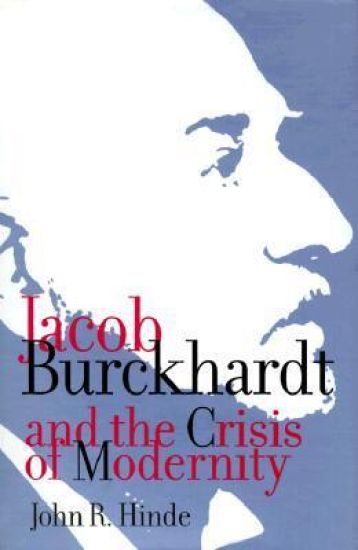
Jacob Burckhardt and the Crisis of Modernity
John R. Hinde
McGill-Queen's University Press
2000
sidottu
As a historian of the Renaissance and the rise of Christianity, Burckhardt was concerned with periods of social, political, and cultural transformation. Writing in the aftermath of the 1848 Revolutions and in the long shadow cast by the French Revolution of 1789, he observed the rise of industrial capitalism and mass politics with trepidation. He especially lamented the fate of the individual, whose creativity had shaped the glories of the Renaissance and ancient Greece but who was increasingly domesticated and commodified in modern society. Unlike conventional accounts, which characterize him as an apolitical aesthete, Hinde shows us that Burckhardt was as a thinker of profound importance whose conservative anti-modernism ranks him with his colleague Friedrich Nietzsche.
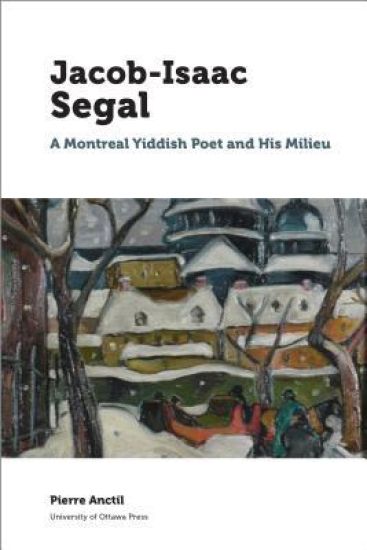
Born in the Ukraine in 1896, and settling in Montreal in 1910, Segal became one of the first Yiddish writers in Canada. His poetry, infused with lyricism and mysticism, along with the numerous essays and articles he penned, embodied both a rich literary tradition and the modernism of his day. Pierre Anctil has written so much more than a biography. For the first time, Segal's poetic production is referenced, translated and rigorously analyzed, and includes over 100 pages of appendices, shedding light on the artistic, spiritual, cultural and historical importance of his oeuvre. By introducing the reader to the poet's work through previously unpublished translations, Anctil demonstrates that in many respects it reflects the history of the Jewish immigrants who arrived in North America from Russia, the Ukraine and Poland at the beginning of the 20th century, as well as the tragic experiences of Jewish intellectual refugees of the interwar period. This admirably written, sweeping yet subtle, work will appeal both to scholars and to a broader audience. The original French version was awarded the prestigious 2014 Canada Prize in the Humanities by the Canadian Federation for the Humanities and Social Sciences.

Jacob Ebersoll, the Immigrant of 1763, and his Descendants
Robert A Heilman
Heritage Books
2009
pokkari
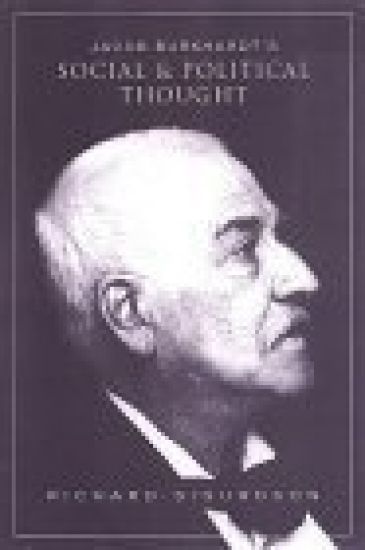
Jacob Burckhardt's Social and Political Thought
Richard Sigurdson
University of Toronto Press
2004
sidottu
Contrary to his usual portrayal as a disinterested aesthete, Swiss cultural historian Jacob Burckhardt is characterised as an original social and political thinker in Richard Sigurdson's timely book Jacob Burckhardt's Social and Political Thought. Burckhardt's thinking on a number of ideas - including the relationship between the individual and the mass, the tension between the ideals of equality and human excellence, and the role of the intellectual in the modern state - is the subject of insightful analysis, thus providing a rare investigation into Burckhardt's culture-critique of the nineteenth century. Other important aspects of Burckhardt's life that undoubtedly influenced both his historical and political thought, such as his ambiguous relationship with Friedrich Nietzsche, are carefully scrutinised in this groundbreaking analysis of the Swiss historian. Known primarily as an historian, Burckhardt's historical writings provide not only a powerful critique of his own times, but also a broad ranging political philosophy that can be placed within the larger German tradition of evaluating politics according to the values and standards of art and culture. Although Burckhardt himself expressed his scepticism towards general theories and claimed to be devoid of a personal philosophical position, through an examination of his works Sigurdson argues that both implicit and explicit political reflections and theories are recognisable.
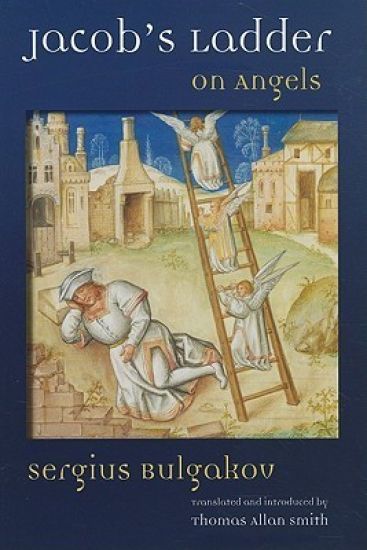
Few of Sergius Bulgakov's professional writings achieve the lyrical heights of Jacob's Ladder. In it he discusses the doctrine of angels and their importance for contemporary humanity. He includes reflections on the meaning of love, the sexes, death, and the Christian hope of resurrection, meditating on the Wisdom of God in the creation. This work completes the word picture of divinized and Sophianic creation begun in The Burning Bush and The Friend of the Bridegroom, which together constitute what scholars call Bulgakov's -major, - or first, trilogy.
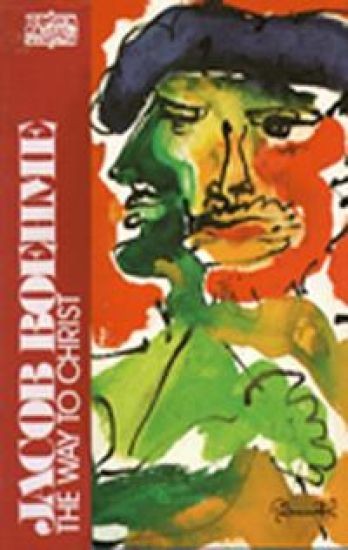
Jacob Boehme
Paulist Press International,U.S.
1977
nidottu
"Precisely the dimension of our heritage that most needs to be recovered...I cannot imagine a more timely publishing venture." Huston Smith Thomas J. Watson Professor Religion & Adjunct Professor of Philosophy Syracuse University Jacob Boehme: The Way to Christ translation, introduction and notes by Peter Erb, preface by Winifred Zeller "For the source in light and the source in darkness is but a single source. Nevertheless they are one nature just as fire and light are one nature." Jacob Boehme, 1575-1624 Evelyn Underhill called the German Lutheran Mystic Jacob Boehme "one of the most astonishing cases in history of a natural genius for the transcendent," Nicolas Beryaev described Boehme as "Beyond a doubt...one of the greatest of Christian gnostics. I am using the word not in the sense of heresies...but to indicate a wisdom grounded in revelation and employing myths and symbols rather than concepts-a wisdom much more contemplative than discursive." Boehme was the son of a farmer who lived the first part of his life as a shepherd and later became a shoemaker. He claimed that his writings reflect only what he was taught through the direct experience of God. A truly giant figure in the spiritual tradition, he has greatly influenced Angelus Silesius, William Blake, John Milton, Isaac Newton, William Law and many others. As the editor of this volume, Peter Erb, says, "The Way to Christ provides the best introduction to his thought and spirituality. A collection of nine separate treatises, its parts were written late in his career and reflect his final theological position, a position established not aside from his earlier work, but on it...The book was intended to serve as a meditation guide. Boehme believed that his writing had come from the Spirit. It was intended to direct his fellow-believers back to the Spirit as he had been directed." †

Busy city! Beep, beep, beep! Jacob Lawrence's exuberant artwork guides readers through a bustling city, complete with builders rat-a-tatting and children playing in the streets. With rhythmic text and 11 iconic paintings, this book is both an introduction to an influential artist and a celebration of city life.
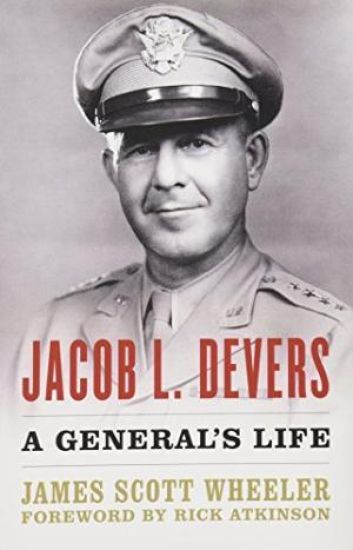
General Jacob L. "Jake" Devers (1897--1979) was one of only two officers -- the other was Omar C. Bradley -- to command an army group during the decisive campaigns of 1944--1945 that liberated Europe and ended the war with Nazi Germany. After the war, Devers led the Army Ground Forces in the United States and eventually retired in 1949 after forty years of service. Despite incredible successes on the battlefield, General George C. Marshall's "dependable man" remains one of the most underrated and overlooked figures of his generation.In this definitive biography, James Scott Wheeler delivers a groundbreaking reassessment of the American commander whose contributions to victory in Europe are topped only by General Dwight D. Eisenhower's. Wheeler's exhaustively researched chronicle of Devers's life and career reveals a leader who demonstrated an extraordinary ability to cut through red tape and solve complex problems. Nevertheless, Eisenhower disliked Devers -- a fact laid bare when he ordered Devers's Sixth Army Group to halt at the Rhine. After the war, Eisenhower's and Bradley's accounts of the generals' disagreements over strategy and tactics became received wisdom, to the detriment of Devers's reputation.An essential contribution to twentieth-century history, Jacob L. Devers provides a fresh and nuanced interpretation of the senior command during World War II and offers a new perspective on a highly accomplished soldier.
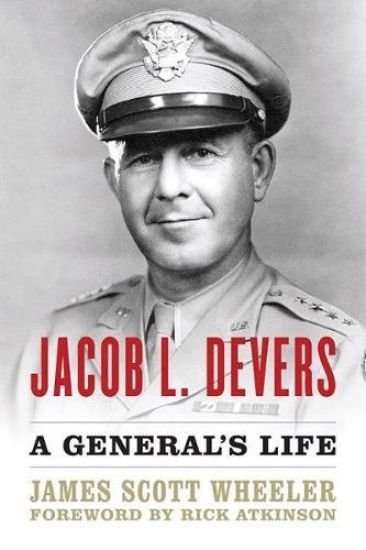
General Jacob L. "Jake" Devers (1897--1979) was one of only two officers -- the other was Omar C. Bradley -- to command an army group during the decisive campaigns of 1944--1945 that liberated Europe and ended the war with Nazi Germany. After the war, Devers led the Army Ground Forces in the United States and eventually retired in 1949 after forty years of service. Despite incredible successes on the battlefield, General George C. Marshall's "dependable man" remains one of the most underrated and overlooked figures of his generation.In this definitive biography, James Scott Wheeler delivers a groundbreaking reassessment of the American commander whose contributions to victory in Europe are topped only by General Dwight D. Eisenhower's. Wheeler's exhaustively researched chronicle of Devers's life and career reveals a leader who demonstrated an extraordinary ability to cut through red tape and solve complex problems. Nevertheless, Eisenhower disliked Devers -- a fact laid bare when he ordered Devers's Sixth Army Group to halt at the Rhine. After the war, Eisenhower's and Bradley's accounts of the generals' disagreements over strategy and tactics became received wisdom, to the detriment of Devers's reputation.An essential contribution to twentieth-century history, Jacob L. Devers provides a fresh and nuanced interpretation of the senior command during World War II and offers a new perspective on a highly accomplished soldier.
Jacob French, a student of William Billings, was one of the most talented postrevolutionary composers of Protestant sacred music in New England. He compiled most of his music in three printed tunebooks, comprising choral pieces of great rhythmic and contrapuntal variety. He felt many excellently crafted, expressive compositions that should find interest among today's choral directors and singers.