These stories, written over the past 13 or so years, after Jim Huston retired from the practice of law, deal with a variety of subjects, characters, and life issues. They represent and contain the author's "FURTHER THOUGHTS" about the human condition.
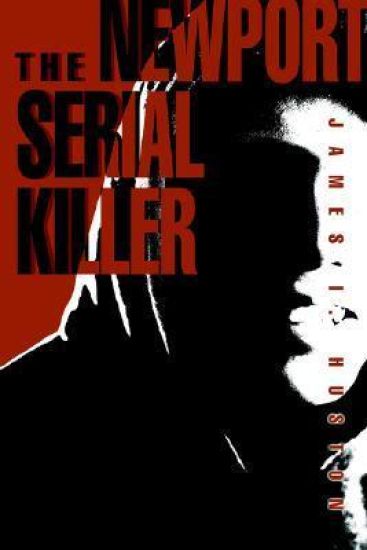
"The Newport Serial Killer" relates the tale of a grisly series of murders which take place in Newport, Rhode Island. There are no clues as Police Lieutenant Clayhill and his partner, Sergeant Souza, struggle to discover and apprehend the brutal murderer of three young women, each murder taking place on a national holiday. Many leads and many interrogations lead nowhere until finally a confession is received. The confessed killer, Lloyd Krubick, is quickly tried, convicted and sentenced to a life term in prison, where in a short time he is killed by other prisoners. While all is now calm in Newport, murders start happening in Miami, Florida, which are hauntingly similar to those in Newport. Could this be a copycat killer? Or was Krubick's confession false and has the real Newport killer moved south? Clayhill and Souza go to Miami to solve the mystery.
This is the personal workbook to accompany "Fit for His Service, Spirit, Soul and Body". It is designed to deepen the reader's experience to the level of practical application for each chapter.
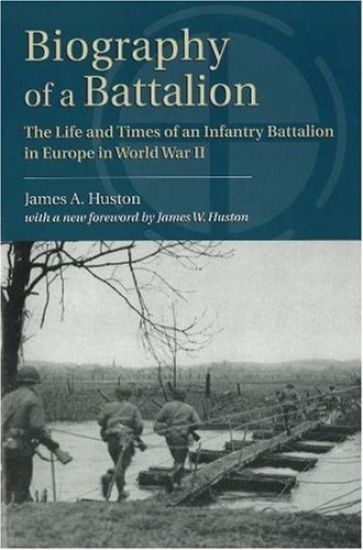
During World War II, James A Huston served as an operations officer in the 3rd Battalion, 134th Infantry, a unit that helped to liberate or capture dozens of cities across France, Belgium, and Germany. From July 1944 through April 1945, the regiment captured 8,974 prisoners of war and covered over 1,500 combat miles, but lost 10,046 men in the process. "Biography of a Battalion" recreates the action and provides an account of the war from one soldier who lived through it.
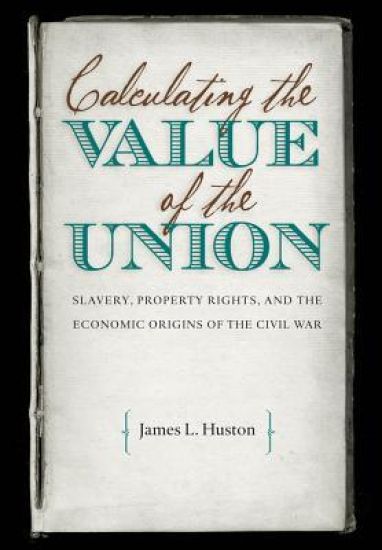
While slavery is often at the heart of debates over the causes of the Civil War, historians are not agreed on precisely what aspect of slavery - with its various social, economic, political, cultural, and moral ramifications - gave rise to the sectional rift. In Calculating the Value of the Union, James Huston integrates economic, social, and political history to argue that the issue of property rights as it pertained to slavery was at the center of the Civil War.In the early years of the nineteenth century, southern slaveholders sought a national definition of property rights that would recognize and protect their ownership of slaves. Northern interests, on the other hand, opposed any national interpretation of property rights because of the threat slavery posed to the northern free labor market, particularly if allowed to spread to western territories. This impasse sparked a process of political realignment that culminated in the creation of the Republican Party, ultimately leading to the secession crisis.Deeply researched and carefully written, this study rebuts recent trends in antebellum historiography and persuasively argues for a fundamentally economic interpretation of the slavery issue and the coming of the Civil War.
International security is an ambiguous concept – it has many meanings to many people. Without an idea of how the world works, or how security is defined and achieved, it is impossible to create effective policies to provide security. This textbook clarifies the concept of security, the debates around it, how it is defined, and how it is pursued. Tracking scholarly approaches within security studies against empirical developments in international affairs, historical and contemporary security issues are examined through various theoretical and conceptual models. Chapters cover a wide range of topics, including war and warfare, political violence and terrorism, cyber security, environmental security, energy security, economic security, and global public health. Students are supported by illustrative vignettes, bolded key terms and an end-of-book glossary, maps, box features, discussion questions, and further reading suggestions, and instructors have access to adaptable lecture slides.

![The Tommiad, a Biographical Fancy, Written about the Year 1842. [In Verse. by G. J. Finch Hatton, Earl of Winchilsea and Nottingham.]](/covers/9781241066161.jpg)





![Voices Through Many Years. [In Verse. with Photographs.] Ms. Notes [By the Author].](/covers/9781241044299.jpg)
![Voices Through Many Years. [In Verse. with Photographs.] Ms. Notes [By the Author].](/covers/9781241044862.jpg)