
Kirjahaku
Etsi kirjoja tekijän nimen, kirjan nimen tai ISBN:n perusteella.
1000 tulosta hakusanalla James Strachan

James and the Giant Peach by Roald Dahl in magnificent full colour."Bigger and bigger grew the peach, bigger and bigger and BIGGER."James Henry Trotter is about to go on the adventure of a lifetime.James lives his awful Aunt Sponge and Aunt Spiker, two of the meanest people you can imagine.Life isn't much fun at all, until something peculiar happens at the bottom of his garden . . .A peach at the very top of a tree begins to grow . . . and grow . . . and GROW! Inside are seven very unusual insects - all waiting to take James on a magical journey.

Join James as he escapes from his horrible aunts and sets off inside the peach on his wonderful adventures. This dramatization of Roald Dahl's hugely popular book can be staged in school, acted out at home or simply read together by a group of friends. With suggestions for staging, props and lighting.Roald Dahl died in 1990 but his books continue to be worldwide bestsellers.Richard George was an American elementary school teacher when he adapted James and the Giant Peach as a school play. Roald Dahl loved it and wrote an introduction.

'First and foremost, he survived, and that was no mean achievement' James's reign marked one of the rare breaks in England's monarchy. Already James VI of Scotland, on Elizabeth I's death he became James I of England and Ireland, uniting the British Isles for the first time and founding the Stuart dynasty. Thomas Cogswell's dramatic new biography brings James to life as a complex, learned, curious man and, above all, a great survivor.
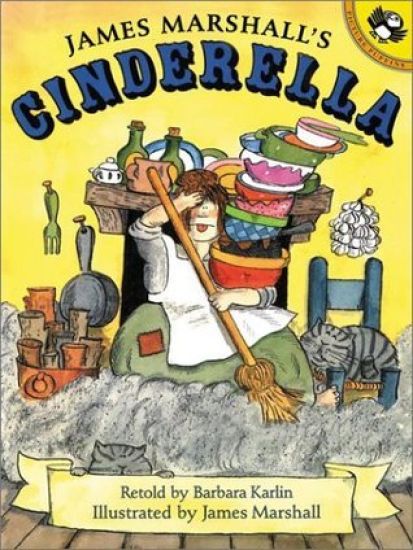
James Marshall's Cinderella
Puffin Books
2001
nidottu
James Marshall adds color and humor to the classic fairy tale with his beautiful illustrations. Retold by Barbara Karlin, Cinderella will be a favorite of all children. "Retold and illustrated with wit and humor, this is an excellent version of the favorite fairy tale."--School Library Journal (starred review) "This collaboration is whimsical and fresh and full of undeniable child appeal."--The Horn Book "Saccharine-free and filled with a robust, earthy humor, this rendition has a studied nonchalance laced with wit. . . . It] will take its rightful place on the fairy-tale shelves, but won't sit there for long "--Booklist (starred review)
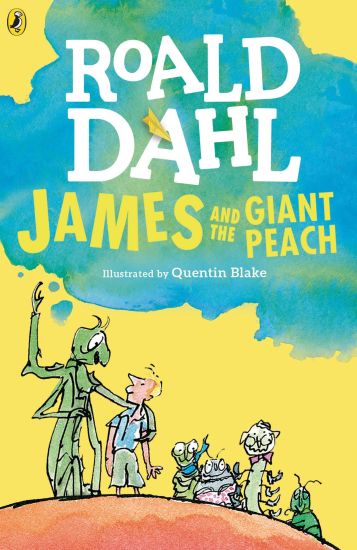
From the World's No. 1 Storyteller, James and the Giant Peach is a children's classic that has captured young reader's imaginations for generations. One of TIME MAGAZINE's 100 Best Fantasy Books of All Time After James Henry Trotter's parents are tragically eaten by a rhinoceros, he goes to live with his two horrible aunts, Spiker and Sponge. Life there is no fun, until James accidentally drops some magic crystals by the old peach tree and strange things start to happen. The peach at the top of the tree begins to grow, and before long it's as big as a house. Inside, James meets a bunch of oversized friends--Grasshopper, Centipede, Ladybug, and more. With a snip of the stem, the peach starts rolling away, and the great adventure begins Roald Dahl is the author of numerous classic children's stories including Charlie and the Chocolate Factory, Matilda, The BFG, and many more "James and the Giant Peach remains a favorite among kids and parents alike nearly 60 years after it was first published, thanks to its vivid imagery, vibrant characters and forthright exploration of mature themes like death and hope." --TIME Magazine
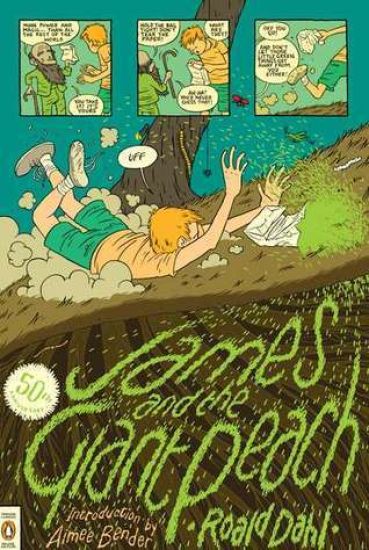
James and the Giant Peach (Penguin Classics Deluxe Edition)
Roald Dahl
Penguin Classics
2011
nidottu
An enormous escaped rhinoceros from London Zoo has eaten James's parents. And it gets worse! James is packed off to live with his two really horrible aunts, Sponge and Spiker. Poor James is miserable, until something peculiar happens and James finds himself on the most wonderful and extraordinary journey he could ever imagine... A new and delectable Deluxe edition of this wonderful classic.
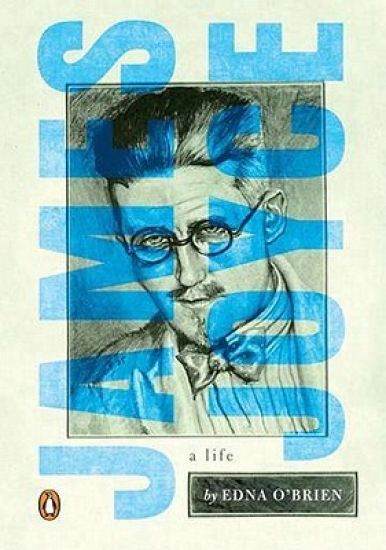
"Joyce fans should thank their lucky stars." -The New York Times Arguably the most influential writer of the twentieth century, James Joyce continues to inspire writers, readers, and thinkers today. Now Edna O'Brien, herself one of Ireland's great writers, approaches the master as only a fellow countryman can. From Joyce's adolescence through his travels abroad to the publication of Ulysses-the scandalous masterpiece that was initially banned in the U nited States but later hailed as one of the most brilliant novels of the twentieth century-O'Brien traces the arc of Joyce's remarkable life. Her biography is a tribute, at once affectionate and stern, from a contemporary writer to one of our most significant literary ancestors.
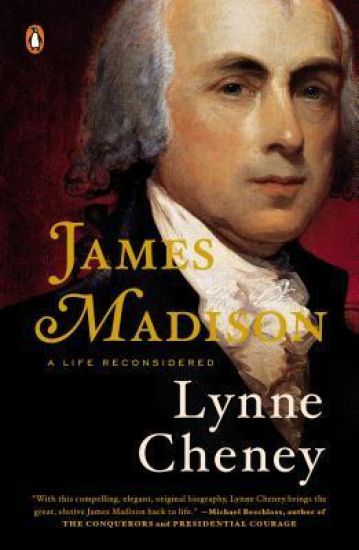
A major new biography of the fourth U.S. president, from New York Times bestselling author Lynne Cheney James Madison was a true genius of the early republic, the leader who did more than any other to create the nation we know today. This majestic new biography tells his story. Outwardly reserved, Madison was the intellectual driving force behind the Constitution. His visionary political philosophy eloquently presented in the Federalist Papers was a crucial factor behind the Constitution s ratification, and his political savvy was of major importance in getting the new government underway. As secretary of state under Thomas Jefferson, he managed the Louisiana Purchase, doubling the size of the United States. As president, Madison led the country in its first war under the Constitution, the War of 1812. Without precedent to guide him, he would demonstrate that a republic could defend its honor and independence while remaining true to its young constitution."
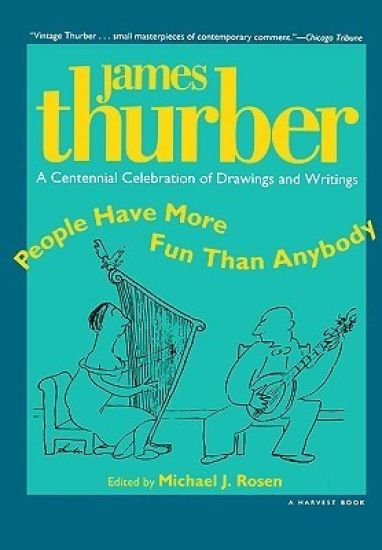
People Have More Fun Than Anybody: A Centennial Celebration of Drawings and Writings by James Thurber
James Thurber; Thurber
HARPER PERENNIAL
1995
nidottu
"Vintage Thurber. . . small masterpieces of contemporary comment." --Chicago Tribune"As funny, surprising, elegant, and subtly provocative as one would expect from that superb writer and draftsman." --Atlantic MonthlyThis delightful volume of previously uncollected work from beloved American humorist James Thurber includes nearly one hundred drawings and writings by the only cartoonist who could claim to draw "abstract things like despair, disillusion, despondency, sorrow, lapse of memory, exile." Edited and with an Introduction by Michael J. Rosen.

In August 1973, the large and growing television audience of the Soviet Union first laid eyes on what would become its quintessential if fictitious hero spy. He was nothing like the West's action man and sex icon James Bond who had risen to global fame in the 1960s. By contrast, Shtirlits made his first appearance as a handsome yet somewhat tired-looking, middle-aged man on a meditative stroll in wintry woods, to the score of a very slow piano rendition of the show's wistful signature theme. The Cold War East, the Soviet Union and its sphere of domination and influence in Eastern Europe, produced a rich array of home-made intelligence heroes who became vastly popular among television audiences in the 1960s and '70s. In this work, Tarik Cyril Amar recovers and analyzes a world of spy fiction entertainment, focusing on three blockbuster series in the former Soviet bloc: Seventeen Moments of Spring (USSR), Stakes Greater Than Life (Poland), and The Invisible Visor (East Germany). Not only did these shows feature secret agents as heroes, but they were also important to party-state authorities, including security and intelligence services, who were combatting Western subversion and deliberately polishing their own image behind the Iron Curtain. The series made reference to World War II, the Holocaust, and the Cold War, shaping public interpretations of historical events and inspiring a rising generation to join intelligence services, including Vladmir Putin. And they remained persistently popular, surviving the collapse of the authoritarian-socialist political regimes under which they had been produced. Based on exhaustive research of unpublished primary sources in archives in Berlin, Moscow, and Warsaw, James Bond's Socialist Rivals offers a more expansive vision of the phenomenon of the spy as popular-culture hero and of the complex nature of Cold War interactions across ideological divisions, geopolitical blocs, and national borders.

A close reading of James Baldwin's short story "Sonny's Blues" that provides insight into his life and ideas about art. Tom Jenks's reading of James Baldwin's "Sonny's Blues" follows a scene-by-scene, sometimes line-by-line, discussion of the pattern by which Baldwin indelibly writes "Sonny's Blues" into the consciousness of readers. It provides ongoing observations of the aesthetics underlying the particulars of the story, with references to Edward P. Jones (whose magnificent story "All Aunt Hagar's Children" bears a knowing relationship to "Sonny's Blues,") to Charlie Parker's music, and to Billie Holiday's "Am I Blue?" and John Coltrane's "A Love Supreme" as part of the musical progression Baldwin creates, and with attention to Baldwin's oratorical gifts and the biblical references in the story, to its time structure, characterizations, dramatic action, and, most of all, its totality of effect. Drawing on Baldwin's book-length essay The Fire Next Time, which Baldwin published six years after the publication of the short story, Tom Jenks offers insight on some of the sources in Baldwin's life for "Sonny's Blues" and on the logic and passion by which life may be meaningfully transformed into art.

James Joyce is one of the greatest writers in English. His first book, A Portrait of the Artist as A Young Man laid down the template for the Coming of Age novel, while his collection of short stories, Dubliners, is of perennial interest. His great modern epic, Ulysses, took the city of Dublin for its setting and all human life for its subject, and its publication in 1922 marked the beginning of the modern novel. Joyce's final work, Finnegans Wake is an endless experiment in narrative and language. But if Joyce is a great writer he is also the most difficult writer in English. Finnegans Wake is written in a freshly invented language, and Ulysses exhausts all the forms and styles of English. Even the apparently simple Dubliners has plots of endless complexity, while the structure of A Portrait of the Artist as A Young Man is exceptionally intricate. This Very Short Introduction explores the work of this most influential yet complex writer, and analyses how Joyce's difficulty grew out of his situation as an Irish writer unwilling to accept the traditions of his imperialist oppressor, and contemptuous of the cultural banality of the Gaelic revival. Joyce wanted to investigate and celebrate his own life, but this meant investigating and celebrating the drunks of Dublin's pubs and the prostitutes of Dublin's brothels. No subject was alien to him and he developed the naturalist project of recording all aspects of life with the symbolist project of finding significant correspondences in the most unlikely material. Throughout, Colin MacCabe interweaves Joyce's life and history with his books, and draws out their themes and connections. Very Short Introductions: Brilliant, Sharp, Inspiring ABOUT THE SERIES: The Very Short Introductions series from Oxford University Press contains hundreds of titles in almost every subject area. These pocket-sized books are the perfect way to get ahead in a new subject quickly. Our expert authors combine facts, analysis, perspective, new ideas, and enthusiasm to make interesting and challenging topics highly readable.
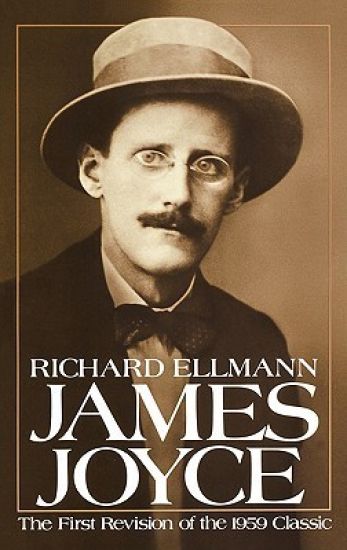
'A truly masterful biography, wise in its completeness. If Joyce be a great writer, then this is a great book.' Sunday Times 'The greatest literary biography of the century.' Anthony Burgess, The Observer

Richard Ellmann has revised and expanded his definitive work on Joyce's life to include newly discovered primary material, including details of a failed love affair, a limerick about Samuel Beckett, a dream notebook, previously unknown letters, and much more.

The Selected Writings of James Weldon Johnson: Volume I: The New York Age Editorials (1914-1923)
James Weldon Johnson
Oxford University Press Inc
1995
sidottu
Johnson's unprecedented role as civil rights leader and literary artist was a dual one that has not been replicated since his time. This volume comprises editorials form the "New York Age" organized thematically, and at a critical introduction discusses Johnson's role in the history of the black press. By painting a vivid picture of the race problem in this nation, and by his portrayal of the successes and possibilities of his race in American life and culture, he picked at white America's conscience. This collection of writings serves to support Dr Wilson's contention that the foundation of black literature had its paternity more in James Weldon Johnson than in anyone else.
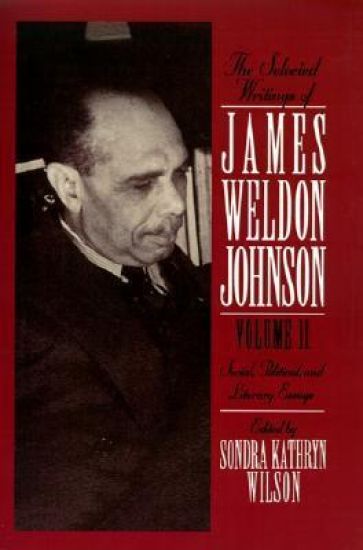
The Selected Writings of James Weldon Johnson: Volume II: Social, Political, and Literary Essays
James Wheldon Johnson
Oxford University Press Inc
1995
sidottu
The two volumes edited by Dr Wilson, Director of the John Memorial Foundation, make an important body of Johnson's writings more readily available to scholars in African-American studies. Volume II comprises literary essays, political essays, and song lyrics. The critical introduction places Johnson in relation to other black artists, the development of African-American literature and early integrationist movements.
"History is a nightmare from which I am trying to awake." Stephen Dedalus's famous complaint articulates a characteristic modern attitude toward the perceived burden of the past. As Robert Spoo shows in this study, Joyce's creative achievement, from the time of his sojourn in Rome in 1906-07 to the completion of Ulysses in 1922, cannot be understood apart from the ferment of historical thought that dominated the nineteenth and early twentieth centuries. Tracing James Joyce's historiographic art to its formative contexts, Spoo reveals a modernist author passionately engaged with the problem of history, forging a new language that both dramatizes and redefines that problem.
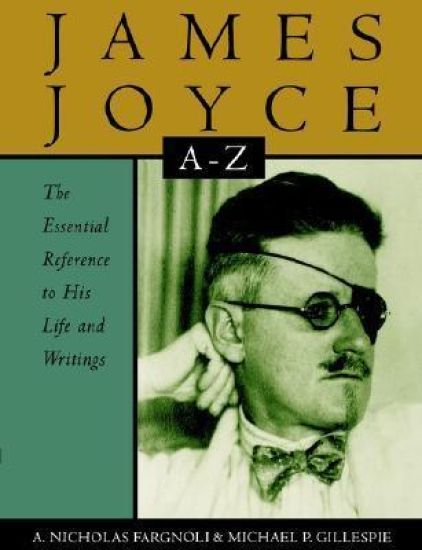
(series copy) These encyclopedic companions are browsable, invaluable individual guides to authors and their works. Useful for students, but written with the general reader in mind, they are clear, concise, accessible, and supply the basic cultural, historical, biographical and critical information so crucial to an appreciation and enjoyment of the primary works. Each is arranged in an A-Z fashion and presents and explains the terms, people, places, and concepts encountered in the literary worlds of James Joyce, Mark Twain, and Virginia Woolf. As a keen explorer of the mundane material of everyday life, James Joyce ranks high in the canon of modernist writers. He is arguably the most influential writer of the twentieth-century, and may be the most read, studied, and taught of all modern writers. The James Joyce A-Z is the ideal companion to Joyce's life and work. Over 800 concise entries relating to all aspects of Joyce are gathered here in one easy-to-use volume of impressive scope.
James Joyce's A Portrait of the Artist as a Young Man
Oxford University Press Inc
2003
nidottu
James Joyce's A Portrait of the Artist as a Young Man: A Casebook offers a comprehensive introduction to a landmark in modern fiction. The essays collected here will help first-time readers, teachers, and advanced scholars gain new insight into Joyce's semi-autobiographical story of an Irish boy's slow and difficult discovery of his artistic vocation. The epitome of the modernist Bildungsroman, or novel of education, Joyce's novel was controversial from the moment of its publication in 1916, and Mark Wollaeger's introduction provides an overview of the composition and early reception of A Portrait of the Artist as a Young Man as well as a survey of some of the recurrent issues debated by literary critics. The selection of the essays is designed to address major critical issues, provide detailed readings of important passages, and trace the evolution of critical responses to the novel. Essays by Hugh Kenner and Patrick Parrinder offer both indispensable overviews of the entire novel-its themes, structure, and idiom-and close attention to specific interpretive cruxes. In addition to classic responses to Portrait, such as Wayne Booth's critique of authorial "distance," Fritz Senn's unpacking of the epigraph, and Michael Levenson's reading of the diary, the collection includes a newly revised and expanded version of Maud Ellmann's groundbreaking 1982 poststructuralist essay, "Polytropic Man," and essays by Hélène Cixous, Joseph Valente, Vicki Mahaffey, Emer Nolan, Marian Eide, Marjorie Howes, and Mark Wollaeger. Some essays are oriented toward literary history, genre, biography or formalism; others draw on recent developments in queer theory and postcolonial studies; others on the turn towards history exemplified in Irish studies. All are very readable and pay close attention to intricacies of Joyce's text. Together the essays bring into focus the wide range of questions that have kept A Portrait of the Artist as a Young Man fresh for the new millennium.