Kirjojen hintavertailu. Mukana 11 244 527 kirjaa ja 12 kauppaa.

Kirjahaku

Etsi kirjoja tekijän nimen, kirjan nimen tai ISBN:n perusteella.

1000 tulosta hakusanalla Jason W. Freeman

Maszyny Wirtualnej W Centrach Danych W Chmurze W Celu Optymalizacji ZuZycia Energii
Przetwarzanie w chmurze odnotowalo znaczny wzrost w ciągu ostatniej dekady, co odciążylo firmy inwestujące w infrastrukturę IT. To z kolei stworzylo zapotrzebowanie na projektowanie energooszczędnych architektur, w kt rych można zaspokoic potrzeby związane z wydatkami ekonomicznymi i środowiskowymi. Ten typ architektury przenosi chmurę do domeny zielonego przetwarzania.Wyzwanie, jakim jest produktywne zarządzanie klastrem fizycznych serwer w, zapobiegające powstawaniu wąskich gardel i marnowaniu energii, nie zostalo calkowicie rozwiązane przez centra danych w chmurze. Nowoczesne centra danych w chmurze stoją w obliczu stale rosnącej zlożoności ze względu na rosnącą liczbę klient w i ich rosnące zapotrzebowanie na zasoby.

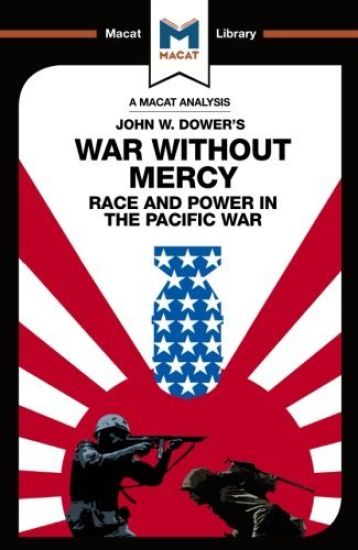
An Analysis of John W. Dower's War Without Mercy

An Analysis of John W. Dower's War Without Mercy

Vincent Sanchez; Jason Xidias

Macat International Limited
2017
nidottu
John Dower’s War Without Mercy is an attempt to resolve the problem of why the United States fought World War II so very differently in the Pacific and European theaters. Specifically, the author sets out to explain why there was such vicious hostility between the US and Japan during the conflict. This was not merely a matter of outrage at Pearl Harbor, and understanding the phenomenon required going beyond the usual strategic, diplomatic and operational records that fuel most histories of war. Dower looked instead for alternate possibilities – and found them. His book argues that the viciousness that marked fighting in the Pacific had deep roots in popular culture which created frightening racial stereotypes of the enemy on both sides of the ocean. Dower's focus on ‘low culture’ proved to be a useful way of generating alternative possibilities to mainstream thinking about US-Japanese relations. The thinking underpinning the book was innovative, and was challenged by some peers who failed to recognise how profoundly revealing material such as cartoons and cheap magazines could be. But the result was one of the most significant studies of 20th-century history yet written – one that yields a strong, well-reasoned and persuasive solution to the problem posed.
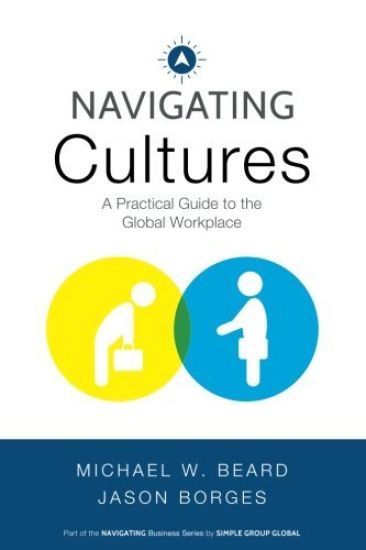
Navigating Cultures

Navigating Cultures

Jason Borges; Michael W Beard

Navigating Cultures
2017
pokkari
Cultures - Just as fish do not think about water, we humans rarely think about our own culture (unless you happen to be an anthropologist). Fish do not realize just how pervasive water is to their existence until they are removed from it. Then, the absence of water becomes painfully obvious. Likewise, we don't realize how pervasive our culture is until we've been taken out of it and put into another culture. Culture is the operating system running our life. Culture colors the way we see the world. Culture is like a tree with deep roots. Yet, most of culture is hidden below the surface.
Zero Trust Security

Zero Trust Security

Jason Garbis; Jerry W. Chapman

APress
2021
nidottu
Understand how Zero Trust security can and should integrate into your organization. This book covers the complexity of enterprise environments and provides the realistic guidance and requirements your security team needs to successfully plan and execute a journey to Zero Trust while getting more value from your existing enterprise security architecture. After reading this book, you will be ready to design a credible and defensible Zero Trust security architecture for your organization and implement a step-wise journey that delivers significantly improved security and streamlined operations.Zero Trust security has become a major industry trend, and yet there still is uncertainty about what it means. Zero Trust is about fundamentally changing the underlying philosophy and approach to enterprise security—moving from outdated and demonstrably ineffective perimeter-centric approaches to a dynamic, identity-centric, and policy-based approach.Making this type of shift can be challenging. Your organization has already deployed and operationalized enterprise security assets such as Directories, IAM systems, IDS/IPS, and SIEM, and changing things can be difficult. Zero Trust Security uniquely covers the breadth of enterprise security and IT architectures, providing substantive architectural guidance and technical analysis with the goal of accelerating your organization‘s journey to Zero Trust. What You Will Learn Understand Zero Trust security principles and why it is critical to adopt themSee the security and operational benefits of Zero TrustMake informed decisions about where, when, and how to apply Zero Trust security architecturesDiscover how the journey to Zero Trust will impact your enterprise and security architectureBe ready to plan your journey toward Zero Trust, while identifying projects that can deliver immediate security benefits for your organization Who This Book Is ForSecurity leaders, architects, and practitioners plus CISOs, enterprise security architects, security engineers, network security architects, solution architects, and Zero Trust strategists
Statistics and Faith

Statistics and Faith

Jason Wilson; Russell W. Howell

IVP Academic
2026
nidottu
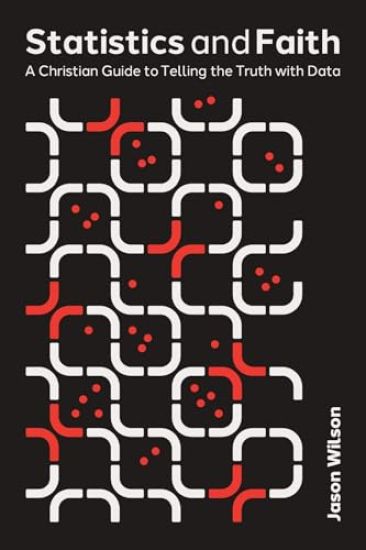
Bringing Integrity to the Stories Numbers Tell When we tell stories with numbers, we depend on the field of statistics--but how do we know that those stories are true? Almost everything in life is connected to data, and that data can help us make sense of truth in a world that feels increasingly challenging to navigate as Christians. But in a world where we are told to "do our own research," it can be nearly impossible to know whether we're just gravitating toward stories that confirm our own untested biases, or whether we're analyzing the data in a way that is illuminating truth. Exploring a range of contemporary topics, professor of statistics Jason Wilson shows both non-experts and experts alike that statistics has something to say when it relates to the polarizing issues that we face today. Exploring topics such as gambling, Covid, and media bias, Wilson shows that the ways we collect, organize, analyze, and interpret data have something to say in conversation with the Christian faith. In Statistics and Faith, you'll find examinations of contemporary issues using statistical concepts, tools, and theories; case studies from history that show how statistics can be used in ways that are helpful or harmful; application chapters based on over fifteen years of research; and reflection questions to help you explore how to do statistics with integrity. Ideal as a supplementary text for statistics and other courses that use this discipline, Statistics and Faith helps us better evaluate data and use statistics with both trust and discernment by exploring the connection between statistics and our faith. By understanding how statistics tell a story, we can learn to communicate that story effectively and faithfully.
Catholics, Slaveholders, and the Dilemma of American Evangelicalism, 1835-1860
Although slaveholding southerners and Catholics in general had little in common, both groups found themselves relentlessly attacked in the northern evangelical press during the decades leading up to the Civil War. In Catholics, Slaveholders, and the Dilemma of American Evangelicalism, 1835-1860, W. Jason Wallace skillfully examines sermons, books, newspaper articles, and private correspondence of members of three antebellum groups—northern evangelicals, southern evangelicals, and Catholics—and argues that the divisions among them stemmed, at least in part, from disagreements over the role that religious convictions played in a free society. Focusing on journals such as The Downfall of Babylon, Zion's Herald, The New York Evangelist, and The New York Observer, Wallace argues that northern evangelicals constructed a national narrative after their own image and, in the course of vigorous promotion of that narrative, attacked what they believed was the immoral authoritarianism of both the Catholic and the slaveholder. He then examines the response of both southerners and Catholics to northern evangelical attacks. As Wallace shows, leading Catholic intellectuals interpreted and defended the contributions made by the Catholic Church to American principles such as religious liberty and the separation of church and state. Proslavery southern evangelicals, while sharing with evangelicals in the North the belief that the United States was founded on Protestant values, rejected the attempts by northern evangelicals to associate Christianity with social egalitarianism and argued that northern evangelicals compromised both the Bible and Protestantism to fit their ideal of a good society. The American evangelical dilemma arose from conflicting opinions over what it meant to be an American and a Christian.
Langston Hughes and American Lynching Culture

Langston Hughes and American Lynching Culture

W. Jason Miller

University Press of Florida
2012
nidottu
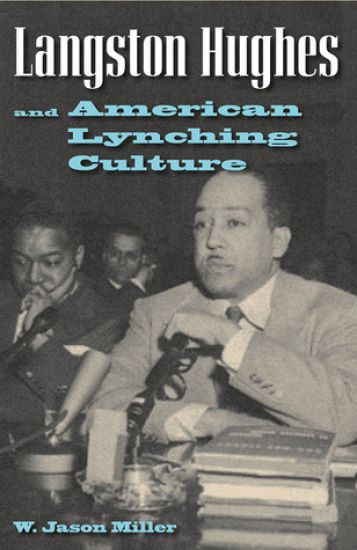
Langston Hughes never knew of an America where lynching was absent from the cultural landscape. Jason Miller investigates the nearly three dozen poems written by Hughes on the subject of lynching to explore its varying effects on survivors, victims, and accomplices as they resisted, accepted, and executed this brutal form of sadistic torture. Starting from Hughes's life as a teenager during the Red Summer of 1919 and moving through the civil rights movement that took place toward the end of Hughes's life, Miller initiates an important dialogue between America's neglected history of lynching and some of the world’s most significant poems. This extended study of the centrality of these heinous acts to Hughes's artistic development, aesthetics, and activism represents a significant and long-overdue contribution to our understanding of the art and politics of Langston Hughes.
Origins of the Dream

Origins of the Dream

W. Jason Miller

University Press of Florida
2015
sidottu
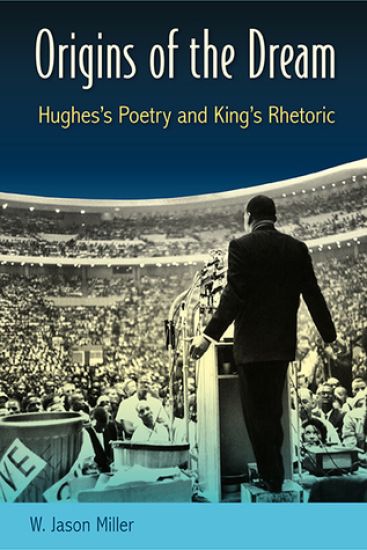
Since Martin Luther King Jr.’s “I Have a Dream” speech, some scholars have privately suspected that King’s “dream” was connected to Langston Hughes’s poetry. Drawing on archival materials, including notes, correspondence, and marginalia, W. Jason Miller provides a completely original and compelling argument that Hughes’s influence on King’s rhetoric was, in fact, evident in more than just the one famous speech.King’s staff had been wiretapped by J. Edgar Hoover and suffered accusations of communist influence, so quoting or naming the leader of the Harlem Renaissance—who had his own reputation as a communist—would only have intensified the threats against the civil rights activist. Thus, the link was purposefully veiled through careful allusions in King’s orations. In Origins of the Dream, Miller lifts that veil and shows how Hughes’s revolutionary poetry became a measurable inflection in King’s voice. He contends that by employing Hughes’s metaphors in his speeches, King negotiated a political climate that sought to silence the poet’s subversive voice. By separating Hughes’s identity from his poems, King helped the nation unconsciously embrace the incendiary ideas behind his poetry.
Origins of the Dream

Origins of the Dream

W. Jason Miller

University Press of Florida
2016
nidottu
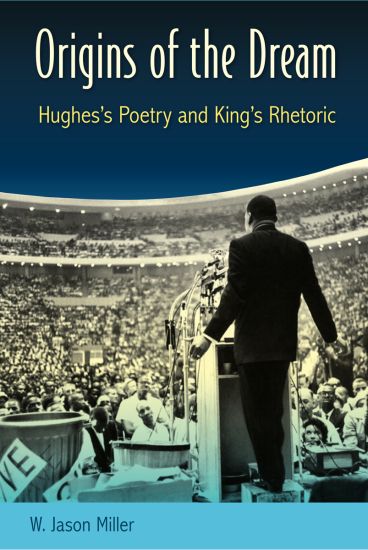
Origins of the Dream reveals the connection between Martin Luther King Jr.’s “I Have a Dream” speech and Langston Hughes’s poetry. During his research for this book, W. Jason Miller discovered a longforgotten reel-to-reel tape of King’s first “I Have a Dream” speech, which was delivered in a high school gymnasium in Rocky Mount, North Carolina.
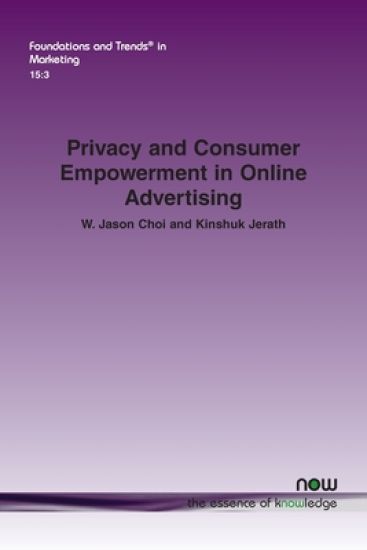
Privacy and Consumer Empowerment in Online Advertising

Privacy and Consumer Empowerment in Online Advertising

W. Jason Choi; Kinshuk Jerath

Now Publishers Inc
2022
nidottu
Privacy and Consumer Empowerment in Online Advertising provides an overview of the different issues that are in play in consumer privacy and in empowering consumers with rights to manage the privacy of their data. The authors review the existing knowledge on this topic and discuss implications for consumers, for advertisers, and for ad serving platforms that enable advertisers to reach consumers.The introductory section provides an outline and briefly reviews the key ideas. Section 2 discusses the key aspects of the GDPR, the CCPA and the CPRA. Since the implementation of the GDPR in May 2018, some early empirical evidence has emerged of its impact and this is examined in Section 3. The authors review the privacy and economic frameworks in Section 4. Section 5 discusses the theoretical work in this area enhances our understanding of the impact of privacy regulation on consumers and on online advertising. Section 6 examines how consumers are presented with privacy notices and their (in)ability to make privacy choices due to a variety of factors. Section 7 reviews how firms attach value to consumers' data. In light of the passing of privacy regulation, firms have been attempting to develop methods for privacy-preserving targeted advertising. In Section 8, we discuss some of these attempts such as FLoC and TURTLEDOVE, which aim to target consumers based on their interests and/or their website visit history, but without compromising their privacy. Finally, Section 9 concludes with a discussion. An overall summary is that privacy concerns have been heightened in the past two decades and this has led to the passing of privacy regulations addressing data security and privacy rights. After these regulations, a significant minority of consumers have chosen to not provide consent for their data to be collected, used and shared. However, most consumers still do not properly understand the key implications of privacy policies of firms, and more efforts are needed in that regard. Also, technologies are being developed for privacy-preserving user targeting. Finally, regarding firms, data frictions caused by privacy regulations have, in turn, caused negative consequences for small advertisers, publishers and service providers. The authors provide some directions for future work that may be valuable to move thinking forward on this increasingly important topic.
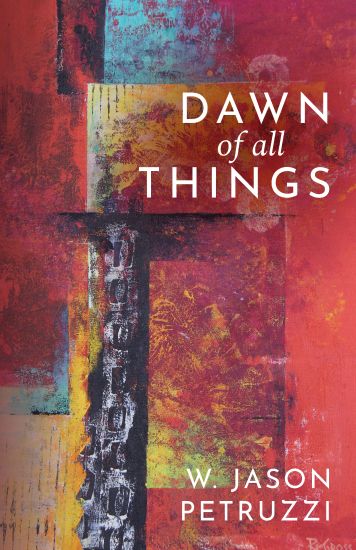
Dawn of All Things

Dawn of All Things

W. Jason Petruzzi

William J. Petruzzi
2019
nidottu
Dawn of All Things begins in the early 2000's with a group of sexually and ethnically diverse friends working through life's issues, including careers, goals, past and present relationships, entertainment venues, and curiosity about religion and the afterlife. Their 'playground' is Washington, D.C. and surrounding communities. The story focuses on a young man who meets a mysterious young woman claiming to be God who is observing her world but not wanting to interrupt the balance and harmony of good and evil. The twist is they were sweethearts in high school. After seeing her preaching to several followers, he becomes consumed with her dramatic life change since he last saw her. The young man wants to know everything about his former girlfriend's evolution and enlightenment, and whether by claiming to be God, she is delusional or psychotic. The longer he searches, the more he falls in love again, uncertain of the outcome.
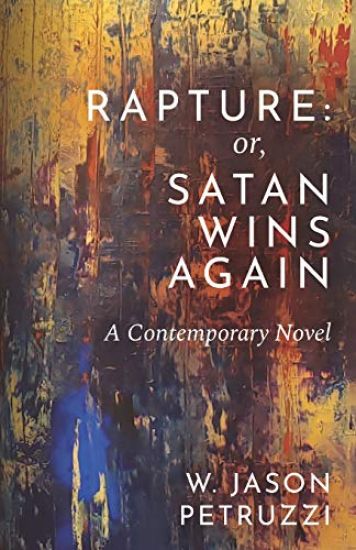
Rapture: Or, Satan Wins Again: A Contemporary Novel

Rapture: Or, Satan Wins Again: A Contemporary Novel

W. Jason Petruzzi

William J. Petruzzi
2019
nidottu
Rapture: Or, Satan Wins Again is a sarcastic, irreverent riff on the Christian concept of an end-time event, where all believers will rise into heaven; this event precedes the Second Coming.This contemporary thriller begins in Manhattan, with the NYC Police and FBI investigating a rash of murders. Meanwhile, a retired CEO, and Romania's UN Ambassador (and a generous contributor to the US president's reelection campaigns), was on his way to a critical meeting. At the same time, people begin disappearing. The Nation is in ruin, buildings are shuttered, and NYC is bombed.In the midst of this chaos, the Ambassador delivers a stirring speech at the UN; he then moves to Washington, D.C. as the President's confidant, and they travel to Jerusalem and Rome in search of answers. As it turns out, the UN Ambassador is actually the Antichrist. Once his full life-history is revealed, the quick-paced events will keep the reader glued to the book until the surprise conclusion.
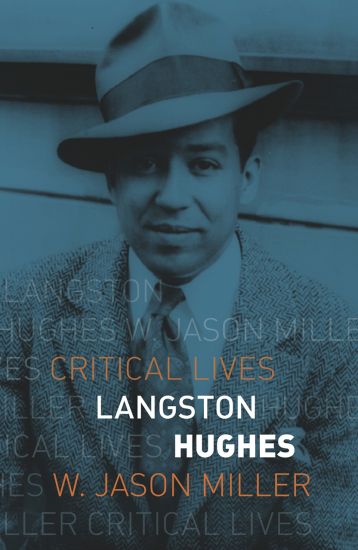
Langston Hughes

Langston Hughes

W. Jason Miller

Reaktion Books
2020
nidottu
As the first black author in America to make his living exclusively by writing, Langston Hughes inspired a generation of writers and activists. One of the pioneers of jazz poetry, Hughes led the Harlem Renaissance, while Martin Luther King invoked his signature metaphor of dreaming in his speeches. In this new biography, W. Jason Miller illuminates Hughes’s status as an international literary figure through a compelling look at the relationship between his extraordinary life and his canonical works. Drawing on unpublished letters and manuscripts, Miller addresses Hughes’s often ignored contributions to the civil rights movement of the 1960s and his complex and well-guarded sexuality, and repositions him as a writer, rather than merely the most beloved African American poet of the twentieth century.