Kirjojen hintavertailu. Mukana 11 437 669 kirjaa ja 12 kauppaa.

Kirjahaku

Etsi kirjoja tekijän nimen, kirjan nimen tai ISBN:n perusteella.

1000 tulosta hakusanalla Jean Rotrou

Jean Toomer

Jean Toomer

Barbara Foley

University of Illinois Press
2014
nidottu
The 1923 publication of Cane established Jean Toomer as a modernist master and one of the key literary figures of the emerging Harlem Renaissance. Though critics and biographers alike have praised his artistic experimentation and unflinching eyewitness portraits of Jim Crow violence, few seem to recognize how much Toomer's interest in class struggle, catalyzed by the Russian Revolution and the post–World War One radical upsurge, situate his masterwork in its immediate historical context. In Jean Toomer: Race, Repression, and Revolution, Barbara Foley explores Toomer's political and intellectual connections with socialism, the New Negro movement, and the project of Young America. Examining his rarely scrutinized early creative and journalistic writings, as well as unpublished versions of his autobiography, she recreates the complex and contradictory consciousness that produced Cane. Foley's discussion of political repression runs parallel with a portrait of repression on a personal level. Examining family secrets heretofore unexplored in Toomer scholarship, she traces their sporadic surfacing in Cane. Toomer's text, she argues, exhibits a political unconscious that is at once public and private.
Jean-Luc Godard, Cinema Historian

Jean-Luc Godard, Cinema Historian

Indiana University Press
2013
pokkari
Originally released as a videographic experiment in film history, Jean-Luc Godard's Histoire(s) du cinéma has pioneered how we think about and narrate cinema history, and in how history is taught through cinema. In this stunningly illustrated volume, Michael Witt explores Godard's landmark work as both a specimen of an artist's vision and a philosophical statement on the history of film. Witt contextualizes Godard's theories and approaches to historiography and provides a guide to the wide-ranging cinematic, aesthetic, and cultural forces that shaped Godard's groundbreaking ideas on the history of cinema.
Jean Bethke Elshtain

Jean Bethke Elshtain

University of Notre Dame Press
2018
sidottu
Jean Bethke Elshtain (1941–2013) was a noted ethicist, political philosopher, and public intellectual. Her four decades of scholarship defy easy categorization: she wrote both seminal works of theory and occasional pieces for the popular press, and she was variously viewed as radical and conservative, feminist and traditionalist, anti-war and pro-interventionist. Jean Bethke Elshtain: Politics, Ethics, and Society is the first attempt to evaluate Elshtain's entire published body of work and to give shape to a wide-ranging scholarly career, with an eye to her work's ongoing relevance. This collection of essays brings together scholars and public intellectuals from across the spectrum of disciplines in which Elshtain wrote. The volume is organized around four themes, which identify the central concerns that shaped Elshtain's thought: (1) the nature of politics; (2) politics and religion; (3) international relations and just war; and (4) the end(s) of political life. The essays have been chosen not only for the expertise of each contributor as it bears on Elshtain's work but also for their interpretive and analytic scope. This volume introduces readers to the work of a key contemporary thinker, using Elshtain's writing as a lens through which to reflect on central political and scholarly debates of the last few decades. Jean Bethke Elshtain will be of great interest to specialists researching Elshtain and to scholars of multiple disciplines, particularly political theory, international relations, and religion. Contributors: Debra Erickson Sulai, Michael Le Chevallier, Robin W. Lovin, William A. Galston, Arlene W. Saxonhouse, Don Browning, Peter Berkowitz, Nancy J. Hirschmann, Michael Kessler, Lisa Sowle Cahill, Nigel Biggar, Gilbert Meilaender, Eric Gregory, Daniel Philpott, Marc LiVecche, Nicholas Rengger, John D. Carlson, Chris Brown, Michael Walzer, James Turner Johnson, Erik Owens, Francis Fukuyama, Carl Gershman, and Patrick J. Deneen.
Jean Gerson and the Last Medieval Reformation

Jean Gerson and the Last Medieval Reformation

Brian Patrick McGuire

Pennsylvania State University Press
2005
sidottu
In this biography of the noted French philosopher and theologian Jean Gerson, the first since 1929, Brian Patrick McGuire presents a compelling portrait of Gerson as a voice of reason and Christian humanism during a time of great intellectual and social tumult in the late Middle Ages. Born to a peasant father and mother in the county of Champagne, Gerson (1363–1429) was the first of twelve children. He overcame his modest beginnings to become a scholastic and vernacular theologian, a university intellectual, and a church reformer. McGuire shows us the turning points in Gerson’s life, including his crisis of faith after becoming chancellor of the University of Paris in 1395. Through these key moments, we see the deeper undercurrents of his mystical writings. With their rich display of spiritual and emotional life, these writings were to earn Gerson the appellation “doctor christianissimus.” In turn, they would influence many later thinkers, including Nicholas of Cusa, Ignatius of Loyola, Francis de Sales, and even Martin Luther. Gerson is a man perhaps easier to admire than to love: conscientious to a fault, at once a pragmatist and an idealist in church politics, a university intellectual who both fostered and distrusted the religious aspirations of the laity, a powerful prelate who moved among the great yet never forgot his peasant origins, a self-revealing yet intensely private man who yearned for intimacy almost as much as he feared it. McGuire ably situates Gerson in the context of his age, an age replete with doctrinal controversies and the politics of papal schism on the eve of the Protestant Reformation. Gerson emerges as a proponent of dialogue and discussion, committed to reforming the church from within. His courageous effort to renew the unity of a unique civilization bears examination in our own time.
Jean Gerson and the Last Medieval Reformation

Jean Gerson and the Last Medieval Reformation

Brian Patrick McGuire

Pennsylvania State University Press
2005
pokkari
In this biography of the noted French philosopher and theologian Jean Gerson, the first since 1929, Brian Patrick McGuire presents a compelling portrait of Gerson as a voice of reason and Christian humanism during a time of great intellectual and social tumult in the late Middle Ages. Born to a peasant father and mother in the county of Champagne, Gerson (1363–1429) was the first of twelve children. He overcame his modest beginnings to become a scholastic and vernacular theologian, a university intellectual, and a church reformer. McGuire shows us the turning points in Gerson’s life, including his crisis of faith after becoming chancellor of the University of Paris in 1395. Through these key moments, we see the deeper undercurrents of his mystical writings. With their rich display of spiritual and emotional life, these writings were to earn Gerson the appellation “doctor christianissimus.” In turn, they would influence many later thinkers, including Nicholas of Cusa, Ignatius of Loyola, Francis de Sales, and even Martin Luther. Gerson is a man perhaps easier to admire than to love: conscientious to a fault, at once a pragmatist and an idealist in church politics, a university intellectual who both fostered and distrusted the religious aspirations of the laity, a powerful prelate who moved among the great yet never forgot his peasant origins, a self-revealing yet intensely private man who yearned for intimacy almost as much as he feared it. McGuire ably situates Gerson in the context of his age, an age replete with doctrinal controversies and the politics of papal schism on the eve of the Protestant Reformation. Gerson emerges as a proponent of dialogue and discussion, committed to reforming the church from within. His courageous effort to renew the unity of a unique civilization bears examination in our own time.
The Complete Plays of Jean Racine

The Complete Plays of Jean Racine

Jean Racine

Pennsylvania State University Press
2010
sidottu
This is the first volume of a planned translation into English of all twelve of Jean Racine’s plays—a project undertaken only three times in the three hundred years since Racine’s death. For this new translation, Geoffrey Alan Argent has taken a fresh approach: he has rendered these plays in rhymed "heroic" couplets. While Argent’s translation is faithful to Racine’s text and tone, his overriding intent has been to translate a work of French literature into a work of English literature, substituting for Racine’s rhymed alexandrines (hexameters) the English mode of rhymed iambic pentameters, a verse form particularly well suited to the highly charged urgency of Racine’s drama and the coiled strength of his verse. Complementing the translations are the illuminating Discussions and the extensive Notes and Commentaries Argent has furnished for each play. The Discussions are not offered as definitive interpretations of these plays, but are intended to stimulate readers to form their own views and to explore further the inexhaustibly rich world of Racine’s plays. Included in the Notes and Commentary section of this translation are passages that Racine deleted after the first edition and have never before appeared in English.The full title of Racine’s first tragedy is La Thébaïde ou les Frères ennemis (The Saga of Thebes, or The Enemy Brothers). But Racine was far less concerned with recounting the struggle for Thebes than in examining those indomitable passions—in this case, hatred—that were to prove his lifelong focus of interest. For Oedipus’s sons, Eteocles and Polynices (the titular brothers), vying for the throne is rather a symptom than a cause of their unquenchable hatred—so unquenchable that by the end of the play it has not only destroyed these twin brothers, but has also claimed the lives of their mother, their sister, their uncle, and their two cousins as collateral damage. Indeed, as Racine acknowledges in his preface, “There is hardly a character in it who does not die at the end.”
The Complete Plays of Jean Racine

The Complete Plays of Jean Racine

Jean Racine

Pennsylvania State University Press
2010
pokkari
This is the first volume of a planned translation into English of all twelve of Jean Racine’s plays—a project undertaken only three times in the three hundred years since Racine’s death. For this new translation, Geoffrey Alan Argent has taken a fresh approach: he has rendered these plays in rhymed "heroic" couplets. While Argent’s translation is faithful to Racine’s text and tone, his overriding intent has been to translate a work of French literature into a work of English literature, substituting for Racine’s rhymed alexandrines (hexameters) the English mode of rhymed iambic pentameters, a verse form particularly well suited to the highly charged urgency of Racine’s drama and the coiled strength of his verse. Complementing the translations are the illuminating Discussions and the extensive Notes and Commentaries Argent has furnished for each play. The Discussions are not offered as definitive interpretations of these plays, but are intended to stimulate readers to form their own views and to explore further the inexhaustibly rich world of Racine’s plays. Included in the Notes and Commentary section of this translation are passages that Racine deleted after the first edition and have never before appeared in English.The full title of Racine’s first tragedy is La Thébaïde ou les Frères ennemis (The Saga of Thebes, or The Enemy Brothers). But Racine was far less concerned with recounting the struggle for Thebes than in examining those indomitable passions—in this case, hatred—that were to prove his lifelong focus of interest. For Oedipus’s sons, Eteocles and Polynices (the titular brothers), vying for the throne is rather a symptom than a cause of their unquenchable hatred—so unquenchable that by the end of the play it has not only destroyed these twin brothers, but has also claimed the lives of their mother, their sister, their uncle, and their two cousins as collateral damage. Indeed, as Racine acknowledges in his preface, “There is hardly a character in it who does not die at the end.”
The Complete Plays of Jean Racine

The Complete Plays of Jean Racine

Jean Racine

Pennsylvania State University Press
2011
sidottu
This is the second volume of a projected translation into English of all twelve of Jean Racine’s plays—only the third time such a project has been undertaken in the three hundred years since Racine’s death. For this new translation, Geoffrey Alan Argent has taken a fresh approach: he has rendered these plays in rhymed “heroic” couplets. While Argent’s translation is faithful to Racine’s text and tone, his overriding intent has been to translate a work of French literature into a work of English literature, substituting for Racine’s rhymed alexandrines (hexameters) the English mode of rhymed iambic pentameters, a verse form particularly well suited to the highly charged urgency of Racine’s drama and the coiled strength of his verse. Complementing the translation are the illuminating Discussion, intended as much to provoke discussion as to provide it, and the extensive Notes and Commentary, which clarify obscure references, explicate the occasional gnarled conceit, and offer their own fresh and thought-provoking insights.Bajazet, Racine’s seventh play, first given in 1672, is based on events that had taken place in the Sultan’s palace in Istanbul a mere thirty years earlier. But the twilit, twisting passageways of the Seraglio merely serve as a counterpart to the dim and errant moral sense of the play’s four protagonists: Bajazet, the Sultan’s brother; Atalide, Bajazet’s secret lover; Roxane, the Sultaness, who is madly in love with Bajazet and dangles over his head the death sentence the Sultan has ordered her to implement in his absence; and Akhmet, the wily, well-intentioned Vizier, who involves them all in an imbroglio in the Seraglio, with disastrous consequences. Unique among Racine’s plays, Bajazet provides no moral framework for either protagonists or audience. We watch as these benighted characters, cut adrift from any moral moorings, with no upright character at hand to serve as an ethical anchor and no religious or societal guidelines to serve as a lifeline, flail, flounder, and finally drag one another down. Here, Racine has presented us with his four most mercilessly observed, most subtly delineated, and most ambiguously fascinating characters. Indeed, Bajazet is certainly Racine’s most undeservedly neglected tragedy.
The Complete Plays of Jean Racine

The Complete Plays of Jean Racine

Jean Racine

Pennsylvania State University Press
2014
pokkari
This is the second volume of a projected translation into English of all twelve of Jean Racine’s plays—only the third time such a project has been undertaken in the three hundred years since Racine’s death. For this new translation, Geoffrey Alan Argent has taken a fresh approach: he has rendered these plays in rhymed “heroic” couplets. While Argent’s translation is faithful to Racine’s text and tone, his overriding intent has been to translate a work of French literature into a work of English literature, substituting for Racine’s rhymed alexandrines (hexameters) the English mode of rhymed iambic pentameters, a verse form particularly well suited to the highly charged urgency of Racine’s drama and the coiled strength of his verse. Complementing the translation are the illuminating Discussion, intended as much to provoke discussion as to provide it, and the extensive Notes and Commentary, which clarify obscure references, explicate the occasional gnarled conceit, and offer their own fresh and thought-provoking insights.Bajazet, Racine’s seventh play, first given in 1672, is based on events that had taken place in the Sultan’s palace in Istanbul a mere thirty years earlier. But the twilit, twisting passageways of the Seraglio merely serve as a counterpart to the dim and errant moral sense of the play’s four protagonists: Bajazet, the Sultan’s brother; Atalide, Bajazet’s secret lover; Roxane, the Sultaness, who is madly in love with Bajazet and dangles over his head the death sentence the Sultan has ordered her to implement in his absence; and Akhmet, the wily, well-intentioned Vizier, who involves them all in an imbroglio in the Seraglio, with disastrous consequences. Unique among Racine’s plays, Bajazet provides no moral framework for either protagonists or audience. We watch as these benighted characters, cut adrift from any moral moorings, with no upright character at hand to serve as an ethical anchor and no religious or societal guidelines to serve as a lifeline, flail, flounder, and finally drag one another down. Here, Racine has presented us with his four most mercilessly observed, most subtly delineated, and most ambiguously fascinating characters. Indeed, Bajazet is certainly Racine’s most undeservedly neglected tragedy.
The Complete Plays of Jean Racine

The Complete Plays of Jean Racine

Jean Racine

Pennsylvania State University Press
2011
sidottu
This is the third volume of a projected translation into English of all twelve of Jean Racine’s plays—only the third time such a project has been undertaken. For this new translation, Geoffrey Alan Argent has rendered these plays in the verse form that Racine might well have used had he been English: namely, the “heroic” couplet. Argent has exploited the couplet’s compressed power and flexibility to produce a work of English literature, a verse drama as gripping in English as Racine’s is in French. Complementing the translation are the illuminating Discussion, intended as much to provoke discussion as to provide it, and the extensive Notes and Commentary, which offer their own fresh and thought-provoking insights.In Iphigenia, his ninth play, Racine returns to Greek myth for the first time since Andromache. To Euripides’s version of the tale he adds a love interest between Iphigenia and Achilles. And dissatisfied with the earlier resolutions of the Iphigenia myth (her actual death or her eleventh-hour rescue by a dea ex machina), Racine creates a wholly original character, Eriphyle, who, in addition to providing an intriguing new denouement, serves the dual dramatic purpose of triangulating the love interest and galvanizing the wholesome “family values” of this play by a jolt of supercharged passion.
The Complete Plays of Jean Racine

The Complete Plays of Jean Racine

Jean Racine

Pennsylvania State University Press
2015
pokkari
This is the third volume of a projected translation into English of all twelve of Jean Racine’s plays—only the third time such a project has been undertaken. For this new translation, Geoffrey Alan Argent has rendered these plays in the verse form that Racine might well have used had he been English: namely, the “heroic” couplet. Argent has exploited the couplet’s compressed power and flexibility to produce a work of English literature, a verse drama as gripping in English as Racine’s is in French. Complementing the translation are the illuminating Discussion, intended as much to provoke discussion as to provide it, and the extensive Notes and Commentary, which offer their own fresh and thought-provoking insights.In Iphigenia, his ninth play, Racine returns to Greek myth for the first time since Andromache. To Euripides’s version of the tale he adds a love interest between Iphigenia and Achilles. And dissatisfied with the earlier resolutions of the Iphigenia myth (her actual death or her eleventh-hour rescue by a dea ex machina), Racine creates a wholly original character, Eriphyle, who, in addition to providing an intriguing new denouement, serves the dual dramatic purpose of triangulating the love interest and galvanizing the wholesome “family values” of this play by a jolt of supercharged passion.
The Complete Plays of Jean Racine

The Complete Plays of Jean Racine

Jean Racine

Pennsylvania State University Press
2012
sidottu
As Voltaire famously opined, Athaliah, Racine's last play, is "perhaps the greatest masterwork of the human spirit." Its formidable antagonists, Athaliah, queen of Judah, and Jehoiada, high priest of the temple of Jerusalem, are engaged in a deadly struggle for dominion: she, fiercely determined to maintain her throne and exterminate the detested race of David; he, no less fiercely determined to overthrow this heathen queen and enthrone the orphan Joash, the scion of the house of David, whom Athaliah believes she slew as an infant ten years earlier. This boy represents the sole hope for the survival of the royal race from which is to spring the Christ. But in this play, even God is more about hate and retribution than about love and mercy.This is the fourth volume of a projected translation into English of all twelve of Jean Racine's plays-only the third time such a project has been undertaken. For this new translation, Geoffrey Alan Argent has rendered these plays in the verse form that Racine might well have used had he been English: namely, the "heroic" couplet. Argent has exploited the couplet's compressed power and flexibility to produce a work of English literature, a verse drama as gripping in English as Racine's is in French. Complementing the translation are the illuminating Discussion, intended as much to provoke discussion as to provide it, and the extensive Notes and Commentary, which offer their own fresh and thought-provoking insights.
The Complete Plays of Jean Racine

The Complete Plays of Jean Racine

Jean Racine

Pennsylvania State University Press
2014
pokkari
As Voltaire famously opined, Athaliah, Racine’s last play, is “perhaps the greatest masterwork of the human spirit.” Its formidable antagonists, Athaliah, queen of Judah, and Jehoiada, high priest of the temple of Jerusalem, are engaged in a deadly struggle for dominion: she, fiercely determined to maintain her throne and exterminate the detested race of David; he, no less fiercely determined to overthrow this heathen queen and enthrone the orphan Joash, the scion of the house of David, whom Athaliah believes she slew as an infant ten years earlier. This boy represents the sole hope for the survival of the royal race from which is to spring the Christ. But in this play, even God is more about hate and retribution than about love and mercy.This is the fourth volume of a projected translation into English of all twelve of Jean Racine’s plays—only the third time such a project has been undertaken. For this new translation, Geoffrey Alan Argent has rendered these plays in the verse form that Racine might well have used had he been English: namely, the “heroic” couplet. Argent has exploited the couplet’s compressed power and flexibility to produce a work of English literature, a verse drama as gripping in English as Racine’s is in French. Complementing the translation are the illuminating Discussion, intended as much to provoke discussion as to provide it, and the extensive Notes and Commentary, which offer their own fresh and thought-provoking insights.
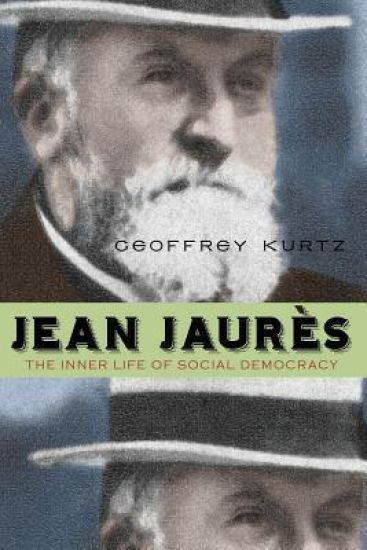
Jean Jaurès

Jean Jaurès

Geoffrey Kurtz

Pennsylvania State University Press
2014
sidottu
Jean Jaurès was a towering intellectual and political leader of the democratic Left at the turn of the twentieth century, but he is little remembered today outside of France, and his contributions to political thought are little studied anywhere. In Jean Jaurès: The Inner Life of Social Democracy, Geoffrey Kurtz introduces Jaurès to an American audience. The parliamentary and philosophical leader of French socialism from the 1890s until his assassination in 1914, Jaurès was the only major socialist leader of his generation who was educated as a political philosopher. As he championed the reformist method that would come to be called social democracy, he sought to understand the inner life of a political tradition that accepts its own imperfection. Jaurès's call to sustain the tension between the ideal and the real resonates today.In addition to recovering the questions asked by the first generation of social democrats, Kurtz’s aim in this book is to reconstruct Jaurès’s political thought in light of current theoretical and political debates. To achieve this, he gives readings of several of Jaurès’s major writings and speeches, spanning work from his early adulthood to the final years of his life, paying attention to not just what Jaurès is saying, but how he says it.
Jean Jaurès

Jean Jaurès

Geoffrey Kurtz

Pennsylvania State University Press
2016
pokkari
Jean Jaurès was a towering intellectual and political leader of the democratic Left at the turn of the twentieth century, but he is little remembered today outside of France, and his contributions to political thought are little studied anywhere. In Jean Jaurès: The Inner Life of Social Democracy, Geoffrey Kurtz introduces Jaurès to an American audience. The parliamentary and philosophical leader of French socialism from the 1890s until his assassination in 1914, Jaurès was the only major socialist leader of his generation who was educated as a political philosopher. As he championed the reformist method that would come to be called social democracy, he sought to understand the inner life of a political tradition that accepts its own imperfection. Jaurès's call to sustain the tension between the ideal and the real resonates today.In addition to recovering the questions asked by the first generation of social democrats, Kurtz’s aim in this book is to reconstruct Jaurès’s political thought in light of current theoretical and political debates. To achieve this, he gives readings of several of Jaurès’s major writings and speeches, spanning work from his early adulthood to the final years of his life, paying attention to not just what Jaurès is saying, but how he says it.
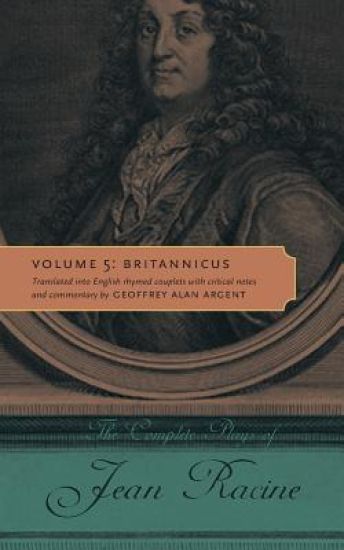
The Complete Plays of Jean Racine

The Complete Plays of Jean Racine

Jean Racine

Pennsylvania State University Press
2014
sidottu
This is the fifth volume of a projected translation into English of all twelve of Jean Racine’s plays. Geoffrey Alan Argent’s translations faithfully convey all the urgency and keen psychological insight of Racine’s dramas, and the coiled strength of his verse, while breathing new vigor into the time-honored form of the “heroic” couplet. Complementing this translation are the Discussion and the Notes and Commentary—particularly detailed and extensive for this volume, Britannicus being by far Racine’s most historically informed play. Also noteworthy is Argent’s reinstatement of an eighty-two-line scene, originally intended to open Act III, that has never before appeared in an English translation of this play. Britannicus, one of Racine’s greatest plays, dramatizes the crucial day when Nero—son of Agrippina and stepson of the late emperor Claudius—overcomes his mother, his wife Octavia, his tutors, and his vaunted “three virtuous years” in order to announce his omnipotence. He callously murders his innocent stepbrother, Britannicus, and effectively destroys Britannicus’s beloved, the virtuous Junia, as well. Racine may claim, in his first preface, that this tragedy “does not concern itself at all with affairs of the world at large,” but nothing could be further from the truth. The tragedy represented in Britannicus is precisely that of the Roman Empire, for in Nero Racine has created a character who embodies the most infamous qualities of that empire — its cruelty, its depravity, and its refined barbarity.
The Complete Plays of Jean Racine

The Complete Plays of Jean Racine

Jean Racine

Pennsylvania State University Press
2014
pokkari
This is the fifth volume of a projected translation into English of all twelve of Jean Racine’s plays. Geoffrey Alan Argent’s translations faithfully convey all the urgency and keen psychological insight of Racine’s dramas, and the coiled strength of his verse, while breathing new vigor into the time-honored form of the “heroic” couplet. Complementing this translation are the Discussion and the Notes and Commentary—particularly detailed and extensive for this volume, Britannicus being by far Racine’s most historically informed play. Also noteworthy is Argent’s reinstatement of an eighty-two-line scene, originally intended to open Act III, that has never before appeared in an English translation of this play. Britannicus, one of Racine’s greatest plays, dramatizes the crucial day when Nero—son of Agrippina and stepson of the late emperor Claudius—overcomes his mother, his wife Octavia, his tutors, and his vaunted “three virtuous years” in order to announce his omnipotence. He callously murders his innocent stepbrother, Britannicus, and effectively destroys Britannicus’s beloved, the virtuous Junia, as well. Racine may claim, in his first preface, that this tragedy “does not concern itself at all with affairs of the world at large,” but nothing could be further from the truth. The tragedy represented in Britannicus is precisely that of the Roman Empire, for in Nero Racine has created a character who embodies the most infamous qualities of that empire — its cruelty, its depravity, and its refined barbarity.