Kirjojen hintavertailu. Mukana 11 348 756 kirjaa ja 12 kauppaa.

Kirjahaku

Etsi kirjoja tekijän nimen, kirjan nimen tai ISBN:n perusteella.

1000 tulosta hakusanalla Jefferson Hack

Jefferson'S Fine Arts Library

Jefferson'S Fine Arts Library

William B. O'Neal

University of Virginia Press
1976
sidottu
This volume incudes chapters on the reconstruction of Jefferson' Fine Arts Library, Desiderata List, Jefferson's efforts to furnish the University's with a library in the fine arts, and an appended list of books that have survived from the original Jeffersonian collection in the fine arts.
Jefferson's Empire

Jefferson's Empire

Peter S. Onuf

University of Virginia Press
2000
nidottu
Thomas Jefferson believed that the American revolution was a transformative moment in the history of political civilization. He hoped that his own efforts as a founding statesman and theorist would help construct a progressive and enlightened order for the new American nation that would be a model and inspiration for the world. Peter S. Onuf's new book traces Jefferson's vision of the American future to its roots in his idealized notions of nationhood and empire. Onuf's unsettling recognition that Jefferson's famed egalitarianism was elaborated in an imperial context yields strikingly original interpretations of our national identity and our ideas of race, of westward expansion and the Civil War, and of American global dominance in the twentieth century.Jefferson's vision of an American "empire for liberty" was modeled on a British prototype. But as a consensual union of self-governing republics without a metropolis, Jefferson's American empire would be free of exploitation by a corrupt imperial ruling class. It would avoid the cycle of war and destruction that had characterized the European balance of power.The Civil War cast in high relief the tragic limitations of Jefferson's political vision. After the Union victory, as the reconstructed nation-state developed into a world power, dreams of the United States as an ever-expanding empire of peacefully coexisting states quickly faded from memory. Yet even as the antebellum federal union disintegrated, a Jeffersonian nationalism, proudly conscious of America's historic revolution against imperial domination, grew up in its place.In Onuf's view, Jefferson's quest to define a new American identity also shaped his ambivalent conceptions of slavery and Native American rights. His revolutionary fervor led him to see Indians as "merciless savages" who ravaged the frontiers at the British king's direction, but when those frontiers were pacified, a more benevolent Jefferson encouraged these same Indians to embrace republican values. African American slaves, by contrast, constituted an unassimilable captive nation, unjustly wrenched from its African homeland. His great panacea: colonization.Jefferson's ideas about race reveal the limitations of his conception of American nationhood. Yet, as Onuf strikingly documents, Jefferson's vision of a republican empire—a regime of peace, prosperity, and union without coercion—continues to define and expand the boundaries of American national identity.
Jefferson and His Time

Jefferson and His Time

Dumas Malone; Merrill D. Peterson

University of Virginia Press
2005
sidottu
Dumas Malone's classic biography Jefferson and His Time - originally published in six volumes over a period of thirty-four years, between 1948 and 1982 - was awarded the Pulitzer Prize in history and became the standard work on Jefferson's life. The University of Virginia Press is pleased to announce that the complete illustrated six-volume biography is available for the first time in a handsome boxed set. Merrill Peterson, editor of the Library of America edition of Thomas Jefferson's writings, has contributed a new foreword to the Virginia edition. In this second volume, Malone recounts the eventful middle years of Jefferson's life, beginning with the European mission and Jefferson's ministry to France and continuing through his role in the French revolution and his memorable service as secretary of state in the first cabinet of George Washington. This volume also relates the crucial beginning of Jefferson's ideological differences with both Alexander Hamilton and the Federalist Party.
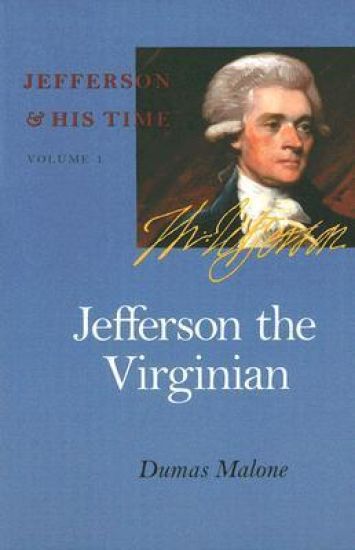
Jefferson the Virginian

Jefferson the Virginian

Dumas Malone

University of Virginia Press
2005
sidottu
Dumas Malone's classic six-volume biography Jefferson and His Time was awarded the Pulitzer Prize in history and became the standard work on Jefferson's life. Volume 1. Jefferson the VirginianThis first volume explores the early phases of Jefferson's life, from his youth, education, legal career, and marriage, to the building of Monticello, writing of the Declaration of Independence and his highly contentious governorship.
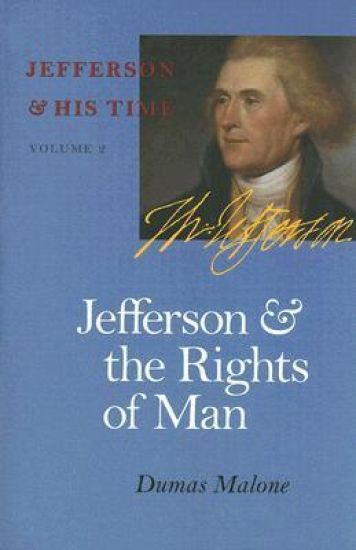
Jefferson and the Rights of Man

Jefferson and the Rights of Man

Dumas Malone

University of Virginia Press
2005
sidottu
Dumas Malone's classic six-volume biography Jefferson and His Time was awarded the Pulitzer Prize in history and became the standard work on Jefferson's life.Volume 2. Jefferson and the Rights of ManIn this second volume, Malone recounts the eventful middle years of Jefferson's life, beginning with the European mission and Jefferson's ministry to France and continuing through his role in the French revolution and his memorable service as secretary of state in the first cabinet of George Washington.
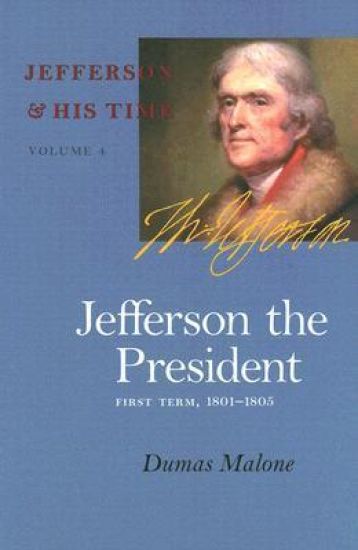
Jefferson the President: First Term, 1801-1805

Jefferson the President: First Term, 1801-1805

Dumas Malone

UNIVERSITY OF VIRGINIA PRESS
2005
sidottu
Dumas Malone's classic six-volume biography Jefferson and His Time was awarded the Pulitzer Prize in history and became the standard work on Jefferson's life.Volume 4. Jefferson the President; First Term, 1801-1805Examining the first four years of Jefferson's presidency, this volume provides a fascinating account of the Louisiana Purchase, Jefferson's continuing opposition to Hamilton's charge for an overriding central government, and his battle with the Supreme Court.
Jefferson the President

Jefferson the President

Dumas Malone

University of Virginia Press
2005
sidottu
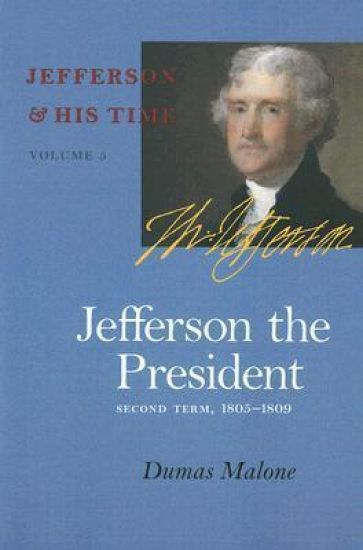
Dumas Malone's classic six-volume biography Jefferson and His Time was awarded the Pulitzer Prize in history and became the standard work on Jefferson's life.Volume 5. Jefferson the President; Second Term, 1805-1809Covering the climax of Jefferson's forty-year career, this fifth and penultimate volume follows Jefferson through his demanding second term as president, when he famously sponsors the Lewis and Clark expedition, confronts the trial of Aaron Burr, and concludes the naval "war" with the Barbary pirates.
Jefferson the Virginian

Jefferson the Virginian

Dumas Malone

University of Virginia Press
2006
nidottu
Dumas Malone's classic six-volume biography Jefferson and His Time was awarded the Pulitzer Prize in history and became the standard work on Jefferson's life.Volume 1. Jefferson the VirginianThis first volume explores the early phases of Jefferson's life, from his youth, education, legal career, and marriage, to the building of Monticello, writing of the Declaration of Independence and his highly contentious governorship.
Jefferson and the Rights of Man

Jefferson and the Rights of Man

Dumas Malone

University of Virginia Press
2006
nidottu
Dumas Malone's classic six-volume biography Jefferson and His Time was awarded the Pulitzer Prize in history and became the standard work on Jefferson's life.Volume 2. Jefferson and the Rights of ManIn this second volume, Malone recounts the eventful middle years of Jefferson's life, beginning with the European mission and Jefferson's ministry to France and continuing through his role in the French revolution and his memorable service as secretary of state in the first cabinet of George Washington.
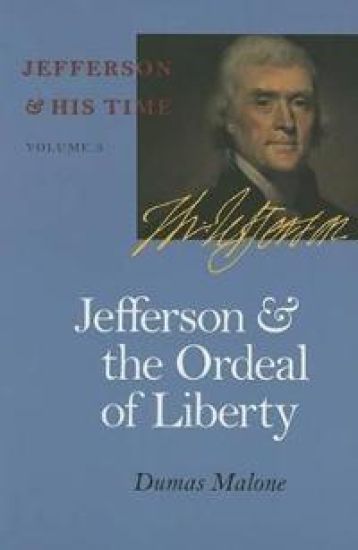
Jefferson and the Ordeal of Liberty

Jefferson and the Ordeal of Liberty

Dumas Malone

University of Virginia Press
2006
nidottu
Dumas Malone's classic six-volume biography Jefferson and His Time was awarded the Pulitzer Prize in history and became the standard work on Jefferson's life.Volume 3. Jefferson and the Ordeal of LibertyBeginning with Jefferson's final year of service as secretary of state in Washington's cabinet, this volume takes on one of the most significant and controversial years in Jefferson's life and indeed in modern Western history, while also exploring Jefferson's retirement to Monticello, his decision to lead the opposition party, and his own election as president in 1801.
Jefferson the President

Jefferson the President

Dumas Malone

University of Virginia Press
2006
nidottu
Dumas Malone's classic six-volume biography Jefferson and His Time was awarded the Pulitzer Prize in history and became the standard work on Jefferson's life.Volume 4. Jefferson the President; First Term, 1801-1805Examining the first four years of Jefferson's presidency, this volume provides a fascinating account of the Louisiana Purchase, Jefferson's continuing opposition to Hamilton's charge for an overriding central government, and his battle with the Supreme Court.
Jefferson the President

Jefferson the President

Dumas Malone

University of Virginia Press
2006
nidottu
Dumas Malone's classic six-volume biography Jefferson and His Time was awarded the Pulitzer Prize in history and became the standard work on Jefferson's life.Volume 5. Jefferson the President; Second Term, 1805-1809Covering the climax of Jefferson's forty-year career, this fifth and penultimate volume follows Jefferson through his demanding second term as president, when he famously sponsors the Lewis and Clark expedition, confronts the trial of Aaron Burr, and concludes the naval "war" with the Barbary pirates.
Jefferson vs. the Patent Trolls

Jefferson vs. the Patent Trolls

Jeffrey H. Matsuura

University of Virginia Press
2008
sidottu
Of all the founding fathers, Thomas Jefferson had the most substantial direct experience with the issues surrounding intellectual property rights and their impact on creativity, invention, and innovation. In our own digital age, in which IP has again become the object of intense debate, his voice remains one of the most vital in American history on this crucial subject. Jefferson lived in a time of immense change, when inventions and other creative works impacted the world profoundly. In this atmosphere, it became clear that the developers of creative works and the users of those works often have competing interests. Jefferson appreciated as well as anyone that the originators of ideas needed legal protection. He also knew that innovation was crucial for a nation's economic prosperity as well as its political health, and that rights should not become barriers. Jefferson was in a unique position to understand the issues of intellectual property rights. His pronouncements on these issues were those not of a scholar but, rather, of a practitioner. As a scientist, author, and inventor, he was a prolific creator. He was also a tireless consumer of others' works. As America's first patent commissioner, he decided which ideas merited protection and effectively created the patent review process. Jeffrey Matsuura profiles Jefferson's diverse and substantial experience with these issues and discusses the lessons Jefferson's efforts offer us today, as we grapple with many of the same challenges of balancing IP rights against an effort to foster creativity and innovation. Without inserting Jefferson anachronistically into the current debate, Matsuura does not shy away from positing where in the spectrum of opinion Jefferson's ideas lie. For lawyers, legal and technology historians, and entrepreneurs, Matsuura offers a fresh, historically informed perspective on a current issue of major importance.
Jefferson, Lincoln and Wilson

Jefferson, Lincoln and Wilson

University of Virginia Press
2010
sidottu
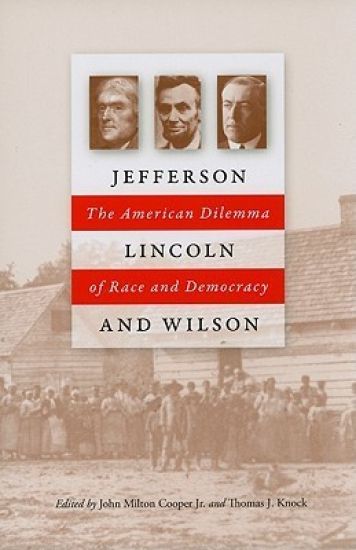
Jefferson, Lincoln, and Wilson: The American Dilemma of Race and Democracy seeks to explore how the collision of races shaped American democracy in the lives, thought, and actions of three of the nation's most important presidents. Each of them led the nation in a different epoch, during times that had their own set of historical circumstances that shaped constructions of race: Jefferson at the very beginning of the republic, as the nineteenth century dawned and the institution of slavery flourished; Lincoln when the country had expanded into a continental empire and fell into civil war over slavery; and Wilson when, simultaneously, the United States emerged as a leader on the world stage and consolidated legally sanctioned apartheid at home. As great and brilliant presidents, they constitute a kind of trinity, partly because no other chief executives have communicated the ideals of democracy so effectively or eloquently, to both their fellow citizens and the peoples of the world, even as they violated principles for which they ostensibly stood.Cooper and Knock have brought these three leaders together in this unique and significant collection of essays written by leading scholars in the field. Contributors include Jean Harvey Baker, David W. Blight, John Milton Cooper Jr., Eric Foner, Annette Gordon-Reed, Thomas J. Knock, Erez Manela, Manning Marable, Peter S. Onuf, and Lucia Stanton.
Jefferson's Body

Jefferson's Body

Maurizio Valsania

University of Virginia Press
2017
sidottu
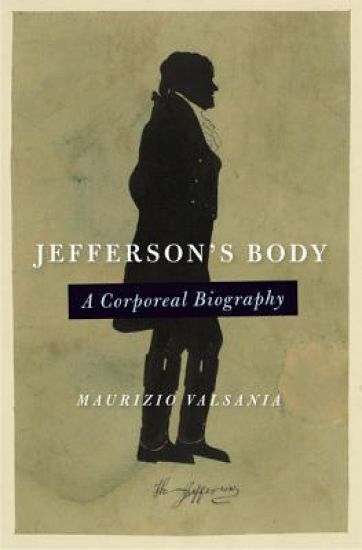
What did Thomas Jefferson look like? How did he carry himself? Such questions, reasonable to ask as we look back on a person who lived in a pre-photographic era, are the starting point for this boldly original new work. Maurizio Valsania considers all aspects of Jefferson’s complex conception of “the body,” from eighteenth-century clothing and fashion to manners, adornment, posture, gesture, and visual and material culture. Drawing also from the fields of medical science, psychology, and cultural anthropology, the author conjures a vivid and detailed re-creation of the third president as a living, breathing—and pondering—human being.Having situated Jefferson in his own body, Valsania looks at the embodied Jefferson in the world of his fellow humans. Any one of the other people in Jefferson’s society—whether that other person was male or female, free or enslaved, African American or Native American—was a critical counterexample for the eighteenth-century Virginian to define himself against, and Valsania’s explorations here lead to numerous insightful discoveries about race, gender, and structures of power. The first comprehensive exploration of Jefferson’s corporeal world, Jefferson’s Body brings the man vividly to life for the modern reader while deepening our understanding of what it meant to Jefferson to be alive.
Jefferson on Display

Jefferson on Display

Gaye S. Wilson

University of Virginia Press
2018
sidottu
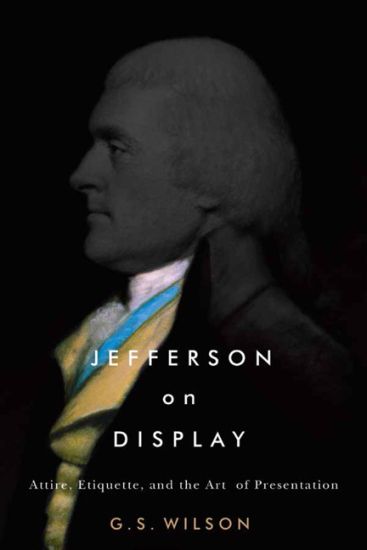
When we think of Thomas Jefferson, a certain picture comes to mind for some of us, combining his physical appearance with our perception of his character. During Jefferson’s lifetime this image was already taking shape, helped along by his own assiduous cultivation. In Jefferson on Display, G. S. Wilson draws on a broad array of sources to show how Jefferson fashioned his public persona to promote his political agenda. During his long career, his image shifted from cosmopolitan intellectual to man of the people. As president he kept friends and foes guessing: he might appear unpredictably in old, worn, and out-of-date clothing with hair unkempt, yet he could as easily play the polished gentleman in a black suit, as he hosted small dinners in the President’s House that were noted for their French-inspired food and fine European wines. Even in retirement his image continued to evolve, as guests at Monticello reported being met by the Sage clothed in rough fabrics that he proudly claimed were created from his own merino sheep, leading Americans by example to manufacture their own clothing, free of Europe.By paying close attention to Jefferson’s controversial clothing choices and physical appearance-as well as his use of portraiture, architecture, and the polite refinements of dining, grooming, and conversation-Wilson provides invaluable new insight into this perplexing founder.
Jefferson on Display

Jefferson on Display

G. S. Wilson

UNIVERSITY OF VIRGINIA PRESS
2022
nidottu
When we think of Thomas Jefferson, a certain picture comes to mind for some of us, combining his physical appearance with our perception of his character. During Jefferson’s lifetime this image was already taking shape, helped along by his own assiduous cultivation. In Jefferson on Display, G. S. Wilson draws on a broad array of sources to show how Jefferson fashioned his public persona to promote his political agenda. During his long career, his image shifted from cosmopolitan intellectual to man of the people. As president he kept friends and foes guessing: he might appear unpredictably in old, worn, and out-of-date clothing with hair unkempt, yet he could as easily play the polished gentleman in a black suit, as he hosted small dinners in the President’s House that were noted for their French-inspired food and fine European wines. Even in retirement his image continued to evolve, as guests at Monticello reported being met by the Sage clothed in rough fabrics that he proudly claimed were created from his own merino sheep, leading Americans by example to manufacture their own clothing, free of Europe.By paying close attention to Jefferson’s controversial clothing choices and physical appearance--as well as his use of portraiture, architecture, and the polite refinements of dining, grooming, and conversation--Wilson provides invaluable new insight into this perplexing founder.
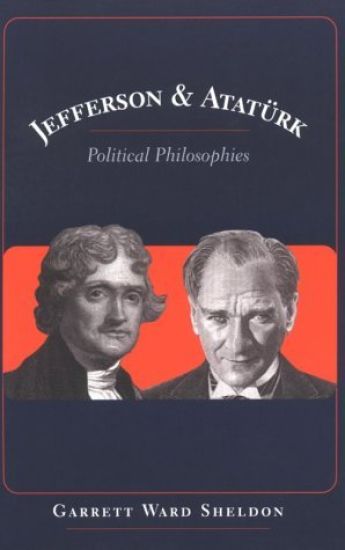
Jefferson and Atatuerk

Jefferson and Atatuerk

Garrett Ward Sheldon

Peter Lang Publishing Inc
2000
nidottu
This book is a comparative study of the political theories of Thomas Jefferson, one of the founders of the United States of America, and Kemal Atat rk, the founder of modern Turkey. Similarities are found in their imperial settings, wars of national independence, establishment of republics, freedom of religion, public education, and economics. The impact of these two great political thinkers on the West and the Middle East is detailed.