
Kirjahaku
Etsi kirjoja tekijän nimen, kirjan nimen tai ISBN:n perusteella.
1000 tulosta hakusanalla Jeffrey V Perry

Jeffrey Chaucer E La Letteratura Inglese Del Secolo XIV (1881)
Giuseppe Brugari
KESSINGER PUBLISHING, LLC
2010
pokkari
Critical Thinking Notes, Jeffrey Grupp, U. of Michigan - Dearborn
Jeffrey Grupp
Lulu.com
2015
pokkari
This book consists of notes covered in class, for Phi 233, Critical Thinking, during my last year of teaching at the University of Michigan - Dearborn, in Dearborn Michigan.

The key to Adam Walsh's murder mystery was secretly hidden 40 years ago in an autopsy file never expected to be publicly seen. On its reveal, it showed that every police action in the case since couldn't possibly have been right. And that was the least of it.A famous old crime. No linking physical evidence. For decades, the murder of 6-year-old Adam Walsh, the iconic face of Missing Children, the boy on the milk carton, was an unsolved mystery. Suddenly police declared a solution resurrected on a theory they'd long discredited, clearly a convenient fiction to benefit the victim's family, who at a live nationally-televised police press conference were tearful and grateful.The national media bought it; the local press knew better. As Fred Grimm wrote in the South Florida Sun Sentinel on July 30, 2021, days after the 40th anniversary of Adam's disappearance: "A sensational alternate theory blamed serial killer Jeffrey Dahmer, who was living in Miami in 1981. But in 2008, despite no new evidence, Hollywood police hung the crime on long-dead Ottis Toole."The only mystery left unsolved was how any cop could have possibly believed Ottis Toole."Before 2008, Adam's father John Walsh had bitterly complained, often crying, that there was "no justice, no justice" for his family. But while Toole was still alive and could have been charged on the same information, Walsh had belittled the idea: "A lot of people still think Ottis Elwood Toole did it. But he and his partner] Henry Lee Lucas confessed to a lot of murders they didn't do. It's a great ploy for convicts: They read about a murder and they're in solitary. They call the police, desperate to clear a murder, and they say, 'Fly me there and buy me a pizza, ' and they get out of their cells for two days "-South Florida magazine, July 1992Police had statements from six separate witnesses at the mall who said they saw Dahmer when Adam disappeared, but police couldn't confirm that Dahmer had been in town then. Then reporter Art Harris, working with ABC Primetime, found a Miami police report with Dahmer's name dated 20 days before Adam was taken. Still they weren't interested. But by 2008, both Dahmer and Toole were dead, so did it matter? Although the police's conclusion was eye-rolling, it seemed harmless.Grimm was wrong only in that police's belief in Toole was the only mystery left.Probably without realizing it, by closing the case police unlatched a door locked nearly 30 years before to a guarded secret that possibly only one man, maybe two, seemed to know-not even the detectives. At that point you just needed to know to ask to open the door.Only one reporter did. Who knew what would be inside?Inside Harris discovered a much larger convenient fiction, but this one not at all harmless. In looking back it explained everything irregular in the investigation that had followed. As long as the secret was kept, the case could never be truly solved. Harris was then working with The Miami Herald, but even when they confronted them, the chief medical examiner who'd hidden it, the police-and most surprisingly, even the Walshes all turned blind eyes.What was the never-meant-to-be-seen or spoken-of truth in Adam Walsh's murder?First, despite what everyone has been led to believe, the autopsied child was only presumed to be Adam. Without a signed autopsy report, as reported in The Miami Herald, he was never actually properly identified as him.Why wasn't there an autopsy report?Because, as it turns out, the child was very likely not Adam.Which makes the unsolved murder mystery in the case, Who is i


The Way to Wealth Benjamin Franklin 250th Anniversary Edition: Commentary by Jeffrey Reeves
Jeffrey Reeves Ma
Createspace Independent Publishing Platform
2011
nidottu
The Wisdom of the Founders articulated by Benjamin Franklin's avatar Father Abraham, the embodiment of the principles and practices of the wisdom holders of the period that created the greatest country and economy in the history of the Earth. The Way to Wealth incorporates the simple financial and economic maxims that you find in every book on personal economics. The commentary by Jeffrey E. Reeves explains and clarifies those simple tenets in common sense 21st century language. A book to study not just read.Compare to "The Richest Man in Babylon" "Rich Dad Poor Dad" "Think and Grow Rich"


Jeffrey Lionel Dahmer stato un assassino, un serial killer, autore di 17 omicidi, molestatore, mutilatore, necrofilo e cannibale; ma la cosa pi interessante la particolare attenzione che sta avendo la sua storia, non a caso, subito dopo la serie su Netflix di Ryan Murphy. Gli spettatori, infatti, ne sono rimasti affascinati fino a farlo diventare un argomento trend, e ci ha suscitato un'aspra critica da parte delle famiglie delle vittime, che si sono sentite quasi offese dall'impostazione della vicenda . D'altronde quello che capita spesso: almeno una volta tutti noi abbiamo preso le parti del Professore nella Casa di Carta, di Pablo Escobar in Narcos o di Walther White in Breaking Bad. una cosa alla quale non possiamo fare a meno, quella dell'identificazione con il protagonista, ma questo non vuol dire assolutamente essere in grado di compiere quei gesti sconvolgenti: solo un artifizio narrativo, poich il protagonista di ogni storia sei tu.

Johannes Pachelbel Canon in D major for four guitars: transcribed by Jeffrey Goodman
Jeffrey Goodman
Createspace Independent Publishing Platform
2012
nidottu

Jeffrey Goodman Music for Guitar
Jeffrey Goodman
Createspace Independent Publishing Platform
2012
nidottu
Composer's Note: This is a collection of original compositions for guitar that I composed over a time span of many years. The music embodies a wide variety of compositional styles - from romantic Spanish, to impressionistic, to Japanese traditional, as well as a group of atonal/12 tone works. A common element that they all share is an exploration of the virtually endless palette of color and timbre of the guitar.The pieces included in this collection are:1. Sakura, Introduction, Theme and Variations on the Japanese folk song. This is a virtuoso concert piece that weaves a dreamlike tapestry of eight variations and a coda, full of mystical evocations of spring, clouds, misty landscapes and serene meditative solitudes. Based on the Japanese folk tune "Sakura," it means "Blooming Cherry Blossoms." Originally composed in the Edo period, its lyrics are translated as: Cherry blossoms, cherry blossoms, Blanketing the countryside, As far as you can see.Is it a mist, or clouds?....Come now, comeLet's look, at last 2. Catalonian Reverie. This is a concert piece that is inspired by music of Spanish composers such as Albeniz, Granados, and De Falla, with a touch of flamenco as well.3. Romance. This short work, based on the iconic Romance D'Amour, has a middle section where the melody is heard in the bass. 4. Hands of My Angel for Solo Guitar. I originally composed this music as an homage to Eric Satie and his Gymnopedie # 1, originally for piano. The harmonic language is somewhat jazz oriented, along with an influence of Satie's friends Claude Debussy and Maurice Ravel.5. Hands of My Angel for Two Guitars. This is a two guitar version of the same melody that I composed for my "Hands of the Angels" CD. In the CD version the guitars are accompanied by pizzicato strings.6. Double of Sarabande from J. S. Bach's Cello Suite # 6. In old French the term 'double' meant melodic variation, where the harmonic design was kept unchanged. Bach composed many doubles, notably in his violin suite in B minor, where each dance is followed by a double. This work is an impressionistic variation on the Bach Sarabande from Cello Suite # 6, with episodic reminiscences of Villa Lobos, Debussy and Baden Powell.7. Ascent for Solo Guitar. Dedicated to my guitar mentor Theodore Norman, this work is inspired by the abstract paintings of Juan Miro, Wassily Kandinski and Paul Klee, as well as the 20th Century music of Anton Webern and Alban Berg. It is composed in a combination atonal/12-tone idiom and is a musical take on the inner experience of mountain climbing: dangling from ropes, suspended in space surrounded by primordial mountain peaks, amidst blue skies and fast-moving clouds.8-12. Children's Games: Five Pieces for Guitar. Composed in an atonal/12-tone idiom, this suite of miniatures explores in musical terms memories of a child-like inner world. Before the regimentation and constraints imposed by the world of adults, children, particularly in play, express a rich world of activity and emotions, often without fixed or rigid boundaries. There is a free alternation, often rapid and instantaneous, between states of joy, exuberance, and sometimes foreboding and anxiety. Los Angeles, July 2012

The New Testament - The Sylvanus Cobb Translation: Reissued by Jeffrey A. Mackey
Jeffrey a. Mackey
Createspace Independent Publishing Platform
2016
nidottu

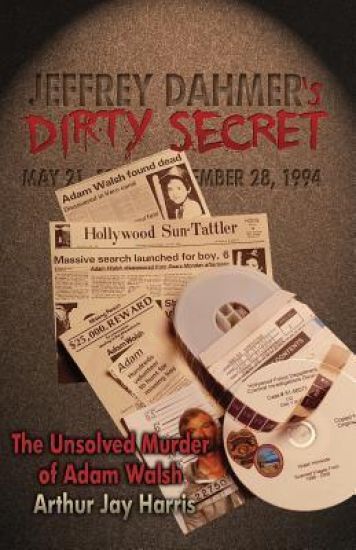
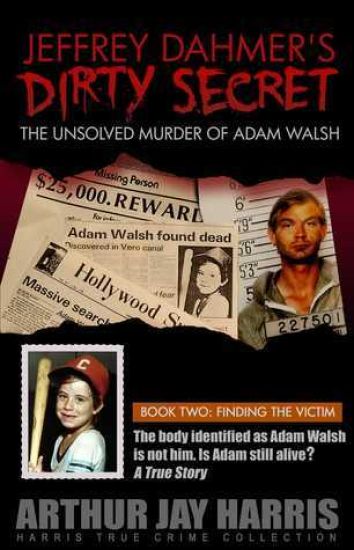
Jeffrey Dahmer's Dirty Secret
Arthur Jay Harris
Createspace Independent Publishing Platform
2013
pokkari
You may think you know the whole story of Adam Walsh-the 6-year-old found killed, whose father, John Walsh, became a crime-fighting TV host. We've long been told that the dead child was Adam-but astonishingly, the medical examiner file doesn't legally confirm it. It should be in an autopsy report, since an autopsy was done-but as Harris reported in the Miami Herald, there is no autopsy report. That never happens. Without legal proof of who's been killed, how can you have a murder trial?A famous old crime. No linking physical evidence. For decades, the murder of Adam Walsh, the iconic face of Missing Children, the boy on the milk carton, was an unsolved mystery. Suddenly police declared a solution resurrected on a theory of theirs they'd long discredited. At a live nationally-televised police press conference, the victim's family was tearful and grateful.The national media bought it. The local press, however, realized it was a convenient fiction.On July 30, 2021, days after the 40th anniversary of Adam's disappearance, Fred Grimm wrote in the South Florida Sun Sentinel: "A sensational alternate theory blamed serial killer Jeffrey Dahmer, who was living in Miami in 1981. But in 2008, despite no new evidence, Hollywood police hung the crime on long-dead Ottis Toole."The only mystery left unsolved was how any cop could have possibly believed Ottis Toole."While Toole was still alive and in state custody, and could have been charged with Adam's murder on the same information, John Walsh had belittled the idea: "A lot of people still think Ottis Elwood Toole did it. But he and his partner] Henry Lee Lucas confessed to a lot of murders they didn't do. It's a great ploy for convicts: They read about a murder and they're in solitary. They call the police, desperate to clear a murder, and they say, 'Fly me there and buy me a pizza, ' and they get out of their cells for two days "-South Florida magazine, July 1992Police had statements from six separate witnesses at the mall who said they saw Dahmer when Adam disappeared, but police couldn't confirm that Dahmer had been in town then. Then reporter Art Harris, working with ABC Primetime, found a Miami police report with Dahmer's name dated 20 days before Adam was taken. Still they weren't interested. But by 2008, both Dahmer and Toole were dead, so did it matter? Although the police's conclusion was eye-rolling, it seemed harmless.Grimm was wrong only in that police's belief in Toole was the only mystery left.Probably without realizing it, by closing the case police unlatched a door locked nearly 30 years before to a guarded secret.Inside Harris discovered a much larger convenient fiction, but this one not at all harmless. In looking back it explained everything irregular in the investigation that had followed. As long as the secret was kept, the case could never be truly solved. Harris was then working with The Miami Herald, but even when they confronted them, the chief medical examiner who'd hidden it, the police-and most surprisingly, even the Walshes all turned blind eyes.What was the never-meant-to-be-seen or spoken-of truth in Adam Walsh's murder?Was it that the evidence that the child was Adam was either inconclusive-or showed that it likely actually wasn't him?This Special Single Edition is a briefer version of Books 1&2
Jeffrey Dahmer's Dirty Secret
Arthur Jay Harris
Createspace Independent Publishing Platform
2013
pokkari
You may think you know the whole story of Adam Walsh-the 6-year-old found killed, whose father, John Walsh, became a crime-fighting TV host. We've long been told that the dead child was Adam-but astonishingly, the medical examiner file doesn't legally confirm it. It should be in an autopsy report, since an autopsy was done-but as Harris reported in the Miami Herald, there is no autopsy report. That never happens. Without legal proof of who's been killed, how can you have a murder trial?A famous old crime. No linking physical evidence. For decades, the murder of Adam Walsh, the iconic face of Missing Children, the boy on the milk carton, was an unsolved mystery. Suddenly police declared a solution resurrected on a theory of theirs they'd long discredited. At a live nationally-televised police press conference, the victim's family was tearful and grateful.The national media bought it. The local press, however, realized it was a convenient fiction.On July 30, 2021, days after the 40th anniversary of Adam's disappearance, Fred Grimm wrote in the South Florida Sun Sentinel: "A sensational alternate theory blamed serial killer Jeffrey Dahmer, who was living in Miami in 1981. But in 2008, despite no new evidence, Hollywood police hung the crime on long-dead Ottis Toole."The only mystery left unsolved was how any cop could have possibly believed Ottis Toole."While Toole was still alive and in state custody, and could have been charged with Adam's murder on the same information, John Walsh had belittled the idea: "A lot of people still think Ottis Elwood Toole did it. But he and his partner] Henry Lee Lucas confessed to a lot of murders they didn't do. It's a great ploy for convicts: They read about a murder and they're in solitary. They call the police, desperate to clear a murder, and they say, 'Fly me there and buy me a pizza, ' and they get out of their cells for two days "-South Florida magazine, July 1992Police had statements from six separate witnesses at the mall who said they saw Dahmer when Adam disappeared, but police couldn't confirm that Dahmer had been in town then. Then reporter Art Harris, working with ABC Primetime, found a Miami police report with Dahmer's name dated 20 days before Adam was taken. Still they weren't interested. But by 2008, both Dahmer and Toole were dead, so did it matter? Although the police's conclusion was eye-rolling, it seemed harmless.Grimm was wrong only in that police's belief in Toole was the only mystery left.Probably without realizing it, by closing the case police unlatched a door locked nearly 30 years before to a guarded secret.Inside Harris discovered a much larger convenient fiction, but this one not at all harmless. In looking back it explained everything irregular in the investigation that had followed. As long as the secret was kept, the case could never be truly solved. Harris was then working with The Miami Herald, but even when they confronted them, the chief medical examiner who'd hidden it, the police-and most surprisingly, even the Walshes all turned blind eyes.What was the never-meant-to-be-seen or spoken-of truth in Adam Walsh's murder?Was it that the evidence that the child was Adam was either inconclusive-or showed that it likely actually wasn't him?

Jeffrey Wolf Green Evolutionary Astrology
Linda Jonson; The School of Evolutionary Astrology; Jeffrey Wolf Green
Createspace Independent Publishing Platform
2014
pokkari
The EA Glossary is a well-researched, informative and illuminating compilation of key terms, topics and guiding principles used in Jeffrey Wolf Green's Evolutionary Astrology that affirms and expands upon the core EA paradigm taught in his books: Pluto: The Evolutionary Journey of the Soul (Vol. 1)Pluto: The Soul's Evolution through Relationships (Vol. 2)Compiled from extracts from the message board of the School of Evolutionary Astrology from March 2009 to October 2013, the EA Glossary provides indispensable study material for resourceful EA students and discerning members of the astrological community, in essence serving as a compass to help navigate into the depths of Evolutionary Astrology