Kirjojen hintavertailu. Mukana 11 342 296 kirjaa ja 12 kauppaa.

Kirjahaku

Etsi kirjoja tekijän nimen, kirjan nimen tai ISBN:n perusteella.

1000 tulosta hakusanalla Jeremiah Bascom Reeves

Jeremiah, Lamentations

Jeremiah, Lamentations

F. B. Huey

Broadman Holman Publishers
1993
sidottu
THE NEW AMERICAN COMMENTARY is for the minister or Bible student who wants to understand and expound the Scriptures. Notable features include: * commentary based on THE NEW INTERNATIONAL VERSION;* the NIV text printed in the body of the commentary;* sound scholarly methodology that reflects capable research in the original languages;* interpretation that emphasizes the theological unity of each book and of Scripture as a whole;* readable and applicable exposition.
Jeremiah's Scribes

Jeremiah's Scribes

Meredith Marie Neuman

University of Pennsylvania Press
2013
sidottu
New England Puritan sermon culture was primarily an oral phenomenon, and yet its literary production has been understood mainly through a print legacy. In Jeremiah's Scribes, Meredith Marie Neuman turns to the notes taken by Puritan auditors in the meetinghouse in order to fill out our sense of the lived experience of the sermon. By reconstructing the aural culture of sermons, Neuman shifts our attention from the pulpit to the pew to demonstrate the many ways in which sermon auditors helped to shape this dominant genre of Puritan New England. Tracing the material transmission of sermon texts by readers and writers, hearers and notetakers, Jeremiah's Scribes challenges the notion of stable authorship by individual ministers. Instead, Neuman illuminates a mode of textual production that pervaded communities and occurred in the overlapping media of print, manuscript, and speech. Even printed sermons, she demonstrates, bore the traces of their roots in the oral culture of the meetinghouse. Bringing material considerations to bear on anxieties over the perceived relationship between divine and human language, Jeremiah's Scribes broadens our understanding of all Puritan literature. Neuman examines the controlling logic of the sermon in relation to nonsermonic writing-such as conversion narrative-ultimately suggesting the fundamental permeability among disparate genres of Puritan writing.
Jeremiah, Baruch

Jeremiah, Baruch

Pauline A. Viviano

Liturgical Press
2013
pokkari
Jeremiah grew up in a time of peace and died in exile. He lived to see the temple burned to the ground, Jerusalem destroyed, and his people marched into a foreign land. A reluctant prophet, Jeremiah preached the renewal of the covenant, teaching in parables like Jesus. His God was a God of hope, promise, power, and the will to make the people of Israel a holy people.The book of Baruch deals with the challenges faced by the Jews of the Diaspora who never returned to their homeland. Out of their exile, they became the people of "the book" gathering in their synagogues, studying the law and the prophets, and producing their own inspired sacred literature.
Jeremiah Joyce

Jeremiah Joyce

John Issitt

CRC Press Inc
2017
sidottu
Jeremiah Joyce was one of the accused in the famous Treason Trials of 1794 which marked the suppression of radical agitation in Britain for the ensuing twenty years. He was a political radical who imbibed the traditions of the 'commonwealthman' and actively campaigned for a more democratic and representative state. Through the early 1790s he acted as the metropolitan political agent for his patron the Earl of Stanhope and he liased between radical groups whilst also distributing radical literature including Tom Paine's Rights of Man. He was one of the very few artisans at the end of the eighteenth century adopted by the literary and scientific intelligentsia and was unique in training to become a Unitarian minister at the age of 23 after serving a seven-year trade apprenticeship and having worked as a journeyman. This work traces the legacies, traditions and visions of the English Enlightenment as they are expressed through Joyce's life and literary production. It explores the evolution of these traditions against the threatening background of the French revolution and the developing imperatives for education in general, and science education in particular. By tracing the linkages between political, educational, scientific and publishing cultures, it reflects on the issues of late eighteenth century patronage, the literary forms of popular science and the evolution of the metropolitan book trade. In so doing the book recovers the life of a hitherto much neglected science writer and political activist and contributes to the histories of politics, education, science and the developing discipline of book history.
Jeremiah and Lamentations – A Commentary for Biblical Preaching and Teaching

Jeremiah and Lamentations – A Commentary for Biblical Preaching and Teaching

Duane Garrett; Calvin Pearson

KREGEL PUBLICATIONS,U.S.
2022
sidottu
Jeremiah and Lamentations approaches two historically related yet literarily distinct books of the Old Testament, carefully attending to their composition and application. Garrett and Pearson draw out the crucial themes and structures of Jeremiah: the hope of eschatological salvation nestled in the center of an expertly crafted exploration of human sin in all its blindness, perversity, and persistence. Lamentations wrestles with the unanswered questions of a community in exile, sobered by judgment and wondering whether God intends to abandon Israel entirely. Garrett and Pearson examine both Old Testament texts through the lens of Jesus, clarifying the parallels and fulfillments essential for Christian preaching.
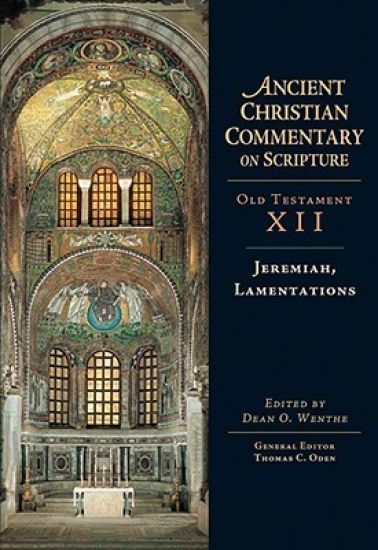
Jeremiah, Lamentations

Jeremiah, Lamentations

Dean O. Wenthe; Thomas C. Oden

IVP Academic
2009
sidottu
Jeremiah, the weeping prophet, prophesied for four decades under the last five kings of Judah—from 627 to 587 B.C. His mission: a call to repentance. Among the apostolic fathers, Jeremiah was rarely cited, but several later authors give prominent attention to him, including Origen, Theodoret of Cyr, and Jerome, who wrote individual commentaries on Jeremiah, and Cyril of Alexandria and Ephrem the Syrian, who compiled catenae. Justin and Irenaeus made use of Jeremiah to define Christians over against Jews. Athanasius made use of him in trinitarian debates. Cyril of Jerusalem, Irenaeus, Basil the Great, and Clement of Alexandria all drew on Jeremiah for ethical exhortation. Lamentations, as might be expected, quickly became associated with losses and death, notably in Gregory of Nyssa's Funeral Oration on Meletius. By extension the fathers saw Lamentations as a description of the challenges that face Christians in a fallen world. In this Ancient Christian Commentary on Scripture volume, readers will find some ancient authors translated into English here for the first time. Throughout they will gain insight and encouragement in the life of faith as seen through ancient pastoral eyes.
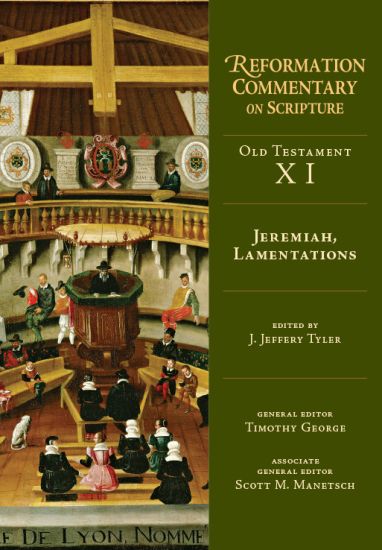
Jeremiah, Lamentations

Jeremiah, Lamentations

J. Jeffery Tyler

IVP Academic
2018
sidottu
The prophetic ministry of Jeremiah, described in the Old Testament books of Jeremiah and Lamentations, took place during a time of chaos and tragedy for the people of Israel: the fall of Jerusalem, the destruction of the temple, and the exile to Babylon. Yet, in the midst of this loss and in hope of the restoration of God's people, Jeremiah is able to declare: "The steadfast love of the Lord never ceases; his mercies never come to an end; they are new every morning; great is your faithfulness" (Lam 3:22-23). Reflecting on these verses, Reformation commentators, who were themselves familiar with the turbulent realities of their own sixteenth century, heard not only hope for the renewal of Israel, but prophetic promise for the coming of the Messiah. Lutheran theologian and pastor Nikolaus Selnecker wrote, "Is not what Jeremiah says immeasurably beautiful, lovely, and consoling? You will think, what is my soul saying to me? That is a strong Amen, when the spirit of the heart knows and can say, 'God hears me, I know it. My heart tells me. I do not doubt God's grace. I am a child of God. He is my father and will help me.'" In this volume of the Reformation Commentary on Scripture, church historian J. Jeffery Tyler guides readers through a diversity of early modern commentary on the books of Jeremiah and Lamentations. Readers will hear from familiar voices and discover lesser-known figures from a variety of theological traditions, including Lutherans, Reformed, Radicals, Anglicans, and Roman Catholics. Drawing upon a variety of resources—including commentaries, sermons, treatises, and confessions—much of which appears here for the first time in English, this volume provides resources for contemporary preachers, enables scholars to better understand the depth and breadth of Reformation commentary, and seeks to help everyone remember that God's mercies never come to an end.
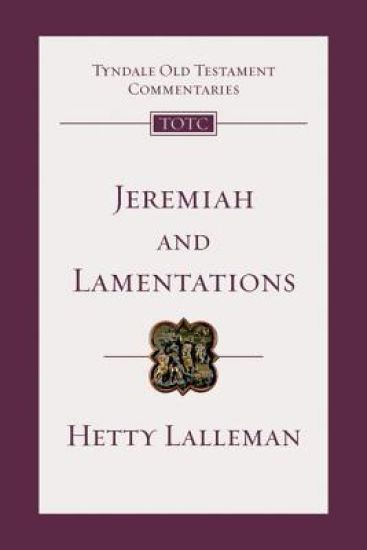
Jeremiah and Lamentations

Jeremiah and Lamentations

Hetty Lalleman

INTERVARSITY PRESS
2013
nidottu
Despite the themes of doom and destruction, the primary message of Jeremiah is one of the love and grace of a God who never gives up on those he has called to be his own. The prophet's life is characterized by suffering, but he points to a new beginning, a new covenant and a new hope, eventually made possible through the unique Suffering Servant. Lamentations powerfully expresses personal and national suffering. Yet, even in these utterances of desperate grief, there are glimpses of hope. Lifting out these significant but understated themes in Jeremiah and Lamentations, this commentary by Hetty Lalleman opens our eyes to an important chapter in salvation history.
Jeremiah, Lamentations

Jeremiah, Lamentations

Dean O. Wenthe; Thomas C. Oden

IVP Academic
2019
nidottu
Jeremiah, the weeping prophet, prophesied for four decades under the last five kings of Judah—from 627 to 587 B.C. His mission: a call to repentance. Among the apostolic fathers, Jeremiah was rarely cited, but several later authors give prominent attention to him, including Origen, Theodoret of Cyr, and Jerome, who wrote individual commentaries on Jeremiah, and Cyril of Alexandria and Ephrem the Syrian, who compiled catenae. Justin and Irenaeus made use of Jeremiah to define Christians over against Jews. Athanasius made use of him in trinitarian debates. Cyril of Jerusalem, Irenaeus, Basil the Great, and Clement of Alexandria all drew on Jeremiah for ethical exhortation. Lamentations, as might be expected, quickly became associated with losses and death, notably in Gregory of Nyssa's Funeral Oration on Meletius. By extension the fathers saw Lamentations as a description of the challenges that face Christians in a fallen world. In this Ancient Christian Commentary on Scripture volume, readers will find some ancient authors translated into English here for the first time. Throughout they will gain insight and encouragement in the life of faith as seen through ancient pastoral eyes.
Jeremiah 1-25

Jeremiah 1-25

Alex Varughese

Lillenas Publishing
2008
pokkari
The New Beacon Bible Commentary is an engaging, indispensable reference tool to aid individuals in every walk of life in the study and meditation of God's Word. Written from the Wesleyan theological perspective, it offers insight and perceptive scholarship to help you unlock the deeper truths of Scripture and garner an awareness of the history, culture, and context attributed to each book of study. Readable, relevant, and academically thorough, it offers scholars, pastors, and laity a new standard for understanding and interpreting the Bible in the 21st century.Each volume features: Completely New Scholarship from notable experts in the Wesleyan traditionConvenient Introductory Material for each book of the Bible including information on authorship, date, history, audience, sociological/cultural issues, purpose, literary features, theological themes, hermeneutical issues, and moreClear Verse-by-verse Explanations, which offer a contemporary, Wesleyan-based understanding derived from the passage's original languageComprehensive Annotation divided into three sections, which cover background elements behind the text; verse-by-verse details and meanings found in the text; and significance, relevance, intertextuality, and application from the textHelpful Sidebars, which provide deeper insight into theological issues, word meanings, archeological connections, historical relevance, cultural customs, and moreExpanded Bibliography for further study of historical elements, additional interpretations, and theological themesThe book of Jeremiah occupies a prominent place in the Old Testament canon at least on three counts: 1) its massive size, 2) the complexity of its content and message, and 3) the towering prophetic figure behind the book that stands shoulder to shoulder with other great prophets such as Isaiah and Ezekiel.
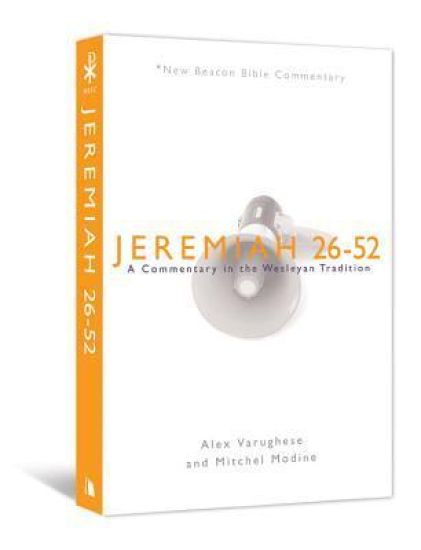
Jeremiah 26-52

Jeremiah 26-52

Alex Varughese; Mitchell Modine

Beacon Hill Press of Kansas City
2010
pokkari
The New Beacon Bible Commentary is an engaging, indispensable reference tool to aid individuals in every walk of life in the study and meditation of God's Word. Written from the Wesleyan theological perspective, it offers insight and perceptive scholarship to help you unlock the deeper truths of Scripture and garner an awareness of the history, culture, and context attributed to each book of study. Readable, relevant, and academically thorough, it offers scholars, pastors, and laity a new standard for understanding and interpreting the Bible in the 21st century.EACH VOLUME FEATURES: Completely New Scholarship from notable experts in the Wesleyan tradition Convenient Introductory Material for each book of the Bible including information on authorship, date, history, audience, sociological/cultural issues, purpose, literary features, theological themes, hermeneutical issues, and more Clear Verse-by-Verse Explanations, which offer a contemporary, Wesleyan-based understanding derived from the passage's original language Comprehensive Annotation divided into three sections, which cover background elements behind the text; verse-by-verse details and meanings found in the text; and significance, relevance, intertextuality, and application from the text Helpful Sidebars, which provide deeper insight into theological issues, word meanings, archeological connections, historical relevance, cultural customs, and more Expanded Bibliography for further study of historical elements, additional interpretations, and theological themes The book of Jeremiah occupies a prominent place in the Old Testament canon at least on three counts: 1) its massive size, 2) the complexity of its content and message, and 3) the towering prophetic figure behind the book that stands shoulder to shoulder with other great prophets such as Isaiah and Ezekiel.
Jeremiah's Mighty Big TO-DO List

Jeremiah's Mighty Big TO-DO List

Wanda Mukherjee

Sojourner Publishing, Inc.
2018
pokkari
Jeremiah Bigoljam is in BIG trouble with Principal Smith. Because he has lost his permission slip and homework, he may not get a TICKET TO PLAY in his school's annual field day. Jeremiah loves to run and play. Field day is his favorite day of the year - and it only happens once a year. Sometimes he is forgetful and his desk is very very messy. When Principal Smith tells him to GET ORGANIZED, Jeremiah takes it to heart. He goes home and creates the biggest, most fantastic and longest TO-DO list in the COSMOS. As usual though, Jeremiah's big plans get him into trouble. His TO-DO list is so big that it knocks his best friend Penny to the ground and causes the other children to laugh. What will Jeremiah do? His teacher Mrs. Brown has the answer. Read on to find the clues.
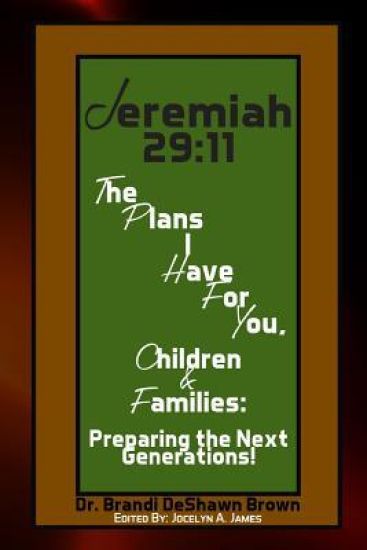
Jeremiah 29

Jeremiah 29

Brandi Deshawn Brown

Brandi Deshawn Brown
2017
pokkari
Jeremiah 29:11 The Plans I Have For You, Children and Families: Preparing the Next Generations is designed for families, and church and community members to understand their roles in the Jeremiah 29:11 purposes of our youth. The achievement of knowing the Jeremiah 29:11 plans for you and your family and the youth assigned to your purpose is the foundation to having a Kingdom-centered life-style within your home, family, and community.
Jeremiah Justice Saves the Day

Jeremiah Justice Saves the Day

Melissa Miles

Melissa Miles
2019
sidottu
Jeremiah Justice is like every other kid, except for the tracheostomy tube in his neck that helps him breathe. At least, that's what he thinks, until the day he discovers his superpower--the ability to shoot a tornado blast from his tracheostomy Jeremiah Justice names his power "Super Tornado Blaster", and practices using it in his home and neighborhood. Will he be able to summon up the courage and control the Super Tornado Blaster to defeat the notorious super villain, Mr. Menace?
Jeremiah Justice Saves Camp!

Jeremiah Justice Saves Camp!

Melissa Miles

Melissa Miles
2021
sidottu
Being a Superhero is Exhausting Ever since Jeremiah Justice discovered the ability to shoot a tornado blast from his tracheostomy tube, he's been working hard to keep his city safe. A week at Camp Hillcrest should be the perfect place to just be a regular kid, and take a break from being a superhero. But, can he do it.When he first meets Bella Grace, Jeremiah Justice isn't sure what to think. But, when Fiendish Firestarter threatens camp, Jeremiah Justice may have to team up with her to stop him once and for all. It may be the only way to save Camp Hillcrest. Even if it means using his Super Tornado Blaster to do it.
Jeremiah I

Jeremiah I

Jo Amdahl

Shoshone Publications
2018
pokkari
So you think you know your Bible History? 1. Did you know that when King Josiah marched against Egypt, that he did it to protect Babylon's interests? 2. Did you know that Jeremiah was the Prophet to the Nations? 3. Did you know that Jeremiah revealed a highly classified Babylonian plan to take Carchemish and defeat the Egyptians, pretty much as it was happening? 4. Did you know that Jeremiah knew that Nebuchadnezzar was king when he arrived in Jerusalem, but Nebuchadnezzar only found out about it over a week later? 5. Do you know who Nitocris was? 6. Did you know that Jehoiakim, upon his crowning, swore to the Chief Priest in anger to do more evil than all his fathers before him?So you think you know your Bible History? Think again The second book of the Empire of Gold series explodes to life with the kidnapping of the Princess of Egypt. This disaster touches off a series of catastrophic events which culminate in the death of Judah's good King Josiah and the beginning of a new era of rebellion and idolatry in the tiny kingdom.Excerpt: Topheth, the place of burning, that was what they called the fiery altars of the Baals, and the unquenchable flames of the garbage heap of Jerusalem had appropriated the name. It was the picture of eternal damnation to the people of Judah. Tongues of fire flickered before the prophet's face, casting eerie lights across his visage in the shadows of the city wall. The flames burned, attempting to devour the rubbish of the city which fed them. The rejected and outcast broken remnants of society were consumed here forever amidst the swarms of flies and the scavenging creatures which tried to gorge themselves on their share of the refuse before the flames could claim it. Jeremiah faced hell and knew it could be avoided no longer...