Kirjojen hintavertailu. Mukana 12 390 323 kirjaa ja 12 kauppaa.

Kirjahaku

Etsi kirjoja tekijän nimen, kirjan nimen tai ISBN:n perusteella.

1000 tulosta hakusanalla Jeremiah Chaplin

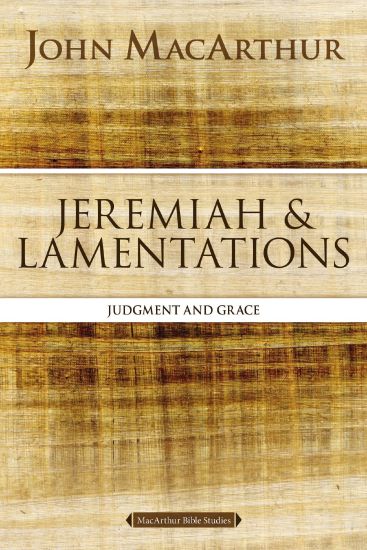
Jeremiah and Lamentations

Jeremiah and Lamentations

John F. MacArthur

HarperChristian Resources
2024
nidottu
The prophet Jeremiah ministered during the waning decades of Judah. The people had rebelled against the Lord through their constant idolatry and injustice of all kinds—and they were about to experience God's wrath in the form of a conquering army. Yet even as Jeremiah described the short-term consequences of the people's rebellion against the Lord, he also spoke of God's long-term plan to provide salvation.In the twelve studies within, join John MacArthur on an exploration of this "weeping prophet"—so called because of the grief he expressed for his people—and the prophecies he faithfully related to them for more than fifty years. By working through this study, you will learn that in your life—just like in the lives of the people of Judah—God may discipline you for a season, but He will always extend His grace to you.—ABOUT THE SERIES—The MacArthur Bible Study series is designed to help you study the Word of God with guidance from widely respected pastor and author John MacArthur. Each guide provides intriguing examinations of the whole of Scripture by examining its parts and incorporates:Extensive, but straight-forward commentary on the text.Detailed observations on overriding themes, timelines, history, and context.Word and phrase studies to help you unlock the broader meaning and apply it to your life.Probing, interactive questions with plenty of space to write down your response and thoughts.
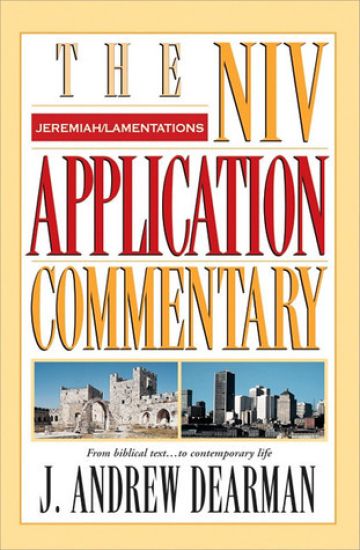
Jeremiah, Lamentations

Jeremiah, Lamentations

J. Andrew Dearman

Zondervan
2002
sidottu
The NIV Application Commentary helps you communicate and apply biblical text effectively in today's context.To bring the ancient messages of the Bible into today's world, each passage is treated in three sections:Original Meaning. Concise exegesis to help readers understand the original meaning of the biblical text in its historical, literary, and cultural context.Bridging Contexts. A bridge between the world of the Bible and the world of today, built by discerning what is timeless in the timely pages of the Bible.Contemporary Significance. This section identifies comparable situations to those faced in the Bible and explores relevant application of the biblical messages. The author alerts the readers of problems they may encounter when seeking to apply the passage and helps them think through the issues involved.This unique, award-winning commentary is the ideal resource for today's preachers, teachers, and serious students of the Bible, giving them the tools, ideas, and insights they need to communicate God's Word with the same powerful impact it had when it was first written.The book you receive may have a different cover design than shown on the website.
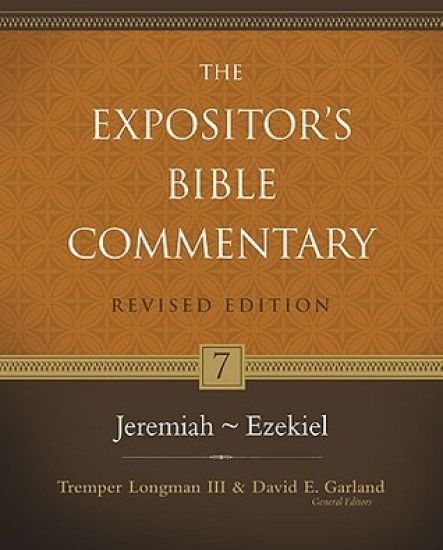
Jeremiah–Ezekiel
Continuing a Gold Medallion Award-winning legacy, the completely revised Expositor's Bible Commentary puts world-class biblical scholarship in your hands.A staple for students, teachers, and pastors worldwide, The Expositor's Bible Commentary (EBC) offers comprehensive yet succinct commentary from scholars committed to the authority of the Holy Scriptures. The EBC uses the New International Version of the Bible, but the contributors work from the original Hebrew and Greek languages and refer to other translations when useful.Each section of the commentary includes:An introduction: background information, a short bibliography, and an outlineAn overview of Scripture to illuminate the big pictureThe complete NIV textExtensive commentaryNotes on textual questions, key words, and conceptsReflections to give expanded thoughts on important issuesThe series features 56 contributors, who:Believe in the divine inspiration, complete trustworthiness, and full authority of the BibleHave demonstrated proficiency in the biblical book that is their specialtyAre committed to the church and the pastoral dimension of biblical interpretationRepresent geographical and denominational diversityUse a balanced and respectful approach toward marked differences of opinionWrite from an evangelical viewpointFor insightful exposition, thoughtful discussion, and ease of use—look no further than The Expositor's Bible Commentary.
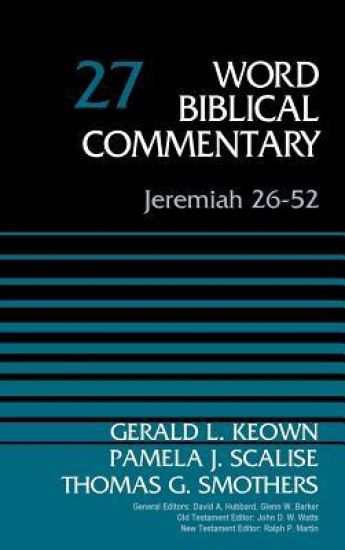
Jeremiah 26-52, Volume 27

Jeremiah 26-52, Volume 27

Gerald Keown; Pamela Scalise; Thomas G. Smothers

Zondervan
2016
sidottu
The Word Biblical Commentary delivers the best in biblical scholarship, from the leading scholars of our day who share a commitment to Scripture as divine revelation. This series emphasizes a thorough analysis of textual, linguistic, structural, and theological evidence. The result is judicious and balanced insight into the meanings of the text in the framework of biblical theology. These widely acclaimed commentaries serve as exceptional resources for the professional theologian and instructor, the seminary or university student, the working minister, and everyone concerned with building theological understanding from a solid base of biblical scholarship.Overview of Commentary OrganizationIntroduction—covers issues pertaining to the whole book, including context, date, authorship, composition, interpretive issues, purpose, and theology.Each section of the commentary includes:Pericope Bibliography—a helpful resource containing the most important works that pertain to each particular pericope.Translation—the author’s own translation of the biblical text, reflecting the end result of exegesis and attending to Hebrew and Greek idiomatic usage of words, phrases, and tenses, yet in reasonably good English.Notes—the author’s notes to the translation that address any textual variants, grammatical forms, syntactical constructions, basic meanings of words, and problems of translation.Form/Structure/Setting—a discussion of redaction, genre, sources, and tradition as they concern the origin of the pericope, its canonical form, and its relation to the biblical and extra-biblical contexts in order to illuminate the structure and character of the pericope. Rhetorical or compositional features important to understanding the passage are also introduced here.Comment—verse-by-verse interpretation of the text and dialogue with other interpreters, engaging with current opinion and scholarly research.Explanation—brings together all the results of the discussion in previous sections to expose the meaning and intention of the text at several levels: (1) within the context of the book itself; (2) its meaning in the OT or NT; (3) its place in the entire canon; (4) theological relevance to broader OT or NT issues.General Bibliography—occurring at the end of each volume, this extensive bibliographycontains all sources used anywhere in the commentary.
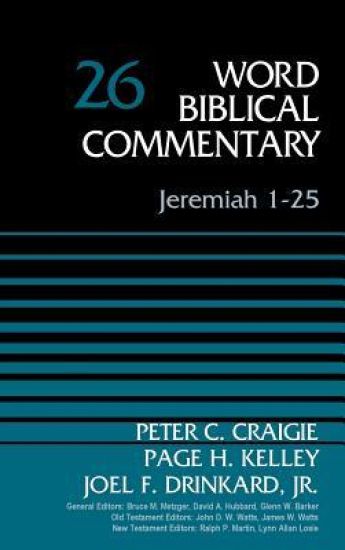
Jeremiah 1-25, Volume 26

Jeremiah 1-25, Volume 26

Peter C. Craigie; Paige Kelley; Joel F. Drinkard

Zondervan
2016
sidottu
The Word Biblical Commentary delivers the best in biblical scholarship, from the leading scholars of our day who share a commitment to Scripture as divine revelation. This series emphasizes a thorough analysis of textual, linguistic, structural, and theological evidence. The result is judicious and balanced insight into the meanings of the text in the framework of biblical theology. These widely acclaimed commentaries serve as exceptional resources for the professional theologian and instructor, the seminary or university student, the working minister, and everyone concerned with building theological understanding from a solid base of biblical scholarship.Overview of Commentary OrganizationIntroduction—covers issues pertaining to the whole book, including context, date, authorship, composition, interpretive issues, purpose, and theology.Each section of the commentary includes:Pericope Bibliography—a helpful resource containing the most important works that pertain to each particular pericope.Translation—the author’s own translation of the biblical text, reflecting the end result of exegesis and attending to Hebrew and Greek idiomatic usage of words, phrases, and tenses, yet in reasonably good English.Notes—the author’s notes to the translation that address any textual variants, grammatical forms, syntactical constructions, basic meanings of words, and problems of translation.Form/Structure/Setting—a discussion of redaction, genre, sources, and tradition as they concern the origin of the pericope, its canonical form, and its relation to the biblical and extra-biblical contexts in order to illuminate the structure and character of the pericope. Rhetorical or compositional features important to understanding the passage are also introduced here.Comment—verse-by-verse interpretation of the text and dialogue with other interpreters, engaging with current opinion and scholarly research.Explanation—brings together all the results of the discussion in previous sections to expose the meaning and intention of the text at several levels: (1) within the context of the book itself; (2) its meaning in the OT or NT; (3) its place in the entire canon; (4) theological relevance to broader OT or NT issues.General Bibliography—occurring at the end of each volume, this extensive bibliographycontains all sources used anywhere in the commentary.
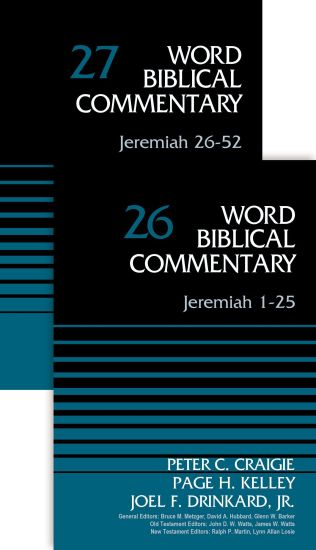
Jeremiah (2-Volume Set---26 and 27)

Jeremiah (2-Volume Set---26 and 27)

Peter C. Craigie; Paige Kelley; Joel F. Drinkard; Pamela Scalise; Thomas G. Smothers

Zondervan
2017
sidottu
The Word Biblical Commentary delivers the best in biblical scholarship, from the leading scholars of our day who share a commitment to Scripture as divine revelation. This series emphasizes a thorough analysis of textual, linguistic, structural, and theological evidence. The result is judicious and balanced insight into the meanings of the text in the framework of biblical theology. These widely acclaimed commentaries serve as exceptional resources for the professional theologian and instructor, the seminary or university student, the working minister, and everyone concerned with building theological understanding from a solid base of biblical scholarship. Overview of Commentary Organization Introduction—covers issues pertaining to the whole book, including context, date, authorship, composition, interpretive issues, purpose, and theology. Each section of the commentary includes: Pericope Bibliography—a helpful resource containing the most important works that pertain to each particular pericope. Translation—the author’s own translation of the biblical text, reflecting the end result of exegesis and attending to Hebrew and Greek idiomatic usage of words, phrases, and tenses, yet in reasonably good English. Notes—the author’s notes to the translation that address any textual variants, grammatical forms, syntactical constructions, basic meanings of words, and problems of translation. Form/Structure/Setting—a discussion of redaction, genre, sources, and tradition as they concern the origin of the pericope, its canonical form, and its relation to the biblical and extra-biblical contexts in order to illuminate the structure and character of the pericope. Rhetorical or compositional features important to understanding the passage are also introduced here. Comment—verse-by-verse interpretation of the text and dialogue with other interpreters, engaging with current opinion and scholarly research. Explanation—brings together all the results of the discussion in previous sections to expose the meaning and intention of the text at several levels: (1) within the context of the book itself; (2) its meaning in the OT or NT; (3) its place in the entire canon; (4) theological relevance to broader OT or NT issues. General Bibliography—occurring at the end of each volume, this extensive bibliographycontains all sources used anywhere in the commentary.
Jeremiah's God (2018 revised edition)

Jeremiah's God (2018 revised edition)

David C Coldwell

Lulu.com
2018
sidottu
Jeremiah was a fascinating and complex man. As you learn more about him, I hope you will draw closer to his God. Jeremiah knew the Lord. He was aware that the Lord implements kindness, justice and righteousness on the earth (Jer. 9:24). May it be the same for you. This prophet lived in turbulent times, and many people today can identify with the difficulties that he faced. Jeremiah s God is a daily devotional book with 365 meditations from the Book of Jeremiah. Each daily reading exposits one or two verses and the reader can gain an understanding of the entire 52 chapters of Jeremiah in one year. To aid the reader s personal use of these studies, each reading concludes with a question or application.
Jeremiah's God 2018 Revised Edition

Jeremiah's God 2018 Revised Edition

David C Coldwell

Lulu.com
2018
pokkari
Jeremiah was a fascinating and complex man. As you learn more about him, I hope you will draw closer to his God. Jeremiah knew the Lord. He was aware that the Lord implements kindness, justice and righteousness on the earth (Jer. 9:24). May it be the same for you. This prophet lived in turbulent times, and many people today can identify with the difficulties that he faced. Jeremiah s God is a daily devotional book with 365 meditations from the Book of Jeremiah. Each daily reading exposits one or two verses and the reader can gain an understanding of the entire 52 chapters of Jeremiah in one year. To aid the reader s personal use of these studies, each reading concludes with a question or application.
Jeremiah in History and Tradition
Jeremiah in History and Tradition examines aspects of the Book of Jeremiah from a variety of perspectives including historical, textual, redaction, and feminist criticism, as well as the history of its reception. The book looks afresh at the Book of Jeremiah through the lens of intertextuality and reception history in the broadest sense, exploring Jeremiah in its historical context as well as the later history and interpretation of the text, and also reconsidering aspects of the Book of Jeremiah’s traditions. This volume features essays from a unique assembly of scholars, both seasoned and new. It is divided into two parts: "Jeremiah in History", which explores a variety of readings of Jeremiah from the point of view of classical historical criticism; and "Jeremiah in Tradition", which discusses the portraits and use of both the book and the figure of Jeremiah in extra-biblical traditions. Offering challenging new theories, Jeremiah in History and Tradition is invaluable to scholars and students in the field of Biblical Studies. It is a useful resource for anyone working on the interpretation of the biblical text and the readings of the text of Jeremiah throughout history.
Jeremiah, Zedekiah, and the Fall of Jerusalem
*Uses both a narratological and historical-critical method to read these specific passages of Jeremiah *Demonstrates that the story of Jeremiah and Zedekiah is not the typical god prophet/bad king story found in much of prophetic literature and the Deuteronomic History *Provides an intertextual reading of the passages which connects Jeremiah to other figures in the Old Testament The book offers a narratological and intertextual reading of Jeremiah 37:1-40:6, a text that features the dynamic interaction between the prophet Jeremiah and King Zedekiah in the context of events surrounding the fall of Jerusalem. While there have been many literary studies of biblical texts, there has been little such work on the narratives in the book of Jeremiah. This fact is surprising since the Jeremianic stories are narrated in a lively and sophisticated manner and contain complex characters and vivid dialogue and action, reminiscent of texts in the Primary History which have received much more literary attention. Roncace's book begins to uncover the richness of the prophetic narratives in Jeremiah. The study focuses on issues of characterization and point of view as well as the text's connections with other passages in the book of Jeremiah and those beyond it, particularly the Deuteronomistic History. Roncace argues that the text develops complex images of both Zedekiah and Jeremiah. It is not a story of the good prophet and the bad king; times as chaotic and confusing as the final days of Jerusalem do not call for a black-and-white story. Rather the text invites both sympathy and criticism for Jeremiah and Zedekiah. Jeremiah is the embattled prophet of God; yet at times he appears deceptive and manipulative, more concerned about his own well-being than that of the people, and his message can be ambiguous and in the end is not fully correct. Zedekiah, for his part, appears receptive to Jeremiah's word and protects the prophet from others who would harm him; yet he is too irresolute to take any action to save the city. The ambiguity in the portrayals of both figures is further developed by intertextual connections. Jeremiah can be compared to Moses, the Rabshakeh, Daniel, Joseph, Samuel, Nathan, and Micaiah, while Zedekiah can be compared to the monarchs that correspond to these figures (Pharaoh, Hezekiah, Saul, David, and Ahab).
Jeremiah (ICC)

Jeremiah (ICC)

William McKane

T. T.Clark Ltd
1986
sidottu
This volume completes the monumental work on the prophet Jeremiah by one of the world's most widely recognized scholars of the Old Testament. Unequalled in scope and detail, these volumes draw on textual and linguistic interpretation of the Hebrew Bible and its versions as well as on the work of later commentaries and scholars. The completion of this work is a landmark event in Old Testament scholarship, and will provide a rich source of information for students and researchers for many years to come.
Jeremiah (ICC)

Jeremiah (ICC)

William McKane

T. T.Clark Ltd
1996
sidottu
Praise for Jeremiah: "...this is the commentary to purchase, cherish and meditate upon day and night... I feel that McKane is due a standing ovation from all the other players currently operating in Jeremiah Studies for his most accomplished achivement... This is the Jeremiah commentary for ages to come." --Journal of Theological Studies
Jeremiah (ICC)

Jeremiah (ICC)

William McKane

T. T.Clark Ltd
2014
nidottu
For over one hundred years International Critical Commentaries have had a special place among works on the Bible. They bring together all the relevant aids to exegesis - linguistic, textual, archaeological, historical, literary, and theological - to help the reader understand the meaning of the books of the Old and New Testaments. William McKane’s volumes on Jeremiah are now made available in paperback for the first time.
Jeremiah Invented

Jeremiah Invented

T. T.Clark Ltd
2015
sidottu
In the first half of the 20th century there was immense scholarly interest in the biography of the prophet Jeremiah as the background for understanding the development of the book of Jeremiah. Around the turn of the century this interest disappeared, but it has now resurfaced in a transformed configuration as work seeking to analyze the creation of the literary persona, Jeremiah the prophet.This volume examines the construction of Jeremiah in the prophetic book and its afterlife, presenting a wide range of scholarly approaches spanning the understanding of Jeremiah from Old Testament times via the Renaissance to the 20th century, and from theology to the history of literature.