Kirjojen hintavertailu. Mukana 11 461 565 kirjaa ja 12 kauppaa.

Kirjahaku

Etsi kirjoja tekijän nimen, kirjan nimen tai ISBN:n perusteella.

1000 tulosta hakusanalla Jim Lefebvre

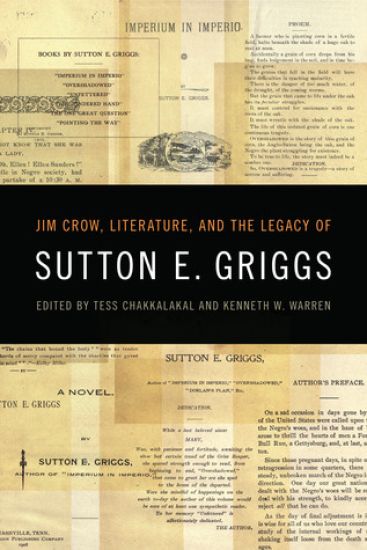
Jim Crow, Literature, and the Legacy of Sutton E. Griggs
Imperium in Imperio (1899) was the first black novel to countenance openly the possibility of organized black violence against Jim Crow segregation. Its author, a Baptist minister and newspaper editor from Texas, Sutton E. Griggs (1872–1933), would go on to publish four more novels; establish his own publishing company, one of the first secular publishing houses owned and operated by an African American in the United States; and help to found the American Baptist Theological Seminary in Tennessee. Alongside W. E. B. Du Bois and Booker T. Washington, Griggs was a key political and literary voice for black education and political rights and against Jim Crow.Jim Crow, Literature, and the Legacy of Sutton E. Griggs examines the wide scope of Griggs’s influence on African American literature and politics at the turn of the twentieth century. Contributors engage Griggs’s five novels and his numerous works of nonfiction, as well as his publishing and religious careers. By taking up Griggs’s work, these essays open up a new historical perspective on African American literature and the terms that continue to shape American political thought and culture.
Jim Crow Terminals

Jim Crow Terminals

Anke Ortlepp

University of Georgia Press
2017
sidottu
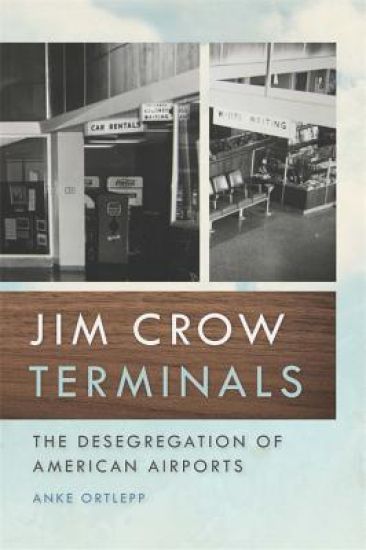
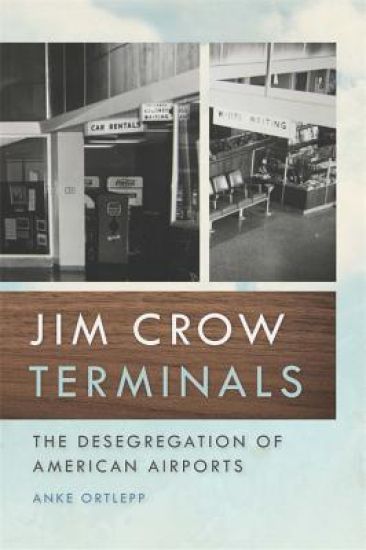
Historical accounts of racial discrimination in transportation have focused until now on trains, buses, and streetcars and their respective depots, terminals, stops, and other public accommodations. It is essential to add airplanes and airports to this narrative, says Anke Ortlepp. Air travel stands at the center of the twentieth century’s transportation revolution, and airports embodied the rapidly mobilizing, increasingly prosperous, and cosmopolitan character of the postwar United States. When segregationists inscribed local definitions of whiteness and blackness onto sites of interstate and even international transit, they not only brought the incongruities of racial separation into sharp relief but also obligated the federal government to intervene.Ortlepp looks at African American passengers; civil rights organizations; the federal government and judiciary; and airport planners, architects, and managers as actors in shaping aviation’s legal, cultural, and built environments. She relates the struggles of black travelers—to enjoy the same freedoms on the airport grounds that they enjoyed in the aircraft cabin—in the context of larger shifts in the postwar social, economic, and political order. Jim Crow terminals, Ortlepp shows us, were both spatial expressions of sweeping change and sites of confrontation over the renegotiation of racial identities. Hence, this new study situates itself in the scholarly debate over the multifaceted entanglements of “race” and “space.”
Jim Crow Terminals

Jim Crow Terminals

Anke Ortlepp

University of Georgia Press
2017
pokkari
Historical accounts of racial discrimination in transportation have focused until now on trains, buses, and streetcars and their respective depots, terminals, stops, and other public accommodations. It is essential to add airplanes and airports to this narrative, says Anke Ortlepp. Air travel stands at the center of the twentieth century’s transportation revolution, and airports embodied the rapidly mobilizing, increasingly prosperous, and cosmopolitan character of the postwar United States. When segregationists inscribed local definitions of whiteness and blackness onto sites of interstate and even international transit, they not only brought the incongruities of racial separation into sharp relief but also obligated the federal government to intervene.Ortlepp looks at African American passengers; civil rights organizations; the federal government and judiciary; and airport planners, architects, and managers as actors in shaping aviation’s legal, cultural, and built environments. She relates the struggles of black travelers—to enjoy the same freedoms on the airport grounds that they enjoyed in the aircraft cabin—in the context of larger shifts in the postwar social, economic, and political order. Jim Crow terminals, Ortlepp shows us, were both spatial expressions of sweeping change and sites of confrontation over the renegotiation of racial identities. Hence, this new study situates itself in the scholarly debate over the multifaceted entanglements of “race” and “space.”
Jim Shaw

Jim Shaw

Rizzoli International Publications
2015
sidottu
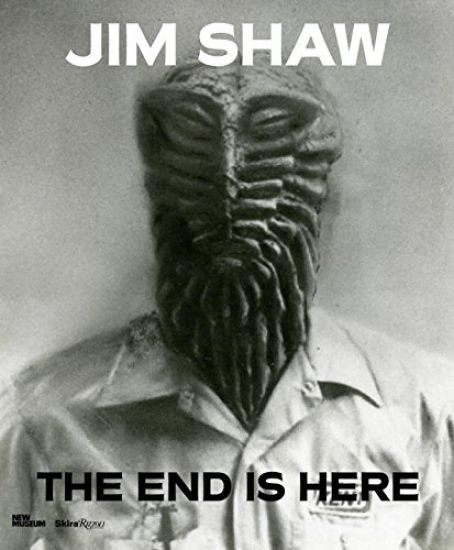
Over the past thirty years, Jim Shaw has become one of America's most visionary artists, moving between painting, sculpture, and drawings, while building connections between his own psyche and the larger political, social, and spiritual history of America. Shaw's imagery is mined from comic books, record covers, conspiracy magazines, obscure religious pamphlets, and other cultural refuse to produce a portrait of the American subconscious out of his personal obsessions. Shaw, along with fellow Michigan native Mike Kelley, moved to California in the 1970s to attend Cal Arts and was one of a number of notable artists to emerge from the school in the early 1980s. Shaw's work is distinguished by rigorous formal and structural analyses of neglected forms of vernacular culture. Accompanying a major exhibition, this is the first major monograph devoted to the entirety of the artist's unique, multifaceted career.
Jim Lambie

Jim Lambie

Skira Rizzoli
2017
sidottu
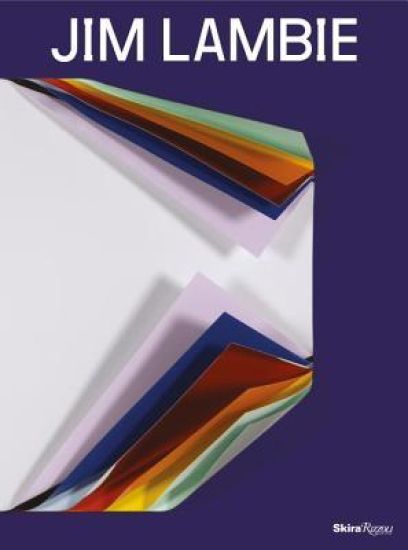
This long-awaited volume surveys the career of Glasgow-based contemporary sculptor Jim Lambie. From his distinctive floor works, striped from wall to wall with vibrant electrical tape, to his paint-soaked mattresses, Lambie adroitly sculpts humour and pathos from the clutter of modern life. Working with items immediately at hand, as well as those sourced in second-hand and hardware stores, he resurrects record decks, speakers, clothing, accessories, doors, and mirrors to form sculptural elements in larger compositions. Lambie prioritizes sensory pleasure over intellectual response. He selects materials that are familiar and have a strong personal resonance, so that they offer a way into the work as well as a springboard to a psychological space beyond. This volume not only serves as a definitive mid-career survey but also as a major reframing of the artist s work. Lambie s practice has long been understood through the lens of punk and rock music, a frequent theme of his works titles. Here the artist and new essays instead trace his approach to the rich material histories he mines and the scrappy, resourceful spirit of his hometown, Glasgow.
Jim Shaw

Jim Shaw

Jim Shaw; Jessica Beck

RIZZOLI INTERNATIONAL PUBLICATIONS
2024
sidottu
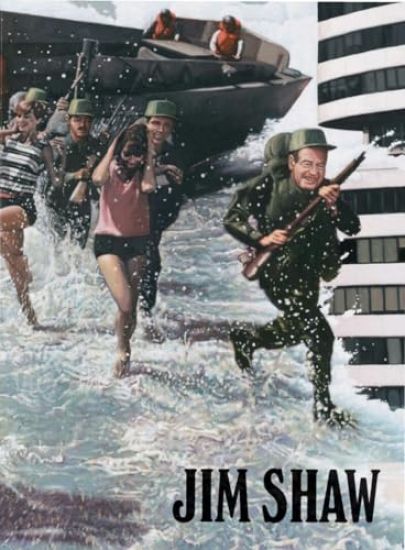
For over three decades, Jim Shaw has found inspiration in comics, pulp novels, album covers, and amateur paintings. His densely layered and humorous works span painting, drawing, and sculpture, and juxtapose images of friends, family, and dreams, with world events, pop culture, and alternative realities. Published to coincide with Thinking the Unthinkable (2023) in Beverly Hills, Shaw s first exhibition with Gagosian, this expansive and vibrantly illustrated catalogue delves into the secret histories of psychedelic therapy, Hollywood legend, and nuclear war themes that all coalesce in the artist s recent works. An essay by Gagosian director Jessica Beck discusses Shaw s hallucinogenic depictions of Cary Grant, Esther Williams, and Jeff Chandler. A conversation with author Rachel Kushner ranges from the artist s formative years to the early weaponization of LSD. In Jim Shaw Kills, new fiction written by Jonathan Lethem, a miniaturized version of Shaw is dispatched into the comatose body of an ex-president.
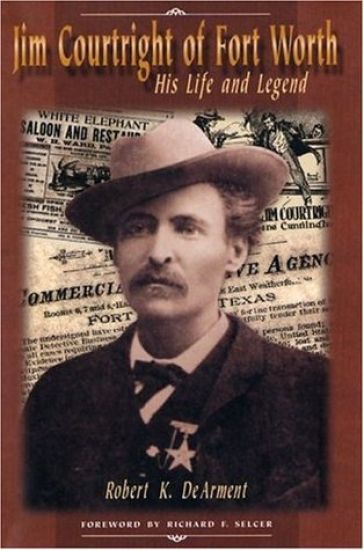
Jim Courtright of Fort Worth

Jim Courtright of Fort Worth

Robert K. DeArment; Richard F. Selcer

Texas Christian University Press,U.S.
2004
sidottu
Timothy Isaiah "Longhair Jim" Courtright operated on both sides of the law and became a legend in his lifetime and after his death. One of the most colorful characters from the wild and woolly days of Fort Worth's Hell's Half Acre, Courtright was at various times city marshal, deputy sheriff, deputy U.S. marshal, private detective, hired killer, and racketeer. Today, he is almost forgotten, either as a gunfighter or a lawman, except in Fort Worth. Little is known about Courtright's early life, though he apparently served in the Union army during the Civil War, But when he arrived in the West, Courtright seemed to attract trouble. He was involved in a shootout during the 1886 railroad strikes and was accused of murder in New Mexico. Deputies were sent to Fort Worth to escort him to New Mexico to stand trial. His escape from them, complete with guns hidden under a restaurant table, is one of Fort Worth's most colorful stories. Finally, he was killed in a shootout that he apparently provoked with gambler and gunman Luke Short. To this day nobody is sure what provoked that feud, but Courtright was honored with the longest funeral procession Fort Worth had ever seen. The myth of Courtright as legendary gunfighter was built in two previous biographies - one by a novelist and the other by a Franciscan priest. After exhaustive research into contemporary newspapers and other accounts and close study of the previous two books, historian Robert K. DeArment deconstructs the myth of Longhair Jim and reconstructs the gunfighter as a real human being, complex, flawed, often courageous, usually both honorable and dishonorable. This book is a must for all those interested in the legends of the West, its lawmen, and its outlaws.
Jim Marshall - The Father of Loud

Jim Marshall - The Father of Loud

Rich Maloof

Backbeat Books
2004
sidottu
In the early 1960s a handful of brash British kids needed a new sound for a new kind of music. They marched into a music store in their blue-collar town and asked the gentleman behind the desk to build them an amplifier with leg-shaking power and jaw-dropping tone. So he did. This first-ever biography tells the story of Jim Marshall ä founder of Marshall Amplification and creator of guitar amplifiers that have defined the sound of rock and are prized by rock guitarists of every age and style ä from his childhood when he was diagnosed with a rare bone disease that confined him to a body cast for nine years to his stage success as a crooner and big-band drummer through his development of the Marshall Stack and ultimate rise to the forefront of the music instrument industry. Forty years after Jim Marshall sold his first JTM45 three generations of guitarists and fans revere the name. Highlights in Marshall history images of amp anatomy details about famous players' preferred models and testimonials from guitar stars round out this engrossing success story. Full-color photos throughout.Þ What Jim marshall did ... was provide English heavy metal and blues players of the mid '60s and early '70s with these weapons. Þä Pete Townshend
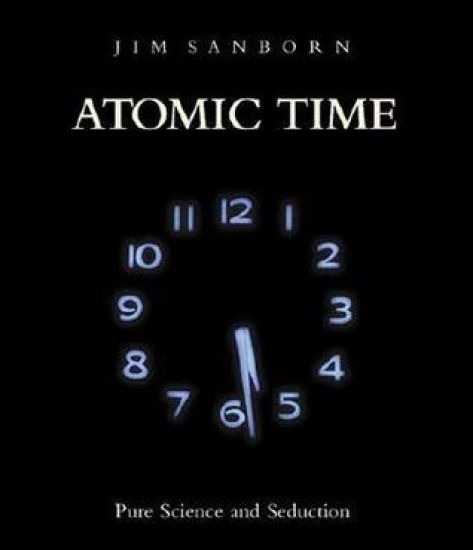
Jim Sanborn: Atomic Time

Jim Sanborn: Atomic Time

Corcoran Gallery of Art,U.S.
2004
sidottu
In Atomic Time, sculptor, photographer and conceptual artist Jim Sanborn has combined his longstanding interests in invisible natural forces and secrecy, pairing together two separate but related projects: a series of photographs called Atomic Time and images of his latest work, the room-sized installation Critical Assembly. Inspired by the Manhattan Project, the first nuclear weapons program at the Los Alamos Scientific Laboratory, Critical Assembly is a representation of what was once a secret site of government-sponsored research. The installation includes actual examples of electronic instruments, hardware, furniture, tools and materials from the Los Alamos Laboratory of the 1940s, 50s and 60s, which Sanborn acquired from retirees living in New Mexico who worked on the Project. The photographs in the Atomic Series are distinguished by an intense cobalt blue-like color, similar to the true color of radioactivity. Half of the series is of abstract images made by exposing sheet film to actual pieces of uranium ore; the other represents an assortment of radium-dial alarm clocks made between 1920 and 1950, acquired from regions around the Trinity Site in New Mexico, where the first atomic bomb exploded.
Jim W.Corder on Living and Dying in West Texas
Jim W. Corder will be remembered by students and colleagues at Texas Christian University for his writing, teaching, and original thinking. He was one of the most influential composition specialists of his generation - his ""Handbook of Rhetoric"" went through numerous editions, becoming a classroom staple nationwide - yet he gave his final years to the 'fourth genre' of creative nonfiction. His numerous publications include ""Lost in West Texas"" (1988), ""Chronicle of a Small Town"" (1989), and ""Yonder: Life on the Far Side of Change"" (1992).
Jim Morrison and the Secret Gold Mine

Jim Morrison and the Secret Gold Mine

David A Shiang

Open Sesame Productions
2019
pokkari
Jim Morrison and the Secret Gold Mine is the first book to explain the monumental vision hidden inside The Doors. Award-winning author David A. Shiang explores how Doors music transports listeners to an unseen world of transcendence and spirituality. The book shows why Morrison's lyrics have stood the test of time and continue to fascinate us.
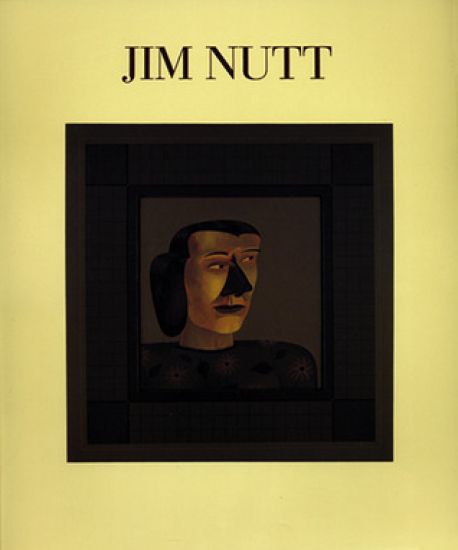
Jim Nutt

Jim Nutt

Milwaukee Art Museum

Milwaukee Art Museum
2005
nidottu
This book examines the artistic work of Chicago native Jim Nutt, an important contemporary American artist. The publication provides an occasion to assess Nutt's works and the connections among them and his group, the Hairy Who. Distributed for the Milwaukee Art Museum, Milwaukee, Wisconsin.
Jim Clark

Jim Clark

Eric Dymock

Dove Publishing
2017
sidottu
This new edition of the universally acclaimed 1997 book is edited and completely redesigned. A classic of motor racing, it celebrates the life and achievements of Jim Clark, World Champion 1963 and 1965. Forewords by Sir Jackie Stewart, David Coulthard, Dario Franchitti and Allan McNish, patrons of the Jim Clark Trust.
Jim Crow of the Mind and the New State Laws Designed to Preserve the Idea of White Male Supremacy
This book exposes the widespread and historical racist and sexist practices that have led to new state laws designed to prevent classroom discussion of these practices. It describes how slavery has led to racist practices following the Civil War that are still prevalent in our society. These practices include our current use of racial terminology which preserves the idea of "race" that was concocted to rationalize slavery. The laws of each of fifteen states are examined to show how they prevent discussion of the racism and sexism still ingrained in American society. These laws comprise Jim Crow of the mind, laws that support the idea of white male supremacy. These laws severely impact not only the fifteen states but also the nation as a whole.