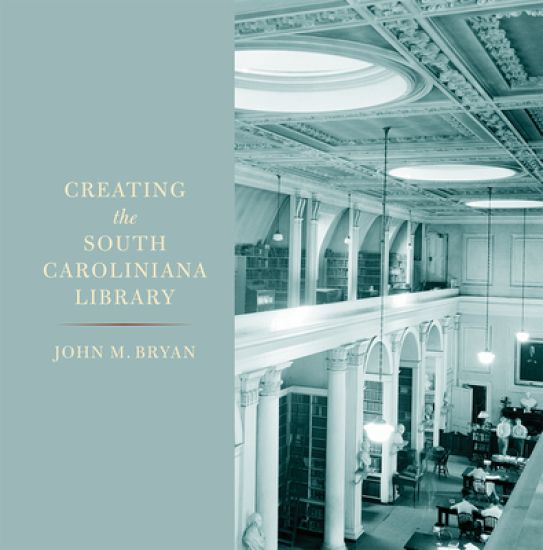
The South Caroliniana Library, located on the historic Horseshoe of the University of South Carolina campus in Columbia, is one of the premier research archives and special collections repositories in South Carolina and the American Southeast. The library's holdings--manuscripts, published materials, university archives, and visual materials--are essential to understanding the Palmetto State and Southern culture as it has evolved over the past 300 years.When opened as the South Carolina College library in 1840 it was the first freestanding academic library building in the United States. Designed by Robert Mills, architect of the Washington Monument, it is built in the Greek Revival style and features a replica of the reading room that once housed Thomas Jefferson's personal library in the second Library of Congress. When the college built a larger main library (now known as the McKissick Museum) in 1940, the Mills building became the home of ""Caroliniana""--published and unpublished materials relating to the history, literature, and culture of South Carolina.Through a dedicated mining of the resources this library has held, art historian John M. Bryan crafted this comprehensive narrative history of the building's design, construction, and renovations, which he enhanced with personal entries from the diaries and letters of the students, professors, librarians, and politicians who crossed its threshold. A treasure trove of Caroliniana itself, this colorful volume, featuring 95 photographs and illustrations, celebrates a beautiful and historic structure, as well as the rich and vibrant history of the Palmetto State and the dedicated citizenry who have worked so hard to preserve it.A foreword is provided by W. Eric Emerson, director, South Carolina Department of History and Archives.
Commentaries and Rules of Ulpian - Third Edition is an unchanged, high-quality reprint of the original edition of 1885. Hansebooks is editor of the literature on different topic areas such as research and science, travel and expeditions, cooking and nutrition, medicine, and other genres. As a publisher we focus on the preservation of historical literature. Many works of historical writers and scientists are available today as antiques only. Hansebooks newly publishes these books and contributes to the preservation of literature which has become rare and historical knowledge for the future.
Learn the Most Popular Excel Formulas Ever: VLOOKUP, IF, SUMIF, INDEX/MATCH, COUNT, SUMPRODUCT plus Many More With this book, you'll learn to apply the must know Excel Formulas & Functions to make your data analysis & reporting easier and will save time in the process.With this book you get the following: ✔ 101 Ready Made Formulas Covering: LOOKUP, LOGICAL, MATH, STATISTICAL, TEXT, DATE, TIME & INFORMATION ✔ Easy to Read Step by Step Guide with Screenshots✔ Downloadable Practice Workbooks for each Formula with Solutions✔ New Excel Formulas For Excel 2019 & Office 365✔ You also get a FREE BONUS downloadable PDF version of this book ✔ Exclusive to Hardcover: You also get a FREE BONUS 20+ Hour Excel Course with 77 video tutorials This book is a MUST-HAVE for Beginner to Intermediate Excel users who want to learn Excel Formulas FAST & stand out from the crowd
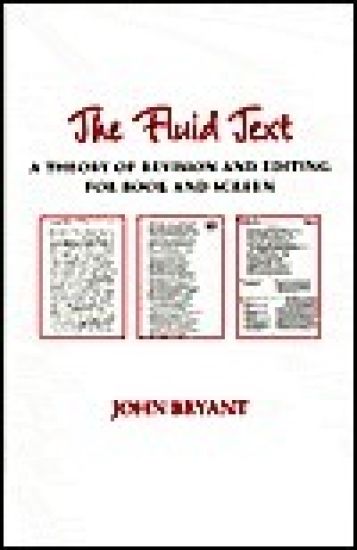
Theorists, scholars, and critics usually consider literary works to be fixed objects, assuming that any variations in the text of a work should be stabilized, reduced, eliminated. John Bryant urges that these variations create valuable records of the interactions between the artist and society. Preprint revisions, revised editions, adaptations for film, and expurgations for children are among the many forms of flux that shape literary works and position them relative to their audiences. Fully understanding the life of a literary work in its cultural situation requires recognizing the fluidity of text, and the present work makes the first coherent theoretical, critical, and editorial approach to the study of revision. The author develops his theory and its critical application drawing upon the example of Melville's Typee, using its various versions to present protocols for fluid text analysis. He shows how the mountain of scholarly material comprising the fluid text can be presented by a partnership of book and computer screen, in ways that offer new opportunities, insights,and pleasures for scholars and readers. The Fluid Text: A Theory of Revision and Editing for Book and Screen is written in a clear and accessible style and will appeal to scholars and students in editorial theory, literary criticism and analysis, and anyone concerned with the information architecture of complex literary works in digital media. John Bryant is Professor of English, Hofstra University. His most recent book is an edition of Melville's Tales, Poems, and Other Writings.
Theorists, scholars, and critics usually consider literary works to be fixed objects, assuming that any variations in the text of a work should be stabilized, reduced, eliminated. John Bryant urges that these variations create valuable records of the interactions between the artist and society. Preprint revisions, revised editions, adaptations for film, and expurgations for children are among the many forms of flux that shape literary works and position them relative to their audiences. Fully understanding the life of a literary work in its cultural situation requires recognizing the fluidity of text, and the present work makes the first coherent theoretical, critical, and editorial approach to the study of revision.The author develops his theory and its critical application drawing upon the example of Melville's "Typee, " using its various versions to present protocols for fluid text analysis. He shows how the mountain of scholarly material comprising the fluid text can be presented by a partnership of book and computer screen, in ways that offer new opportunities, insights, and pleasures for scholars and readers."The Fluid Text: A Theory of Revision and Editing for Book and Screen" is written in a clear and accessible style and will appeal to scholars and students in editorial theory, literary criticism and analysis, and anyone concerned with the information architecture of complex literary works in digital media.John Bryant is Professor of English, Hofstra University. His most recent book is an edition of "Melville's Tales, Poems, and Other Writings."
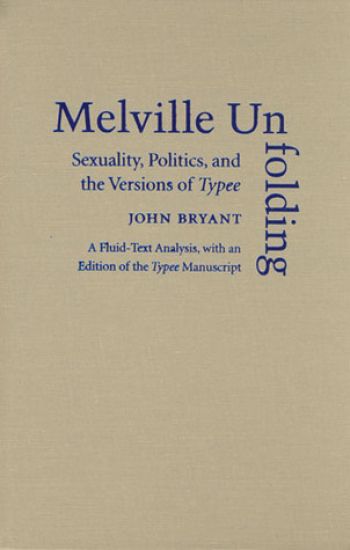
Typee: A Peep at Polynesian Life was published in 1846 and was Melville's most popular work, offering Victorian readers startling and romantic glimpses of island people and practices. The Typee manuscript was discovered only in 1983, and is considered one of the most important literary manuscripts in nineteenth-century American studies. Melville Unfolding offers a new approach to literary analysis, focusing on how the "invisible text of revision" is made visible in the critical construction of the novel. This volume is linked to an electronic edition of Typee, providing a model for how critical analysis and textual editing work synergistically and how print and online technologies can complement one another.Melville Unfolding walks readers through the intriguing twists and turns of Melville's writing process, detailing the delights and frustrations of reading a writer in manuscript. In jargon-free prose, John Bryant introduces the scholarship of manuscript study, the use of the revision narrative, and the benefits of the fluid-text analysis---asking readers to consider what a text is, how it comes into being, how it evolves, and how the study of a fluid text enhances our understanding of writers, writing, and culture.John Bryant is Professor of English at Hofstra University and Editor of the Melville Society. His books include The Fluid Text: A Theory of Revision and Editing for Book and Screen and the Modern Library editions of Melville's Tales, Poems, and Other Writings and The Confidence-Man.
Provides comprehensive, yet concise coverage of the broad field of bioethics, dealing with the scientific, medical, social, religious, political and international concerns This book offers complete information about all aspects of bioethics and its role in our world. It tackles the concerns of bioethicists, dealing with the ethical questions that arise in the relationships among life sciences, biotechnology, medicine, politics, law, and philosophy. The book introduces the various modes of ethical thinking and then helps the reader to apply that thinking to issues relating to the environment, to plants and animals, and to humans. Written in an accessible manner, Introduction to Bioethics, Second Edition focuses on key issues directly relevant to those studying courses ranging from medicine through to biology and agriculture. Ethical analysis is threaded throughout each chapter and supplementary examples are included to stimulate further thought. In addition there are numerous mini-case studies to aid understanding, together with key references and further reading. Topics covered include genetic modification; GM crops, human genetics and genomics; cloning and stem cells; assisted reproduction; end of life issues; human enhancement; transhumanism and more. A concise introduction covering the whole field of bioethicsEthical analysis included throughoutMini case-studies in each chapter place ethics into specific contextsIncludes exercises and commentary to further clarify ethical discussionsNow fully revised, updated and re-ordered, with new chapters on Biofuels and on Synthetic Biology Introduction to Bioethics, Second Edition is primarily aimed at undergraduate students taking courses in biomedical sciences, biological sciences, and medicine. It will also be useful to anyone with an interested in the ethics of biological and biomedical science, including science journalists and reporters, who want to inform themselves about current developments.
Provides comprehensive, yet concise coverage of the broad field of bioethics, dealing with the scientific, medical, social, religious, political and international concerns This book offers complete information about all aspects of bioethics and its role in our world. It tackles the concerns of bioethicists, dealing with the ethical questions that arise in the relationships among life sciences, biotechnology, medicine, politics, law, and philosophy. The book introduces the various modes of ethical thinking and then helps the reader to apply that thinking to issues relating to the environment, to plants and animals, and to humans. Written in an accessible manner, Introduction to Bioethics, Second Edition focuses on key issues directly relevant to those studying courses ranging from medicine through to biology and agriculture. Ethical analysis is threaded throughout each chapter and supplementary examples are included to stimulate further thought. In addition there are numerous mini-case studies to aid understanding, together with key references and further reading. Topics covered include genetic modification; GM crops, human genetics and genomics; cloning and stem cells; assisted reproduction; end of life issues; human enhancement; transhumanism and more. A concise introduction covering the whole field of bioethicsEthical analysis included throughoutMini case-studies in each chapter place ethics into specific contextsIncludes exercises and commentary to further clarify ethical discussionsNow fully revised, updated and re-ordered, with new chapters on Biofuels and on Synthetic Biology Introduction to Bioethics, Second Edition is primarily aimed at undergraduate students taking courses in biomedical sciences, biological sciences, and medicine. It will also be useful to anyone with an interested in the ethics of biological and biomedical science, including science journalists and reporters, who want to inform themselves about current developments.
This texts discusses DNA replication in plants including chapters on; functional chromosomal structure, the biochemistry of DNA replication, Control of DNA replication, Replication of plant organelle DNA, replication of DNA viruses in plants, and DNA damage, repair, and mutagenesis.
Will this be the end of humanity as we know it? Will The Seven finally get what they have always truly wanted? Alastor, an alien-human hybrid is left brooding after losing everything to Kakos, Queen of The Seven. Abandoned as a child by his earth mother and Alien father, he was left with an almost complete nihilistic outlook on everything and everyone. Alcohol and opioids became his communion; a way to bring peace to his emotional tempest and silence the voices of chaos within. Alastor is oblivious; oblivious to the power of The Seven, oblivious to humanity's origins, and oblivious to his own power. This self-inflicted naivete and careless behavior become his reckless crutch. Now Alastor must make a choice. Will he help fight for the Lost Ones, or will he keep down the path of self-destruction that has led him to nothing but tragedy?