Assault landings began for the men in the blackness of the early hours of the morning. On 1 November 1943, the troops of the 3d Marine Division were awakened before 0400, went to General Quarters at 0500, ate a tense breakfast, and then stood by for the decisive command, "Land the Landing Force." All around them the preinvasion bombardment thundered, as the accompanying destroyers poured their 5-inch shells into the target areas, and spotters in aircraft helped to adjust the fire. As the sun rose on a bright, clear day, the word came at 0710 for the first LCVPs (Landing Craft, Vehicle and Personnel) to pull away from their transport ships and head for the shore, a 5,000-yard run across Empress Augusta Bay to the beaches of an island called Bougainville...
Have a happy birthday--the backwards way Full of fun and based on the hit song from Tom Chapin and John Forster, this is a celebratory birthday bash like no other. Put your clothes on inside out, heat up the ice cream, and hang on to your party hats--because everything's out of whack at the backwards birthday party From beloved, three-time Grammy-winning singer-songwriter Tom Chapin, four-time Grammy-nominated singer-songwriter John Forster, and with stunning illustrations from Chuck Groenink comes the zaniest birthday party you'll ever attend.
Based on the touching song “This Pretty Planet” by Tom Chapin and John Forster, this hopeful and whimsically illustrated picture book celebrates the pretty planet we call home.Winds blow. Tides flow. Shooting stars descend. Our lives begin, middle, and end on This pretty planet. From icy tundras to sandy beaches, lush forests to tall mountains, this exuberant picture book journeys around the globe and presents the natural wonders of the planet with a contagious sense of awe and whimsy. Young readers will get lost in the detailed illustrations as the narration serves as a gentle reminder of why we must care for and protect our pretty planet.
THE OTHER SIDE OF SUFFERING is a memoir of John Ramsey's climb out of emotional and spiritual darkness. Like the biblical Job, Ramsey has been tried by fire several times over. From the often-overlooked loss of his first daughter in a 1992 car accident, through the murder of JonBenet Ramsey and the resulting 'trial by media,' to the loss of his wife in 2006 to cancer, THE OTHER SIDE OF SUFFERING is the story of how John Ramsey has emerged from his own spiritual darkness.
The major ground component of the active Marine Corps Reserve is the 4th Marine Division, Fleet Marine Force. The combat record of this division in World War II was exemplary; in the short space of one year it participated in four major amphibious assaults and won two presidential citations. The interest in its battle record among the reservists who now serve in its ranks has prompted the republication of this brief history, originally published in August 1945 and reprinted in 1974. This new reprint contains a brief history of the reserve 4th Division, written by Colonel Joseph B. Ruth, USMCR, a former member of the 25th Marines. Also included are copies of the division's lineage and honors, a list of its commanders, and a list of its units and their locations.
Software is pervasive in our lives. We are accustomed to dealing with the failures of much of that software - restarting an application is a very familiar solution. Such solutions are unacceptable when the software controls our cars, airplanes and medical devices or manages our private information. These applications must run without error. SPARK provides a means, based on mathematical proof, to guarantee that a program has no errors. SPARK is a formally defined programming language and a set of verification tools specifically designed to support the development of software used in high integrity applications. Using SPARK, developers can formally verify properties of their code such as information flow, freedom from runtime errors, functional correctness, security properties and safety properties. Written by two SPARK experts, this is the first introduction to the just-released 2014 version. It will help students and developers alike master the basic concepts for building systems with SPARK.
Software is pervasive in our lives. We are accustomed to dealing with the failures of much of that software - restarting an application is a very familiar solution. Such solutions are unacceptable when the software controls our cars, airplanes and medical devices or manages our private information. These applications must run without error. SPARK provides a means, based on mathematical proof, to guarantee that a program has no errors. SPARK is a formally defined programming language and a set of verification tools specifically designed to support the development of software used in high integrity applications. Using SPARK, developers can formally verify properties of their code such as information flow, freedom from runtime errors, functional correctness, security properties and safety properties. Written by two SPARK experts, this is the first introduction to the just-released 2014 version. It will help students and developers alike master the basic concepts for building systems with SPARK.
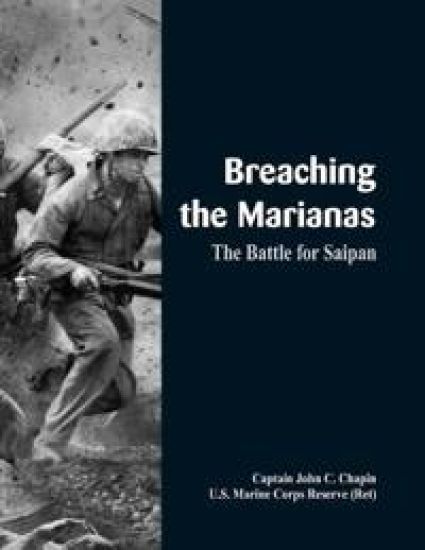
It was to be a brutal day. At first light on 15 June 1944, the Navy fire support ships of the task force lying off Saipan Island increased their previous days' preparatory fires involving all calibers of weapons. At 0542, Vice Admiral Richmond Kelly Turner ordered, "Land the landing force." Around 0700, the landing ships, tank (LSTs) moved to within approximately 1,250 yards behind the line of departure. Troops in the LSTs began debarking from them in landing vehicles, tracked (LVTs). Control vessels containing Navy and Marine personnel with their radio gear took their positions displaying flags indicating which beach approaches they controlled. The historic battles of the Marines in the Pacific War are recounted in this U.S. Marines history book.
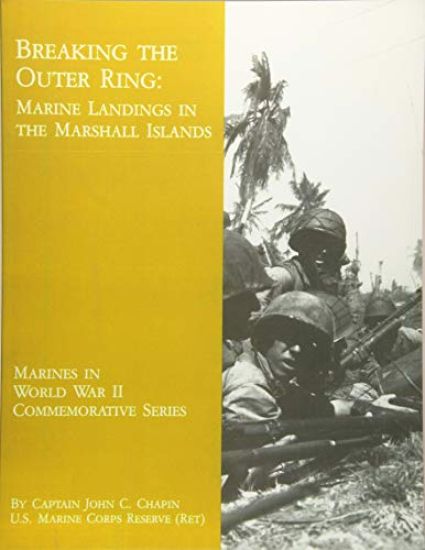
By the beginning of 1944, United States Marine forces had already made a dramatic start on the conquest of areas overrun by the Japanese early in World War II. Successful American assaults in the Southwest Pacific, beginning with Guadalcanal in the Solomon Islands in August 1942, and in the Central Pacific at Tarawa in the Gilbert Islands in November 1943, were crucial campaigns to mark the turn of the Japanese floodtide of conquest. The time had now come to take one more decisive step: assault of the islands held by Japan before 1941. These strategic islands, mandated to the Japanese by the League of Nations after World War I, were a source of mystery and speculation. Outsiders were barred; illegal fortifications were presumed; yet any Central Pacific drive towards Japan's inner defense ring had to confront these unknowns. The obvious target to begin with was the Marshall Islands. As early as 1921 a Marine planning officer had pinpointed their geographic significance. This official U.S. Marine Corps history provides detailed accounts of the Marshall Islands operation.
The Battle of Pusan Perimeter was a large-scale battle between United Nations and North Korean forces lasting from August 4 to September 18, 1950. It was one of the first major engagements of the Korean War. An army of 140,000 UN troops, having been pushed to the brink of defeat, were rallied to make a final stand against the invading North Korean army, 98,000 men strong. UN forces, having been repeatedly defeated by the advancing North Koreans, were forced back to the "Pusan Perimeter", a 140-mile (230 km) defensive line around an area on the southeastern tip of the Korean Peninsula that included the port of Pusan. The UN troops, consisting mostly of forces of the Republic of Korea Army (ROK), United States Army, and British Army, mounted a last stand around the perimeter, fighting off repeated North Korean attacks for six weeks as they were engaged around the cities of Taegu, Masan, and P'ohang, and the Naktong River. The massive North Korean assaults were unsuccessful in forcing the United Nations troops back further from the perimeter, despite two major pushes in August and September. North Korean troops, hampered by supply shortages and massive losses, continually staged attacks on UN forces in an attempt to penetrate the perimeter and collapse the line. However, the UN used the port to amass an overwhelming advantage in troops, equipment, and logistics, and its navy and air forces remained unchallenged by the North Koreans during the fight. After six weeks, the North Korean force collapsed and retreated in defeat after the UN force launched a counterattack at Inchon on September 15. The battle would be the furthest the North Korean troops would advance in the war, as subsequent fighting ground the war into a stalemate.
We have come to know that our ability to survive and grow as a nation to a very large degree depends upon our scientific progress. Moreover, it is not enough simply to keep 1 abreast of the rest of the world in scientific matters. We must maintain our leadership. President Harry Truman spoke those words in 1950, in the aftermath of World War II and in the midst of the Cold War. Indeed, the scientific and engineering leadership of the United States and its allies in the twentieth century played key roles in the successful outcomes of both World War II and the Cold War, sparing the world the twin horrors of fascism and totalitarian communism, and fueling the economic prosperity that followed. Today, as the United States and its allies once again find themselves at war, President Truman’s words ring as true as they did a half-century ago. The goal set out in the Truman Administration of maintaining leadership in science has remained the policy of the U. S. Government to this day: Dr. John Marburger, the Director of the Office of Science and Technology (OSTP) in the Executive Office of the President, made remarks to that effect during his 2 confirmation hearings in October 2001. The United States needs metrics for measuring its success in meeting this goal of maintaining leadership in science and technology. That is one of the reasons that the National Science Foundation (NSF) and many other agencies of the U. S.