This title is part of the Pearson Modern Classics series. Pearson Modern Classics are acclaimed titles at a value price. Please visit www.pearsonhighered.com/math-classics-series for a complete list of titles. John E. Freund's Mathematical Statistics with Applications, Eighth Edition, provides a calculus-based introduction to the theory and application of statistics, based on comprehensive coverage that reflects the latest in statistical thinking, the teaching of statistics, and current practices.
Life's foundational questions come elegantly to the fore in this skillfully crafted nonfiction story about the late John H. Finley, Jr. For 51 years Finley was the celebrated and erudite Eliot Professor of the Classics at Harvard. His musings transport readers on a soul-engaging journey of contemplation. Luminous and compellingly relevant, Finley's story leads readers into direct engagement with the fundamental wisdom questions of a fulfilled life. Classical Considerations is a small treasure--a true Soul*Spark--offering a compact but brilliantly lyrical array of intellectual scintillas to help kindle enduring knowledge.
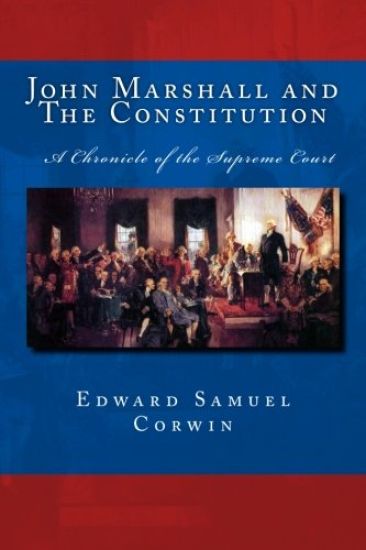
This premium quality edition contains the complete and unabridged original 1919 version of Edward S. Corwin's classic John Marshall and The Constitution: A Chronicle of the Supreme Court, printed on heavy, bright white paper in a large 6"x9" format, with page headers and a fully laminated full-color cover featuring an original design. Additional contents include Corwin's bibliographic examination of his contemporary sources and his original annotations, together with a new, unique introductory note explaining how to read and understand legal citations to Supreme Court opinions. Widely considered the foremost historian of the Supreme Court for the first half of the 20th century, Corwin brought his historical approach and renowned narrative style to bear in this eminently readable account of the life and work of John Marshall, the single most influential jurist in American history. Authoritative without being an overly detailed scholarly treatise, this unique work provides an excellent basic text for any reader interested in the roots of Constitutional law in the United States and the life of the man at the center of its early development. Along with treating his subject generally, Corwin provides detailed accounts of the process involved in the creation of the federal judiciary, the conflicts between the Court and the legislative and executive branches in the early years of the Republic, and the early development of key areas of Constitutional law, particularly the limitations of the exercise of power between the federal and state governments. Additionally, Corwin discusses the Aaron Burr treason case in some detail and examines the authority of the government to interfere with rights arising from private contracts. This extremely readable book is one of the best sources available for anyone interested in John Marshall and his role in the development of American Constitutional law, and also provides a valuable starting point for readers intending to pursue further reading on these subjects.
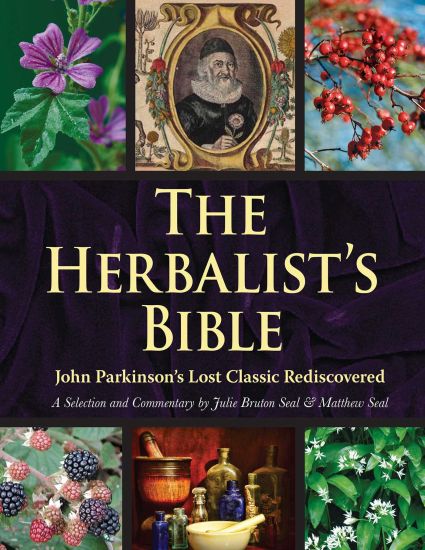
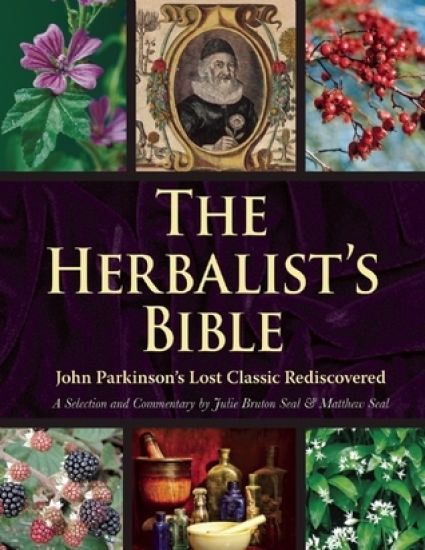
Here Julie Bruton-Seal and Matthew Seal have beautifully combined selections from John Parkinson classic book from 1640 with their own modern commentary on how each plant is used today to create a truly one-of-a-kind, comprehensive collection of herbal information old and new. Herbalist to King Charles I, John Parkinson (1567-1650) was a master apothecary, herbalist, and gardener. Famous in his own lifetime for his influential books, his magnum opus, the Theatrum Botanicum, was published in 1640 and ran to 1,766 large pages. The sheer scope and size was perhaps to prove the book's downfall, because while it was much revered--and plagiarized--it was never reprinted and, centuries later, has attained the status of an extremely rare and valuable book. Parkinson was writing at a time when Western herbalism was at its zenith, and his skills as a gardener (from his grounds in Covent Garden) combined perfectly with his passion for science, observation, and historical scholarship. This modern edition features: Agrimony & Hemp AgrimonyBlackthorn, Bugle, and BurnetDaisies and DandelionGoldenrod, Round Ivy, and GroundselLiquourice and LovageMarjoram, Milk Thistle, and MintPimpernel and PoppiesSeaweed and SorrelSt. John's Wort and StrawberryTomato and TribulusWoodruff and YarrowAnd much more Parkinson's clear and lively description of a chosen plant's virtues or healing properties side-by-side with the editor's notes--including copious herbal recipes--make this the perfect book for students and practitioners of herbalism, historians, and gardeners, all of whom will welcome this restoration of Parkinson's lost classic.
Everything depends on getting Jesus placed. That lies at the root of all-living, serving, preaching, teaching. John had Jesus placed. He had Him up in His own place. This settles everything else. Then one gets himself placed, too, up on a level where the air is clear and bracing, the sun warm, and the outlook both steadying and stimulating. Get the centre fixed and things quickly adjust themselves about it to your eyes. It will be seen very quickly that this little book makes no pretension to being a commentary on, or an exposition of, John's Gospel. That is left to the scholarly folk who eat their meals in the sacred classical languages of the past. It is simply a homely attempt to let out a little of what has been sifting in these years past of this wondrous miniature Bible from John's pen. The proportions of this homely little messenger of paper and type may seem a little odd at first. The longest chapter is devoted to only the opening eighteen verses of John, the prologue. While the whole of the first twelve chapters of John, excepting that prologue, is brought into one smaller chapter. It wasn't planned so, though I felt it coming as the wondrous mood of this book came down over me. I think it mast be the effect of the atmosphere of John's book. Sometimes John packs so much in so little space, and again he goes so particularly into the details of someone incident. The prologue is a miniature Bible. The whole Bible story is there in its cream. And on the other hand John spends five chapters (xiii.-xvii.), almost a fifth of the whole, on a single evening. He devotes seven chapters (xiii.-xix.), almost a third of all, on the events of twenty-four hours. John is controlled not by mere proportion of space or quantity, but by the finer proportions of thought and quality. It has been difficult to hold these homely talks down to the limit of space they take here. So many veins of gold in this mine, showing clearly large nuggets of pure ore, lie just at hand untouched in this little mining venture. But it seemed clearly best to get the one clear grasp of the whole. That helps so much. But there'll be strong temptation to get one's pick and spade and go at this gold mine again. But now these things are written that we common folk may understand a bit better, and in a warm way, that Jesus was God on a wooing errand to the earth; and that we may join the blest company of the won ones, and become co-wooers with God of the others. S. D. G.
The My Friend John induction is rightly regarded as an Ericksonian classic. Unfortunately, its classic status has meant that it is often considered to be outside the reach of all but the most elite hypnotists.This book aims to take the induction and demonstrate how it can be used to induce hypnosis in a variety of ways, both covert and overt. It even includes a version for hypnotising two people at once If you are seeking to take your hypnosis to the next level, or to increase the inductions in your toolbox, you will want to buy this book. The exercises throughout and the numerous variations make this an invaluable guide for hypnotists of all levels of skill and experience. My Friend John deserves its reputation as a classic induction. Now, it deserves to be put into practice as such
This work is a work of fiction. The plot of the novel takes place in the United States in the middle of the 19th century. The scenes range from gold-rush era California, across the American West, and across the Atlantic to London. The work was published posthumously in 1865................... Major Theodore Woolsey Winthrop (September 22, 1828 - June 10, 1861) was a writer, lawyer, and world traveller. He was one of the first Union officers killed in the American Civil War. Biography: Winthrop was born in New Haven, Connecticut. He was descended through his father from Governor John Winthrop and through his mother from George (Joris) Woolsey, one of the earliest settlers of New Amsterdam, Thomas Cornell (settler) and Jonathan Edwards. He graduated in 1848 from Yale University, where his uncle Theodore Dwight Woolsey was President and he was a member of the Phi Chapter of the Delta Kappa Epsilon Fraternity, he travelled for a year in Great Britain and Europe and then through the United States. After contributing to periodicals, short sketches, and stories, which attracted little attention, Winthrop enlisted in the 7th Regiment, New York State Militia, an early volunteer unit of the Federal Army that answered President Abraham Lincoln's call for troops in 1861. He wrote a popular essay about the experience titled "Our March to Washington." He was appointed Major and soon became an aide-de-camp to Maj. Gen. Benjamin Butler, commander of the Department of Virginia headquartered at Fort Monroe. Battle of Big Bethel: At the Battle of Big Bethel on June 10, 1861, he volunteered for General Ebenezer W. Peirce's staff and drew up a crude plan of battle. After a Federal attack to the enemy right flank was foiled, Winthrop led an ill-fated assault on the Confederate left held by four companies of the 1st Regiment North Carolina Infantry, under the command of Colonel (later Lieutenant General) Daniel Harvey Hill. In the heat of battle, Major Winthrop leapt onto the trunk of a fallen tree and reportedly yelled, "One more charge boys, and the day is ours." Soon thereafter, he was killed by a musket ball to the heart and became the first casualty of rank for the Northern side in what history regards as the first pitched land battle of the Civil War. Ironically, ardent abolitionist Winthrop may have been shot by the African-American slave of a Confederate officer in the 1st North Carolina Infantry. (Three different soldiers, as well as this slave, referred to in the records only as "Sam," claimed to have killed him.).....................
A lost classic of Western herbalism--rediscovered and restored with 200 full-color images. Herbalist to King Charles I, John Parkinson (1567-1650) was a master apothecary, herbalist, and gardener. Famous in his own lifetime for his influential books, his magnum opus, the Theatrum Botanicum, was published in 1640 and ran to 1,766 large pages. The sheer scope and size was perhaps to prove the book's downfall, because while it was much revered--and plagiarized--it was never reprinted and, centuries later, has attained the status of an extremely rare and valuable book. Parkinson was writing at a time when Western herbalism was at its zenith, and his skills as a gardener (from his grounds in Covent Garden) combined perfectly with his passion for science, observation, and historical scholarship. In the The Herbalist's Bible, Julie Bruton-Seal and Matthew Seal have beautifully combined selections from Parkinson's book with their own modern commentary on how each plant is used today to create a truly one-of-a-kind, comprehensive collection of herbal information old and new. Parkinson's clear and lively description of a chosen plant's "vertues" or healing properties side-by-side with the editors' notes--including copious herbal recipes--make this the perfect book for students and practitioners of herbalism, historians, and gardeners, all of whom will welcome this restoration of Parkinson's lost classic.
John Ruskin (8 February 1819 - 20 January 1900) was the leading English art critic of the Victorian era, as well as an art patron, draughtsman, watercolourist, a prominent social thinker and philanthropist. He wrote on subjects as varied as geology, architecture, myth, ornithology, literature, education, botany and political economy. His writing styles and literary forms were equally varied. Ruskin also penned essays and treatises, poetry and lectures, travel guides and manuals, letters and even a fairy tale. The elaborate style that characterised his earliest writing on art was later superseded by a preference for plainer language designed to communicate his ideas more effectively. In all of his writing, he emphasised the connections between nature, art and society. He also made detailed sketches and paintings of rocks, plants, birds, landscapes, and architectural structures and ornamentation. He was hugely influential in the latter half of the 19th century, and up to the First World War. After a period of relative decline, his reputation has steadily improved since the 1960s with the publication of numerous academic studies of his work. Today, his ideas and concerns are widely recognised as having anticipated interest in environmentalism, sustainability and craft. Ruskin first came to widespread attention with the first volume of Modern Painters (1843), an extended essay in defence of the work of J. M. W. Turner in which he argued that the principal role of the artist is "truth to nature". From the 1850s he championed the Pre-Raphaelites who were influenced by his ideas. His work increasingly focused on social and political issues. Unto This Last (1860, 1862) marked the shift in emphasis. In 1869, Ruskin became the first Slade Professor of Fine Art at the University of Oxford, where he established the Ruskin School of Drawing. In 1871, he began his monthly "letters to the workmen and labourers of Great Britain", published under the title Fors Clavigera (1871-1884). In the course of this complex and deeply personal work, he developed the principles underlying his ideal society. As a result, he founded the Guild of St George, an organisation that endures today.
The Man of Property (1906) edit] In this first novel of the Forsyte Saga, after introducing us to the impressive array of Forsytes headed by the formidable Aunt Ann, Galsworthy moves into the main action of the saga by detailing Soames Forsyte's desire to own things, including his beautiful wife, Irene Forsyte (n e Heron). He is jealous of her friendships and wants her to be his alone. He concocts a plan to move her to the country, to Robin Hill and a house he is having built, away from everyone she knows and cares about. She resists his grasping intentions, falls in love with the architect Philip Bosinney who has been engaged by Soames to build the house and has an affair with him. However, Bosinney is the fianc of her friend June Forsyte, the daughter of Soames's cousin 'Young' Jolyon. There is no happy ending: Irene leaves Soames after he asserts what he perceives to be his ultimate right on his property - he rapes Irene (as a husband was entitled to do under English Law until 1991), and Bosinney dies under the wheels of an omnibus after being driven frantic by the news of Irene's rape by Soames.... The Forsyte Saga, first published under that title in 1922, is a series of three novels and two interludes published between 1906 and 1921 by Nobel Prize-winning English author John Galsworthy. They chronicle the vicissitudes of the leading members of a large commercial upper-middle-class English family, similar to Galsworthy's own. 1] Only a few generations removed from their farmer ancestors, the family members are keenly aware of their status as "new money". The main character, Soames Forsyte, sees himself as a "man of property" by virtue of his ability to accumulate material possessions-but this does not succeed in bringing him pleasure. Separate sections of the saga, as well as the lengthy story in its entirety, have been adapted for cinema and television. The first book, The Man of Property, was adapted in 1949 by Hollywood as That Forsyte Woman, starring Errol Flynn, Greer Garson, Walter Pidgeon, and Robert Young. The BBC produced a popular 26-part serial in 1967, that also dramatised a subsequent trilogy concerning the Forsytes, A Modern Comedy. In 2002, Granada Television produced two series for the ITV network called The Forsyte Saga and The Forsyte Saga: To Let, and the two Granada series made their runs in the US as part of Masterpiece Theatre. In 2003, The Forsyte Saga was listed as #123 on the BBC's The Big Read poll of the UK's "best-loved novel". Following The Forsyte Saga, Galsworthy would go on to write two more trilogies and several more interludes also based around the titular family; the resulting series is collectively called The Forsyte Chronicles.... John Galsworthy OM (14 August 1867 - 31 January 1933) was an English novelist and playwright. Notable works include The Forsyte Saga (1906-1921) and its sequels, A Modern Comedy and End of the Chapter. He won the Nobel Prize in Literature in 1932.... Edward William Garnett (1868-1937) was an English writer, critic and literary editor, who was instrumental in getting D. H. Lawrence's Sons and Lovers published.