The book titled ""The Self In Psychotic Process: Its Symbolization In Schizophrenia"" by John Weir Perry is a comprehensive exploration of the experience of schizophrenia from a psychoanalytic perspective. The author delves into the concept of the self and how it is represented in the psyche of individuals suffering from schizophrenia. Perry argues that the self is a complex symbol that is constantly evolving and that the way it is symbolized in the mind of a schizophrenic is unique and deeply personal.The book offers a detailed analysis of the symptoms of schizophrenia and their relationship to the self. Perry describes how the breakdown of the self can lead to the development of delusions, hallucinations, and other psychotic symptoms. He also explores the role of the unconscious and the collective unconscious in the formation of the self and how this can impact the experience of schizophrenia.Throughout the book, Perry draws on his extensive clinical experience to provide vivid case studies that illustrate the complex and often confusing world of schizophrenia. He also provides insights into the therapeutic process and how psychoanalysis can help individuals suffering from this condition.Overall, ""The Self In Psychotic Process: Its Symbolization In Schizophrenia"" is a thought-provoking and insightful exploration of one of the most challenging mental health conditions. It offers valuable insights for clinicians, researchers, and anyone interested in understanding the human mind and its complexities.This scarce antiquarian book is a facsimile reprint of the old original and may contain some imperfections such as library marks and notations. Because we believe this work is culturally important, we have made it available as part of our commitment for protecting, preserving, and promoting the world's literature in affordable, high quality, modern editions, that are true to their original work.
""A Concordance To The Complete Works Of Geoffrey Chaucer: And To The Romaunt Of The Rose"" by John Strong Perry Tatlock is a comprehensive reference guide to the complete works of the medieval English poet Geoffrey Chaucer. This book provides a detailed concordance for all of Chaucer's works, including his most famous works such as ""The Canterbury Tales"" and ""Troilus and Criseyde"", as well as lesser-known works like ""The Book of the Duchess"" and ""The Parliament of Fowls"". The concordance includes an alphabetical listing of every word used in Chaucer's works, along with the line numbers and page numbers where each word appears. This allows readers to easily find and compare different occurrences of the same word or phrase throughout Chaucer's works. Additionally, the book includes a concordance for ""The Romaunt of the Rose"", a popular medieval French poem that Chaucer translated into English. Overall, ""A Concordance To The Complete Works Of Geoffrey Chaucer: And To The Romaunt Of The Rose"" is an essential reference guide for scholars, students, and anyone interested in the works of one of the greatest poets of the Middle Ages.Carnegie Institution Of Washington Publication, No. 353.This scarce antiquarian book is a facsimile reprint of the old original and may contain some imperfections such as library marks and notations. Because we believe this work is culturally important, we have made it available as part of our commitment for protecting, preserving, and promoting the world's literature in affordable, high quality, modern editions, that are true to their original work.
This little book attempts to provide the reader with the knowledge to initiate sincere conversation and friendship with the universe encompassing and indwelling Mystery of God. Why and how this undertaking is possible constitute the substance of this little book. If the spiritual journey being recommended and explained is undertaken and faithfully completed, it will lead to the indescribably precious goal of habitual union with God's indwelling Presence and Love.
In this concise study, John Perry enables the reader to see that the Transfiguration story does not recount an actual event, but was created to teach an important "symbolic" lesson abou thte Risen Jesus. To that end, he explains: (1) the conflict within the early church that called the story into being; (2) the nature ofmidrash and the role that it played in the formation of the story. Perry then considers why Mark, the writer of the first Gospel, decided to modify the Transfiguration story known to him and use it in his Gospel. Finally, answers are provided for 12 questiosn frequently prompted by contemporary readings of this story. These answers shed considerable light on the way the early church went about the task of preserving and interpreting the sacred history of Jesus.
InExploring the Resurrection of Jesus, John Perry defends the appearances of the Risen Jesus as real but "nonphyscial" and he reconciles this reading with a scientific world view.
Tradition has assumed that the Lord's Supper was "instituted" by Jesus on the night of Holy Thursday as a memorial of his impending death on Good Friday. Recent scholarship tells us, however, that this assumption must be carefully qualified. The way in which Jesus taught the church to celebrate his Supper was actually far more complex. This investigation reveals that the earliest celebrations of the Lord's Supper were memorials of Jesus' Resurrection, not his death. Only later, because of an urgent pastoral problem, did the early church decide to join the memory of Jesus' death to her original celebration of his Resurrection. In the final chapter, Perry answers specific questions raised by the contemporary understanding of the Lord's Supper.
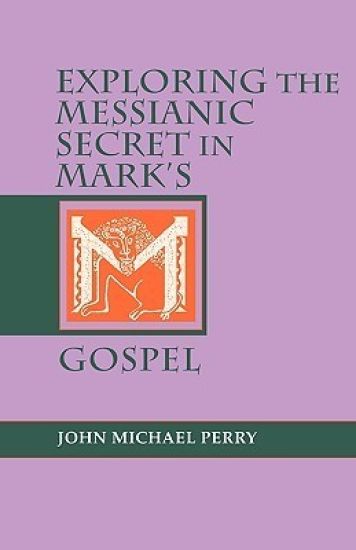
In Exploring the Messianic Secret in Mark's Gospel, John Perry shows the reader how to distinguish between the actual history of Jesus and Mark's Messianic Secret theology, explaining why the substance of Mark's theology is still valid and can still nourish our contemporary faith.