Kirjojen hintavertailu. Mukana 11 342 296 kirjaa ja 12 kauppaa.

Kirjahaku

Etsi kirjoja tekijän nimen, kirjan nimen tai ISBN:n perusteella.

1000 tulosta hakusanalla John Stuart Mill

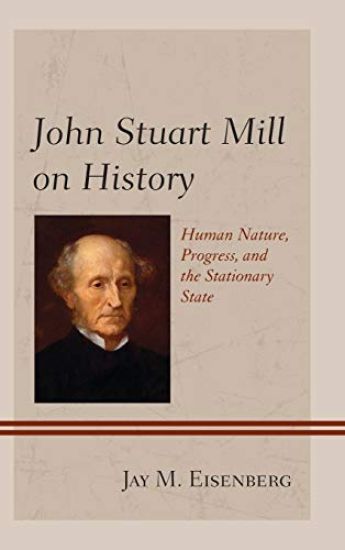
John Stuart Mill on History

John Stuart Mill on History

Jay M. Eisenberg

Lexington Books
2018
sidottu
Though Mill has been the subject of an imposing volume of scholarship, his philosophy of history has received scant attention. This inquiry considers the role of history in Mill’s break from the Benthamite radicals, his effort to define a methodology for the study of society modelled on the natural sciences, and his speculations about the course and meaning of history. A dominant theme is Mill’s struggle to reconcile his ambition to develop a comprehensive science of society with his convictions that human nature is malleable and that history progresses as a consequence of intellectual achievement and diversity of beliefs. Mill’s compatibilist vision of the individual as driven by deterministic psychological laws and as also capable of freely choosing a life of autonomous “self-culture” was mirrored in his philosophy of history, as Mill retained the materialistic stadial theory of social development proposed during the Scottish Enlightenment, and an idealistic vision of history derived from the Saint-Simonians, Guizot and Comte. Though Mill claimed the primacy of the intellect in advancing material living conditions, he believed that the culmination of instrumental rationalism in his own Age of Commerce was undermining and marginalizing other forms of individual accomplishment—indeed, individuality itself—in the suffocating conformity of mass culture. Mindful of what he considered to be the culturally stationary states of Asia, Mill dreaded the prospect that a commercial culture with no higher ambition than the acquisition of ever-greater wealth would also become inert as the consequence of overbearing social conventions and intellectual stagnation. Like Smith and Ricardo, Mill anticipated the inevitability of the economically stationary state as the consequence of the fall in the rate of profits under free market capitalism, but rather than await its arrival, Mill seized on its possibilities. The stationary state became Mill’s vehicle for advocating an egalitarian supra-subsistence economy in the expectation that cultural priorities would shift to the pursuit of higher moral, intellectual and aesthetic aspirations, and the revitalization of individual autonomy.
John Stuart Mill; His Life and Works

John Stuart Mill; His Life and Works

Herbert Spencer

Createspace Independent Publishing Platform
2015
nidottu
John Stuart Mill; His Life and Works is a classic biography of the great English philosopher by Herbert Spencer. John Stuart Mill (20 May 1806 - 8 May 1873) was a British philosopher, political economist and civil servant. One of the most influential thinkers in the history of liberalism, he contributed widely to social theory, political theory and political economy. Dubbed "the most influential English-speaking philosopher of the nineteenth century", Mill's conception of liberty justified the freedom of the individual in opposition to unlimited state and social control. Mill was a proponent of utilitarianism, an ethical theory developed by his predecessor Jeremy Bentham. He contributed to the investigation of scientific methodology, though his knowledge of the topic was based on the writings of others, notably William Whewell, John Herschel and Auguste Comte, and research carried out for Mill by Alexander Bain. Mill engaged in written debate with Whewell. A member of the Liberal Party, he was also the first Member of Parliament to call for women's suffrage. John Stuart Mill was born at 13 Rodney Street in Pentonville, Middlesex, the eldest son of the Scottish philosopher, historian and economist James Mill, and Harriet Burrow. John Stuart was educated by his father, with the advice and assistance of Jeremy Bentham and Francis Place. He was given an extremely rigorous upbringing, and was deliberately shielded from association with children his own age other than his siblings. His father, a follower of Bentham and an adherent of associationism, had as his explicit aim to create a genius intellect that would carry on the cause of utilitarianism and its implementation after he and Bentham had died. Mill was a notably precocious child. He describes his education in his autobiography. At the age of three he was taught Greek. 11] By the age of eight, he had read Aesop's Fables, Xenophon's Anabasis, 11] and the whole of Herodotus, 11] and was acquainted with Lucian, Diogenes La rtius, Isocrates and six dialogues of Plato. 11] He had also read a great deal of history in English and had been taught arithmetic, physics and astronomy. At the age of eight, Mill began studying Latin, the works of Euclid, and algebra, and was appointed schoolmaster to the younger children of the family. His main reading was still history, but he went through all the commonly taught Latin and Greek authors and by the age of ten could read Plato and Demosthenes with ease. His father also thought that it was important for Mill to study and compose poetry. One of Mill's earliest poetic compositions was a continuation of the Iliad. In his spare time he also enjoyed reading about natural sciences and popular novels, such as Don Quixote and Robinson Crusoe. His father's work, The History of British India was published in 1818; immediately thereafter, at about the age of twelve, Mill began a thorough study of the scholastic logic, at the same time reading Aristotle's logical treatises in the original language. In the following year he was introduced to political economy and studied Adam Smith and David Ricardo with his father, ultimately completing their classical economic view of factors of production. Mill's comptes rendus of his daily economy lessons helped his father in writing Elements of Political Economy in 1821, a textbook to promote the ideas of Ricardian economics; however, the book lacked popular support. 12] Ricardo, who was a close friend of his father, used to invite the young Mill to his house for a walk in order to talk about political economy.
John Stuart Mill – On Democracy, Freedom and Government & Other Selected Writings

John Stuart Mill – On Democracy, Freedom and Government & Other Selected Writings

John Stuart Mill; Zbigniew Janowski; Jacob Duggan; Ryszard Legutko; Nicholas Capaldi

ST AUGUSTINE'S PRESS
2019
sidottu
In addition to “On Liberty” and “On Representative Government,” this new selection of Mill’s writings includes, among others, a number of less known of his writings, such as: “Civilization,” “Perfectibility,” “The Negro Question,” “On Education,” “On Aristocracy,” “On Marriage,” “On Free Press,” “Socialism,” Mill’s review of Tocqueville’s “Democracy in America,” his letters to Tocqueville, and several other writings. If one can use a somewhat exaggerated language, Mill’s writings are to liberal-democracy what Marx and Engels’ writings were to Communism. Both systems gave expression to 19th century man’s longing for equality and justice, both promised to liberate him from the shackles of oppression, authority and tradition. Instead of liberating man, Communism created the most brutal system in human history, and its spectacular fall in 1989 is one of history’s greatest events. Western world today shows that liberal-democracy is no longer a benign doctrine, which advocates free market, minimum state and individual liberties, but, like Communism, is an all-encompassing ideology which forces an individual to abdicate his freedom and soul in favor of a Communist-like collective. As many critics of real Socialism could see the seeds of totalitarianism in the writings of Marx and Engels, so one can see the seeds of liberal totalitarianism in Mill’s writings. This new edition is intended to help readers to understand why democratic-liberalism came so close to its 19th century ideological rival.
John Stuart Mill – On Democracy, Freedom and Government & Other Selected Writings

John Stuart Mill – On Democracy, Freedom and Government & Other Selected Writings

John Stuart Mill; Zbigniew Janowski; Jacob Duggan; Ryszard Legutko; Nicholas Capaldi

ST AUGUSTINE'S PRESS
2019
nidottu
In addition to “On Liberty” and “On Representative Government,” this new selection of Mill’s writings includes, among others, a number of less known of his writings, such as: “Civilization,” “Perfectibility,” “The Negro Question,” “On Education,” “On Aristocracy,” “On Marriage,” “On Free Press,” “Socialism,” Mill’s review of Tocqueville’s “Democracy in America,” his letters to Tocqueville, and several other writings. If one can use a somewhat exaggerated language, Mill’s writings are to liberal-democracy what Marx and Engels’ writings were to Communism. Both systems gave expression to 19th century man’s longing for equality and justice, both promised to liberate him from the shackles of oppression, authority and tradition. Instead of liberating man, Communism created the most brutal system in human history, and its spectacular fall in 1989 is one of history’s greatest events. Western world today shows that liberal-democracy is no longer a benign doctrine, which advocates free market, minimum state and individual liberties, but, like Communism, is an all-encompassing ideology which forces an individual to abdicate his freedom and soul in favor of a Communist-like collective. As many critics of real Socialism could see the seeds of totalitarianism in the writings of Marx and Engels, so one can see the seeds of liberal totalitarianism in Mill’s writings. This new edition is intended to help readers to understand why democratic-liberalism came so close to its 19th century ideological rival.
John Stuart Mill – Articles, Columns, Reviews and Translations of Plato`s Dialogues

John Stuart Mill – Articles, Columns, Reviews and Translations of Plato`s Dialogues

John Stuart Mill; Zbigniew Janowski; Jacob Duggan; Nicholas Capaldi

St. Augustine's Press
2022
sidottu
This is the second volume, following the well-received edition of Mill’s writing essential to understanding the liberal tradition. His commentary on a full spectrum of issues gives further insight into the strengths and vulnerabilities of liberal democratic theory in practice. Rare and difficult to locate material is here brought to attention and made available. The contribution of Mill’s most authoritative biographer, Nicholas Capaldi, is a singular and unmatched highlight. The tenor of St. Augustine’s Press volumed on Mill is distinct in its intention to place his work in the framework of political philosophy and the conversation of the viability of liberalism as a tradition of thought.
John Stuart Mill – Articles, Columns, Reviews and Translations of Plato`s Dialogues

John Stuart Mill – Articles, Columns, Reviews and Translations of Plato`s Dialogues

John Stuart Mill; Zbigniew Janowski; Jacob Duggan; Nicholas Capaldi

St. Augustine's Press
2022
nidottu
This is the second volume, following the well-received edition of Mill’s writing essential to understanding the liberal tradition. His commentary on a full spectrum of issues gives further insight into the strengths and vulnerabilities of liberal democratic theory in practice. Rare and difficult to locate material is here brought to attention and made available. The contribution of Mill’s most authoritative biographer, Nicholas Capaldi, is a singular and unmatched highlight. The tenor of St. Augustine’s Press volumed on Mill is distinct in its intention to place his work in the framework of political philosophy and the conversation of the viability of liberalism as a tradition of thought.
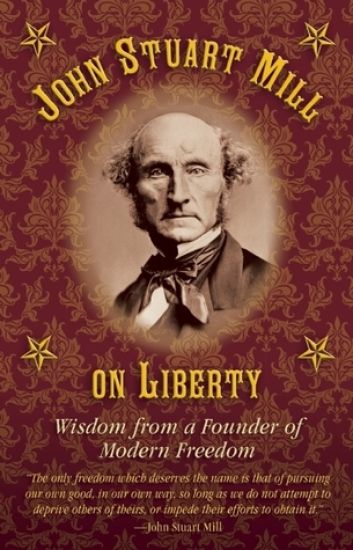
John Stuart Mill on Tyranny and Liberty
The United States was founded on the importance of civil liberties?protections for the individual against the control of others, whether those are other people or the government. Freedom for each person is a cornerstone of Western society. John Stuart Mill’s thoughts on liberty and the concept of freedom are among the most important frameworks on which we’ve built so much of modern society; our very ideas of limited government and personal freedom are rooted in the writings of this great political philosopher.John Stuart Mill on Liberty is a collection of some of the most important of his statements on the ideas of liberty and freedom. This book showcases his firm belief that each person should have the right to live as he or she wants to, so long as it does not harm anyone else. Much of what we now take for granted or still fight to maintain or advance, such as freedom of speech, the abolition of slavery, and the rights of women, are things Mill argued for. As you read his passionate entreaties for liberty, you’ll be amazed at how relevant and important they remain today.?In this age, the mere example of non-conformity, the mere refusal to bend the knee to custom, is itself a service.” ?John Stuart Mill
John Stuart Mill; His Life and Works

John Stuart Mill; His Life and Works

Herbert Spencer

Notion Press
2020
pokkari
Notion Press proudly brings to you timeless classics from ancient texts to popular modern classics. This carefully chosen collection of books is a celebration of literature, our tribute to the pioneers, the legends and the giants of the literary world.Apart from being the voice of indie writers, we also want to introduce every reader to read all kinds of literature.In this series, you will find a wide range of books--from popular classics like the works of Shakespeare and Charlotte Bront to rare gems by the likes of Edith Wharton and James Fenimore Cooper.
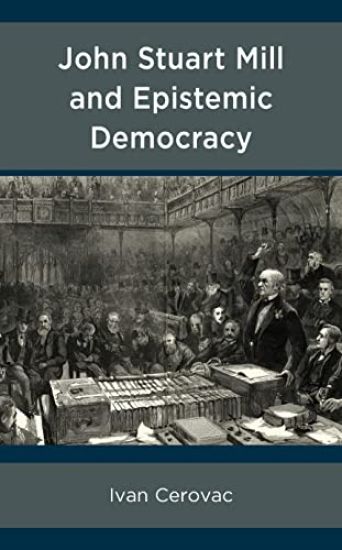
John Stuart Mill and Epistemic Democracy

John Stuart Mill and Epistemic Democracy

Ivan Cerovac

BLOOMSBURY PUBLISHING PLC
2022
sidottu
John Stuart Mill and Epistemic Democracy explores the epistemic, or cognitive, character of democratic institutional practices and the protection of basic liberties in Mill's political thought. Mapping Mill's theory of representative democracy and critically engaging Mill's more controversial issues, Ivan Cerovac identifies the epistemic criteria within these proposals and uses them as a basis for unifying Mill's political thought. The book addresses the epistemic role of wide democratic participation on the one hand and institutional mechanisms used to filter the public will—such as political representation, plural voting proposals, partisanship, division of epistemic and political labor—on the other, and it analyzes how Mill tries to resolve the conflict between political and epistemic values. Characterizing Mill as both a political instrumentalist and an epistemic democrat, Cerovac sets Mill's theory in a broader explanatory framework and compares it with contemporary accounts of epistemic justification. Emphasizing Mill's normative considerations regarding franchise and the exercise of political power over others, this book discusses how to implement the epistemic ideal in real-world politics. It will be a fascinating read for anyone interested in democratic decision-making.
John Stuart Mill and Epistemic Democracy

John Stuart Mill and Epistemic Democracy

Ivan Cerovac

LEXINGTON BOOKS
2024
nidottu
John Stuart Mill and Epistemic Democracy explores the epistemic, or cognitive, character of democratic institutional practices and the protection of basic liberties in Mill's political thought. Mapping Mill's theory of representative democracy and critically engaging Mill's more controversial issues, Ivan Cerovac identifies the epistemic criteria within these proposals and uses them as a basis for unifying Mill's political thought. The book addresses the epistemic role of wide democratic participation on the one hand and institutional mechanisms used to filter the public will—such as political representation, plural voting proposals, partisanship, division of epistemic and political labor—on the other, and it analyzes how Mill tries to resolve the conflict between political and epistemic values. Characterizing Mill as both a political instrumentalist and an epistemic democrat, Cerovac sets Mill's theory in a broader explanatory framework and compares it with contemporary accounts of epistemic justification. Emphasizing Mill's normative considerations regarding franchise and the exercise of political power over others, this book discusses how to implement the epistemic ideal in real-world politics. It will be a fascinating read for anyone interested in democratic decision-making.
John Stuart Mill und Harriet Taylor Mill

John Stuart Mill und Harriet Taylor Mill

Ringo Narewski

Vs Verlag Fur Sozialwissenschaften
2008
nidottu
:Die Frage der Gleichberechtigung der Geschlechter ist auch immer eine Frage nach Vorbildern dafür; nach Frauen und Männer, die vorgemacht haben, welche Formen des Zusammenlebens möglich sind, die frei von Unterdrückung und in Anerkennung der Individualität des Anderen Gleichberechtigung zur Alltäglichkeit werden ließen. Ein solches Beispiel ist das Zusammenleben und -wirken des Philosophenpaares John Stuart Mill und Harriet Taylor Mill. Im viktorianischen England des 19. Jahrhunderts mit seiner restriktiven Moral scheuten sie nicht davor zurück gesellschaftliche Grenzen zu überschreiten und herrschende Sitten offen zu hinterfragen. Ihre Lebensgeschichten, die geprägt sind durch die Liebe und Bewunderung für den jeweils anderen, und ihre Werke, welche sie zu Klassikern der politischen Theorie werden ließen, geben eine der interessantesten Antworten auf die Frage der Gleichberechtigung von Mann und Frau. Das vorliegende Buch zeichnet den ungewöhnlichen Weg nach, welchen Mill und Taylor Mill einschlugen. Es schildert wichtige Lebensabschnitte, analysiert und diskutiert die Entwicklung ihrer politischen Ideen und sucht durch textanalytische Vergleiche nach Hinweisen auf Umfang sowie Bedeutung des gemeinsamen Schaffens.