Kirjojen hintavertailu. Mukana 11 342 296 kirjaa ja 12 kauppaa.

Kirjahaku

Etsi kirjoja tekijän nimen, kirjan nimen tai ISBN:n perusteella.

1000 tulosta hakusanalla Jonathan Edwards

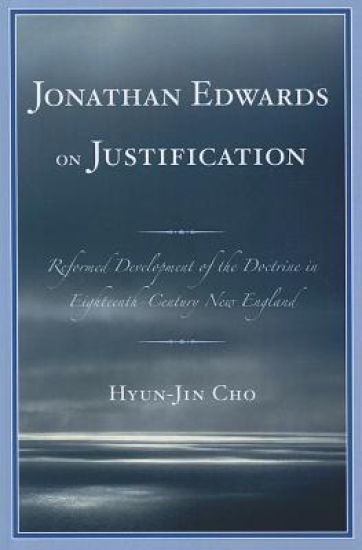
Jonathan Edwards on Justification

Jonathan Edwards on Justification

Hyun-Jin Cho

University Press of America
2012
nidottu
Jonathan Edwards (1703–1758) was a preacher, theologian, and missionary to the Native Americans. This book deals with Jonathan Edwards’ doctrine of justification and its continuity with Reformed tradition. In his Reformed Theology, Edwards interprets the doctrine with scholastic as well as forensic terms such as “disposition,” “habit,” and “fitness.” Due to his use of these concepts, some scholars suspect that he had a quasi-Roman Catholic view of salvation. According to them, Edwards’ use of the terms indicates the intrinsic renovation or inherent righteousness of a saint. Contrary to this suspicion, Jonathan Edwards on Justification demonstrates that Edwards stands firmly on the Reformed tradition in the doctrine of justification. In this book, Hyun-Jin Cho presents a historical study on the theological connection between Edwards and his Reformed forebears. Based on Edwards’ dispositional ontology, the concept of “dispositional transformation” with the Holy Spirit becomes an important theoretical foundation of his doctrine of justification. Cho discusses Edwards’ attempts to explain his doctrine of justification in terms of disposition and its effects.
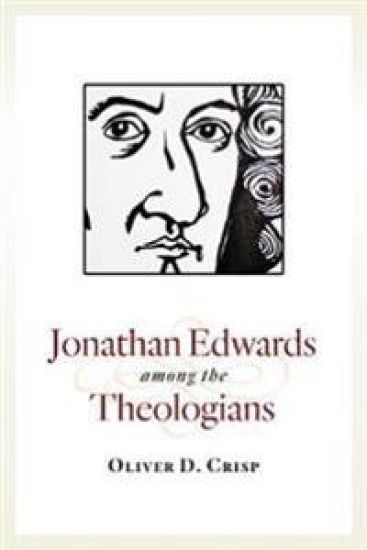
Jonathan Edwards among the Theologians

Jonathan Edwards among the Theologians

Oliver D. Crisp

William B Eerdmans Publishing Co
2015
nidottu
A fresh, comparative study of the innovative thought of America's greatest theologianThough Jonathan Edwards (1703-1758) is widely regarded as America's most important theologian, very few people are actually familiar with his theology. In Jonathan Edwards among the Theologians Oliver Crisp helpfully elucidates key themes in Edwards's thought.Treating Edwards as a constructive theologian with serious philosophical interests, Crisp explains Edwards's thinking on such matters as the Trinity, creation, original sin, free will, and preaching. Crisp underscores the innovative nature of Edwards's work by bringing his thought into dialogue with other creative and important Christian theologians such as Anselm and Arminius.What emerges from Crisp's study is a complex, multifaceted picture of Edwards as a highly original, significant thinker who sometimes pressed at the very limits of orthodoxy and whose theological thought remains strikingly relevant today.
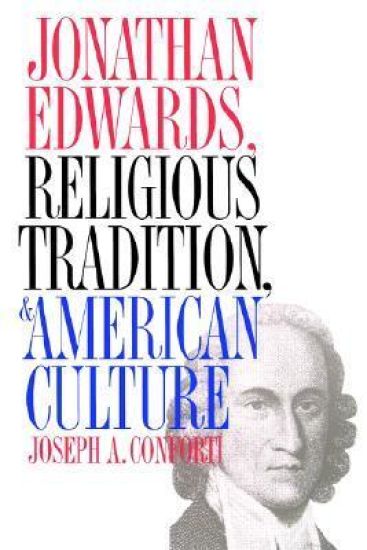
Jonathan Edwards, Religious Tradition, and American Culture

Jonathan Edwards, Religious Tradition, and American Culture

Conforti Joseph A.

The University of North Carolina Press
1995
nidottu
As the charismatic leader of the wave of religious revivals known as the Great Awakening, Jonathan Edwards (1703-58) is one of the most important figures in American religious history. However, by the end of the eighteenth century, his writings were generally dismissed as remnants of a moribund Puritan tradition. Focusing on the publishing history and appropriation of Edwards's works by succeeding generations, Joseph Conforti explores the construction and manipulation of the Edwards legacy and demonstrates its central place in American cultural and religious history. Most of Edwards's writings were not regularly republished or widely read until the early nineteenth century, when he emerged as a prominent thinker both in academic circles and in the new popular religious culture of the Second Great Awakening. Even after the Civil War, Edwards remained a popular figure from the Puritan past for colonial revivalists. But by the early twentieth century, scholars had again reinvented Edwards, this time deemphasizing his influence. These contrasting constructions of the one man, Conforti says, reveal the dynamic process of cultural change.
Jonathan Edwards, the Fiery Puritan; 1930

Jonathan Edwards, the Fiery Puritan; 1930

Henry Bamford 1904-1972 Parkes

Hassell Street Press
2021
nidottu
This work has been selected by scholars as being culturally important and is part of the knowledge base of civilization as we know it.This work is in the public domain in the United States of America, and possibly other nations. Within the United States, you may freely copy and distribute this work, as no entity (individual or corporate) has a copyright on the body of the work.Scholars believe, and we concur, that this work is important enough to be preserved, reproduced, and made generally available to the public. To ensure a quality reading experience, this work has been proofread and republished using a format that seamlessly blends the original graphical elements with text in an easy-to-read typeface.We appreciate your support of the preservation process, and thank you for being an important part of keeping this knowledge alive and relevant.
Jonathan Edwards, Samuel Taylor Coleridge, and the Supernatural Will in American Literature
In a work that will be of interest to students and scholars of American Literature, Romanticism, Transcendentalism, the History of Ideas,and Religious Studies, Brad Bannon examines Samuel Taylor Coleridge’s engagement with the philosophical theology of Jonathan Edwards. A closer look at Coleridge’s response to Edwards clarifies the important influence that both thinkers had on seminal works of the nineteenth century, ranging from the antebellum period to the aftermath of the American Civil War—from Poe’s fiction and Emerson’s essays to Melville’s Billy Budd and Crane’s The Red Badge of Courage. Similarly, Coleridge’s early espousal of an abolitionist theology that had evolved from Edwards and been shaped by John Woolman and Olaudah Equiano sheds light on the way that American Romantics later worked to affirm a philosophy of supernatural self-determination. Ultimately, what Coleridge offered the American Romantics was a supernatural modification of Edwards’ theological determinism, a compromise that provided Emerson and other nineteenth-century thinkers with an acceptable extension of an essentially Calvinist theology. Indeed, a thoroughgoing skepticism with respect to salvation, as well as a faith in the absolute inscrutability of Providence, led both the Transcendentalists and the Dark Romantics to speculate freely on the possibility of supernatural self-determination while doubting that anything other than God, or nature, could harness the power of causation.
Jonathan Edwards and the Metaphysics of Sin
Jonathan Edwards (1703-1758) is widely regarded as America's greatest philosopher-theologian. In the last half century there has been a resurgence of interest in Edwards' work from historians, theologians and philosophers, aided by the publication of the Yale edition of Edwards' Works. Edwards' thinking on sin has long been a mystery to scholars trying to fit his thought into the traditional categories of Reformed theology. What this study shows is that Edwards' theory of sin was an original contribution to philosophical theology, which can only be understood when read on its own terms as a philosophical theory about the nature of sin, its origin and transmission. This constitutes a substantial contribution to the literature on Edwards and, more broadly, to philosophical theology in general.
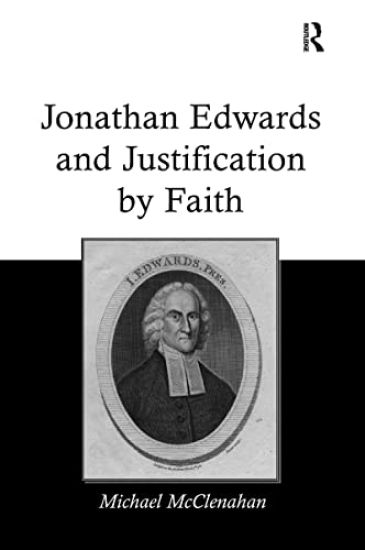
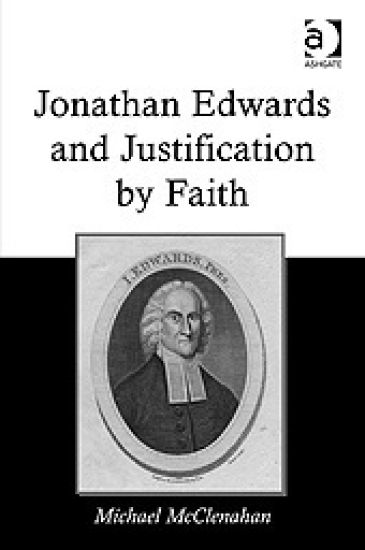
Jonathan Edwards and Justification by Faith
Jonathan Edwards (1703-1758) is widely regarded as North America's most influential theologian. Throughout the early decades of his ministry he engaged in a public and sustained debate with 'Arminian' theology, a crusade that contributed significantly to the events of the Great Awakening. This book investigates the contours and substance of this theological war. In establishing a clearer historical context for this polemic, McClenahan seeks to overturn the scholarly consensus that Edwards' own theology was a twisting of the Reformed tradition. By demonstrating that Edwards' interlocutor was the dead English Archbishop, John Tillotson, McClenahan provides the hermeneutical key for many of Edwards' most significant works. Justification by faith is one of the most contested doctrines in contemporary theology and Jonathan Edwards, referred to as America's Augustine, wrote extensively on this area. His is a voice that many people are keen to hear.
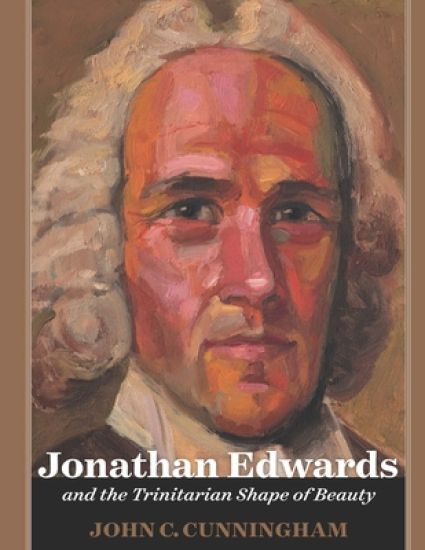
Jonathan Edwards and the Trinitarian Shape of Beauty
This dissertation is a theological analysis of the trinitarian shape of Jonathan Edwards' aesthetics of beauty. The contributions of this dissertation lie chiefly in three areas. The primary aim of this study is to advance the burgeoning field of the study of Jonathan Edwards by elucidating his views of beauty. In so doing, I present him as a rich source for the theological engagement of beauty, which could serve not only the field of Edwards studies, but also that of theological aesthetics more broadly.
Jonathan Edwards and Justification by Faith

Jonathan Edwards and Justification by Faith

Michael McClenahan

Ashgate Publishing Limited
2012
sidottu
Jonathan Edwards (1703-1758) is widely regarded as North America's most influential theologian. Throughout the early decades of his ministry he engaged in a public and sustained debate with 'Arminian' theology, a crusade that contributed significantly to the events of the Great Awakening. This book investigates the contours and substance of this theological war. In establishing a clearer historical context for this polemic, McClenahan seeks to overturn the scholarly consensus that Edwards' own theology was a twisting of the Reformed tradition. By demonstrating that Edwards' interlocutor was the dead English Archbishop, John Tillotson, McClenahan provides the hermeneutical key for many of Edwards' most significant works. Justification by faith is one of the most contested doctrines in contemporary theology and Jonathan Edwards, referred to as America's Augustine, wrote extensively on this area. His is a voice that many people are keen to hear.