Kirjojen hintavertailu. Mukana 11 627 220 kirjaa ja 12 kauppaa.

Kirjahaku

Etsi kirjoja tekijän nimen, kirjan nimen tai ISBN:n perusteella.

1000 tulosta hakusanalla Josef Becker

Josef Plecnik Zacherlhaus / The Zacherl House by Jože Plecnik
The Zacherlhaus is located in the heart of Vienna, just 180 meters from St. Stephen's Cathedral, and is one of the most important buildings created by the Otto Wagner School. It was built in the years from 1900 to 1913 and designed for its owner Johann Zacherl by Joesef Plecnik, who later taught at the Academy of Fine Arts in Prague and from 1925 worked on the urban renewal of Ljubljana. It was the first combined residential and commercial building of modern style in the historic inner city and is one of the best known buildings in Vienna. This generously illustrated, authentic publication documents the building and its thorough renovation, which will be completed in 2015; it includes contributions by experts on European architecture of the 20th century.
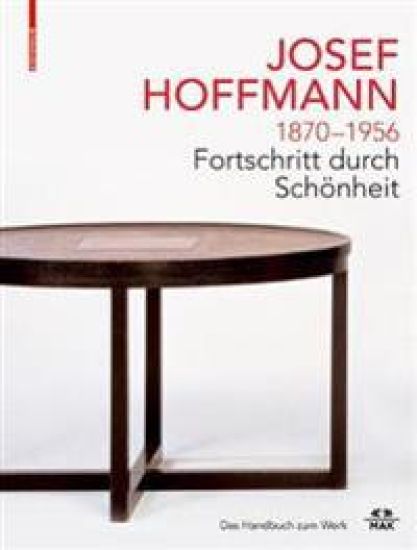
JOSEF HOFFMANN 1870–1956: Fortschritt durch Schönheit
Das Buch dokumentiert erstmals umfassend das Gesamtwerk Josef Hoffmanns. Als Wagner-Schüler, Gründungsmitglied der Wiener Secession (1897), Professor an der Wiener Kunstgewerbeschule (1899–1936), Mitbegründer der Wiener Werkstätte (1903), des Deutschen Werkbundes (1907) sowie des Österreichischen Werkbundes (1912) kultivierte er ein Modell moderner Lebensweisen auf der Basis einer handwerklich geprägten, künstlerisch ambitionierten und gestalterisch avancierten Bau- und Produktkultur. Über 40 illustrierte Essays namhafter ExpertInnen zu den wichtigsten Bauten, Interieurs, Ausstellungen, kunstgewerblichen Entwürfen und Produkten stellen alle Sparten seines großen Œuvres dar. Großzügige Bildstrecken, eine detaillierte Biografie und ein umfassender Dokumentationsteil runden das Buch zu einem neuen Standardwerk ab.
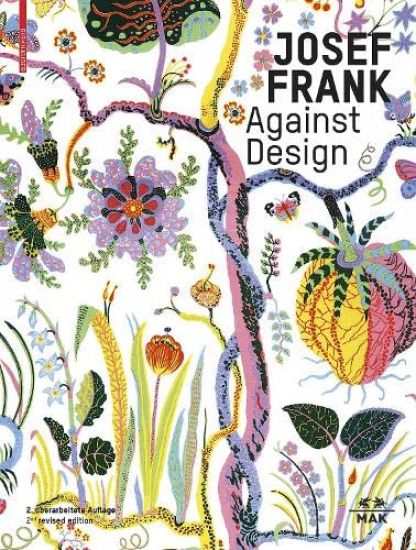
Josef Frank – Against Design
The catalog for the 2015/16 exhibition at the MAK (Museum of Applied Arts) in Vienna is dedicated to Josef Frank (1885–1967), one of the most important Austrian architects of the 20th century. In addition to his groundbreaking architectural work, the catalog focuses his design, which remains highly influential to this day. As an architect and designer, Frank remains contemporary, having promoted a pragmatic approach to design that focused less on formal qualities and more on those of social experience. Frank's ideal of an unaffected and unpretentious practicality, aimed at an independent and sophisticated bourgeois culture of living beyond stylistic dogmas and fashionable conventions, seems more relevant than ever.
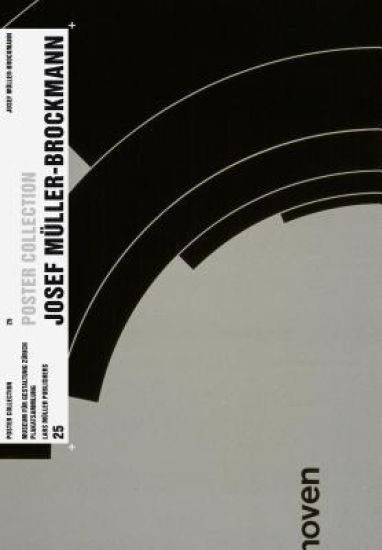
Josef Muller-Brockmann

Josef Muller-Brockmann

Museum of Design Zurich; Alice Twemlow

Lars Muller Publishers
2013
nidottu
Josef Muller-Brockmann's graphics left a lasting mark on Swiss visual communication from the 1950s onward. His posters demonstrate how a sober, formally reduced language works best for conveying a universal, timeless message. Poster campaigns for longtime clients such as the Tonhalle concert hall in Zurich or the Automobile Club of Switzerland follow strict functional criteria - and yet exhibit a variety of design solutions and exciting, dynamic compositions. This book presents selected posters by Muller-Brockmann and places them in the context of their own time while also examining the validity of his solutions from today's point of view.
Josef Frank-Spaces

Josef Frank-Spaces

Mikael Bergquist; Olof Michelsen

Park Books
2016
sidottu
Josef Frank, born 1885 in Baden near Vienna, ranks among Europe's most significant architects of the twentieth century. His designs for furniture and textiles also make him one of the eminent figures of modernist interior design. Born into a Jewish family, growing anti-Semitism forced him to emigrate in 1933. He first went to Sweden and in 1939 to the USA, returning to Sweden again in 1947, where he lived and worked until his death in 1967. Josef Frank - Spaces is the first comprehensive book on Frank's single-family houses. It explores the evolution of his designs over the years and investigates the influences that shaped his work: Adolf Loos's spatial plan concept, Le Corbusier's ideas, and Hermann Muthesius's seminal book The English House. It also looks at Frank's own architectural concepts of movement and stairs in residential buildings. The second part features six of Frank's houses in greater detail, including images and plans, and in descriptive texts that also interpret their characteristics. The selection comprises the villas Claëson and Wehtje in Falsterbo, Sweden, the villas Wien XIII and Beer in Vienna, the House MS in Los Angeles, and the unrealised Fantasy House 9 (Accidental House). A complete catalogue of Frank's single-family houses rounds out the book.
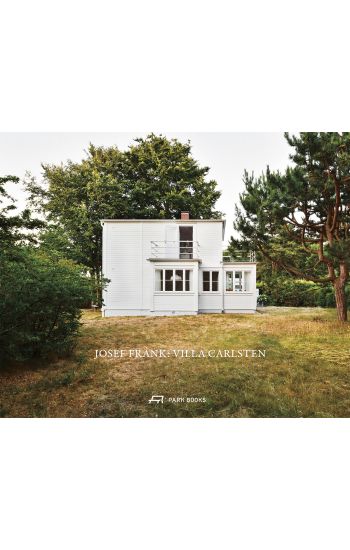
Josef Frank: Villa Carlsten

Josef Frank: Villa Carlsten

Mikael Bergquist

Park Books
2019
sidottu
Between 1924 and 1936, Austrian-born architect Josef Frank built five holiday homes on the Falsterbo Peninsula in southern Sweden. Conceived as summer houses for friends and relatives of Frank's Swedish wife, the Falsterbo Villas constitute a key part of Frank's architectural work and demonstrate the principles at the core of his housing designs. In 2016, Villa Carlsten, the smallest of the Falsterbo houses, underwent an extensive restoration. Published on the occasion of its completion, Josef Frank: Villa Carlsten is the first book to comprehensively document the building. As with all of Frank's housing designs, Villa Carlsten sees the architect paying special attention to the connection between interior and exterior, to the availability of daylight, and to inhabitants' movements through the building. A particular part of Villa Carlsten's charm is its scale, as everything is of slightly smaller dimensions than one would expect. Despite its intricate layout, however, Villa Carlsten is also one of Frank's most accessible homes, and the design is full of wit, combining comfort with modern refinement. Beautifully designed with seventy-five full-colour photographs by Mikael Olsson, who adeptly highlights the home's qualities and relationship with its surroundings, the book also includes an essay by Mikael Bergquist, who realised the renovation and places Villa Carlsten in context with the other Falsterbo Villas and Frank's broader work.
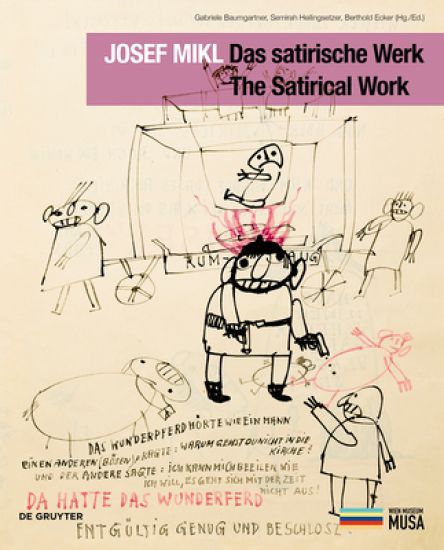
Josef Mikl. Das satirische Werk. The Satirical Work.
The oeuvre of the Austrian painter Josef Mikl (1929–2008), documenta participant and Austria’s representative at the Biennale in Venice, always had a second facet: pointed social satire. In his caustic and pointed illustrations, Mikl—who was also Professor at the Academy of Fine Arts—reacted to contemporary developments in the artistic and cultural scenes: in adventurous stories, such as his "Wunderpferd" series, the "Kulturtagung von Worpswede", or the figure of the "Journalistenfresserin Hawranek", he vented his feelings about art criticism. For the first time, this book provides an overview of the satirical oeuvre of Josef Mikl and of his extensive collection of sketch books, pages of text, episcope images, and booklets.
Josef Burkard Leu (1808-1865)

Josef Burkard Leu (1808-1865)

Guido Wüest

Herbert Cie Lang AG, Buchhandlung Antiquariat
1974
nidottu
Am Beispiel des Luzerner Geistlichen und Theologen (Schuler von P. Girard und der Tubinger Theologen Drey, Mohler und Hirscher) geht die Arbeit den Schwierigkeiten der kirchentreuen, aber sogenannten liberalen Geistlichen in der Auseinandersetzung zwischen Staat und Kirche vor und nach dem Sonderbundskrieg in Luzern nach. Josef Burkard Leu zahlte sich selber zur -vernunftigen Mitte- und gehorte zu den fuhrenden Jesuitengegnern."